A hotel of more than 800 sqm with 20 en-suite rooms, a bar and restaurant is heading into its third auction attempt of 2026 with a minimum bid of just €39,000. That equates to €1,950 per key — but this may be the least useful metric in the entire transaction. Capex, compliance, demand, working capital and the asset’s ability to generate sustainable EBITDA could amount to many times the acquisition price.
€39,000 for twenty rooms.
The calculation is immediate:
€1,950 per room.
It is exactly the kind of headline number that can turn a judicial auction into an apparent bargain before anyone has even read the valuation report.
But in hospitality, price per key becomes a dangerous metric when used without understanding how much capital will actually be required to bring the asset back to market.
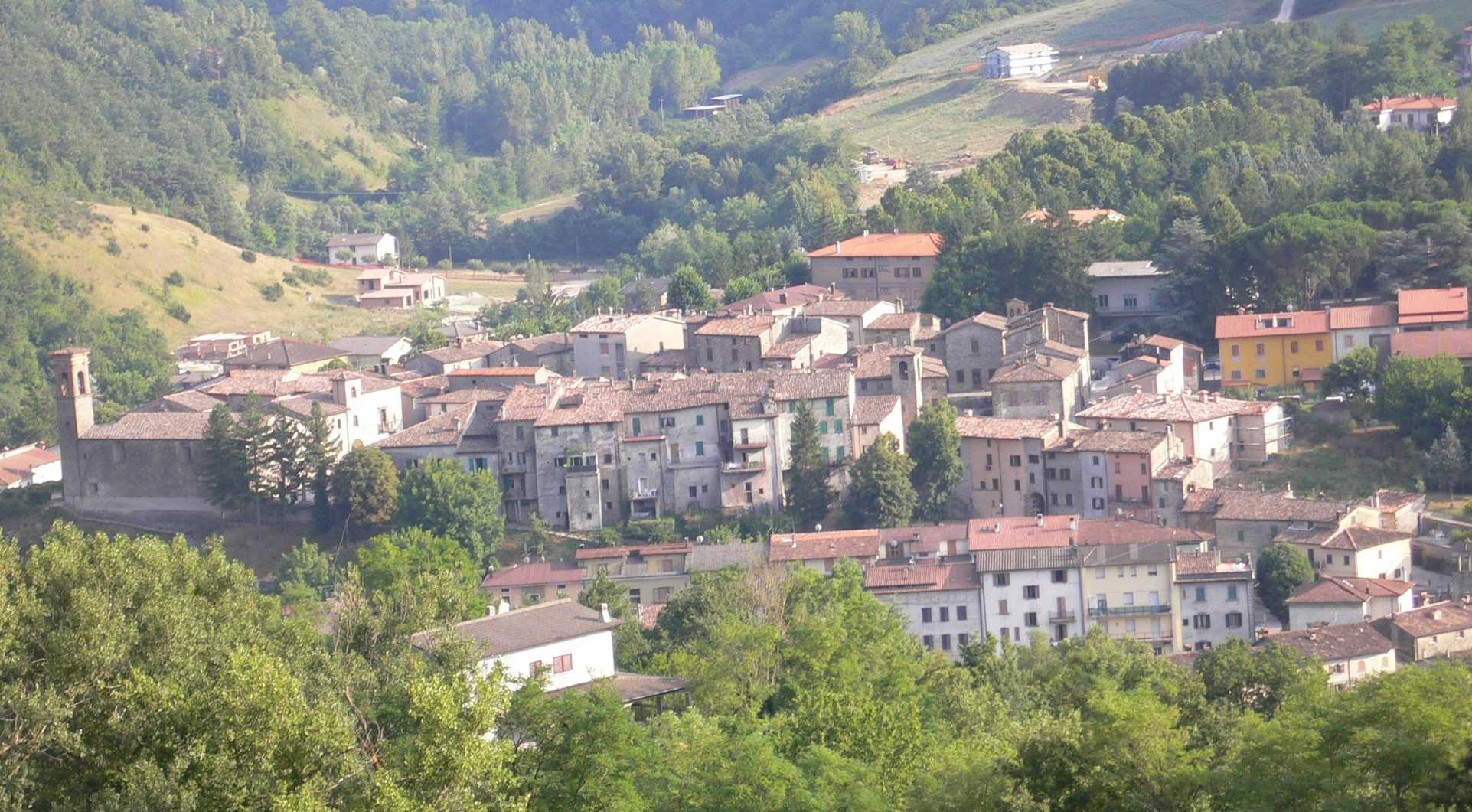
That is the central issue in the case of the property at Via Borgo Mazzini 40 in Apecchio, in the province of Pesaro and Urbino.
As part of Enforcement Proceeding No. 49/2015 before the Court of Urbino, the next auction is scheduled for 8 October 2026.
The base price is €52,000.
The minimum bid is:
€39,000
The question an investor should ask, however, is not:
“How little am I paying per room?”
It is:
“How much capital will I ultimately have to invest before those twenty rooms can generate sustainable EBITDA again?”
Those are two very different questions.
The Asset: More Than Just a Building
The auction documentation describes an approximately 810 sqm hotel, bar and restaurant property.
The ground floor reportedly includes a bar, dining rooms, kitchen, oven area, cellar, plant rooms, service areas and outdoor spaces.
The upper floors contain a total of 20 en-suite guestrooms, together with terraces, balconies and ancillary areas.
The property also includes a lift shaft serving the different floors, while one area is described as a sauna.
This is therefore not simply a generic building with potential for hotel conversion.
The asset was already configured as a hospitality property.
And that is precisely why the €39,000 minimum bid attracts so much attention.
Three Auction Attempts, a Price Cut in Half
The current pricing becomes even more striking when viewed against the history of the 2026 sale attempts.
| Auction | Base Price | Minimum Bid | Outcome |
|---|---|---|---|
| 29 January 2026 | €104,000 | €78,000 | No bids |
| 7 May 2026 | €72,800 | €54,600 | No bids |
| 8 October 2026 | €52,000 | €39,000 | Pending |
During 2026, the minimum bid has therefore fallen from €78,000 to €39,000.
Exactly half.
That does not mean the economic value of the hotel has fallen by 50%.
It means only that the price required by the enforcement process has been reduced.
Auction price and investment value are not the same thing.
€1,950 per Key: Mathematically Correct, Financially Weak
Dividing €39,000 by twenty rooms does indeed produce:
€1,950 per key.
But that calculation implicitly assumes that each room is already:
usable, compliant, furnished, marketable and capable of generating revenue.
That is precisely what due diligence must determine.
A room in an operating, renovated and profitable hotel cannot be compared economically with a room in an asset that may require building works, new systems, furniture, regulatory approvals and a full commercial relaunch.
The more meaningful metric is therefore not:
Acquisition Price / Key
but:
Total Investment Cost / Key
and, more importantly:
Total Investment Cost / Stabilised EBITDA
Those are the metrics on which an investment decision should ultimately be based.
The Purchase Price Could Be Only a Small Fraction of the Capital Required
The true cost of the transaction should include:
acquisition price + taxes and transaction costs + Capex + FF&E + compliance works + regulatory costs + pre-opening expenditure + working capital + marketing + funding required until stabilisation.
Consider a purely methodological example.
If the asset were acquired for €39,000 but required a further €500,000 to renovate, equip, regularise, reopen and fund the initial operating period, the actual project cost would be approximately:
€539,000
or almost:
€27,000 per key.
If post-acquisition expenditure reached €1 million, the all-in investment would exceed:
€50,000 per key.
We are not suggesting that these are the actual costs for Apecchio.
We do not yet have sufficient technical due diligence to determine them.
The example illustrates one principle:
when the real estate acquisition price is extremely low, Capex may become the real purchase price of the transaction.
Before the Business Plan Comes the Technical Report
For this reason, in the Apecchio case, the most important document is not the auction notice showing €39,000.
It is the technical appraisal report.
Before any economic assessment, an investor would need to verify:
planning and building compliance, cadastral consistency, building systems, occupancy certification, fire-safety requirements, hotel and F&B operating permits, maintenance condition, required works and the cost of any necessary regularisation.
The principle is straightforward.
On an asset available for €39,000, a technical issue costing €100,000 would represent almost three times the acquisition price.
This is why, in distressed transactions, the largest risk is often not the auction itself.
It is what emerges afterwards.
The Market Matters More Than the Price
Once the technical issues have been addressed, the industrial question remains.
Who is going to buy Apecchio’s twenty rooms every night?
Apecchio sits in an Apennine setting between the Marche and Umbria regions, near Monte Nerone, with potential demand drivers linked to outdoor tourism, hiking, cycling, food and wine and local events.
These are relevant attractions.
But they do not automatically translate into a hotel market capable of supporting twenty rooms twelve months a year.
An investor therefore needs to turn destination appeal into numbers:
room nights → occupancy → ADR → RevPAR → revenue → GOP → EBITDA.
That is the step that separates an interesting destination from a financially sustainable hotel investment.
Three Scenarios to Illustrate the Issue
Without pretending to value Apecchio on the basis of data we do not yet have, we can construct three purely methodological scenarios for a 20-room hotel.
| Scenario | Occupancy | ADR | RevPAR | Indicative Room Revenue |
|---|---|---|---|---|
| Conservative | 35% | €85 | €29.75 | ~€217,000 |
| Base Case | 45% | €95 | €42.75 | ~€312,000 |
| Upside | 55% | €105 | €57.75 | ~€422,000 |
These figures are not forecasts for the Apecchio hotel.
They simply illustrate the correct investment question.
If Total Investment Cost were €600,000, €900,000 or €1.2 million, which operating scenario would be required to deliver an acceptable return?
And, more importantly:
can the local market realistically support it?
That is the analysis that should take place before submitting a bid.
The Restaurant Could Matter as Much as the Rooms
The property also includes a bar, kitchen and several dining areas.
The business plan should therefore not necessarily rely exclusively on room revenue.
Food & Beverage could:
materially increase revenue,
strengthen the positioning,
capture local demand,
or become a cost centre.
The outcome depends on:
number of covers, average spend, opening days, staffing, food cost, ability to attract non-resident customers and seasonality.
A credible financial model should therefore separate:
Rooms P&L
from
F&B P&L.
These are two distinct economic activities that ultimately converge in the hotel’s overall GOP.
Recreating the Previous Hotel May Not Be the Best Strategy
Another common mistake in distressed-property acquisitions is assuming that the building’s past use must determine its future operating model.
Not necessarily.
The combination of twenty rooms, F&B areas, common spaces and an Apennine location suggests that investors should assess the property’s hospitality highest and best use.
Potential concepts could include, purely as strategic scenarios:
outdoor hotel, bike-focused hospitality, retreat, food-led destination hotel, small sports groups, events, experiential stays or other formats suited to the local market.
This does not mean those concepts are automatically feasible or profitable.
A proper market and feasibility analysis would be required.
This is the same type of analysis that should precede turnaround projects assessed through Investhotel.it and the due diligence and valuation work developed by HotelManagementGroup.it.
The Real Test: How Much EBITDA Can the Asset Generate?
The investor’s final question should therefore not focus on the €39,000 purchase price.
It should focus on future EBITDA.
Assume, for illustration only, that the project requires an all-in investment of €800,000 after renovation and relaunch.
If the stabilised hotel produced only €30,000 of EBITDA, the operating return on capital would be weak.
At €80,000 of EBITDA, the investment case would look very different.
At €120,000, it would change again.
The point is not to suggest that any of these results are achievable in Apecchio.
The point is to demonstrate that:
an asset acquired for €39,000 can still be a poor investment at an €800,000 Total Investment Cost — and an attractive one at the same capital base if it generates sufficient EBITDA.
The acquisition price in isolation cannot distinguish between those outcomes.
When the Price Is Extremely Low, Psychological Risk Increases
There is another less obvious factor.
An asset available for €39,000 can feel almost risk-free.
“How much can I really lose?”
That is the wrong question.
In a distressed project, the investor is not merely risking the money paid at auction.
The real exposure includes all the capital required to:
renovate, regularise, furnish, recruit, reopen, market and support the operation until break-even.
The actual capital at risk could therefore be ten, twenty or thirty times the successful bid.
That is why apparently cheap assets can sometimes require the most rigorous due diligence.
Another Mistake: Comparing It with Hotels Sold “Per Key”
Price per room is widely used in hotel transactions.
But it only works when the assets being compared are reasonably homogeneous.
An operating hotel in a primary destination, with positive EBITDA and limited Capex requirements, may trade at hundreds of thousands of euros per room.
A hotel requiring full reactivation may sell for only a few thousand euros per key.
That does not automatically make the second asset “cheaper” in economic terms.
The market may simply be pricing:
location + risk + Capex + demand + product quality + future cash flow.
The number of doors is only the denominator.
Due Diligence Before 8 October
Before submitting an offer, a professional investor should be able to answer at least five questions:
What will it actually cost to make the property compliant and competitive?
What hospitality concept can realistically work in Apecchio?
What ADR and occupancy can the market sustainably support?
What stabilised EBITDA can the project generate?
What is the maximum acquisition price consistent with the required return?
Only the final answer determines the Maximum Bid Price.
Not the price advertised in the auction notice.
Apecchio as a Distressed Hospitality Case Study
This dossier is interesting well beyond the individual asset.
It captures one of the most common errors in distressed hospitality:
confusing “cheap to buy” with “high value”.
An asset may be extremely inexpensive because it requires enormous additional investment.
Another may cost substantially more but generate cash flow immediately.
A sophisticated investor does not simply look for the lowest acquisition price.
The objective is to find the best relationship between:
Total Investment Cost / Stabilised EBITDA / Risk.
That is the metric that should drive the decision.
Conclusion: €39,000 Is Only the Beginning
The Apecchio auction contains the kind of figures that naturally attract attention:
more than 800 sqm;
20 en-suite rooms;
bar and restaurant;
ancillary areas;
two unsuccessful auction attempts;
€39,000 minimum bid;
a nominal €1,950 per room.
But precisely because the entry price is so low, stopping there would be a mistake.
The real cost of the transaction will be:
Acquisition Price + Capex + Compliance + FF&E + Pre-opening + Working Capital + Stabilisation Cost.
Only after calculating that figure can it be compared with:
ADR + Occupancy + RevPAR + GOP + EBITDA.
Only then will it be possible to understand whether the Apecchio hotel is genuinely an investment opportunity.
Or simply a property that is very inexpensive to acquire and far more expensive to turn back into a profitable hotel.
That is the difference between seeing an auction and analysing an investment.
Further analysis of hotel assets, special situations and distressed hospitality is available at InvestimentiAlberghieri.it.
Hotel turnarounds and business planning are covered by Investhotel.it.
Due diligence, valuations and hotel management analysis are developed through HotelManagementGroup.it.
Further insights into hospitality markets, governance and hotel economics are available at RobertoNecci.it.
Methodological and Legal Notice
This article is intended exclusively for informational, journalistic and professional-analysis purposes and is based on the publicly available documentation reviewed as of the date of publication.
The data relating to the base price, minimum bid, auction date, property configuration and number of rooms derive from the sale documentation relating to Enforcement Proceeding No. 49/2015 before the Court of Urbino.
The figure of €1,950 per room is simply the mathematical result of dividing the €39,000 minimum bid by twenty rooms and does not constitute a real estate, business or hotel valuation.
The scenarios concerning ADR, occupancy, RevPAR, revenue, Capex and Total Investment Cost presented in this article are purely methodological examples and do not constitute forecasts, estimates or valuations of the future performance of the property.
This article does not state that the property is immediately usable or capable of reopening, that all licences and authorisations remain valid, that the building is fully compliant from a planning, building, cadastral or technical perspective, or that the required Capex can be established without comprehensive technical and documentary due diligence.
Any repositioning scenarios discussed are intended solely as strategic illustrations and do not imply administrative, planning, technical or economic feasibility.
This article does not constitute an offer, solicitation to invest, recommendation to participate in the auction, real estate valuation, or legal, tax or financial advice.
Any interested party should review in full the sale notice, technical appraisal, registered encumbrances, building permits, operating licences, cadastral status, technical condition and court documentation, and should conduct its own market and financial feasibility analysis before making any investment decision.
CONTACT
Investors, operators, lenders, funds, servicers and owners interested in confidential analysis of distressed hotels, hotel auctions, UTP/NPL exposures, turnarounds, due diligence, business planning and hospitality asset repositioningmay contact:
info@investimentialberghieri.it