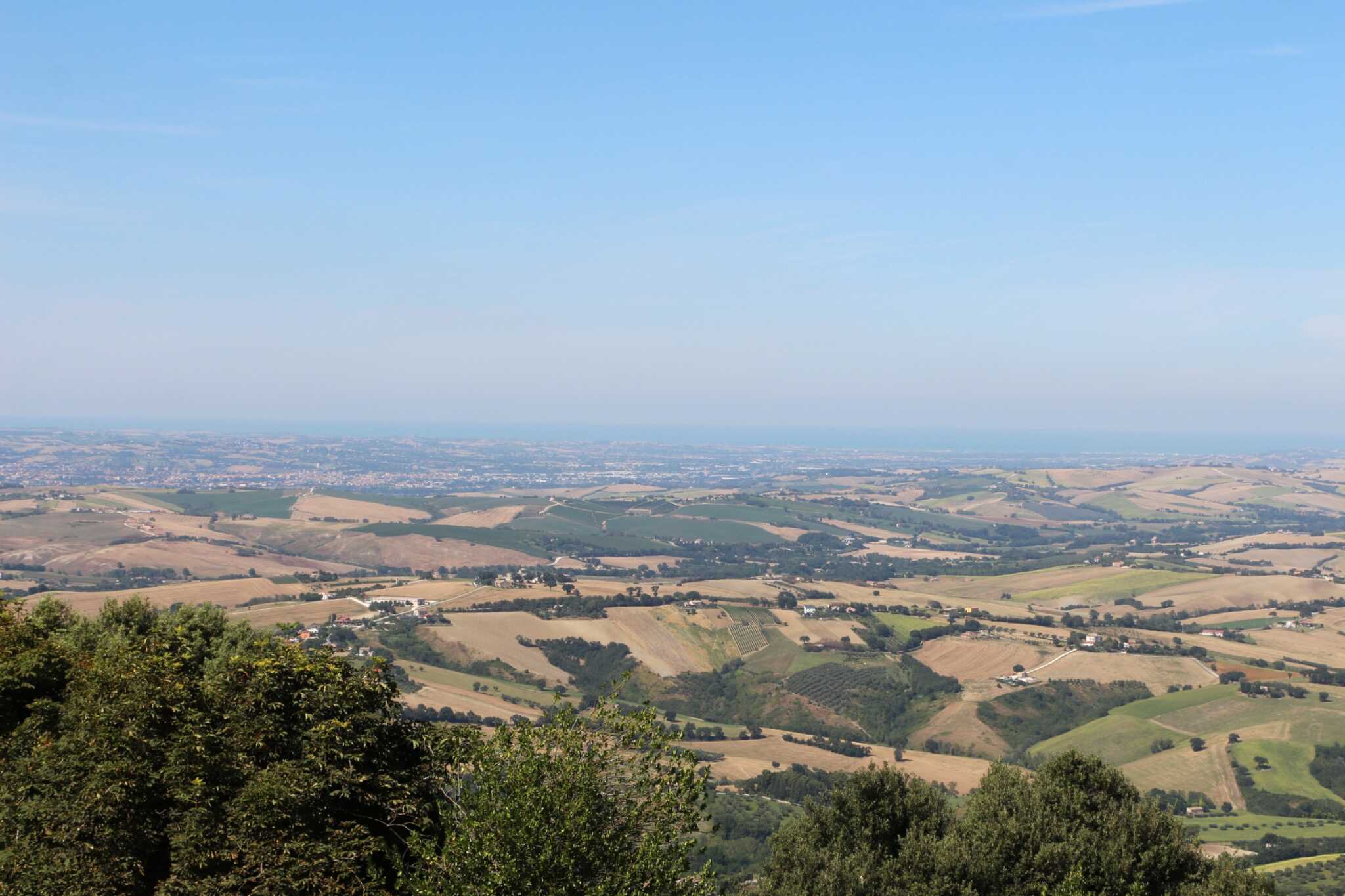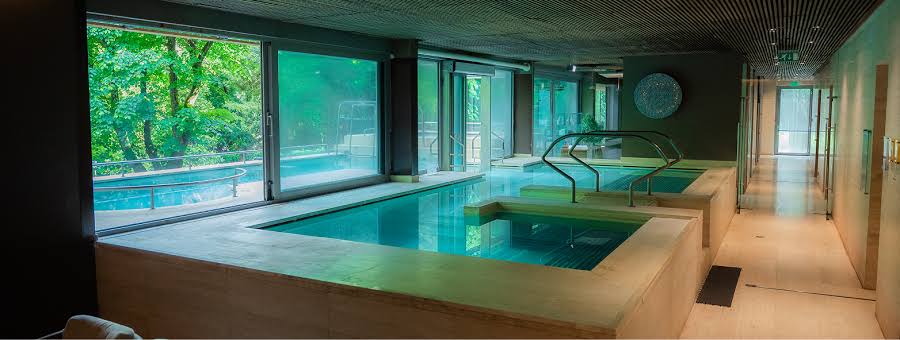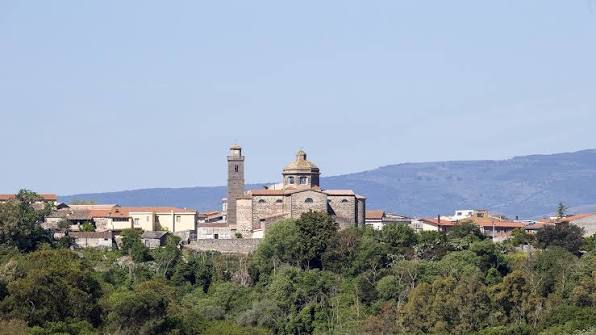
Twenty-five accommodation units set within an oak woodland, a swimming pool and solarium, restaurant, reception, independent lodging units and an equestrian component including stables and riding facilities. In Abbasanta, in inland Sardinia, the former Country Hotel Mandra Edera is returning to auction with a minimum bid of €219,552 against an expert valuation of €876,200. The headline gap is close to 75%, equivalent to less than €8,800 per key. But the most important figure is another one: that €876,200 valuation was itself the result of a 35% haircut applied in 2023 to reflect inactivity, deterioration, lack of maintenance and market conditions. The real investment case therefore cannot be measured by the discount to appraisal. It must be measured by the total capital required to bring this rural resort back to a level where it can generate GOP, EBITDA and cash flow.
In the market for hospitality special situations, some prices are almost designed to attract immediate attention.
€219,552 for a former 4-star country hotel with 25 accommodation units, a swimming pool, restaurant and equestrian facilities certainly falls into that category.
But the more extraordinary the price appears, the more important it becomes to separate four distinct figures:
auction price
technical valuation
actual condition of the asset
prospective operating value.
The Mandra Edera complex in Abbasanta, in the province of Oristano, provides a particularly interesting case study.
The next auction is scheduled for 28 October 2026, with bids due by 27 October.
The principal figures are:
reserve price: €292,736
minimum bid: €219,552
minimum bid increment: €1,000.
At first sight, the entry price looks almost nominal.
But it is only the first number in the investment equation.
A Former 4-Star Country Hotel Set Within an Oak Woodland
Mandra Edera is not configured like a conventional hotel contained within a single building.
It is a multi-building hospitality complex set within a rural environment.
The valuation report describes a main building containing:
-
restaurant;
-
kitchen;
-
reception;
-
ensuite guestrooms.
Other buildings within the woodland were used for guest accommodation and self-contained units, while a separate structure contains:
swimming pool
and:
solarium.
The hospitality operation was also historically integrated with equestrian activities through:
stables
and:
riding facilities.
The overall commercial area identified in the appraisal is approximately:
4,134.75 sqm.
But in an asset of this type, square metres alone do not explain value.
The real question is how much of that space can once again become economically productive.
25 Rooms and Self-Contained Units: A Product Beyond the Conventional Hotel Model
The appraisal identifies a total of:
25 rooms/accommodation units.
Of these:
8 are double rooms with private bathrooms;
while the remainder are configured as self-contained units incorporating a living area, sofa beds, double bedroom and bathroom.
This is an important feature.
It means the future product does not necessarily have to depend exclusively on the traditional formula:
one room → one night → one ADR.
Potential positioning could also address:
-
retreats;
-
wellness;
-
experiential hospitality;
-
equestrian tourism;
-
corporate retreats;
-
small groups;
-
long stays;
-
destination stays;
-
family and extended-stay demand.
The concept, however, should be driven by actual market demand.
Not by nostalgia for the property’s historical positioning.
€219,552 Equates to Approximately €8,782 per Key
The most eye-catching calculation is immediate:
€219,552 / 25 = approximately €8,782 per key.
At the reserve price of €292,736:
approximately €11,709 per room.
The €876,200 appraisal equated to:
approximately €35,048 per key.
At first glance, the spread appears extraordinary.
But in distressed hospitality, investors must distinguish between:
purchase price per key
and:
investment cost per key.
The first measures the cost of acquiring the asset.
The second measures how much capital is required to create rooms that are actually marketable, operational and capable of producing margin.
This distinction sits at the heart of the analysis published by InvestimentiAlberghieri.it.
The Discount to Appraisal Is Approximately 75%
Comparing:
€876,200 appraised value
with:
€219,552 minimum bid
produces a nominal reduction of almost:
75%.
It is undoubtedly a striking figure.
But on its own it tells only half the story.
Because the €876,200 appraisal was already a heavily adjusted valuation.
The Correct Sequence Is €1.348 Million → €876,200 → €219,552
This is arguably the most important financial sequence in the entire transaction.
Following the planning regularisation of the complex, the expert arrived at a theoretical value of approximately:
€1,348,000.
A further reduction of:
35%
was then applied.
The resulting final value was:
€876,200.
The reasons identified in the report included:
-
deterioration caused by inactivity;
-
lack of maintenance;
-
prevailing market conditions;
-
higher cost of capital;
-
stagnation in the local real estate market.
The current minimum bid is:
€219,552.
The economic sequence is therefore:
€1,348,000
→ €876,200
→ €219,552.
This means that today’s auction price comes after a significant proportion of the asset’s problems had already been reflected in the technical valuation.
That makes the question of the genuine margin of safety considerably more sophisticated.
A 75% Discount Does Not Equal a 75% Margin of Safety
An investor may be tempted to think:
“I am buying at one-quarter of the appraisal.”
Mathematically, that is correct.
Financially, it is incomplete.
The true margin of safety can only be determined after accounting for:
-
Capex;
-
extraordinary maintenance;
-
building-services upgrades;
-
guestrooms and self-contained units;
-
FF&E;
-
swimming pool and solarium;
-
kitchen and restaurant;
-
landscaping;
-
equestrian facilities;
-
pre-opening costs;
-
payroll;
-
marketing;
-
distribution;
-
working capital;
-
contingency;
-
financing costs;
-
ramp-up period.
Only after these items have been deducted from the asset’s prospective value can an investor understand how much of the apparent “discount” genuinely remains.
This distinction between asset value, going-concern value and cash-flow value is also central to many of the hospitality analyses published on RobertoNecci.it.
One Positive Element: The Planning Position Has Been Regularised
The transaction does, however, contain an important positive factor.
The first version of the expert report identified significant planning irregularities, resulting in very different valuation scenarios.
The procedure subsequently initiated a formal regularisation process.
In August 2023, the Municipality of Abbasanta issued a building permit based on retrospective double-compliance regularisation, resolving the identified discrepancies and bringing the physical condition of the property into line with the approved design.
This matters.
In real estate special situations, planning uncertainty can destroy value far faster than a reduction in the auction price.
Here, a meaningful part of that risk appears to have been addressed before the sale.
The Regularisation Removed a Severe Downside Scenario
The original valuation made clear just how important the planning issue was.
Under the favourable scenario, assuming regularisation was possible, the theoretical value exceeded:
€1.2 million.
Under the more adverse scenario, which would have required significant demolition and reinstatement works, the value could have fallen to approximately:
€338,480.
The subsequent regularisation therefore removed one of the principal structural uncertainties affecting the transaction.
This does not eliminate the need for updated planning due diligence.
But it materially changes the starting point.
Particular Attention Should Be Paid to the Equestrian Component
The ownership perimeter requires careful analysis.
The procedure holds full ownership of the principal buildings and approximately:
26,991 sqm of land.
A further area of approximately:
5,436 sqm
which includes part of the entrance, parking and the stable/riding area, is instead held through a one-third ownership interest.
This should not be treated as a secondary issue.
An investor should verify:
-
access rights;
-
use of parking;
-
relationships with co-owners;
-
effective control of the equestrian facilities;
-
ability to operate equestrian activities;
-
costs;
-
liabilities;
-
any agreements required.
The equestrian component could become a meaningful differentiator within the future concept.
But only if the investor can actually control and operate it.
The Riding Facilities Could Be a Commercial Asset, Not a Decorative Feature
Historically, the hospitality operation was also associated with horse-riding lessons and excursions.
This could be highly relevant to a future repositioning.
Mandra Edera is located in inland Sardinia.
It cannot therefore rely on the classic positioning:
Sardinia = beach.
It needs to create an independent reason to stay.
Equestrian activities, nature, wellness, food experiences, privacy and outdoor pursuits could contribute to that proposition.
But the business plan must demonstrate that sufficient demand exists.
Owning riding facilities does not automatically create a profitable equestrian tourism business.
Being Away from the Coast Can Be a Weakness — or the Positioning Itself
The appraisal itself notes the property’s distance from Sardinia’s main coastal tourism destinations.
There are two possible interpretations.
The first:
the hotel does not automatically benefit from the major leisure flows concentrated around the island’s coastline.
The second:
it does not necessarily need to compete with coastal resorts at all.
It may be able to create a different category.
This is where concept development becomes critical.
Six Scenarios Worth Testing Through Market Feasibility
The future product could be very different from the original country hotel.
Country Retreat
Privacy, quiet, nature and an experiential stay.
Equestrian Resort
A concept aligned with the property’s historical identity, provided the riding facilities can be operationally integrated.
Wellness Retreat
The pool, solarium, grounds and self-contained units could form an interesting base.
Corporate Retreat
A secluded, multi-building property may suit small groups, management retreats, training and incentive travel.
Destination Food & Hospitality
The restaurant could address external demand and build a stronger connection with Sardinian food and agricultural production.
Experiential Extended Stay
The presence of self-contained accommodation may support longer stays and a different operating cost structure.
None of these concepts should be selected intuitively.
The correct sequence is:
market feasibility → concept → business plan → Capex plan.
The Appraisal Also Built a Theoretical Hotel Operating Model
The expert report contains another interesting element.
To apply an income-based methodology, the valuer constructed a theoretical operating model.
The assumptions included:
25 rooms
€100 ADR
75% occupancy
six months of operations per year
plus an additional:
5%
from ancillary activities such as the bar and equestrian component.
These assumptions produced theoretical annual revenue of approximately:
€354,375.
This is useful information.
But it must be interpreted correctly.
It is not certified historical revenue.
It is a valuation assumption.
The Model Produced Approximately €110,000 of Theoretical Operating Result
Applying theoretical cost ratios, the model indicated:
€244,518.75 of operating costs
and approximately:
€109,856 of operating result used for valuation purposes.
The valuer subsequently reconstructed a theoretical real estate income as well.
This is interesting because it demonstrates that the appraisal was not based exclusively on asset-based metrics.
But for an investor underwriting the opportunity in 2026, these assumptions cannot simply be adopted without independent testing.
€100 ADR and 75% Occupancy Must Be Proven, Not Inherited from the Appraisal
A new business plan should rebuild from first principles:
ADR
occupancy
seasonality
length of stay
segmentation
channel mix
customer acquisition cost
OTA dependence
F&B revenue
wellness revenue
equestrian revenue
payroll
utilities
maintenance
GOP
EBITDA
cash flow.
Only after this work can an investor determine what level of Total Investment Cost the operation can sustain.
This is the kind of approach used in turnaround and distressed hospitality situations analysed by Investhotel.it.
€219,552 Could Be Too Much — or Exceptionally Little
That is not a contradiction.
The price could prove too high if:
-
Capex is disproportionate;
-
demand is weak;
-
fixed costs are excessive;
-
ramp-up takes too long;
-
the concept cannot support the required ADR;
-
the restaurant, pool and equestrian activities become cost centres.
But it could prove exceptionally low if:
-
the property can be recovered with controlled Capex;
-
the accommodation units remain competitive;
-
the pool and external areas can be reactivated easily;
-
the concept supports higher ADR;
-
F&B and experiences generate additional margin;
-
Total Investment Cost remains low relative to stabilised EBITDA.
This is precisely why the auction price alone is insufficient to determine whether the investment is attractive.
Machinery and FF&E Should Be Underwritten Conservatively
The appraisal identifies equipment in widely varying condition.
Some assets appeared usable, while others were obsolete or deteriorated, and operating and maintenance documentation was not available or verified for several items.
The sale documentation indicates that movable assets and equipment form part of the transaction.
But:
included does not mean economically usable.
Under prudent underwriting, each item should be assigned a value close to zero until the following have been verified:
-
functionality;
-
compliance;
-
safety;
-
remaining useful life;
-
repair cost;
-
replacement cost.
Existing Furniture Has Limited Relevance to the Investment Thesis
The updated appraisal attributed approximately:
€7,184 to machinery
and:
€9,976 to furniture.
Less than €20,000 in total.
The message is clear.
The value of the transaction does not lie in the existing furniture.
It lies in the:
real estate
layout
grounds
number and type of accommodation units
swimming pool
positioning potential
and, above all, the:
ability to rebuild a profitable hospitality business.
Total Investment Cost Could Be Several Times the Acquisition Price
A professional investment model should therefore begin with the:
€219,552
minimum bid and add at least:
-
taxes;
-
transaction costs;
-
legal due diligence;
-
technical due diligence;
-
updated planning review;
-
ownership and access verification;
-
guestrooms and self-contained units;
-
building systems;
-
kitchen;
-
restaurant;
-
swimming pool;
-
solarium;
-
equestrian facilities;
-
landscaping;
-
internal roads and access;
-
fire safety;
-
energy efficiency;
-
IT infrastructure;
-
PMS;
-
booking engine;
-
website;
-
branding;
-
distribution;
-
pre-opening payroll;
-
training;
-
launch marketing;
-
working capital;
-
contingency;
-
financing costs during ramp-up.
The resulting figure is the:
Total Investment Cost.
That is the number that should be compared with prospective profitability.
Not €219,552.
This is the methodology used in investment analysis and business planning developed by HotelManagementGroup.it.
The Real Cost per Room Is Not €8,782
€8,782 represents the:
purchase price per key.
What the investor actually needs to know is the:
all-in investment cost per key.
If repositioning requires a substantial Capex programme, the true cost per room could become several times higher.
And that would not necessarily be a problem.
A hotel can be an excellent investment at €60,000 per key and a poor investment at €10,000 per key.
The difference is the EBITDA that the invested capital is capable of producing.
The Real Metric Is Stabilised GOP
The investment process should therefore be reversed.
Not:
“It costs only €219,552. Buy it first and decide what to do later.”
But:
market
→ concept
→ ADR
→ occupancy
→ Total Revenue
→ GOP
→ EBITDA
→ sustainable Capex
→ sustainable Total Investment Cost
→ maximum acquisition price.
The auction bid should be:
the last number in the model.
Not the first.
Mandra Edera: Is the Market Selling a Problem or a Platform?
This is where the case becomes genuinely interesting.
Viewed as an inactive former country hotel, Mandra Edera appears complex.
Viewed as a hospitality and real estate platform, it offers:
25 accommodation units
4,134 sqm of commercial area
a substantial rural setting
oak woodland
swimming pool
solarium
restaurant facilities
an equestrian component
self-contained accommodation
a substantially regularised planning position.
The question is whether these elements can be recombined into a contemporary and profitable hospitality product.
Because in distressed hospitality, value rarely comes simply from recreating the past.
It often comes from transforming an asset into something economically stronger than what it was before.
Mandra Edera Should Not Simply Be Reopened. The Question Is Whether It Can Be Reinvented
This may be the real investment thesis.
The main risk would be to use the large acquisition discount merely to finance the reinstatement of the historical operating model.
The analysis should begin with a more fundamental question:
if this asset were being designed today, what hospitality product would we create?
A boutique country resort?
A retreat?
A wellness destination?
An equestrian resort?
A product for groups and corporate retreats?
A hybrid property combining self-contained units and longer stays?
The answer should not be intuitive.
It should emerge from:
market feasibility + business plan + Capex plan.
The 75% Discount Is the Headline. The Return Is the Story
At first sight, Mandra Edera presents remarkable figures:
25 accommodation units
€876,200 appraisal
€219,552 minimum bid
approximately €8,782 per key
approximately 75% below appraisal.
Those figures make an excellent headline.
But an investor must add several others:
Capex
pre-opening costs
working capital
ramp-up
GOP
EBITDA
cash flow
exit value.
Those are the figures that determine investment returns.
€219,552 tells us what it costs to enter the transaction.
Total Investment Cost tells us how much capital will be required to reach the first paying guest.
Stabilised GOP and EBITDA will ultimately tell us whether the investment created value.
It is in the gap between these three stages — acquisition, reopening and stabilised profitability — that the real economics of Mandra Edera will be determined.
The 75% discount is the headline.
The return on total invested capital is the investment case.
Disclaimer
The information contained in this article is provided solely for informational purposes and is based on publicly available documentation relating to the relevant judicial procedure.
The €876,200 valuation derives from the 2023 appraisal update and should not be interpreted as an independent current valuation of the asset.
Information relating to price, auction date, property perimeter, ownership interests, technical and planning condition, movable assets, access and occupancy should be independently verified against the latest official documentation before any investment decision is made.
The operating assumptions contained in the appraisal are valuation assumptions and should not be interpreted as certified historical results or as forecasts of future performance.
The content does not constitute an offer, investment solicitation, or legal, tax, planning, technical or financial advice.
Any investor should undertake comprehensive independent due diligence.
Hotel Investment Analysis and Special Situations
InvestimentiAlberghieri.it analyses hotel properties, operating businesses, judicial auctions, distressed hospitality opportunities and special situations, assessing economic sustainability, Capex, positioning and Total Investment Cost.
Hotel distress, turnarounds and special situations: Investhotel.it
Hotel valuations, business plans and advisory: HotelManagementGroup.it
Professional hospitality analysis and insights: RobertoNecci.it
For hotel investment opportunity analysis: info@investimentialberghieri.it