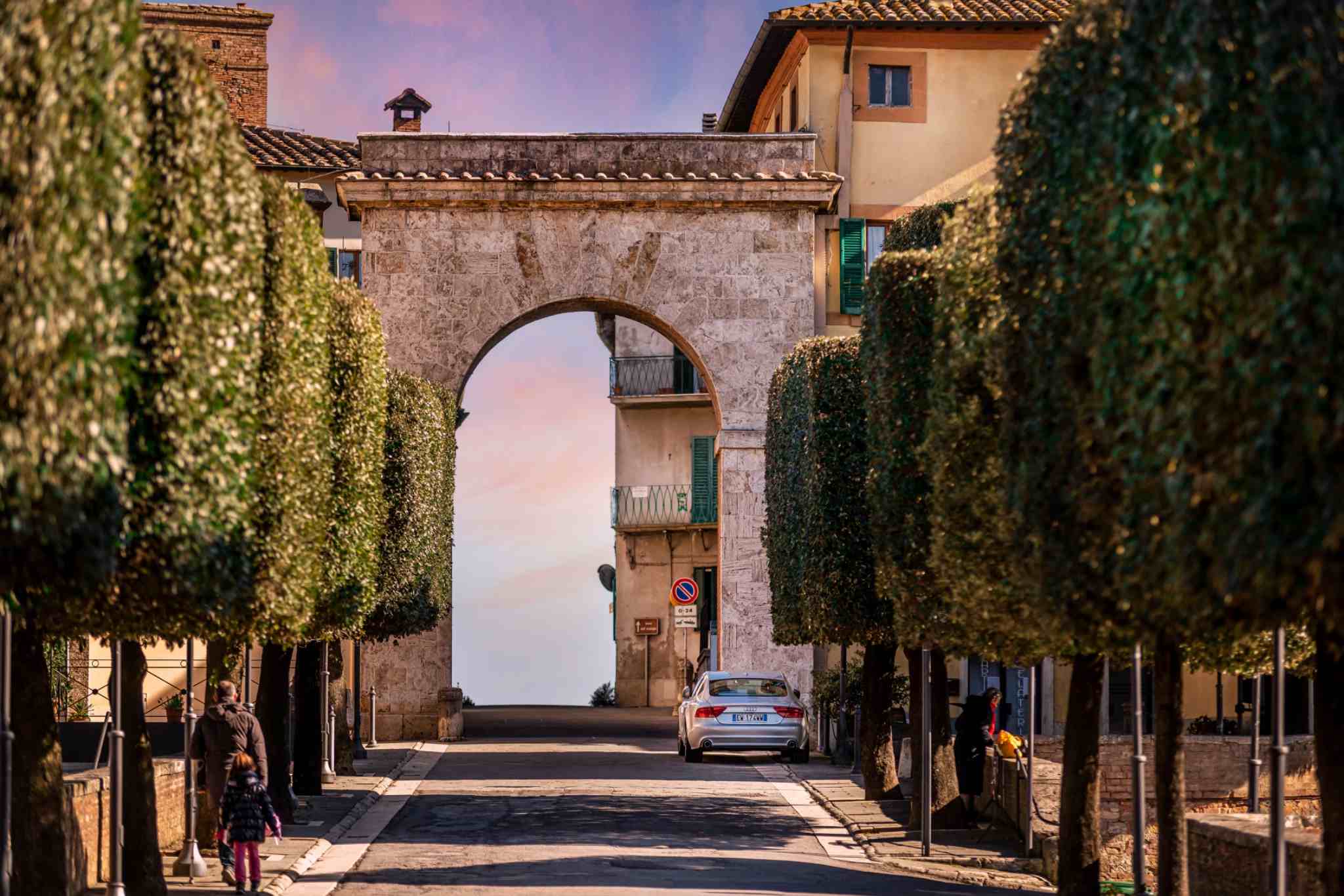
A hospitality estate linked to Agriturismo Parmenide is being offered for sale in Castelnuovo Cilento: accommodation, restaurant, pizzeria, swimming pool, agricultural operations, commercial space and a substantial rural estate. But the real question is not the price — it is how much of the underlying economic ecosystem can actually survive the transfer
When analysing a hotel, the starting point is usually the number of rooms.
When analysing an agritourism business such as Parmenide, that approach is not enough.
Here, potential value is created through the interaction of several activities:
accommodation + food & beverage + agricultural production + direct retail + land + leisure services.
That complexity is precisely what makes the property in Via Coppola, Velina, Castelnuovo Cilento particularly interesting ahead of the sale scheduled for 2 October 2026.
The indicated base price is €1.596 million, while the minimum bid is €1.197 million.
The lot is described as a substantial agritourism complex including a restaurant, pizzeria, kitchen, guestrooms, residential accommodation, retail, exhibition and laboratory areas, together with an extensive agricultural estate and greenhouse facilities.
The total area advertised is approximately 43,136 sqm.
The address and property description allow the asset to be linked with a high degree of confidence to Agriturismo Parmenide.
But for InvestimentiAlberghieri.it, the real question is not how much it costs.
It is what an investor is actually acquiring.
It is not a hotel. Nor is it simply an agriturismo
This distinction is fundamental.
A conventional hotel derives most of its value from rooms and ancillary services.
A sophisticated agritourism business can operate very differently.
In Parmenide’s case, at least five potential business units coexist:
-
accommodation;
-
food & beverage;
-
agriculture;
-
retail;
-
leisure and ancillary activities.
The property has historically been marketed with accommodation, restaurant, wood-fired pizzeria, swimming pool, bar, sports facilities, parking, a farm shop and its own agricultural production.
In 2025, the Campania regional register listed Parmenide with 67 bed spaces.
An investor should therefore not simply ask:
“How much am I paying per room?”
The more relevant question is:
“Which activities actually generate margin, and which exist primarily to support the overall business model?”
€1.197 million: the price is only the entry point
The minimum bid is approximately €1.197 million.
Divided by the roughly 43,136 sqm advertised, the implied figure would be below €30 per sqm.
But that metric is almost meaningless.
The total area includes a combination of:
-
hospitality buildings;
-
food and beverage facilities;
-
service areas;
-
residential accommodation;
-
laboratories;
-
commercial spaces;
-
land;
-
greenhouses;
-
agricultural and ancillary areas.
A simple price-per-square-metre approach therefore risks concealing more than it reveals.
Value needs to be built up by component.
Hospitality: what is the accommodation business actually worth?
The first business unit is accommodation.
The property has historically been marketed through a variety of room types, including double, triple, family and accessible accommodation.
But due diligence should go far beyond counting physical rooms.
An investor would need to verify:
-
authorised inventory;
-
authorised bed capacity;
-
number of genuinely usable rooms;
-
maintenance condition;
-
historical ADR;
-
occupancy;
-
RevPAR;
-
seasonality;
-
distribution costs;
-
OTA/direct mix;
-
ability to extend the operating season.
The 67-bed figure is a useful reference point.
But it must be reconciled with licences, floor plans and the physical condition of the asset.
Food & beverage may be as important as the rooms
The second business unit is F&B.
The complex includes:
-
restaurant;
-
pizzeria;
-
kitchen;
-
bar;
-
outdoor areas;
-
services linked to the swimming pool.
The model can be particularly attractive because the restaurant does not necessarily need to depend on staying guests.
It may serve:
-
local customers;
-
coastal tourism demand;
-
groups;
-
families;
-
events;
-
private functions;
-
day visitors.
The value of the F&B operation should therefore be reconstructed through:
covers × average spend × trading days
and then tested against:
-
food cost;
-
beverage cost;
-
labour cost;
-
utilities;
-
operating margin;
-
seasonality;
-
contribution from in-house agricultural production.
Without these figures, valuing the restaurant solely on the basis of its physical space would be arbitrary.
Agriculture is not scenery
This is where Parmenide becomes significantly more interesting than a conventional small resort.
The agricultural component is not merely decorative.
The historical business model includes the production of:
-
olive oil;
-
vegetables;
-
pulses;
-
wheat;
-
preserves;
-
jams.
This is complemented by direct retail.
The sale also includes an agricultural estate with greenhouse facilities.
The potential model therefore becomes:
agricultural production → processing → restaurant → retail → guest experience.
From an industrial perspective, this is highly attractive.
But it is also considerably more complex.
An investor needs to understand whether the agricultural business:
-
generates standalone profit;
-
lowers food cost;
-
supplies the restaurant;
-
supports the positioning;
-
generates revenue through retail;
-
or consumes more resources than it creates.
The risk is to assign value to the “farm-to-table” concept without measuring its actual contribution to EBITDA.
Parmenide should be analysed as an economic ecosystem
For this reason, the property should not be assessed through a single consolidated P&L.
Serious due diligence should reconstruct at least four separate mini-P&Ls.
Accommodation
Rooms, overnight stays, breakfast and guest services.
Food & Beverage
Restaurant, pizzeria, bar and events.
Agriculture
Production, agricultural labour, machinery, utilities, maintenance and yields.
Retail
Farm shop, processed products and direct sales.
Only then should the different activities be consolidated.
One business unit may generate margin while another may exist primarily to support positioning or demand generation.
Without separating them, it would be impossible to understand where EBITDA is actually being generated.
This is consistent with the approach adopted by Investhotel.it, where real estate and operating businesses are analysed independently before being brought back together.
The critical question: does the going concern really exist?
Parmenide’s online presence is relevant.
But it should not be confused with evidence of current operating continuity.
An active website does not automatically prove:
-
that the business is operating normally;
-
that the current operator is the entity involved in the proceedings;
-
that the brand is included in the sale;
-
that licences are transferable;
-
that employees, contracts, customers and farming activities follow the real estate.
The sale documentation reportedly refers to the property as the “former Agriturismo Parmenide” and describes the asset as available to the proceedings.
This raises the most important question in the entire transaction:
Is the investor acquiring an existing business, or merely the physical platform on which the business must be rebuilt?
The two scenarios have fundamentally different values.
An asset deal is not the same as a business acquisition
Acquiring the real estate does not necessarily mean acquiring:
-
the brand;
-
domain name;
-
website;
-
booking engine;
-
OTA profiles;
-
customer database;
-
reviews;
-
employees;
-
supplier contracts;
-
licences;
-
agricultural business;
-
equipment;
-
stock;
-
commercial relationships.
It is therefore essential to distinguish between:
asset deal
and
business acquisition.
Confusing the two could lead to a significant overstatement of value.
Scenario A — Continuity
Under the first scenario, the investor is able to preserve a meaningful part of the going concern.
The following may therefore survive:
-
brand;
-
hospitality operations;
-
restaurant;
-
employees;
-
commercial channels;
-
agricultural production;
-
customer base;
-
licences;
-
supplier relationships.
In this case, part of the historic operating value can be preserved.
Additional capital would mainly be directed towards:
-
maintenance;
-
CAPEX;
-
repositioning;
-
marketing;
-
working capital.
Scenario B — Restart
Under the second scenario, the investor is effectively acquiring land and buildings.
The following then need to be rebuilt:
-
operating company;
-
licences;
-
staff;
-
organisation;
-
distribution;
-
restaurant;
-
farming operations;
-
retail;
-
marketing;
-
supply chain;
-
commercial reputation.
In this case, the true cost of the transaction rises significantly.
And the maximum sustainable price for the real estate should fall accordingly.
Total Investment Cost matters more than the purchase price
The visible number is:
€1,197,000.
But the economically relevant number will be:
**Purchase Price
-
taxes and transaction costs
-
CAPEX
-
FF&E
-
agricultural equipment
-
F&B equipment
-
regularisation costs
-
pre-opening
-
marketing
-
working capital
-
financing costs
= Total Investment Cost**
That capital should then be assessed against:
stabilised EBITDA / Total Investment Cost.
Only then can the investment be judged on economic grounds.
A property can appear inexpensive.
An investment may not be.
Location is one of the property’s strongest assets
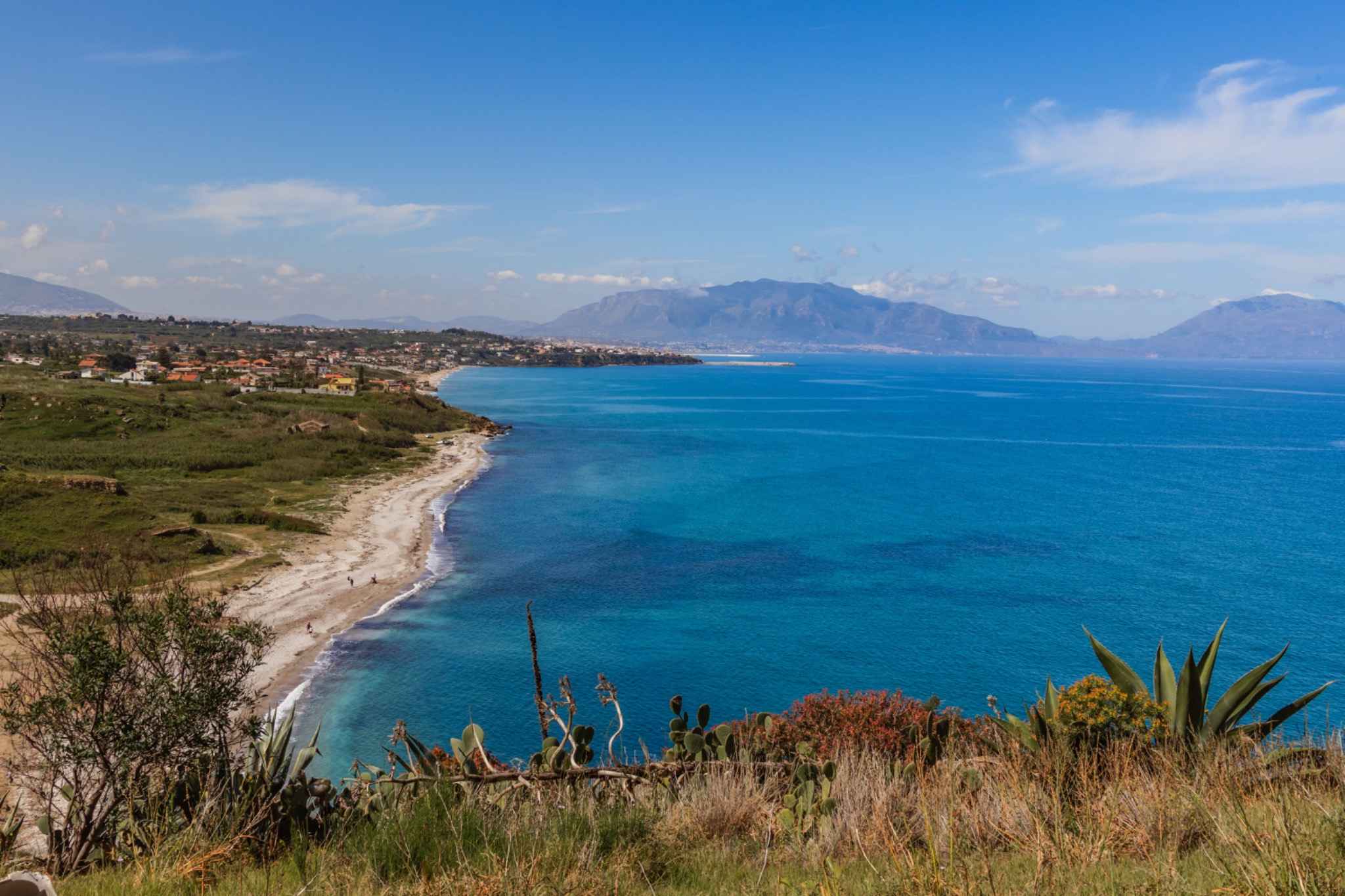
Parmenide benefits from an attractive location within Cilento.
The surrounding market potentially allows the business to combine:
-
seaside tourism;
-
rural tourism;
-
gastronomy;
-
culture;
-
family travel;
-
outdoor activities;
-
wellness;
-
experiential tourism.
Its proximity to Velia and the coast broadens the number of addressable demand segments.
But diversification also requires a clear strategy.
An agritourism business attempting to serve every possible segment risks losing its identity.
An investor therefore needs to decide which demand it wants to capture and with what product.
From traditional agriturismo to rural resort?
This is probably the key strategic choice.
Should Parmenide continue as a traditional agriturismo?
Or could the estate be repositioned as a Cilento rural resort?
The two strategies imply very different pricing, distribution and CAPEX requirements.
A repositioning strategy could focus on:
-
higher-quality accommodation;
-
swimming pool;
-
light wellness;
-
gastronomy;
-
agricultural experiences;
-
cookery classes;
-
olive oil and local products;
-
small events;
-
retreats;
-
cycling tourism;
-
cultural itineraries;
-
integrated coast-and-countryside stays.
The objective is not simply to make the asset more luxurious.
It is to improve:
ADR + average length of stay + guest spend + season extension.
Those are the variables that turn real estate into an investment.
Agriculture and hospitality: integration or complexity?
The agritourism model has an obvious advantage.
Agriculture can provide authenticity, differentiation and content.
But it also increases complexity.
An investor should examine:
-
regulatory requirements for agritourism operations;
-
relationship between agricultural and hospitality activities;
-
land areas;
-
production;
-
labour;
-
operating titles;
-
restrictions;
-
subsidies;
-
potential incentives;
-
industrial sustainability of the farming activity.
The risk is to treat the land as ordinary real estate.
In an agritourism business, agricultural activity may be an integral part of both the operating licence and the economic model.
This is precisely the type of integrated due diligence that requires hospitality, real estate and industrial expertise of the kind developed by HotelManagementGroup.it.
The essential due diligence workstreams
Before submitting a bid, the opportunity should be reconstructed across at least twelve workstreams.
1. Real estate perimeter
Buildings, land, greenhouses, swimming pool, sports facilities, external areas and access.
2. Planning
Consistency between authorised, cadastral and physical conditions.
3. Agritourism licence
Requirements, hospitality capacity and relationship with agricultural operations.
4. Inventory
Actual number of authorised rooms and bed spaces.
5. Restaurant
Capacity, licences, kitchen and economic performance.
6. Agricultural activity
Cultivated areas, production, greenhouses, equipment, costs and revenue.
7. Retail
Farm shop, laboratory, processing and direct sales.
8. FF&E
Movable assets included or excluded from the sale.
9. Brand
Trademark, domain, website, social media and commercial accounts.
10. Employees
Hospitality, F&B and agricultural headcount.
11. Performance
ADR, occupancy, F&B revenue, agricultural production, retail sales and normalised EBITDA.
12. CAPEX
Investment required to maintain, reopen or reposition the estate.
Only after this reconstruction can an industrial value be assigned to the project.
Price per bed is a shortcut
In 2025, the Campania regional register listed Parmenide with 67 beds.
Dividing the minimum bid by that capacity produces a theoretical figure of approximately:
€17,900 per bed.
But this metric can also be misleading.
The price includes far more than accommodation.
It includes real estate, land, food and beverage, agricultural production and ancillary activities.
Parmenide cannot simply be assessed as:
€1.197 million / 67 beds.
A more appropriate equation would be:
**hospitality value
-
F&B value
-
agricultural value
-
real estate value
-
ancillary activity value
– CAPEX
– restart costs
– execution risk.**
That is the true investment equation.
The opportunity lies in the platform, not in the individual building
This is probably the most interesting aspect of Parmenide.
The investor is not merely acquiring a hotel.
The opportunity is to build an integrated rural tourism platform.
The combination of:
Cilento + coast + countryside + food + agriculture + accommodation
has clear potential.
But potential is not value.
It becomes value only when converted into:
-
demand;
-
ADR;
-
occupancy;
-
average guest spend;
-
EBITDA;
-
cash flow.
As explored on Robertonecci.it, the investor’s task is not to decide how attractive an asset appears from a real estate perspective.
It is to determine how much income the asset can generate relative to the capital required to acquire, transform and operate it.
A €1.2 million agriturismo, or an ecosystem that needs to be rebuilt?
That is the final question.
The minimum price of approximately €1.197 million may appear attractive relative to the physical size of the estate.
But physical scale alone is not enough.
The investor must establish whether the acquisition represents:
a business to be preserved
or
a physical platform on which the business must be rebuilt.
In the first case, value lies in continuity.
In the second, value depends on the investor’s ability to create a new economic model.
That distinction will ultimately determine whether Parmenide is genuinely an investment opportunity.
The real risk is not buying an agriturismo for €1.2 million.
It is paying for an economic ecosystem that may not transfer with the real estate.
Because the real investment is not the acquisition of 43,000 sqm of agritourism property.
It is the ability to turn land, rooms, food and beverage, agricultural production and services into a single operating system capable of generating an adequate return on total invested capital.
In agri-hospitality, value does not lie in the square metres.
It lies in the ability to make them work together.
Hospitality investment analysis, agri-hospitality, special situations and repositioning opportunities
InvestimentiAlberghieri.it analyses hotels, resorts, agritourism assets and hospitality properties through an integrated assessment of real estate, operating businesses, market positioning, CAPEX, business planning and value-creation potential.
For confidential enquiries and analysis:
info@investimentialberghieri.it