2,859 sqm, 54 physical rooms, two restaurant spaces and a minimum bid of €428,250. The implied price per room appears exceptionally low, but the real investment case depends on CAPEX, key count, energy infrastructure, F&B economics, demand and stabilised value
€428,250 for a hotel with 54 physically existing rooms.
It is the kind of headline figure that immediately attracts attention.
Yet in the case of the former Hotel Trieste in Arta Terme, in the Carnia area of north-eastern Italy, the entry price may ultimately prove to be one of the least important numbers in the entire transaction.
The property, located at 54 Via Giosuè Carducci in the hamlet of Avosacco, is included in Real Estate Enforcement Proceeding No. 20/2025 before the Court of Udine. The proceedings indicate a commercial area of approximately 2,859.25 sqm, a base price of €571,000, a minimum bid of €428,250, and a sale scheduled for 30 September 2026.
On paper, this translates into:
approximately €150 per sqm of commercial area
and less than:
€8,000 per physically existing room.
At first sight, these numbers appear extraordinary.
But that is precisely the issue:
€428,250 is not the cost of the hotel.
It is merely the cost of entering the asset.
The actual investment should be assessed as follows:
**Acquisition Price
-
Transaction Costs
-
Compliance
-
CAPEX
-
Energy Infrastructure
-
FF&E
-
Pre-opening
-
Working Capital
-
Financing Costs
-
Contingency
= Total Investment Cost**
It is this figure — not the judicial sale price — against which returns should be measured.
From Locanda Trieste to a legacy hospitality asset
The property originated from the former Locanda Trieste, and the available documentation points to a long history of extensions and alterations.
The building was expanded during the 1970s. Further works were carried out after the 1976 earthquake, particularly on the part of the property facing the road. During the 1990s, some external areas were reorganised and a lift was installed to serve the different floors.
Historic regional sources also record Hotel Trieste at the same address as a three-star hotel, with 54 rooms and 98 beds.
This is therefore not simply a building with potential hospitality use.
It is a genuine legacy hospitality asset.
And that makes one distinction particularly important:
Historic Hotel ≠ Market-ready Hotel
The asset at a glance
The property extends across several floors and includes:
-
bar;
-
two restaurant rooms;
-
professional kitchen;
-
common areas;
-
plant rooms;
-
storage areas;
-
laundry;
-
lift;
-
guestrooms on the upper floors.
The available documentation refers to a total of 54 physical rooms.
Some rooms have private bathrooms, while others are associated with shared sanitary facilities.
That immediately introduces the first genuine underwriting issue.
54 physical rooms do not necessarily mean 54 economically optimal rooms
One of the most common mistakes in value-add hospitality transactions is to treat the existing room count as something that must be preserved.
It does not.
The appropriate question is not:
“How can we retain all 54 rooms?”
It is:
“What room count maximises ADR, occupancy, GOP and stabilised value?”
A significant refurbishment could involve:
-
eliminating certain rooms;
-
increasing average room size;
-
creating private bathrooms;
-
combining units;
-
introducing junior suites;
-
improving corridor layouts;
-
redesigning common areas.
It is entirely possible that:
48 stronger rooms > 54 legacy rooms
or that the economically optimal key count is something else entirely.
Room count should be the outcome of the underwriting process.
Not one of its assumptions.
Physical Keys, Authorised Keys and Saleable Keys
A proper assessment of the investment requires at least three different room-count metrics.
Physical Keys
Rooms that physically exist within the building.
Authorised Keys
Rooms that are consistent with planning approvals, operating permissions and applicable requirements.
Saleable Keys
Rooms that, following repositioning, can genuinely be marketed in line with the intended hotel product.
The correct process is therefore:
Physical Survey
→ Legal & Planning Verification
→ Product Redesign
→ Key Rationalisation
→ Final Saleable Keys
Only at that point does it become meaningful to calculate:
All-in Cost per Key
€8,000 per room? It is the wrong metric
Dividing €428,250 by 54 rooms produces an implied acquisition cost of less than €8,000 per physical key.
But this does not mean an investor is acquiring an operational hotel for €8,000 per room.
It means the investor may acquire a building containing 54 physical rooms.
The relevant metric should instead be:
Total Invested Capital ÷ Final Saleable Keys
rather than:
Acquisition Price ÷ Historic Keys
That distinction fundamentally changes the economics of the transaction.
CAPEX is likely to be the heart of the deal
The hotel has been closed for several years.
Before any reopening can realistically be considered, the investment case should assess at least:
-
guestrooms;
-
bathrooms;
-
mechanical and electrical systems;
-
fire-safety compliance;
-
energy efficiency;
-
lift;
-
air-conditioning;
-
kitchen;
-
restaurant areas;
-
FF&E;
-
IT and PMS systems;
-
Wi-Fi infrastructure;
-
public areas;
-
façades and building envelope;
-
planning and building compliance;
-
pre-opening costs.
The real question therefore becomes:
What will it cost to transform the former Hotel Trieste into a competitive hotel product for the 2026–2027 market?
Not:
How much does it cost to buy the building?
Three investment scenarios: the entry price may quickly become marginal
Without a technical due diligence process, it would not be appropriate to estimate definitive CAPEX.
However, a number of purely illustrative scenarios can help explain the investment logic.
Scenario 1 – Light repositioning
| Item | Illustrative amount |
|---|---|
| Acquisition | €0.43m |
| CAPEX + FF&E + compliance | €1.80m |
| Pre-opening + working capital + fees | €0.40m |
| Total Investment Cost | ~€2.63m |
If the final product comprised 50 rooms:
All-in Cost per Key ≈ €52,600
Scenario 2 – Full repositioning
| Item | Illustrative amount |
|---|---|
| Acquisition | €0.43m |
| CAPEX + FF&E + compliance | €3.00m |
| Pre-opening + working capital + fees | €0.60m |
| Total Investment Cost | ~€4.03m |
If the final product comprised 48 rooms:
All-in Cost per Key ≈ €84,000
Scenario 3 – Deep transformation
| Item | Illustrative amount |
|---|---|
| Acquisition | €0.43m |
| CAPEX + FF&E + compliance | €4.50m |
| Pre-opening + working capital + fees | €0.80m |
| Total Investment Cost | ~€5.73m |
If the final product comprised 46 rooms:
All-in Cost per Key ≈ €124,500
These figures are not estimates of the property.
They illustrate one principle:
The purchase price could represent less than 10–20% of the capital ultimately required.
At that point, €428,250 ceases to be the central number in the investment case.
Energy reset: one of the most important underwriting issues
Energy infrastructure deserves a dedicated due diligence workstream.
When operational, the hotel used a district-heating system.
For a property of almost 2,900 sqm operating in a mountain destination, energy can have a material impact on GOP.
A prospective buyer should therefore compare alternative solutions, including:
district heating reset
vs heat pumps
vs hybrid system
vs alternative energy configuration
The analysis should consider:
-
initial CAPEX;
-
annual consumption;
-
cost per kWh;
-
winter peak loads;
-
domestic hot-water production;
-
summer cooling;
-
maintenance;
-
available incentives;
-
energy performance;
-
impact on asset value.
For a mountain hotel:
energy underwriting and hotel underwriting are part of the same investment analysis.
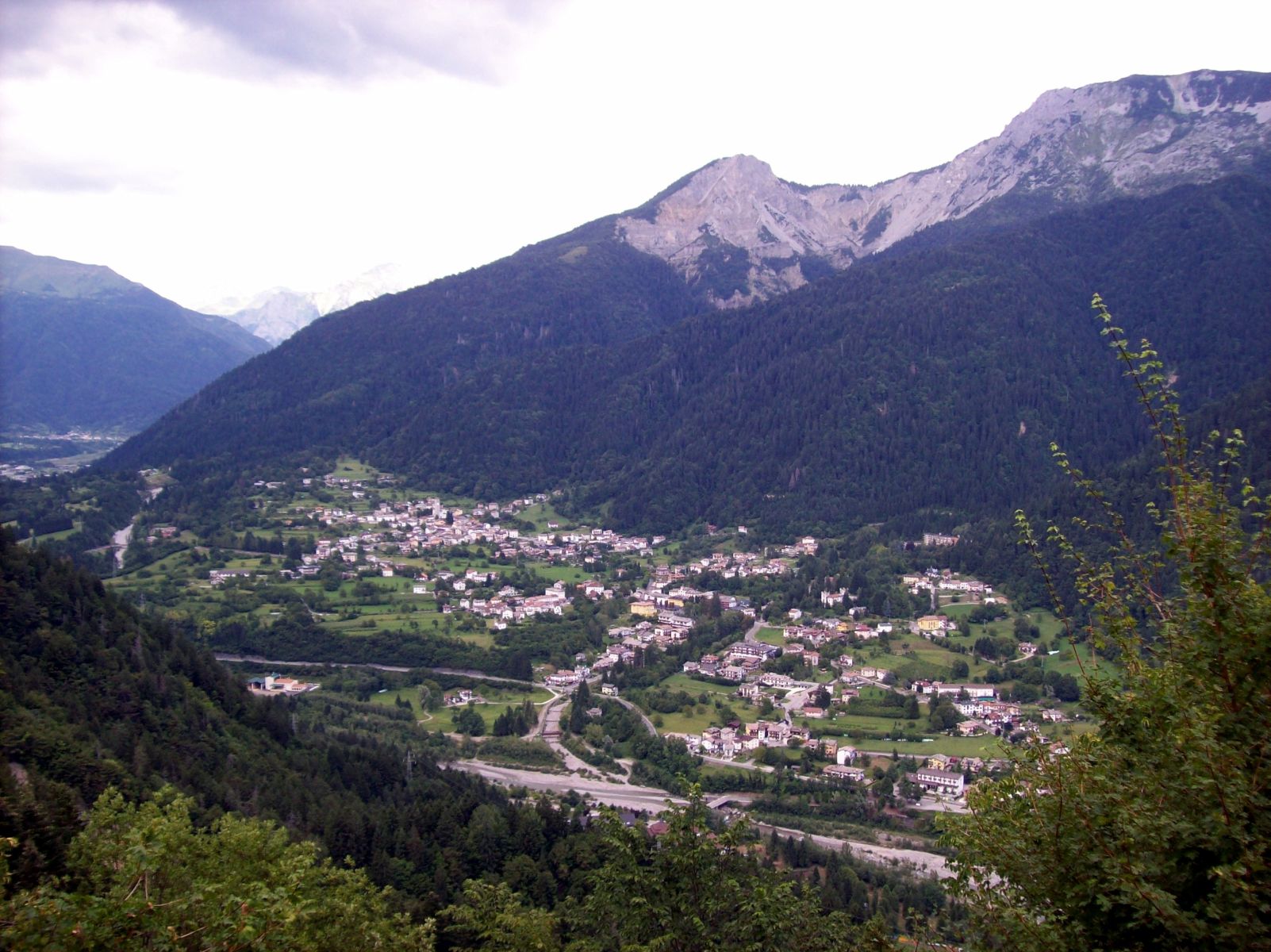
The destination case: Arta Terme should not be viewed only as a spa destination
The opposite mistake would be to focus entirely on the property's physical issues and overlook the destination.
Arta Terme sits within a market that combines:
-
thermal tourism;
-
wellness;
-
mountains;
-
outdoor activities;
-
cycling;
-
sports tourism;
-
groups;
-
events;
-
leisure demand.
The destination has recorded growth in tourism flows in recent years.
That does not automatically guarantee the performance of a future hotel.
But it does mean the destination case deserves a more nuanced assessment.
The correct distinction is:
Destination Growth ≠ Hotel Performance
but also:
Asset Distress ≠ Destination Distress
And that second distinction is particularly relevant in this transaction.
Arta's thermal offering as a demand generator
Thermal tourism remains one of the destination's principal demand drivers.
For the former Hotel Trieste, potential demand could be built across several segments.
Thermal & Medical Wellness
Spa guests and medical-wellness demand.
Mountain Leisure
Outdoor activities, hiking, cycling and summer stays.
Winter Demand
Demand linked to mountain destinations and the wider Zoncolan area.
Groups
The presence of substantial restaurant space could make group business strategically relevant.
Sports & Events
Sporting competitions, local events and sports-related travel.
The hotel should therefore not be underwritten against a single customer segment.
The more appropriate approach is a:
Multi-segment Demand Stack
Two restaurant rooms: strategic asset or structural cost burden?
The F&B component is one of the most sensitive aspects of the property.
The former Hotel Trieste includes:
two restaurant rooms + bar + professional kitchen
For a 54-room hotel, this may represent a relatively large operating footprint.
The key question is:
Can the F&B operation attract meaningful external demand?
If yes, it may become a revenue engine.
If not, it could become a cost centre.
The relevant equation is:
**Hotel Guests
-
External Covers
-
Groups
-
Events
= Sustainable F&B Demand**
If the restaurant depends exclusively on in-house guests, the risk is:
too much infrastructure for too little revenue
If, however, the property can attract:
-
groups;
-
events;
-
banqueting;
-
local customers;
-
sports demand;
-
thermal tourism;
-
organised travel;
then F&B could become strategically important to the overall business model.
RevPAR is not enough: GOPPAR matters
For an asset such as this, measuring only:
ADR
or:
RevPAR
is not sufficient.
The investor needs to understand how much profit is generated by each room and each operating square metre.
The model should therefore extend at least to:
-
ADR;
-
occupancy;
-
RevPAR;
-
rooms contribution;
-
F&B contribution;
-
payroll ratio;
-
energy cost;
-
maintenance;
-
GOP;
-
GOPPAR;
-
EBITDA;
-
replacement reserve.
A hotel with fewer rooms, a stronger ADR, a better product mix and lower operational complexity may create more value than simply preserving the historic room configuration.
The financial model should begin with stabilised GOP
The business plan should follow a structure such as:
**Room Revenue
-
F&B Revenue
-
Other Revenue
= Total Revenue**
less:
**Payroll
-
Energy
-
Distribution
-
F&B Cost
-
Maintenance
-
Administration
-
Other Operating Costs**
equals:
GOP
followed by:
GOP
– Fixed Charges
– Management Fees
– Replacement Reserve
= Normalised EBITDA
It is this EBITDA that must justify the capital invested.
The real test: how much capital can the deal absorb?
The full investment framework should include:
**Acquisition Cost
-
Taxes & Transaction Costs
-
Compliance Costs
-
MEP & Energy CAPEX
-
Rooms CAPEX
-
F&B CAPEX
-
FF&E
-
Technology
-
Professional Fees
-
Pre-opening
-
Working Capital
-
Contingency
-
Financing Costs
= Total Invested Capital**
Then:
Stabilised EBITDA ÷ Total Invested Capital = Yield on Cost
and:
Stabilised Value – Total Invested Capital = Value Creation
Only at that point can the opportunity be assessed properly.
The stress tests an investment committee should require
CAPEX +20%
What happens to returns if refurbishment costs exceed budget?
Opening +6 months
How much additional working capital is required?
ADR -10%
How materially is EBITDA affected?
Slower occupancy ramp-up
What happens if stabilisation takes three years rather than two?
Energy cost +20%
How much GOP is eroded?
Fewer Keys Scenario
Could a lower room count improve ADR and profitability?
F&B downside
Does the restaurant operation remain sustainable without significant external demand?
The true quality of a business plan does not become visible in the base case.
It becomes visible in the downside case.
From minimum bid to Maximum Bid
A professional investor should not start with the judicial sale price when deciding what to offer.
The process should work in reverse.
1. Define the future product
How many rooms?
Which category?
What F&B concept?
What market positioning?
2. Build the operating model
ADR.
Occupancy.
RevPAR.
GOP.
EBITDA.
3. Determine Stabilised Value
By applying a yield or multiple consistent with:
-
destination;
-
quality of cash flow;
-
risk profile;
-
hotel category;
-
liquidity;
-
physical quality.
4. Deduct all required capital
CAPEX.
Fees.
Working capital.
Financing costs.
Contingency.
Required investor return.
5. Derive the Maximum Acquisition Price
The equation becomes:
Stabilised Value
– Total Development Cost
– Required Investor Return
= Maximum Bid
Only then can an investor determine whether €428,250 is:
cheap, fair or expensive
The real investment thesis: the asset is distressed, the destination may not be
This is perhaps the most interesting aspect of the case.
The former Hotel Trieste presents several obvious challenges:
-
prolonged closure;
-
repositioning requirements;
-
energy reset;
-
compliance issues;
-
room rationalisation;
-
extensive F&B areas;
-
significant CAPEX.
At the same time, the destination case presents:
-
growth in visitor flows;
-
thermal-tourism demand;
-
mountain leisure;
-
sports;
-
events;
-
group business;
-
potential for seasonality reduction.
This leads to a crucial distinction:
The asset may be distressed.
The destination thesis does not necessarily have to be.
It is often precisely this disconnect that creates the most interesting hospitality special situations.
Arta Terme: you are not buying 54 rooms
This is the central point.
An investor is not buying:
54 rooms at €7,930 each.
The investor is buying:
2,859 sqm of hospitality real estate that needs to be redesigned.
The correct sequence is:
Legacy Asset
→ Compliance
→ Energy Reset
→ Product Redesign
→ Key Rationalisation
→ CAPEX
→ Reopening
→ Ramp-up
→ Stabilised GOP
→ Asset Re-rating
Because:
54 Physical Keys ≠ 54 Saleable Keys
54 Saleable Keys ≠ Optimal Key Count
€7,930 per Physical Key ≠ All-in Cost per Reopened Key
More Keys ≠ More Value
Historic Hotel ≠ Market-ready Hotel
Destination Growth ≠ Hotel Performance
Low Entry Price ≠ Low Investment Risk
The final equation
The true hotel inventory is not the number of doors.
It is:
Final Saleable Keys
× Sustainable ADR
× Sustainable Occupancy
× Contribution Margin
= Economic Room Inventory
If reducing the number of rooms allows the project to achieve:
**Higher ADR
-
Better Product
-
Higher GOP
-
Lower Complexity
-
Stronger Stabilised Value**
then:
fewer keys may create more value
That is the question that should guide an investor considering the former Hotel Trieste.
Not:
“How cheaply can I buy it?”
But:
“How much capital will it take to transform the asset, what cash flow can it generate, and what will it be worth once that cash flow has stabilised?”
That is the difference between acquiring a hotel property and building a genuine hospitality investment thesis.
Investimenti Alberghieri
InvestimentiAlberghieri.it analyses hotel transactions, distressed assets, development projects and value-creation opportunities through an integrated approach combining real estate, operations and finance.
The wider professional ecosystem also includes:
RobertoNecci.it, focused on economic and strategic analysis of the hotel industry;
InvestHotel.it, focused on hospitality investment, hotel finance, value creation and extraordinary transactions;
HotelManagementGroup.it, dedicated to hotel advisory and management.
The analysis does not begin with the purchase price.
It begins with:
Stabilised Cash Flow
→ Stabilised Value
→ Total Investment Cost
→ Required Return
→ Maximum Acquisition Price
For feasibility studies, business plans, valuation, acquisition underwriting and hospitality investment assessments:
info@investimentialberghieri.it
Methodological and legal note
This article has been prepared on the basis of publicly available documentation and information relating to Real Estate Enforcement Proceeding No. 20/2025 before the Court of Udine, together with public sources concerning the property and the destination.
Any observations regarding CAPEX, repositioning, future room count, F&B strategy, investment returns, stabilised value or operating configuration are provided solely for analytical and methodological purposes.
The financial scenarios included in this article are purely illustrative and do not constitute property valuations, professional appraisals, offers or investment recommendations.
Any potential transaction would require independent technical, legal, planning, cadastral, environmental, tax, commercial, energy and financial due diligence.
|
|
|