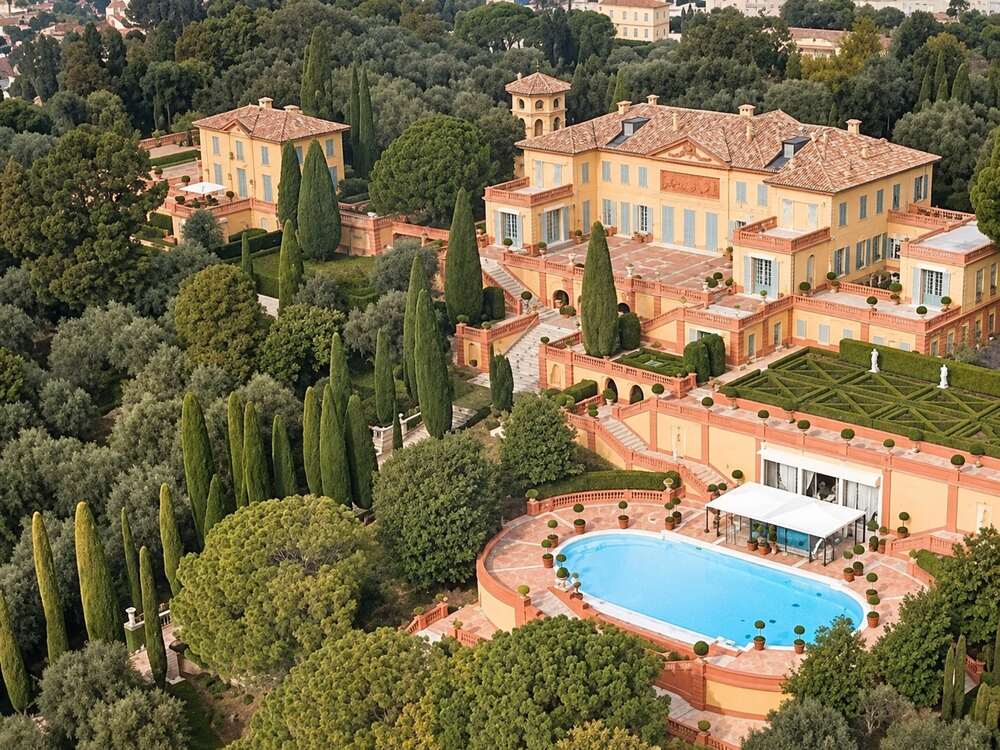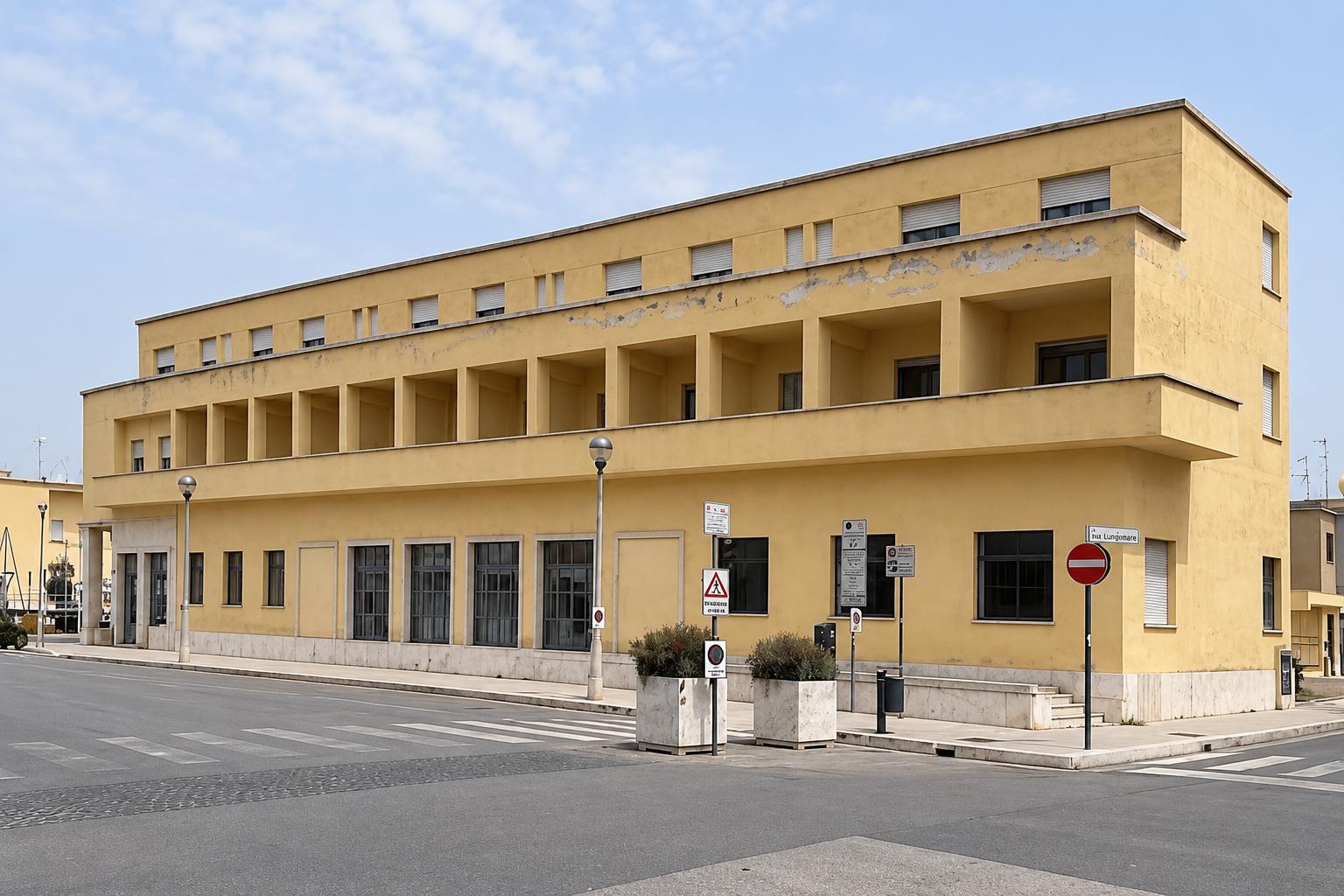
HIP could become one of Europe’s largest publicly listed hotel investment platforms. Yet behind the headline numbers — 61 hotels, roughly 20,000 rooms and a real estate portfolio valued at around €6 billion — lies a much more important question: property value is one thing; what investors are ultimately willing to pay for the equity is another.
Sixty-one hotels. Around 20,000 rooms. A real estate portfolio reportedly worth approximately €6 billion.
Those numbers alone are enough to make the potential IPO of Hotel Investment Partners (HIP), controlled by Blackstone, one of the most significant European hospitality transactions in recent years.
But the most important number may not be the one dominating the headlines.
For investors, banks, funds and hotel owners, the real question should be:
Are those €6 billion actually what the market will be willing to pay?
According to Cinco Días, Blackstone is preparing for a potential listing of HIP on the Spanish stock market between late October and early November 2026. HIP currently owns 61 hotels comprising around 20,000 rooms, primarily across Spain, Portugal, Italy and Greece, with its real estate portfolio reportedly valued at approximately €6 billion.
The transaction, however, has not yet reached its definitive stage: the formal intention to float still has to be communicated to the market.
And this is precisely where the analysis begins.
The First Mistake Would Be to Call €6 Billion “HIP’s Value”
Three concepts are too often blurred together in hotel real estate:
property value, enterprise value and equity value.
They are not the same thing.
If a property portfolio is valued at €6 billion, that does not automatically mean shareholders own €6 billion of economic value.
You first need to understand the debt remaining within the structure, available cash, other assets and liabilities, financing conditions and, ultimately, the price investors are prepared to pay for the shares.
This distinction is particularly relevant in HIP’s case.
According to Cinco Días, three of the main Spanish companies within the portfolio had combined CBRE valuations of approximately €4.7 billion and were involved in a refinancing transaction totalling €2.4 billion in May 2025.
The capital structure of the future listed company may nevertheless change ahead of the IPO, including through potential debt repayments.
This is why simply stating:
“HIP is worth €6 billion”
would be financially incomplete.
The real equation is closer to:
Asset Value – Net Financial Debt ± Other Balance-Sheet Items = Equity Value
Then comes a second and potentially much harsher assessment:
the judgement of the public market.
Why the Market May Not Pay NAV
A property valuation essentially answers one question:
What are the assets worth?
The stock market asks another:
How much are we prepared to pay today to own a share of those assets, taking into account risk, debt and future returns?
That distinction is crucial.
A real estate company can trade at a premium to its Net Asset Value, but it can just as easily trade at a significant discount to NAV.
Investors will assess the cost of capital, leverage, interest coverage, cash generation, future CAPEX requirements, operator quality, contract duration, geographic concentration, expected growth and the returns available from alternative investments.
Moving from the private market to the stock exchange is therefore much more than a financing event.
It is a form of public price discovery.
And that is precisely what makes HIP particularly relevant to anyone professionally following the transactions analysed by InvestimentiAlberghieri.it.
€300,000 per Room: A Compelling Benchmark, but Handle with Care
HIP currently reports 61 hotels and approximately 20,000 rooms.
Around 78% of its rooms are beachfront, 94% are located in four- and five-star properties, and the company reports approximately €800 million of cumulative CAPEX investment.
Simply dividing the reported €6 billion property value by 20,000 rooms produces an indicative average of:
approximately €300,000 per room.
It is a striking figure.
But it would be a mistake to turn it automatically into a benchmark for valuing any Italian hotel.
HIP owns something that cannot easily be recreated in an Excel spreadsheet:
hard-to-replicate locations.
The predominance of coastal and beachfront resorts means product scarcity, planning restrictions, high replacement costs and a limited supply of genuinely comparable properties.
The value of such a portfolio therefore does not arise simply from the number of rooms.
It comes from the interaction between:
location, profitability, destination, real estate quality, CAPEX, operator, brand, capital structure and scarcity of the underlying assets.
The same principle should underpin any serious hotel valuation, turnaround or financial restructuring process carried out within the framework of Investhotel Capital Partners.
Blackstone Is Not Simply Listing Hotels. It Is Looking for an Exit.
There is another factor that makes the transaction considerably more interesting than a standard corporate news story.
Blackstone controls approximately 65% of HIP.
The remaining 35% is owned by Singapore sovereign wealth fund GIC, which invested in the platform in 2023. At the time, GIC officially confirmed the ownership structure, with Blackstone remaining the majority shareholder.
But Blackstone is a financial investor.
Its business model is not based on owning hotels indefinitely.
The cycle is different:
acquire, aggregate, invest, reposition, improve profitability and ultimately exit.
According to Cinco Días, Blackstone had indeed been pursuing a dual-track process, evaluating both a private sale and an IPO.
A potential disposal of Blackstone’s 65% interest to GIC was reportedly discussed without an agreement being reached, making the stock-market route increasingly likely.
That detail changes the interpretation of the transaction substantially.
The IPO is not simply:
“HIP has grown and is now going public.”
It is also:
“Blackstone needs to find a market capable of monetising the value it has created.”
What If the Private Market Will Not Pay the Asking Price?
This may be the most interesting aspect of the entire transaction for the broader hospitality industry.
Selling a hotel worth €30 million or €50 million still allows a seller to approach a relatively broad universe of investors.
Selling a multi-billion-euro platform dramatically reduces the number of potential buyers.
Very few investors can acquire a portfolio of this scale outright.
A stock-market listing, however, makes it possible to economically divide ownership among a much larger pool of investors.
In other words, it creates a transition:
from real estate liquidity to capital-market liquidity.
That is one of the fundamental differences between merely owning hotels and building an institutional hotel investment platform.
The €700 Million Capital Increase Tells Another Part of the Story
The prospective transaction is not expected to consist solely of Blackstone selling part of its existing shareholding.
According to information reported by Cinco Días, the transaction is expected to include a primary capital increase of approximately €700 million, alongside a smaller secondary offering of existing shares.
This is a critical point.
If the transaction retains this structure, the IPO will not merely represent an exit.
It will simultaneously involve:
raising new equity, financing further platform growth and partially monetising the existing investment.
The market will therefore have to assess not only what HIP is worth today, but what it may become once that new capital is deployed.
And this is where the business plan meets valuation.
Asset-Heavy Versus Asset-Light: HIP Is Swimming Against the Tide
Over the past two decades, many of the world’s largest hotel groups have moved increasingly towards asset-light models.
Less directly owned real estate.
More management contracts.
More franchising.
More brand-led growth.
HIP represents something close to the opposite model.
It acquires hotel real estate, invests in repositioning the properties and entrusts their operation to international hotel companies and brands.
HIP reports partnerships with groups including Marriott, Hyatt, Hilton, Barceló and Meliá.
Its value does not therefore necessarily come from becoming a hotel operator itself.
It derives from its ability to act as a specialist institutional hotel owner.
That distinction deserves close attention from the Italian market as well.
As we have repeatedly highlighted through Hotel Management Group, hotel ownership, hotel operations and economic control are separate functions — and value can often be created precisely by separating and governing them correctly.
And What About Italy?
HIP is not exclusively a Spanish story.
The company currently reports five hotels across Sardinia and Sicily, representing approximately 8% of its total room inventory.
That makes this transaction particularly relevant to Italy.
The Italian hotel market remains characterised by a very high proportion of family ownership, property companies holding individual assets, and hotel businesses in which real estate ownership and hotel operations often remain intertwined.
The HIP model tells a different story.
A hotel can be acquired.
Repositioned.
Renovated.
Placed within a portfolio.
Entrusted to an operator.
Branded.
Refinanced.
Aggregated alongside dozens of other properties.
And ultimately transformed into a potentially publicly listed financial platform.
That is the distance between simply owning real estate and building capital on an industrial scale.
It is also a central theme in the analysis developed by RobertoNecci.it around new models of hotel governance and value creation.
The Real Test Will Not Be the IPO. It Will Be the Price.
The HIP transaction could become a reference point for the entire Mediterranean hospitality investment market.
But the right question is not:
“Will Blackstone succeed in listing HIP?”
The real question is:
“At what valuation will the market actually be prepared to buy it?”
That is the point at which a private real estate valuation will meet the judgement of thousands of investors.
If the market recognises values close to NAV, Blackstone will have demonstrated that aggregating, repositioning and investing CAPEX into Mediterranean hotel assets can produce an institutional platform with substantial monetisation potential.
If investors instead demand a significant discount, the conclusion will be equally important:
A hotel portfolio may be worth €6 billion on paper without necessarily being worth €6 billion to investors being asked to put fresh capital at risk today.
And that may ultimately be the most important lesson from this transaction.
In hospitality, value is not simply the number written in a valuation report.
Value becomes real when someone is prepared to pay for it, finance it and earn a return on that capital that is consistent with the risk being taken.
That is precisely the difference between valuing a hotel and structuring a hotel investment.
For hotel investment analysis, valuations, distressed transactions, turnarounds, NPL/UTP situations, business plans and transaction structuring, contact info@investimentialberghieri.it.