Brookfield is one of the world’s most important investors in real assets and a fundamental case for understanding the evolution of institutional hotel investment.
After Blackstone, Brookfield is the ideal investor to analyze because it allows us to look at hospitality from a different angle.
Blackstone is often perceived as a powerful machine of private equity, real estate, platforms, cycle timing, capex and exits.
Brookfield, by contrast, should be read primarily as an investor in real assets, infrastructure, property, operating platforms and long-term capital.
In hospitality, this distinction is very important.
Brookfield is not a hotel brand.
It is not an operator such as Four Seasons, Aman, Rosewood or Six Senses.
It does not sell rooms directly to the final guest.
Brookfield invests in real assets, platforms and economic infrastructure capable of generating cash flows over time.
Hotels, resorts, holiday villages, integrated destinations and leisure platforms fit perfectly into this logic when they are read not only as hospitality assets, but as tourism infrastructure.
This is the key to the dossier.
Brookfield does not look at a hotel only as real estate.
It sees it as economic infrastructure connected to tourism demand, experiential consumption, leisure time, destination, territory, debt, capex and operating management.
For the Italian market, this approach is particularly interesting.
Italy has many hotels, resorts, leisure destinations, tourism complexes, villages, thermal assets, historic properties and potential platforms that could be read not only as hotels, but as tourism infrastructure to be capitalized, managed and enhanced.
The investment thesis
The central thesis is that Brookfield is one of the most relevant investors for hospitality because it interprets the sector as part of the real assets universe.
This means that a hotel is not assessed only as an accommodation business, but as a real asset capable of creating value through:
-
location;
-
tourism demand;
-
real estate scarcity;
-
physical infrastructure;
-
capex;
-
active management;
-
debt;
-
operating platforms;
-
long-term control;
-
destination enhancement.
Brookfield creates value in hospitality through ten main levers:
-
acquisition of assets or platforms with solid real estate fundamentals;
-
long-term asset control;
-
active asset management;
-
capex investment;
-
refinancing and optimization of the capital structure;
-
creation of operating platforms;
-
enhancement of leisure destinations;
-
development of ancillary revenues;
-
ability to attract institutional capital;
-
transformation of tourism assets into economic infrastructure.
The decisive point is that Brookfield does not treat hospitality as a purely operating sector.
It treats it as a system of tourism infrastructure.
A resort is not only a hotel.
It is a platform of rooms, F&B, attractions, staff, territory, energy, water, access, international demand, brands, services and real estate investment.
A holiday village is not only accommodation.
It is leisure infrastructure with capacity, services, employment, ancillary spend, recurring revenues and territorial value.
A large integrated resort is not only hospitality.
It is a small tourism economy.
This is the level at which Brookfield operates.
What Brookfield is
Brookfield Asset Management is one of the world’s leading alternative asset managers.
The group operates across several areas:
-
real estate;
-
infrastructure;
-
renewable power;
-
transition;
-
private equity;
-
credit;
-
insurance solutions;
-
opportunistic strategies.
Its identity is strongly connected to real assets.
Real assets are physical or infrastructure assets capable of generating value over time: property, infrastructure, energy, transport, networks, data centers, logistics, residential, hospitality and other operating platforms.
This framework is central.
Brookfield is not only a financial investor.
It is a long-term asset owner and operating investor.
Its strength comes from its ability to combine:
-
capital;
-
ownership;
-
operating control;
-
sector expertise;
-
long-term investment horizon;
-
access to debt;
-
refinancing capability;
-
management of complex platforms;
-
relationships with institutional investors.
In hospitality, Brookfield can therefore operate on several levels:
-
real estate ownership;
-
asset management;
-
resort platforms;
-
large leisure complexes;
-
refinancing;
-
capex;
-
partnerships with operators;
-
operating control;
-
destination enhancement.
This multidimensional approach makes Brookfield very different from a simple hotel buyer.
Brookfield as a real assets investor
To understand Brookfield in hotels, it is first necessary to understand its investment culture.
Brookfield tends to favor real assets that are essential, difficult to replicate, capable of producing cash flows and supported by long-term trends.
In real estate and infrastructure, these trends may include:
-
urbanization;
-
demographic growth;
-
energy;
-
energy transition;
-
digitalization;
-
logistics;
-
housing;
-
tourism;
-
leisure;
-
population aging;
-
mobility;
-
growth in experiential consumption.
Tourism fits into this logic because it is supported by structural drivers:
-
increase in global mobility;
-
growth of the international middle class;
-
search for experiences;
-
leisure demand;
-
family travel;
-
domestic tourism;
-
wellness;
-
iconic destinations;
-
scarcity of prime locations.
Hotels and resorts become interesting when they sit at the intersection of real estate and structural demand.
Brookfield does not simply buy hospitality.
It buys exposure to tourism flows, leisure time, destinations and real assets.
Why hotels interest Brookfield
Hotels interest Brookfield when they have characteristics consistent with a real assets logic.
This happens especially when the asset has:
-
a location that is difficult to replicate;
-
significant scale;
-
solid demand;
-
capex potential;
-
active management potential;
-
a role within the destination;
-
operating cash flows that can be improved;
-
underlying real estate value;
-
access to institutional debt;
-
refinancing potential;
-
platform potential.
A small independent hotel without scale may be of limited interest to Brookfield.
A large resort, leisure platform, asset portfolio, holiday village or integrated trophy asset can instead be very attractive.
The difference is economic depth.
Brookfield looks for assets where value does not depend on a single lever.
A large resort can generate value from:
-
rooms;
-
F&B;
-
spa;
-
marina;
-
golf;
-
retail;
-
casino;
-
attractions;
-
events;
-
residences;
-
adjacent real estate development;
-
refinancing;
-
ADR growth;
-
capex;
-
territorial enhancement.
This plurality of levers is typical of complex real assets.
Brookfield Properties and hospitality
Brookfield Properties is one of the platforms through which the group oversees operating real estate.
In hospitality, the logic is clear: hotels are not only properties to be held, but assets to be actively managed.
A hospitality platform requires specific capabilities:
-
hotel asset management;
-
revenue management;
-
cost control;
-
capex planning;
-
relationship with brands and operators;
-
debt management;
-
demand analysis;
-
F&B;
-
wellness;
-
maintenance;
-
procurement;
-
guest experience;
-
reporting;
-
benchmarking;
-
sustainability;
-
relationship with the destination.
This point is fundamental.
A traditional real estate investor may underestimate the complexity of hotels.
Brookfield, by contrast, has a platform culture that allows it to integrate investment, ownership, operations and operating control.
In hospitality, this integration is decisive.
Capital buys the asset.
But active management creates the value.
Brookfield versus Blackstone
The comparison between Brookfield and Blackstone is highly useful.
Both are global giants of alternative capital.
Both invest in real estate.
Both have experience in hospitality.
But their cultures are different.
| Element | Brookfield | Blackstone |
|---|---|---|
| Main identity | Real assets, infrastructure, long-term asset control | Private equity, real estate, platforms and capital rotation |
| Time horizon | Often more long-term and asset-control driven | Often more focused on cycles, transformation and exit |
| Hospitality | Real assets, resorts, leisure platforms, operating control | Hotels as an asset class, platforms, capex, refinancing, exit |
| Strength | Ownership, operations, infrastructure, institutional capital | Financial scale, private equity, sourcing, exit |
| Approach | Own, operate, refinance, enhance | Buy, transform, aggregate, monetize |
| Risk | Illiquidity, operating complexity, capital tied up | Leverage, cycle, exit timing |
Blackstone is often perceived as an investment and monetization machine.
Brookfield is often perceived as an owner and operator of complex real assets.
The distinction is not absolute, but it helps clarify the two models.
In hospitality, Blackstone may look for a platform to transform and sell.
Brookfield may look for tourism infrastructure to own, improve, refinance and hold over time.
Brookfield’s main hospitality transactions
To understand Brookfield in hospitality, it is useful to read some representative cases.
| Asset / platform | Geography | Type | Value lever | Strategic logic |
|---|---|---|---|---|
| Center Parcs UK & Ireland | United Kingdom and Ireland | Holiday villages and leisure platform | Occupancy, ancillary revenues, domestic tourism, families | Leisure infrastructure with resilient demand and strong brand recognition |
| Atlantis Paradise Island | Bahamas | Large integrated resort | Refinancing, capex, casino, marina, waterpark, F&B, employment | Trophy resort as tourism economy and territorial infrastructure |
| Brookfield Properties Hospitality | Global | Hospitality platform | Asset management, capex, revenue, operating control | Active management of complex hospitality assets and portfolios |
| Hotel X Brisbane | Australia | Urban lifestyle hotel | APAC exposure, urban market, lifestyle hospitality | Selective investment in a distinctive urban hotel |
| Sofitel Queenstown / Rydges Wellington | New Zealand | APAC hotel investment | Tourism, patient capital, selective assets | Exposure to liquid and institutional tourism markets |
| Hospitality real estate portfolios | Various geographies | Hotels, resorts and leisure assets | Ownership, active management, refinancing, exit or hold | Value creation through platforms and long-term asset control |
This table shows that Brookfield does not operate with a single formula.
It can invest in:
-
integrated resorts;
-
holiday villages;
-
urban hotels;
-
portfolios;
-
operating platforms;
-
tourism assets with a strong territorial component.
The common thread is the real assets logic: physical assets, real demand, active management and institutional capital.
Brookfield and Center Parcs
Center Parcs is one of the most interesting cases for understanding Brookfield in leisure hospitality.
Brookfield acquired Center Parcs UK from Blackstone in 2015 through a managed fund.
The case is particularly important because Center Parcs is not a traditional hotel.
It is a leisure platform.
It combines:
-
accommodation;
-
holiday villages immersed in nature;
-
family activities;
-
restaurants;
-
retail;
-
spa;
-
pools;
-
entertainment;
-
domestic demand;
-
short breaks;
-
high occupancy;
-
strong brand recognition;
-
territorial infrastructure.
This type of asset is perfectly coherent with a Brookfield logic.
It is not only about selling rooms.
It is about controlling an integrated tourism ecosystem.
Center Parcs is interesting because it is built around relatively resilient demand: families, short breaks, domestic tourism, leisure time, nature and activities.
Its value does not come from a single room.
It comes from the system.
Center Parcs as leisure infrastructure
Center Parcs can be read as leisure infrastructure.
Each village is an articulated system made of:
-
land;
-
accommodation;
-
internal roads;
-
green areas;
-
water;
-
energy;
-
restaurants;
-
activities;
-
spa;
-
staff;
-
maintenance;
-
bookings;
-
ancillary spend;
-
brand;
-
logistics;
-
relationship with the territory.
This model is very different from an urban hotel.
Demand does not depend only on central location or business travel.
It depends on the ability to create a self-contained destination.
A Center Parcs village is a destination in itself.
This is important for Italian hotel investors.
Many Italian resorts, holiday villages, camping villages, thermal complexes, tourism villages and leisure assets should be read through the same logic: not as simple accommodation facilities, but as experiential infrastructure.
Value comes from the platform, not from the single bed.
Center Parcs: why it is an investment-grade case
Center Parcs is a very useful case because it translates leisure into institutional logic.
The model has characteristics that can appeal to a real assets investor.
| Characteristic | Financial meaning |
|---|---|
| Domestic demand | Lower dependence on international flights and greater resilience in certain crises |
| Short breaks | Purchase frequency and ability to work across weekends and short holidays |
| Families | Broad, repeatable and predictable target market |
| Villages immersed in nature | Physical and environmental barrier that is difficult to replicate |
| Ancillary revenues | Increased guest spend beyond accommodation |
| Recognizable brand | Trust, pricing power and lower customer acquisition cost |
| Structurally high occupancy | Greater revenue visibility |
| Scalable platform | Potential for financing, expansion and institutional management |
The lesson is clear.
Not all tourism value is luxury.
An asset can be extremely interesting even if it is not ultra-luxury, provided it has recurring demand, scale, services, brand, ancillary revenues and operating control.
This matters greatly for Italy.
The Italian tourism industry often tends to divide the market between luxury hotels and traditional accommodation. In reality, there is a large institutional opportunity in family leisure, wellness, nature, premium holiday villages, evolved glamping and short breaks.
Center Parcs and the value of ancillary revenues
One of the most interesting aspects of Center Parcs is its ability to generate revenue beyond accommodation.
In a traditional hotel, the room is often the center of value.
In a leisure platform, value also comes from:
-
activities;
-
restaurants;
-
spa;
-
wellness;
-
retail;
-
rentals;
-
experiences;
-
family services;
-
events;
-
upgrades;
-
packages;
-
seasonality.
This is an important lesson.
The future of many tourism assets will not be only about increasing occupancy.
It will be about increasing spend per guest.
An Italian resort can have strong potential if it manages to transform the stay into a coherent consumption ecosystem.
Through models such as Center Parcs, Brookfield shows that hospitality can be a diversified revenue platform.
Atlantis Paradise Island: the large resort as tourism economy
Atlantis Paradise Island is another key case for understanding Brookfield.
This is not an ordinary hotel.
It is a large integrated resort.
An asset of this kind combines:
-
thousands of rooms;
-
restaurants;
-
bars;
-
casino;
-
waterpark;
-
marina;
-
golf;
-
event spaces;
-
attractions;
-
entertainment;
-
staff;
-
infrastructure;
-
brand;
-
relationship with the host country.
Atlantis is a destination within the destination.
It is an asset with relevance not only for hospitality, but also for the local economy and territory.
The refinancing and planned investments perfectly show the Brookfield logic.
This is not only about owning a resort.
It is about keeping an iconic tourism platform competitive through debt, capex, product improvement and relationship with the territory.
A large integrated resort cannot live off its past.
It must be continuously updated.
Atlantis: why it is an investment-grade case
Atlantis Paradise Island is investment grade because its value does not depend on one component alone.
It is a complex platform in which several economic lines reinforce each other.
| Component | Economic function |
|---|---|
| Rooms and suites | Accommodation base and main driver of occupancy and ADR |
| Casino | Demand, entertainment, revenue and international positioning |
| Waterpark and attractions | Differentiation, families, longer stays and ancillary spend |
| Marina | High-end clientele, yachts, events and real estate value |
| F&B | Ancillary revenue, reputation and guest retention within the resort |
| Events and meetings | Group demand, seasonality management and space utilization |
| Retail and services | Incremental spend and monetization of internal traffic |
| Capex | Value protection and maintenance of pricing power |
| Refinancing | Financial stabilization and resources for new investment |
| Relationship with local government | Social license, employment, economic impact and reputation |
This is the central point.
Atlantis is not simply a large hotel.
It is economic infrastructure.
If it works, it supports employment, tourism, suppliers, tax revenues, transport, international reputation and destination appeal.
For this reason, an investor like Brookfield must manage it not only as a real estate asset, but as a system.
Atlantis and the role of refinancing
The refinancing of Atlantis is a particularly important case.
In hotel real estate, refinancing is not a simple banking transaction.
It can be a strategic lever.
It can be used to:
-
stabilize the capital structure;
-
extend maturities;
-
reduce financial pressure;
-
free resources for new investment;
-
support capex;
-
strengthen asset competitiveness;
-
improve negotiating position;
-
prepare future phases of value creation.
In the case of Atlantis, refinancing is connected to significant investment in the product.
This is the decisive point.
Debt is not read only as a financial lever.
It is read as an instrument to support the transformation of the asset.
For the Italian market, the lesson is very strong: many hotels do not only need equity capital. They need financial structures coherent with credible capex plans.
Atlantis, capex and value protection
An integrated resort such as Atlantis requires constant capex.
Capex is not only about making the asset look better.
It protects the competitive value of the asset.
In a large resort, investment can concern:
-
rooms;
-
suites;
-
pools;
-
waterpark;
-
restaurants;
-
casino;
-
marina;
-
technical systems;
-
technology;
-
sustainability;
-
public areas;
-
back-of-house;
-
safety;
-
training;
-
guest experience.
Capex has both a defensive and offensive function.
It is defensive because it prevents obsolescence.
It is offensive because it supports ADR growth, attracts new segments, improves reputation, extends length of stay and increases spend per guest.
This also applies to Italy.
Many Italian tourism assets have lost competitiveness not because the destination is weak, but because the product has not been updated.
Deferred capex is a silent form of value destruction.
Atlantis and the relationship with the destination
A large resort such as Atlantis cannot be separated from the destination in which it operates.
It has an impact on:
-
employment;
-
tax revenues;
-
training;
-
suppliers;
-
transport;
-
international image;
-
tourism;
-
infrastructure;
-
environment;
-
local community.
This makes hotel investment very different from ordinary real estate investment.
When an asset is this large, it becomes part of the local economy.
Brookfield must therefore manage not only the resort, but also the relationship with government, community, workers, suppliers and the tourism market.
This dimension is very important for Italy.
In many Italian destinations, especially seaside, islands, thermal destinations and mountains, large tourism assets have a meaningful territorial impact.
A fund cannot consider them only as properties.
It must consider them as local economic infrastructure.
Brookfield and the platform concept
Like Blackstone, Brookfield often thinks in terms of platforms.
But the logic is different.
For Blackstone, the platform is often a way to create scale, improve value and prepare an exit.
For Brookfield, the platform can also be infrastructure to own, improve and refinance over time.
A hospitality platform makes it possible to:
-
aggregate expertise;
-
manage performance;
-
obtain better financing terms;
-
control capex;
-
optimize procurement;
-
standardize processes without standardizing the product;
-
engage with operators and brands;
-
attract institutional capital;
-
improve reporting;
-
support long-term strategies.
In the Italian hotel sector, this logic is still underdeveloped.
Many assets are managed individually, without scale, without data and without portfolio-level direction.
Brookfield shows that a platform can transform a group of assets into a system that is more legible to capital.
Brookfield and patient capital
One of Brookfield’s distinctive elements is patient capital.
This does not mean lack of financial discipline.
It means the ability to work over longer horizons than purely opportunistic investors.
In hospitality, patient capital is fundamental because:
-
capex takes time;
-
permitting can be lengthy;
-
repositioning is not immediate;
-
staff must be trained;
-
the brand must be built;
-
the destination evolves slowly;
-
debt must be managed;
-
travel cycles can change;
-
reputation requires continuity.
Many hotel investments fail because capital expects returns that are too fast for the nature of the asset.
Brookfield is relevant because it can support complex projects with a long-term asset-owner logic.
This is very important for Italy.
Historic properties, resorts, thermal complexes, villages, holiday villages and fragile destinations require patient capital.
Fast capital is not enough.
The role of debt in the Brookfield model
Debt is also central to Brookfield.
But it is often interpreted differently than by a purely opportunistic private equity investor.
For a real assets investor, debt must be coherent with:
-
asset duration;
-
stability of cash flows;
-
capex phase;
-
operating profile;
-
demand risk;
-
seasonality;
-
real estate value;
-
refinancing potential;
-
relationship with institutional investors.
In hospitality, the wrong debt structure can destroy value.
A hotel can be a good asset, but have unsuitable debt.
This often happens when:
-
maturities are too short;
-
interest rates are too high;
-
the business plan is too aggressive;
-
capex is underestimated;
-
seasonality is not considered;
-
debt service is incompatible with the cycle;
-
the lender does not understand hospitality.
Brookfield has the ability to work with complex and institutional financial structures.
For Italian hotels, this is a fundamental lesson: value does not depend only on the asset, but also on how it is financed.
Capex and product transformation
Capex is one of the most important levers in the Brookfield model.
Tourism and hotel assets require continuous investment.
Buying a hotel is not enough.
It must be kept competitive.
Capex may concern:
-
rooms;
-
technical systems;
-
pools;
-
spa;
-
F&B;
-
public areas;
-
technology;
-
sustainability;
-
energy;
-
accessibility;
-
landscape;
-
attractions;
-
safety;
-
back-of-house;
-
training;
-
brand standards.
Capex is not only a cost.
It is a repositioning lever.
A resort with dated rooms can lose pricing power.
A holiday village without updated services can lose appeal.
A large asset without maintenance can lose value.
Brookfield tends to read capex as part of the long-term asset strategy.
This is very different from a management approach that postpones investment in order to maximize short-term results.
In hotel real estate, deferred capex is often destroyed value.
Brookfield and hospitality as tourism infrastructure
The most important concept in this dossier is this: for Brookfield, hospitality can become tourism infrastructure.
A hotel asset is infrastructure when it:
-
serves a destination;
-
generates employment;
-
attracts demand;
-
supports local suppliers;
-
requires access and services;
-
produces economic flows;
-
influences the image of the territory;
-
has relevant scale;
-
requires long-term capital;
-
is difficult to replicate.
In this sense, some hotels and resorts are more similar to economic infrastructure than to simple properties.
Atlantis is tourism infrastructure.
Center Parcs is leisure infrastructure.
A large Italian resort can be territorial infrastructure.
A thermal complex can be wellness infrastructure.
A marina with hotels and residences can be tourism infrastructure.
A holiday village platform can be accommodation infrastructure.
This reading is very useful for Italy.
The country must stop seeing many tourism assets as isolated family businesses.
It must begin to read them as destination infrastructure.
Brookfield and domestic tourism
Center Parcs shows the importance of domestic tourism.
In Italy, the discussion often focuses on international tourism, luxury, Americans, the Middle East, Asia and major brands.
All of this is correct.
But domestic tourism remains a fundamental component.
Leisure assets capable of capturing domestic demand can be very interesting because they:
-
reduce dependence on international flights;
-
can be more resilient in certain crises;
-
serve families and short breaks;
-
work with nearby markets;
-
enhance weekends and short holidays;
-
generate ancillary revenues;
-
can support longer seasons.
Italy has many destinations compatible with this logic.
Not everything must be international ultra-luxury.
There are also opportunities in:
-
family resorts;
-
evolved holiday villages;
-
thermal destinations;
-
premium camping villages;
-
leisure parks;
-
mountains;
-
lakes;
-
short breaks;
-
domestic wellness;
-
sport tourism.
Brookfield teaches that leisure can be institutional even when it is not luxury.
Brookfield and experiential tourism
Experiential tourism is another important driver.
Investors no longer look only at the bed.
They look at the entire consumption ecosystem.
A contemporary hospitality asset must be able to generate experiences:
-
food;
-
wellness;
-
sport;
-
nature;
-
culture;
-
entertainment;
-
family activities;
-
events;
-
shopping;
-
excursions;
-
learning;
-
community.
Guest value does not depend only on the room rate.
It depends on total spend.
This is clear in assets such as Atlantis and Center Parcs.
The client does not pay only to sleep.
They pay to live within a system.
Many Italian hotels are still too focused on the room.
The future will depend on the ability to build ecosystems of experience.
Brookfield and sustainability
In the world of real assets, sustainability is no longer an ancillary theme.
It is part of risk management and value protection.
For hotel and tourism assets, sustainability means:
-
energy efficiency;
-
water management;
-
waste reduction;
-
landscape protection;
-
biodiversity;
-
relationship with local communities;
-
mobility;
-
climate resilience;
-
materials;
-
maintenance;
-
training;
-
permitting;
-
reputation.
This is particularly important for resorts, villages, islands, coastlines, mountains and natural areas.
A tourism asset that is not sustainable can lose value.
It may face local opposition.
It may be subject to restrictions.
It may become less financeable.
It may lose clientele.
Brookfield, as an institutional investor, must take these factors into account.
For Italy, sustainability must become part of the business plan, not only communication.
Brookfield and Italy
Italy is a very interesting market for a Brookfield-style logic.
Not necessarily because Brookfield should buy every Italian hotel, but because many characteristics of the Italian market are coherent with a real assets reading.
Italy offers:
-
global destinations;
-
historic heritage;
-
sea;
-
mountains;
-
lakes;
-
thermal destinations;
-
villages;
-
domestic tourism;
-
international tourism;
-
leisure demand;
-
rare real estate;
-
tourism infrastructure to be upgraded;
-
undercapitalized assets;
-
platform potential.
The Italian problem is often fragmentation.
Many assets are too small, too family-owned, too undercapitalized or too unstructured to attract institutional capital.
But if aggregated or reimagined as platforms, they can become interesting.
Brookfield teaches that institutional capital enters where it finds:
-
scale;
-
clarity;
-
governance;
-
cash flows;
-
planned capex;
-
controllable risk;
-
professional management;
-
refinancing potential;
-
long-term asset value.
Where a Brookfield-style logic could work in Italy
The Brookfield model can be useful for reading many Italian opportunities.
| Area | Potential opportunity |
|---|---|
| Sardinia | Resorts, holiday villages, marinas, branded residences and leisure infrastructure |
| Sicily | Resorts, heritage, sea, leisure platforms and international tourism |
| Puglia | Masserie, resorts, premium villages, domestic and international tourism |
| Tuscany | Villages, wine resorts, wellness, experiential tourism and patient capital |
| Lake Como | Villas, resorts, residences, luxury leisure and real estate scarcity |
| Dolomites | Wellness, mountains, dual seasonality, resorts and tourism infrastructure |
| Italian thermal destinations | Wellness, longevity, medical wellness and asset repositioning |
| Romagna Riviera | Consolidation, family resorts, villages, platforms and repositioning |
| Tyrrhenian Coast | Resorts, marinas, second homes, hotels and leisure infrastructure |
| Rome | Trophy assets, mixed-use, historic hotels, conversions and institutional capital |
| Milan | Urban hospitality, serviced apartments, mixed-use and corporate demand |
| Venice | Trophy assets, but with strong attention to sustainability and regulation |
Not all these markets are suitable for a major fund.
But many could become suitable if read through a platform logic.
Italian thermal destinations: a perfect case for patient capital
Italian thermal destinations are one of the most interesting cases for a Brookfield-like logic.
Many thermal complexes have real asset characteristics:
-
historic properties;
-
land;
-
water;
-
concessions;
-
infrastructure;
-
accommodation;
-
wellness;
-
medical wellness;
-
domestic demand;
-
international potential;
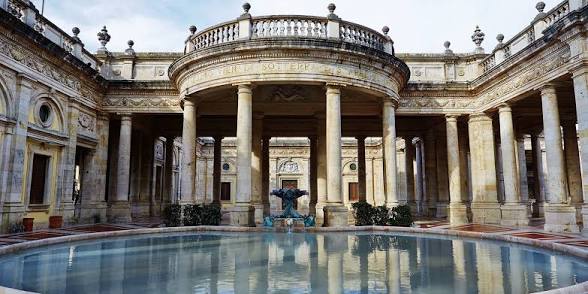
-
need for capex;
-
territorial value;
-
potential for residential or hospitality development.
The problem is that many Italian thermal assets are undercapitalized or managed through models that are not fully industrial.
A patient investor could create value through:
-
renovation;
-
hotels;
-
wellness;
-
medical spa;
-
longevity;
-
residences;
-
parks;
-
F&B;
-
events;
-
healthcare partnerships;
-
deseasonalization;
-
branding;
-
professional management.
Thermal assets are not only hotels.
They are wellness infrastructure.
This reading is very close to the Brookfield logic.
Italian holiday villages and resorts
Another interesting area is holiday villages and resorts.
Italy has many leisure assets in extraordinary locations, but the product is not always aligned with international demand.
Many holiday villages were created for mass domestic demand.
Today, they could be repositioned toward:
-
premium family;
-
lifestyle resort;
-
sport resort;
-
wellness resort;
-
beach club;
-
evolved glamping;
-
branded residences;
-
long stay;
-
leisure smart working;
-
international tourism;
-
sustainability.
The issue is capex.
Many properties require significant investment in:
-
rooms;
-
bungalows;
-
landscaping;
-
pools;
-
F&B;
-
children’s services;
-
sport;
-
spa;
-
sustainability;
-
technology;
-
branding;
-
distribution.
An investor such as Brookfield may be interested only if there is sufficient scale and clear governance.
The lesson is clear: Italian leisure must become more institutional.
Tourism villages and hospitality real estate
Tourism villages are another potential area of interest.
A village is not a traditional hotel.
It is a distributed real estate platform.
It may include:
-
rooms;
-
residences;
-
restaurants;
-
event spaces;
-
wellness;
-
agriculture;
-
wine;
-
experiences;
-
culture;
-
craftsmanship;
-
landscape;
-
local community.
This complexity requires patient capital, sophisticated management and a territorial vision.
Many Italian villages are fascinating but difficult to monetize.
To become investable, they need:
-
clear ownership title;
-
compatible planning status;
-
accessibility;
-
sufficient scale;
-
realistic capex plan;
-
clear positioning;
-
competent operator;
-
identifiable demand;
-
diversified revenue model.
Brookfield would not invest in the poetry of the village.
It would invest in its transformability as a real asset hospitality platform.
How to make an Italian tourism asset investable for real assets capital
This is a decisive section for Italian owners, advisors and operators.
An Italian asset becomes more interesting for an institutional investor when it is legible, scalable and transformable.
1. Scale
The size must justify the attention of institutional capital.
A single small hotel may be too limited.
A portfolio, a large resort or a territorial platform may be more interesting.
2. Clear title
Ownership must be orderly.
Restrictions, concessions, planning status, easements and rights must be mapped.
3. Reliable data
Hotel KPIs, management data, performance history, costs, revenues, capex and debt are required.
Without data, institutional capital perceives risk.
4. Realistic capex plan
The business plan must explain how much to invest, when, where and with what return.
Capex cannot be a generic line item.
It must be a strategy.
5. Identifiable demand
It is not enough to say “tourism”.
It is necessary to know which demand the asset wants to capture: luxury, family, wellness, domestic, international, sport, MICE, long stay, medical wellness, senior leisure.
6. Professional management
The asset must be managed by a credible operator or a strong internal platform.
In complex leisure, management is part of value.
7. Coherent debt structure
Financing must be compatible with seasonality, capex and ramp-up timelines.
Debt must not suffocate the project before repositioning produces results.
8. Platform potential
The asset must be capable of being aggregated, replicated or connected to other assets.
A platform is more legible to a fund than a single isolated property.
9. Exit or refinancing
Even patient capital must have a monetization or refinancing strategy.
The asset must be saleable, refinanceable or capable of being inserted into a broader portfolio.
10. Positive territorial impact
Especially in Italy, the project must be sustainable for the destination.
An institutional tourism investment must also create value for the territory: employment, quality, reputation, services, sustainability and deseasonalization.
An asset does not become institutional only because it is beautiful.
It becomes institutional when it is legible to capital.
Brookfield versus KKR
The comparison with KKR is useful because it shows two different ways of interpreting alternative capital.
KKR has a strong culture in corporate private equity, credit, infrastructure and capital solutions.
Brookfield has a culture more centered on real assets, ownership, infrastructure and operating control.
| Element | Brookfield | KKR |
|---|---|---|
| Identity | Real assets and infrastructure | Private equity, credit, infrastructure |
| Hospitality | Physical assets, resorts, platforms, asset control | Corporate platforms, assets, credit and selective transactions |
| Strength | Patient capital, real estate, infrastructure | Deal structuring, corporate value creation, capital solutions |
| Approach | Ownership, capex, operations, refinancing | Acquisition, growth, financing, exit |
| Hotel reading | Tourism infrastructure | Economic platform or financial investment |
Both can be relevant for hospitality.
But Brookfield tends to read the hotel more as a physical asset and infrastructure.
KKR tends to read it more as an investment platform or business to be transformed.
Brookfield versus Starwood Capital
Starwood Capital has a very deep hospitality culture.
Brookfield has a broader real assets culture.
| Element | Brookfield | Starwood Capital |
|---|---|---|
| Strategic origin | Real assets, infrastructure, real estate | Real estate and hospitality |
| Hospitality | Part of a broad long-term asset strategy | Central part of the group’s identity |
| Strength | Control, patient capital, infrastructure | Hotel culture, brand creation, hotel opportunities |
| Examples | Center Parcs, Atlantis, hospitality platforms | Starwood Hotels, 1 Hotels, Baccarat, SH Hotels |
| Risk | Excessive asset complexity | Greater exposure to hotel-specific cycles |
Brookfield is more infrastructure-oriented.
Starwood Capital is more hotel-oriented.
The comparison is useful because it shows that not all major funds read hotels in the same way.
Brookfield versus Oaktree
Oaktree is a very strong investor in credit, distressed and special situations.
Brookfield is closer to ownership, infrastructure and real assets.
| Element | Brookfield | Oaktree |
|---|---|---|
| Identity | Real assets and institutional capital | Credit, distressed, special situations |
| Hospitality | Ownership and management of complex assets | Debt, restructurings, distressed opportunities |
| Typical phase | Value creation and management | Crisis, debt, turnaround |
| Strength | Patient capital and operating control | Credit discipline and downside protection |
| Hotel reading | Tourism infrastructure | Operating collateral to be restructured |
Oaktree often enters where there is stress.
Brookfield can enter where it sees infrastructure to enhance.
Both are important for the Italian market, where many hotels need both capital and financial restructuring.
Brookfield versus Blackstone: final synthesis
The distinction between Brookfield and Blackstone is central to understanding the global funds block.
Blackstone teaches how to read the hotel as a cyclical, transformable and monetizable asset class.
Brookfield teaches how to read the hotel as a real asset, tourism infrastructure and long-term asset platform.
| Theme | Blackstone | Brookfield |
|---|---|---|
| Key question | How do I create value and realize the exit? | How do I transform and preserve value over time? |
| Culture | Private equity / real estate | Real assets / infrastructure |
| Hotel | Operating asset and financial platform | Tourism infrastructure and real asset |
| Debt | Return lever and refinancing tool | Long-term structure and capex support |
| Capex | Repositioning accelerator | Protection and development of long-term asset value |
| Italy | Aggregation, platforms and investability | Thermal assets, resorts, villages, destinations and leisure infrastructure |
This distinction is very useful for Italian operators.
Not all capital thinks in the same way.
A hotel can interest an opportunistic fund, a real assets investor, a credit fund, a family office, a sovereign wealth fund or an industrial operator.
The quality of the project also depends on the coherence between asset and capital.
Risks of the Brookfield model
The Brookfield model also presents specific risks.
Illiquidity risk
Large real assets can be difficult to sell quickly.
Capex risk
Complex assets require continuous investment. If capex is underestimated, value can decline.
Operating risk
Resorts, holiday villages and leisure platforms are complex operating businesses.
Debt risk
Refinancing is a lever, but also a risk if rates rise or markets close.
Regulatory risk
Tourism destinations, coastlines, mountains, environment, labor and concessions can carry significant constraints.
Climate risk
Coastal assets, islands, mountains and nature resorts are exposed to climate risks.
Reputational risk
A global investor must avoid being perceived as extractive toward the territory.
Demand risk
Tourism can change quickly because of crises, transport, geopolitics or shifts in consumer behavior.
Complexity risk
The larger and more integrated an asset is, the harder it is to manage.
What the Italian market can learn
The Brookfield case offers many lessons for the Italian hotel market.
1. Hospitality can be infrastructure
Large resorts, thermal destinations, holiday villages and leisure platforms should be read as tourism infrastructure, not only as hotels.
2. Patient capital is essential
Many Italian assets require long timelines, capex and structured management.
3. Debt must support capex
It is not enough to finance the acquisition. The transformation must also be financed.
4. The platform is worth more than the single asset
Aggregating assets can create scale, reporting, liquidity and institutional interest.
5. Domestic tourism is an important lever
Not everything must depend on international luxury tourism.
6. Ancillary revenues matter
F&B, wellness, activities, retail, events and services can increase value per guest.
7. Sustainability protects value
Without sustainability, tourism assets risk restrictions, opposition and value loss.
8. Active management is decisive
Passive ownership is not enough. Hotels and resorts must be managed as operating businesses.
9. Italy must become more legible to capital
Data, governance, titles, capex and reporting are fundamental.
10. The territory is part of the investment
A large tourism asset creates value only if it also strengthens the destination.
To explore these themes further, readers may consult the hotel guides published on www.robertonecci.it, the articles available on the Investimenti Alberghieri blog and the updates published on the InvestHotel blog.
Brookfield as a benchmark for hotel investors
Brookfield is a benchmark for at least ten categories of market participants.
The first category is real estate funds. Brookfield shows how hospitality can be read within a real assets strategy.
The second category is resort investors. Atlantis and Center Parcs show the value of complex leisure platforms.
The third category is Italian owners. The Brookfield case teaches that major tourism assets require capital, governance and capex.
The fourth category is banks. Hotel debt must be coherent with cash flows, seasonality and investment plans.
The fifth category is operators. Managing complex assets requires industrial expertise, not only traditional hospitality.
The sixth category is destinations. Institutional investment can strengthen a territory if it is properly governed.
The seventh category is advisors. Transactions of this kind require integrated expertise in real estate, finance, debt, contracts, tourism and operations.
The eighth category is family owners. Brookfield shows how important it is to make assets legible, capitalizable and manageable.
The ninth category is the public sector. Some tourism assets are economic infrastructure and require a public-private vision.
The tenth category is patient investors. Resorts, thermal destinations, villages and holiday villages do not always produce immediate returns, but they can create significant long-term asset value if managed with the right horizon.
Brookfield teaches that hotel value does not come only from ownership.
It comes from the ability to transform a tourism asset into managed, financed and sustainable economic infrastructure.
FAQ on Brookfield and hotel investments
What is Brookfield?
Brookfield is one of the world’s leading alternative asset managers, specializing in real assets, real estate, infrastructure, private equity, credit and other investment strategies.
Is Brookfield a hotel operator?
No. Brookfield is not a hotel brand. It is an investor and asset manager that can own, finance, control and enhance hospitality assets and platforms.
Why is Brookfield important in hospitality?
Because it interprets hotels, resorts and holiday villages as real assets and tourism infrastructure capable of creating value through active management, capex, debt and long-term control.
What is Center Parcs?
Center Parcs is a leisure platform of holiday villages in the United Kingdom and Ireland, acquired by a Brookfield fund from Blackstone in 2015.
Why is Center Parcs relevant?
Because it shows how hospitality can become leisure infrastructure: accommodation, activities, spa, restaurants, families, domestic tourism and ancillary revenues.
What is Atlantis Paradise Island?
Atlantis Paradise Island is a large integrated resort in the Bahamas, relevant for understanding the Brookfield model across trophy resorts, refinancing, capex and tourism destinations.
Why is Atlantis important for hotel investments?
Because it shows that a large resort can be a true tourism economy, with rooms, casino, marina, waterpark, F&B, employment, capex, debt and a structural relationship with the destination.
What is the difference between Brookfield and Blackstone?
Blackstone is often more associated with private equity, platforms, cycles and exits. Brookfield is more associated with real assets, infrastructure, long-term asset control and patient capital.
What can Italy learn from Brookfield?
That many Italian hotels, resorts, thermal assets and holiday villages can be read as tourism infrastructure to be capitalized, aggregated, managed and refinanced.
Which Italian assets are most coherent with a Brookfield-style logic?
Large resorts, holiday villages, thermal destinations, villages, marinas, leisure platforms, complex historic hotels, portfolios and assets with strong territorial impact.
What makes an Italian asset interesting for a real assets investor?
Scale, clear title, reliable data, realistic capex plan, identifiable demand, professional management, coherent debt, platform potential and positive territorial impact.
What is the main risk of the Brookfield model?
The main risk is complexity: large tourism assets require capex, coherent debt, operating management, sustainability and relationship with the territory.
Conclusion
Brookfield is one of the most important cases for understanding the future of institutional hotel investment.
Its strength does not come from owning a single iconic hotel.
It comes from the ability to read hospitality as part of the real assets world.
Brookfield does not look only at the room.
It looks at the land.
It looks at the destination.
It looks at the cash flow.
It looks at the infrastructure.
It looks at the debt.
It looks at the capex.
It looks at the possibility of transforming a tourism asset into an economic platform.
With Center Parcs, Brookfield shows the value of domestic leisure platforms, family demand and ancillary revenues.
With Atlantis Paradise Island, it shows the logic of the large integrated resort as tourism economy, territorial infrastructure and refinanceable asset.
With its real assets culture, it shows that hospitality can be much more than a hotel sector.
It can be economic infrastructure.
For Italy, the lesson is very clear.
Many Italian tourism assets should not be read only as hotels to be sold or operated.
They should be read as value platforms.
Resorts, thermal destinations, villages, holiday villages, marinas, historic hotels and leisure destinations can attract institutional capital if they become legible, scalable, financeable and sustainable.
Brookfield teaches that the future of hotel investment will not depend only on the beauty of destinations.
It will depend on the ability to transform that beauty into professionally managed, properly financed tourism infrastructure capable of generating value over time.
A hotel is not only hospitality.
It is capital deployed.
It is employment.
It is territory.
It is experience.
It is infrastructure.
It is cash flow.
It is a platform.
And when patient capital, active management, capex and destination align, hospitality can become one of the most interesting segments of the real assets universe.
Historic hotels, resorts, holiday villages, thermal assets, hotel portfolios, distressed assets, leisure platforms and repositioning transactions require an integrated reading of real estate, operations, finance, debt, brand, capex, sustainability and market dynamics.
For hotel valuations, investment transactions, development, repositioning, strategic advisory and hospitality asset enhancement, visit Hotel Management Group.
Hotel Management Group supports owners, investors and operators in the valuation, development and enhancement of hotel assets.
Roberto Necci - r.necci@robertonecci.it