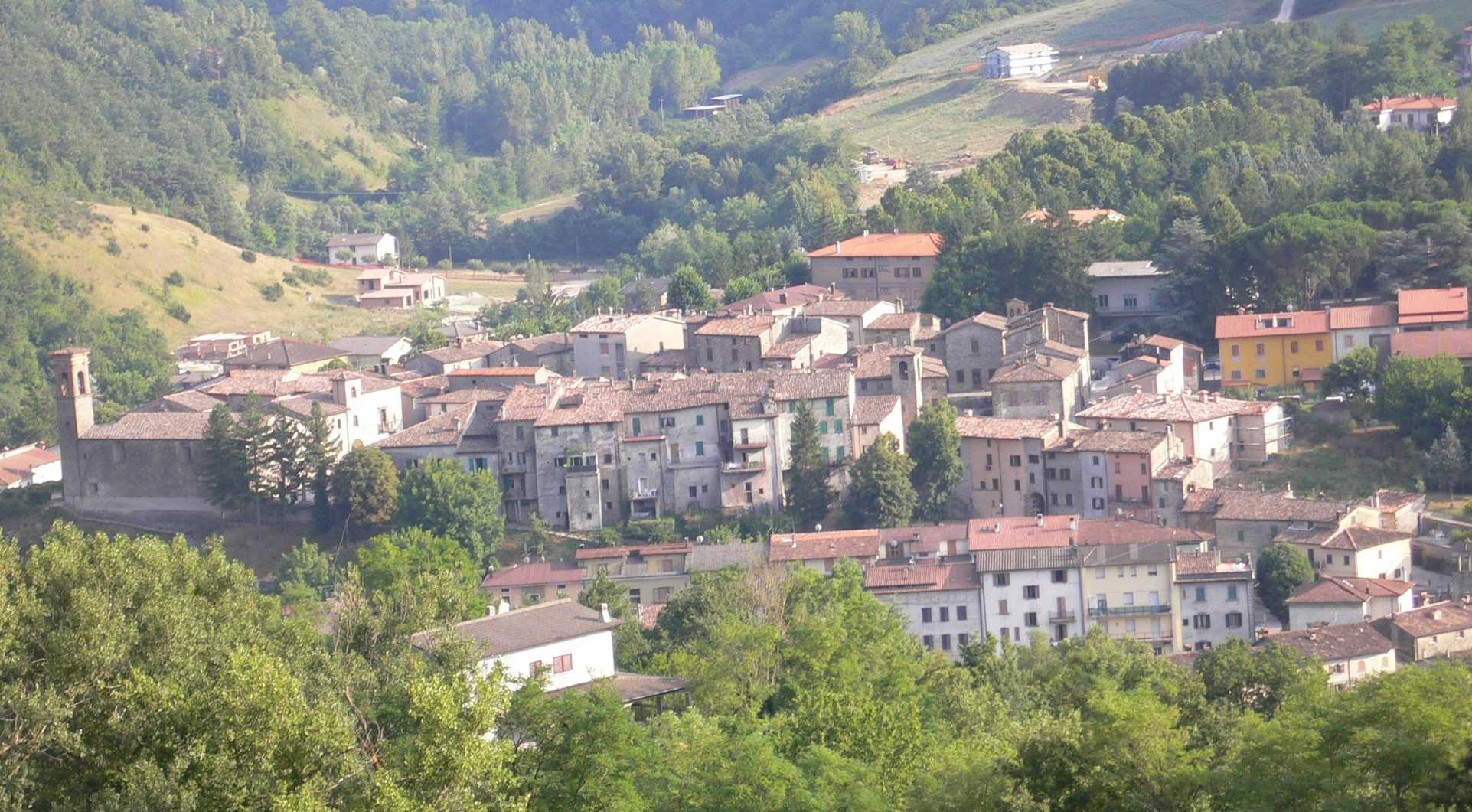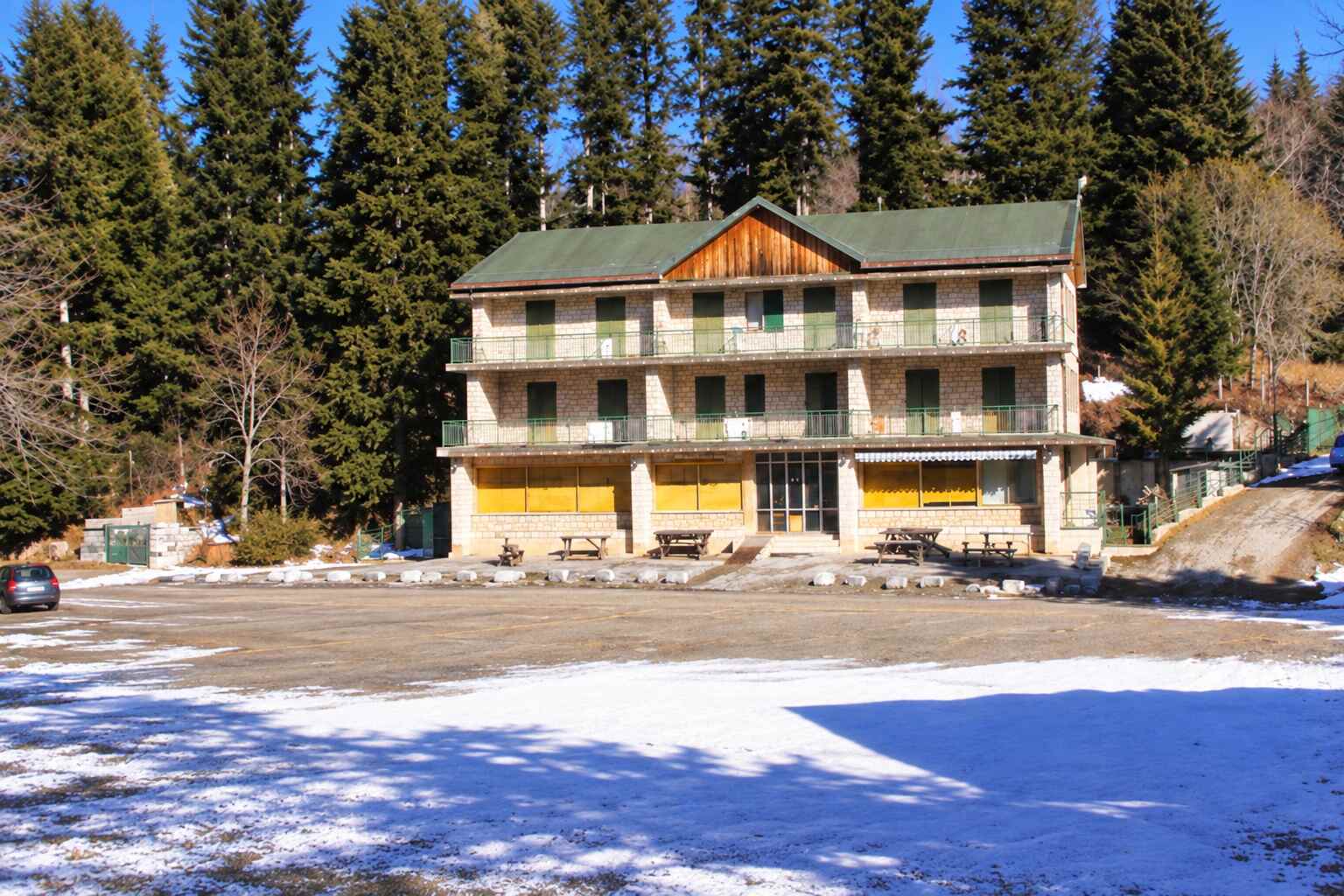
€380,000 for a hotel and restaurant of approximately 1,395 square metres in the heart of the Monti della Laga.
That is the number that immediately attracts attention.
It may also prove to be the least important number in the entire transaction.
According to local media reports, the historic hotel and restaurant in Ceppo, within the municipality of Rocca Santa Maria in the Province of Teramo, has been provisionally awarded for €380,000 to Ezio Iervelli, President of ANCE Teramo.
The sale procedure provided for a base price of €480,150 and a minimum admissible bid of €360,112.50.
The price reported by the press therefore stands:
-
approximately €100,000 below the base price;
-
roughly 21% below the auction reserve;
-
only around 5.5% above the minimum admissible bid.
Interesting numbers.
But in hospitality, acquisition price is rarely the same thing as investment cost.
And when a hotel has been closed for many years, the difference between the two can become substantial.
Buying a hotel for €380,000 does not mean making a €380,000 hotel investment.
The Asset: Approximately 1,395 sqm, 16 Rooms and a Much Broader Operating Footprint
The sale documentation describes a hospitality property distributed across five levels.
The basement includes ancillary areas, storage facilities and spaces previously used for entertainment.
The ground floor includes:
-
entrance;
-
three dining rooms;
-
three kitchens;
-
bar;
-
additional lounges;
-
service areas;
-
plant rooms;
-
storage;
-
garage;
-
further ancillary areas.
The two accommodation floors contain a total of:
16 guestrooms,
with eight rooms on the first floor and eight on the second, all described as having private bathrooms.
The attic remains unfinished.
The stated commercial area is approximately 1,395 sqm, while additional documentation associated with the sale refers to approximately 19,000 sqm of land.
This is therefore not simply a 16-key hotel.
The asset potentially combines:
accommodation + F&B + experiential space + land + significant operating areas.
That broader configuration makes any assessment based exclusively on the auction price inherently incomplete.
€272 per Square Metre and €23,750 per Key: Attractive Numbers, but Incomplete Ones
Dividing the reported provisional award price by the commercial area:
€380,000 / 1,395 sqm
produces a figure of approximately:
€272 per sqm.
Dividing the same price by the 16 guestrooms:
€380,000 / 16
produces:
approximately €23,750 per key.
At first sight, both figures appear exceptionally low.
But it would be methodologically wrong to conclude that the hotel has effectively been acquired at €23,750 per room.
The investor is not acquiring 16 fully operational hotel rooms.
The investor is acquiring a property that needs to be brought back to market:
-
technically;
-
administratively;
-
commercially;
-
organisationally;
-
operationally.
The critical distinction is therefore:
Purchase Price per Key ≠ Total Investment per Key.
The Real Entry Price Is the Restart Cost
For a hotel that has been closed for many years, the most relevant metric may not be the purchase price.
It is the:
Restart Cost.
In other words, the capital required to move:
from the acquisition date
to:
the first day on which a guest can once again book, stay, dine and pay at the property.
Restart Cost may include:
-
structural investigations;
-
MEP upgrades;
-
fire-safety compliance;
-
energy-efficiency works;
-
guestrooms and bathrooms;
-
kitchens;
-
roofing and façades;
-
FF&E;
-
technology;
-
software;
-
permits and licences;
-
pre-opening costs;
-
recruitment;
-
marketing;
-
opening inventory;
-
working capital.
This is where the economics of the transaction can change completely.
Total Investment Cost Matters More Than the Auction Price
The correct underwriting framework is:
Purchase Price
Transaction Costs
Technical CAPEX
FF&E
Compliance Costs
Pre-opening
Marketing
Working Capital
Contingency
=
Total Investment Cost.
Only this figure allows the opportunity to be properly assessed.
This is the same approach used by InvestimentiAlberghieri.it when analysing hotels emerging from auctions, competitive processes and distressed situations:
a discount to acquisition price is not an investment thesis.
How Much Does the Investment Change as CAPEX Changes?
Consider three purely methodological scenarios.
These are not estimates of the CAPEX required for Ceppo. They are designed solely to illustrate how quickly the acquisition price can become a relatively minor component of the overall transaction.
Scenario 1 — Light Restart
Acquisition: €380,000
CAPEX + Restart Cost: €600,000
Total Investment Cost: €980,000
Total Investment per Key:
approximately €61,000.
Scenario 2 — Significant Repositioning
Acquisition: €380,000
CAPEX + Restart Cost: €1.5 million
Total Investment Cost: €1.88 million
Total Investment per Key:
approximately €117,500.
Scenario 3 — Deep Transformation
Acquisition: €380,000
CAPEX + Restart Cost: €3 million
Total Investment Cost: €3.38 million
Total Investment per Key:
approximately €211,000.
The same property.
The same acquisition price.
Three completely different investments.
Which is why:
the entry price tells us only how the transaction begins.
The Second Question: What Product Can Actually Work in Ceppo?
Once technical due diligence has been completed, a more important question emerges.
What kind of hotel should this property become?
Ceppo sits within the Monti della Laga, in a natural environment associated with mountain tourism, hiking and outdoor activities.
But attractive scenery does not automatically translate into hotel demand.
An asset of this type cannot normally rely on the same demand generators as an urban hotel:
-
corporate travel;
-
airport demand;
-
MICE;
-
large-scale international city-break traffic.
It needs to create its own market.
The Product Has to Become a Reason to Travel
Potential positioning could address:
-
trekking;
-
hiking;
-
cycling;
-
outdoor tourism;
-
nature tourism;
-
families;
-
weekend leisure;
-
gastronomy;
-
small groups;
-
retreats;
-
territory-based experiences.
But the strategic question goes deeper.
It should not be:
“How many tourists already visit Ceppo?”
It should be:
“What product can we create that gives people a reason to travel specifically to Ceppo?”
In secondary destinations, that distinction often separates a merely refurbished hotel from a genuine:
destination asset.
Sixteen Rooms Create a Natural Ceiling on Rooms Revenue
With only 16 guestrooms, even healthy occupancy inevitably places a ceiling on rooms revenue.
This makes the property's extensive restaurant and food-service areas particularly important.
The economic model may therefore need at least two primary revenue engines:
Rooms
Food & Beverage.
The restaurant should not necessarily be treated merely as an amenity for hotel guests.
It could become an:
independent demand generator.
Capable of attracting local customers, hikers, families, groups and events — and, indirectly, generating additional demand for accommodation.
What Can 16 Rooms Actually Generate?
Again, the following are illustrative scenarios only, not forecasts for the property.
With 16 guestrooms, maximum theoretical annual inventory is:
16 × 365 = 5,840 available room nights.
Now consider three scenarios.
Conservative Scenario
Occupancy: 35%
Average Daily Rate: €90
Room nights sold: approximately 2,044
Rooms Revenue:
approximately €184,000 per year.
Base Scenario
Occupancy: 50%
Average Daily Rate: €110
Room nights sold: approximately 2,920
Rooms Revenue:
approximately €321,000 per year.
High-Performance Scenario
Occupancy: 65%
Average Daily Rate: €130
Room nights sold: approximately 3,796
Rooms Revenue:
approximately €493,000 per year.
This simple sensitivity analysis immediately highlights one important issue.
Even under the strongest scenario:
guestrooms alone may not justify a high Total Investment Cost.
The contribution from other revenue centres therefore becomes critical:
-
restaurants;
-
events;
-
experiences;
-
potential wellness facilities;
-
use of outdoor areas;
-
other ancillary revenues.
The asset's business plan needs to be built around the entire revenue ecosystem.
Not only its 16 keys.
Product Feasibility Must Come Before CAPEX
One of the greatest risks would be to simply rebuild the hotel as it existed in the past.
Before deciding where capital should be deployed, the investor needs to understand:
Are 16 rooms really the optimum configuration?
Can the room count be increased?
Are the F&B areas correctly sized?
Do the former entertainment spaces still have economic relevance?
Can the land become part of the guest experience?
Would wellness facilities add value?
How much space should support outdoor experiences?
Is the primary market leisure, families, groups or retreats?
The correct sequence should be:
Demand Analysis
↓
Product Definition
↓
Operating Model
↓
Revenue Forecast
↓
Sustainable CAPEX
↓
Development
↓
Opening.
Not the other way around.
The Land Could Shift from Real Estate Accessory to Product Component
The approximately 19,000 sqm of land deserve a separate analysis.
Any potential use would naturally depend on:
-
planning classification;
-
restrictions;
-
permits;
-
landscape protections;
-
actual development or operating rights.
But where compatible with planning and environmental constraints, the land could potentially help create an offering that extends beyond accommodation.
Outdoor activities.
Experiences.
Family-oriented facilities.
Events.
Food.
Relaxation.
This is one of the areas where due diligence should go beyond simply asking what the land is worth.
It should also ask:
how much additional revenue could it help generate?
Accessibility: Authenticity Can Also Become an Investment Risk
In mountain hospitality, remoteness has two sides.
It can be:
an advantage,
because it creates nature, authenticity and tranquillity;
or:
a constraint,
because it reduces the potential catchment area and increases logistics costs.
The principle is straightforward:
the harder a destination is to reach, the stronger the reason for travelling there must be.
That should become one of the guiding principles behind any future positioning strategy.
Labour Could Be a Greater Constraint Than the Property Price
For hotels in inland and rural areas, the challenge is not only attracting guests.
It is also attracting people to work there.
A proper underwriting exercise should therefore assess:
-
local labour availability;
-
payroll costs;
-
seasonality;
-
transport;
-
possible need for staff accommodation;
-
retention;
-
F&B skills.
For a property with only 16 rooms, even a relatively small increase in required headcount can materially alter break-even.
This is one of the key operating issues addressed by HotelManagementGroup.it:
the organisational structure must be sized against revenue that the asset can realistically generate.
Break-even Revenue Is the Real Test
Once the product has been defined, the next question becomes much less emotional:
How much revenue does the property need to generate before it stops losing money?
The model starts with:
Fixed Costs
permanent payroll
insurance
administration
scheduled maintenance
technology
marketing
property overhead
Variable Costs
food cost
laundry
commissions
utilities
housekeeping
amenities
=
Break-even Revenue.
Only after establishing break-even does it make sense to discuss ADR, occupancy and profitability.
How Much EBITDA Does the Investment Need to Generate?
The final stage is financial.
Once Total Investment Cost is known, the investor must ask:
What level of stabilised EBITDA can the project realistically generate?
The framework becomes:
Purchase Price
CAPEX
Restart Cost
Working Capital
=
Total Investment Cost
↓
Stabilised Revenue
↓
Stabilised EBITDA
↓
Stabilised Value
↓
Investor Return.
This sequence determines whether the asset was merely acquired cheaply or whether it represents a genuinely attractive investment.
€380,000 Could Be Extremely Cheap — or Economically Almost Irrelevant
This is the central paradox.
If Total Investment Cost ultimately remained close to €1 million, the acquisition price would still represent a significant share of total capital employed.
If the investment moved towards €2 million, €3 million or more, the initial €380,000 would become progressively less important.
This is the principle applied by Investhotel.it to distressed hotels and special situations:
the price of the real estate is not the cost of the transaction.
And the cost of the transaction is not the same thing as its value.
From Auction to Value Creation
The auction answers only two questions:
Who acquires the asset?
and
At what price?
It does not determine:
-
concept;
-
CAPEX;
-
demand;
-
organisation;
-
staffing;
-
distribution;
-
EBITDA;
-
stabilised value.
Those variables begin after the auction.
And that is where the real entrepreneurial work starts.
Real Estate Price, Business Value and Hospitality Investment Value Are Three Different Things
The Ceppo case allows us to distinguish clearly between three separate concepts.
Real Estate Acquisition Price
The amount paid to acquire the property.
Operating Business Value
The value of the hotel business once operational and stabilised.
Hospitality Investment Value
The value of the overall opportunity relative to total capital invested and the investor's required return.
Confusing these three concepts leads to one of the most common mistakes in hotel investing:
assuming that a hotel is attractive simply because it is cheap.
The analysis published by RobertoNecci.it repeatedly focuses on the need to distinguish between real estate value, hotel operating-business value and the asset's prospective ability to generate sustainable income.
The Transaction Is Still Described as a Provisional Award
One final point must remain clear.
Local press currently describes the result as a:
provisional award.
It is therefore important to distinguish between:
the outcome of the auction
and
the definitive transfer of ownership.
Until the relevant procedural steps are completed, it would be premature to describe the acquisition as definitively closed.
For a platform intended to analyse hotel opportunities rather than simply report headlines, that distinction matters.
The Ceppo Investment Lesson
The case summarises several fundamental principles of hospitality investment.
1. Auction price is not Total Investment Cost.
2. Purchase Price per Key can be highly misleading when the hotel is not operational.
3. For closed properties, Restart Cost may matter more than acquisition price.
4. Product Feasibility must come before CAPEX.
5. In a 16-room hotel, F&B and ancillary revenues may be essential.
6. In inland destinations, the product itself must become a reason to travel.
7. Real value is created by sustainable EBITDA, not by the discount achieved at auction.
The Final Framework
The auction determines the Acquisition Price.
Due diligence determines the risk.
Product Feasibility determines what should be built.
Restart Cost determines the capital required to reopen.
CAPEX determines product quality.
Demand determines revenue.
The operating model determines break-even.
Management determines EBITDA.
EBITDA determines value.
Only at the end of this sequence will it be possible to determine whether the reported €380,000 simply represents a very low entry price or the starting point for:
a genuinely high-potential hospitality investment.
InvestimentiAlberghieri.it | Distressed Hospitality & Special Situations
Hotels emerging from auctions, competitive processes or prolonged operating discontinuity cannot be assessed solely through their real estate acquisition price.
A complete investment analysis needs to integrate:
real estate + due diligence + Product Feasibility + Restart Cost + CAPEX + demand + management + EBITDA + stabilised value.
InvestimentiAlberghieri.it analyses hotel investments, auctions, conversions, opportunities and special situations across the Italian hospitality market.
For analysis of hotel valuation, hospitality economics and the financial sustainability of hotel operating businesses: RobertoNecci.it.
For distressed hotels, UTP/NPL situations, turnarounds, debt restructuring and extraordinary transactions: Investhotel.it.
For business planning, organisation, management control and hotel operating performance: HotelManagementGroup.it.
For investment analysis, distressed hotels, turnaround opportunities, auctions and hospitality special situations:
info@investimentialberghieri.it