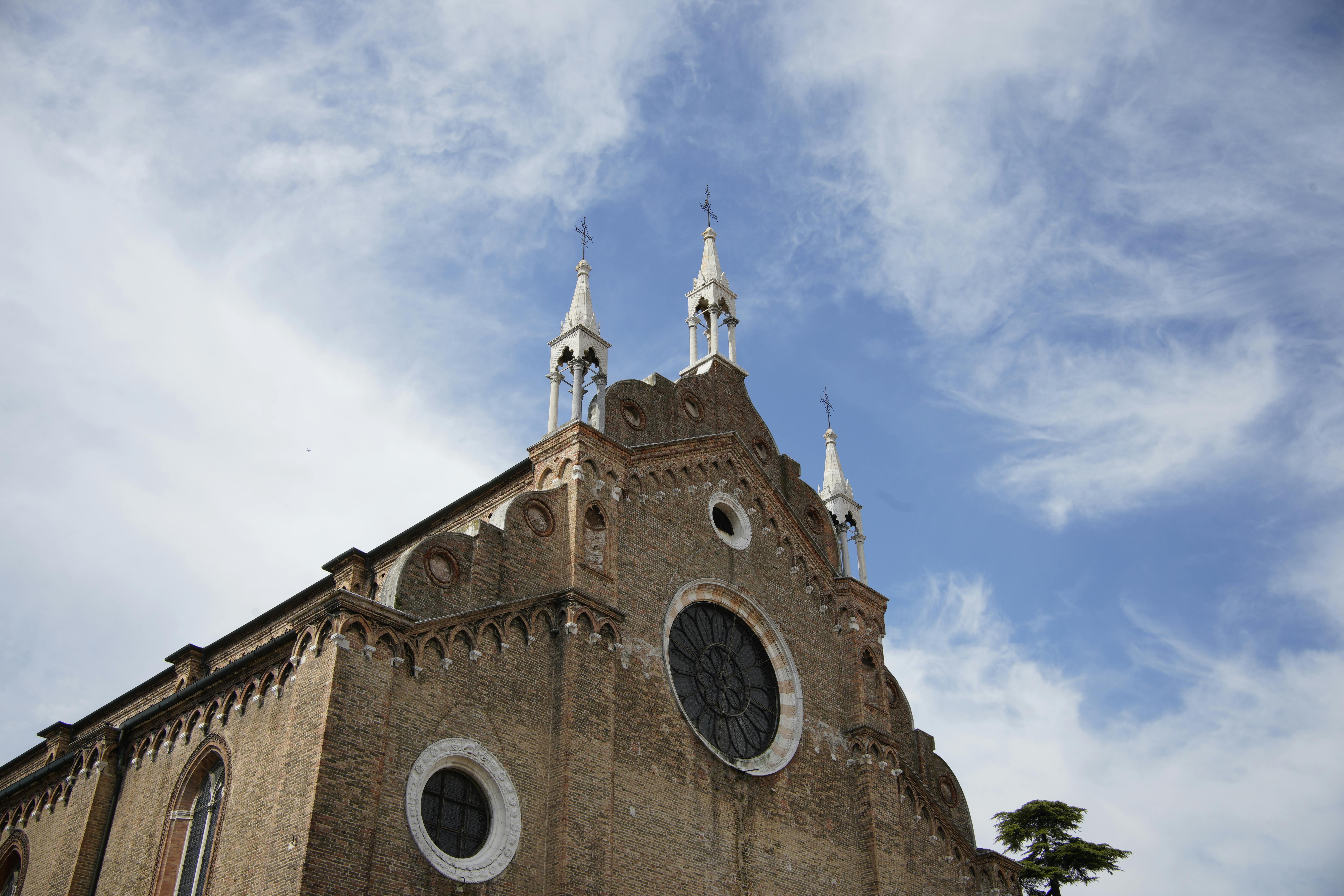
Ecclesiastical real estate is no longer just a matter of historical preservation. In several Italian cities, it is becoming one of the most compelling real estate reserves for upper-upscale and luxury hospitality. Milan is already proving the point: former convents, seminaries, deconsecrated churches and underused religious complexes are now on the radar of funds, hotel brands, family offices and luxury operators. Yet converting these assets into hotels is not simply a change of use. It is one of the most sophisticated forms of hotel asset management today.
Milan has sent a signal the Italian hotel market cannot afford to ignore.
For decades, ecclesiastical properties were viewed almost exclusively as historical, religious or cultural assets. Today, they are gaining new strategic relevance. Not because every convent, seminary or religious complex can become a hotel. That would be a superficial reading. But because part of this heritage has characteristics that are increasingly rare in urban real estate: centrality, history, architecture, identity, scale, internal courtyards, gardens, monumentality and non-replicability.
In today’s hospitality market, these elements already have significant value.
In the luxury market, they can command a substantial premium.
The conversion of ecclesiastical properties into upper-upscale and luxury hospitality assets should not be dismissed as an urban planning curiosity. It signals a deeper evolution in the way real estate capital is being deployed in hospitality. It sits at the intersection of three forces: owners’ need to unlock value from complex assets, investors’ search for scarce real estate, and the growing demand for authentic, distinctive and story-rich hotel experiences.
The issue is not whether a former church can become a hotel.
The real question is when a property with high symbolic density can be transformed into a hospitality platform capable of generating economic, urban and reputational value without consuming its identity.
Milan as a laboratory for heritage-based hospitality
Milan is becoming one of the most interesting laboratories for this transformation.
The Four Seasons Hotel Milano, housed in a former 15th-century convent in the heart of the Fashion Quadrilateral, has long shown how a historic religious building can become a luxury hotel when location, architecture, brand, service and atmosphere work in the same direction.
Portrait Milano, located in the former Archiepiscopal Seminary on Corso Venezia, has pushed the model beyond the traditional concept of a hotel. It is not merely an accommodation facility. It is an urban destination. It combines hospitality, dining, retail, public space, Milanese identity and a direct relationship with the Fashion Quadrilateral.
The NH Collection Milano CityLife, created from the conversion of the former Cristo Re church, shows another trajectory: the transformation of a religious building into a contemporary hotel product, positioned within a rapidly evolving urban district supported by business, leisure and MICE demand.
These cases should not be read as isolated episodes.
They mark the shift from simple real estate recovery to heritage-based hospitality, where the property is not a neutral container but the primary source of positioning.
In other words, the value of the hotel does not come only from management. It comes from the biography of the place.
Ecclesiastical Real Estate as a strategic property reserve
Italy’s ecclesiastical real estate represents one of the country’s major property reserves.
According to estimates circulating in the real estate market, ecclesiastical entities control tens of thousands of buildings across Italy, with an overall asset value estimated in the tens of billions of euros. Milan is one of the most relevant cities in terms of concentration, with hundreds of properties connected to religious entities, many of them located in valuable urban areas.
A significant share of this heritage is underused, vacant, difficult to maintain or in need of substantial refurbishment.
This changes the interpretation of the phenomenon entirely.
These are not occasional one-off transactions. They are part of a broader property base that, under the right conditions, may enter processes of value creation, conversion, long-term leasing, concession, real estate partnership or hospitality development.
The decisive point is that these properties are not ordinary assets.
They carry history, constraints, memory, religious identity, public perception and reputational responsibility. For this reason, they require a higher level of expertise than a standard hotel transaction.
Why these properties attract funds, brands and investors
The hospitality market is increasingly looking for properties capable of standing apart.
Standardised hotels compete on location, price, service and brand. Truly strong hotels also compete on what cannot be copied.
This is where certain ecclesiastical properties become strategic.
Many convents, seminaries and religious complexes are located in central or semi-central areas, often in cities where new development is difficult, expensive or almost impossible from an urban planning perspective. They offer internal courtyards, cloisters, gardens, naves, historic corridors, architectural perspectives and volumes that do not belong to ordinary real estate.
These features create three competitive advantages.
The first is scarcity. A former convent in central Milan, Rome, Florence or Venice cannot be replaced by just any building. Scarcity creates a value premium.
The second is narrative power. Contemporary luxury does not buy square metres alone. It buys history, access, perceived authenticity and a sense of belonging to a place. A historic ecclesiastical property already has a built-in narrative.
The third is experiential depth. A high-spending guest is not merely looking for a well-furnished room. They are looking for a place with atmosphere, memory and difference.
In this sense, ecclesiastical real estate may represent one of the few remaining Italian property reserves capable of generating truly distinctive hotel positioning.
But the appeal of the building is not enough.
The critical mistake: confusing beauty with economic sustainability
In hospitality, many projects fail not because the property lacks value, but because it has been misread.
This risk increases when dealing with ecclesiastical buildings.
A former convent may be extraordinary architecturally and fragile operationally. It may have rigid constraints, rooms that are difficult to standardise, common areas that are hard to monetise, complex circulation, problematic accessibility, expensive technical systems, fire-safety limitations, planning restrictions, high maintenance costs and an investment-to-room-count ratio that is not sustainable.
The first mistake is falling in love with the building.
The second is building a business plan to justify that infatuation.
The third is assuming that luxury can absorb any cost.
It cannot.
Luxury allows for high ADRs, but it also demands standards, service, coherence, technical quality, comfort, privacy, functionality, safety and constant maintenance. A historic building that is incompatible with these requirements risks becoming a fascinating but weak investment.
The right question is not: “How beautiful would it be to turn this into a hotel?”
The right question is: “Which hotel model can this property sustain economically without being distorted?”
That is the difference between an emotional real estate operation and a professional hotel investment.
The decision framework: When an ecclesiastical property can become a hotel
An ecclesiastical property should be considered for hotel conversion only if it passes a series of fundamental tests.
The first concerns demand. Is there a market capable of sustaining the product? Does the destination generate demand consistent with the intended positioning? Is the demand leisure, business, luxury, MICE, bleisure, extended stay, cultural or evolved religious tourism?
The second concerns economic scale. Is the room count sufficient? Can ancillary spaces generate revenue? Can dining, spa, events, retail, meeting facilities, memberships or branded residences contribute to profitability?
The third concerns building compatibility. Can the structure support functional layouts? Can systems be installed without disproportionate costs? Are ceiling heights, access points, escape routes, vertical connections and service flows compatible with efficient hotel operations?
The fourth concerns constraints. Historic, artistic, landscape, ecclesiastical and urban planning restrictions can deeply affect timelines, costs and design freedom.
The fifth concerns transaction governance. Who owns the property? Who invests? Who operates? Which brand enters the project? Which contractual structure is used: lease, management agreement, business lease, concession, project financing, surface rights or another model?
The sixth concerns reputation. A religious property is not a neutral asset. It carries memory, sensitivity and public perception. A poorly conceived transformation can generate opposition, reputational damage or conflict with the local community.
The seventh concerns urban return. Does the project create value for the city as well? Does it open spaces? Reactivate places? Produce quality? Or does it completely privatise an asset perceived as part of collective memory?
Only when these dimensions are aligned can the operation become genuinely interesting.
Asset Management, not real estate romanticism
Transforming an ecclesiastical property into a hotel is not an ordinary conversion project.
It is a complex asset management exercise.
It requires hotel, financial, planning, legal, technical, reputational and institutional expertise. It requires the ability to engage with owners who are often not driven purely by yield maximisation. It requires patient capital. It requires long-term vision.
The decisive point is to build equilibrium among four actors: owner, investor, operator and city.
If the project creates value only for the owner but not for the operator, the model will not hold.
If it creates value only for the investor but not for the city, the project becomes reputationally fragile.
If it creates value only for the brand but not for the property, it risks consuming the asset’s identity.
If it creates value only at opening but not during ordinary operations, it becomes an expensive showcase.
Ecclesiastical properties cannot be treated as containers to be filled with rooms.
They must be interpreted as complex organisms.
The role of ecclesiastical owners: value creation does not mean disposal
For ecclesiastical entities, real estate value creation is becoming increasingly relevant.
Many religious properties are currently underused, difficult to maintain, no longer aligned with their original functions or economically burdensome. The decline in vocations, the evolution of pastoral needs and rising maintenance costs make it inevitable to reconsider the future use of many assets.
But creating value does not simply mean monetising.
It means choosing a future for a property.
A high rent may appear attractive in the short term, but if the project is culturally incoherent, technically fragile or reputationally risky, the damage may exceed the benefit.
For this reason, owners should assess not only the economic offer, but also the quality of the partner, financial solidity, operator reputation, concept compatibility, asset protection and contribution to the community.
The value creation of ecclesiastical real estate is not a normal property negotiation.
It is a matter of asset governance.
Regeneration or privatisation of the sacred?
Every conversion of this kind contains an inevitable tension.
On one side, there is regeneration. Closed, abandoned, costly or underused properties can be restored, maintained, reopened, made productive and reintegrated into urban life.
On the other side, there is the risk of symbolic privatisation. Places perceived as part of spiritual or collective memory may become accessible only to a highly selected clientele.
This tension cannot be solved ideologically.
It is solved through the quality of the project.
An intelligent project does not erase the history of the place. It makes it legible.
It does not use religious identity as commercial scenery. It treats it as sensitive material.
It does not turn everything into product. It preserves a degree of urban, cultural or relational return.
It does not force the building into a standard format. It builds a tailor-made model.
The real dividing line is not between religious use and hotel use.
The real dividing line is between intelligent transformation and the consumption of identity.
The new luxury seeks places with a biography
For many years, luxury hospitality was described through large rooms, fine materials, personalised service, dining, spa facilities and international brands.
Today, these elements remain necessary, but they are no longer enough.
The new luxury seeks depth.
It seeks places with a biography.
It seeks buildings that do not feel replicable.
It seeks contexts where guests can feel they are accessing something outside ordinary tourism.
From this perspective, certain ecclesiastical properties represent extraordinary raw material. Not because they are automatically suitable to become hotels, but because they contain a symbolic density that the luxury market cannot manufacture artificially.
A new hotel can be perfect.
A well-converted former convent can be memorable.
And at the upper end of the market, memorability is a component of value.
Rome, Florence, Venice, Naples: this is not only about Milan
Milan is currently the most visible case because it brings together international capital, luxury demand, corporate travel, fashion, design and intense real estate pressure.
But the issue is national.
Rome has an enormous ecclesiastical property base and structural international tourism demand. Florence and Venice have established luxury markets, but also acute sensitivities around tourism pressure and urban preservation. Naples, Bologna, Turin, Palermo, Genoa and many Italian art cities have historic properties that may be compatible with hotel, cultural or hybrid formulas.
The real opportunity is not to copy Milan.
The real opportunity is to build models that are coherent with each city.
In some contexts, a five-star luxury hotel may work. In others, a cultural boutique hotel. Elsewhere, an urban retreat, an upper-upscale temporary residence, an aparthotel, an executive training facility, an events venue, a hospitality-healthcare model, a renewed form of religious hospitality or a mixed-use project with cultural functions may be more appropriate.
The question is not: “How many religious properties can we turn into hotels?”
The question is: “Which use generates the best balance between economic value, operational sustainability and respect for the identity of the asset?”
What investors need to look at
For hotel investors, this segment can be extremely interesting, but it is not suited to simple speculative logic.
Transactions involving ecclesiastical properties require deeper analysis than a standard hotel acquisition or a greenfield development.
The real cost of conversion must be assessed, not the theoretical cost. Approval timelines must be estimated with caution. The compatibility between restrictions and hotel standards must be verified. The relationship between room count, non-revenue-generating areas, ancillary services and profitability must be analysed. The market’s ability to support the rates required to remunerate the investment must be understood.
Above all, one trap must be avoided: treating the historic nature of the asset as an automatic guarantee of value.
It is not.
Historic character creates value only when it is translated into a product that is coherent, marketable, manageable and financially sustainable.
An iconic property with a weak operating model remains a poor investment.
A complex property with a precise concept, a suitable operator, a balanced contractual structure and solid demand can instead become a difficult-to-replicate asset.
What owners need to look at
For owners, whether ecclesiastical or not, the central question is different.
It is not enough to ask how much rent can be obtained.
The real question is which operator can increase the value of the asset over time.
Partner selection is decisive.
A weak investor can block the project. An unsuitable operator can damage the property. An incoherent brand can create misalignment. An unbalanced contract can generate disputes. An insensitive concept can provoke negative reactions.
The value creation of a historic asset is not measured only at the moment of signing.
It is measured after ten, twenty or thirty years.
For this reason, the most intelligent operations are those that align the interests of ownership, capital, management and the surrounding territory.
The decisive skill: read the asset before writing the business plan
In hospitality, the tendency is often to start from the concept.
Here, the process should be reversed.
First, the asset must be read.
Its history. Its structure. Its relationship with the neighbourhood. Its voids. Its constraints. Its potential. Its limits. Its light. Its access points. Its silences. Its reputation. The way it is perceived by the community.
Only then should the hotel model be built.
Forcing an ecclesiastical property into a predefined format is a strategic mistake.
The brand must adapt to the building, not erase it.
The business plan must arise from the nature of the asset, not from an abstract spreadsheet.
In these cases, the hotel is not an exercise in occupying space. It is an exercise in interpretation.
A new specialist asset class for Italian Hospitality
Can ecclesiastical real estate become a new specialist asset class for Italian hospitality?
Yes — but only under specific conditions.
Not every property is suitable.
Not every market can sustain upper-upscale or luxury products.
Not every investor has the necessary patience.
Not every operator has the sensitivity to work in places of such density.
Not every project is socially acceptable.
But when the conditions align, the potential is very strong.
Because these properties offer something the market is desperately seeking: difference.
And in hospitality, difference is one of the few true sources of premium.
The link with the hotel investment market
For those operating in hotel investment, this is not a marginal issue.
The scarcity of prime properties, yield compression in the strongest destinations, rising development costs and the search for distinctive products are pushing capital and operators towards more complex but more defensible assets.
Ecclesiastical properties fit perfectly into this dynamic.
They are complex to acquire, convert and operate.
But that complexity can itself become a barrier to entry.
In the hotel market of the future, the ability to manage complexity will be one of the main sources of competitive advantage.
Capital alone will not be enough.
The winners will be those who can read the hidden potential of properties, build sustainable models, negotiate with sophisticated owners, involve suitable operators and transform identity-rich places into credible hotel products.
Our hotel guides
To explore themes related to hotel management, valuation, development and positioning in greater depth, you can also consult our hotel guides published at:
The guides are designed to support entrepreneurs, investors, property owners and managers who want to interpret the hotel not only as an operating business, but also as an economic, patrimonial and strategic asset.
The InvestimentiAlberghieri editorial path
This content is part of the Investimenti Alberghieri editorial path dedicated to the strategic analysis of the hospitality market. To read all published insights, visit the full blog archive:
https://www.hotelinvestments.it/blog
The value lies not in transforming, but in interpreting
The transformation of ecclesiastical properties into luxury hotels is one of the most interesting trends in Italian hospitality.
It is also one of the most delicate.
It can generate value, regenerate heritage, attract capital, create urban destinations and bring underused buildings back to life.
Or it can produce unbalanced, culturally fragile, economically weak and reputationally risky operations.
The difference lies in the quality of the strategic reading.
An ecclesiastical property is not a normal building to be converted.
It is an asset that carries history, function, memory, constraint, identity and public perception.
For this reason, it cannot be assessed only by asking: “How many rooms can we create?”
It must be assessed through deeper questions.
Which hospitality model is coherent with this place?
Which market can sustain it?
Which investor can finance it?
Which operator can interpret it?
Which contract can protect it?
Which value can it return to the city?
Which identity can it preserve after the transformation?
The future of Italian hospitality will not be built only on new developments, international chains and operating standards.
It will also be built on the ability to read existing heritage more intelligently.
Former convents, seminaries, deconsecrated churches and underused religious complexes are not automatically hotels.
But in some cases, they can become much more: irreplaceable assets, urban destinations, value platforms and symbols of a new season in hotel investment.
True luxury today is not about turning everything into a product.
It is about creating value without consuming the identity of places.
Are you assessing a hotel asset, a hospitality conversion or a real estate value creation project in the accommodation sector?
Hotel Management Group supports owners, investors and operators in the strategic, operational and patrimonial assessment of hotel assets, accommodation businesses and development projects.
For a strategic assessment of the economic, operational and patrimonial sustainability of a hotel investment or conversion, visit:
Roberto Necci - r.necci@robertonecci.it