Just a few steps from the Vatican, a 296-room, 395-bed development spanning more than 12,000 square metres is taking shape and could become one of Italy’s most significant hybrid hospitality projects.
The scheme is called CX Rome | San Pietro and combines hotel accommodation, long-stay units, food and beverage, a panoramic rooftop, coworking facilities, a gym, meeting rooms and event spaces within a single property.
It will therefore be far more than another new hotel in Rome.
The asset is designed to attract international tourists, pilgrims, business travellers, relocated professionals, young executives, extended-stay guests and corporate event demand.
Developed and owned by Techbau S.p.A., with its commercial positioning linked to the CX Living ecosystem, the project will provide an important test for the Italian hospitality market: can the combination of hotel accommodation and temporary residential living generate higher returns than a conventional hotel or purpose-built student residence?
For the investors and hospitality stakeholders followed by InvestimentiAlberghieri.it, CX San Pietro offers a broader lesson: the future value of urban hospitality assets will depend not only on room count, but on the ability to turn every square metre into revenue, margin and real estate value.
Where CX San Pietro is located
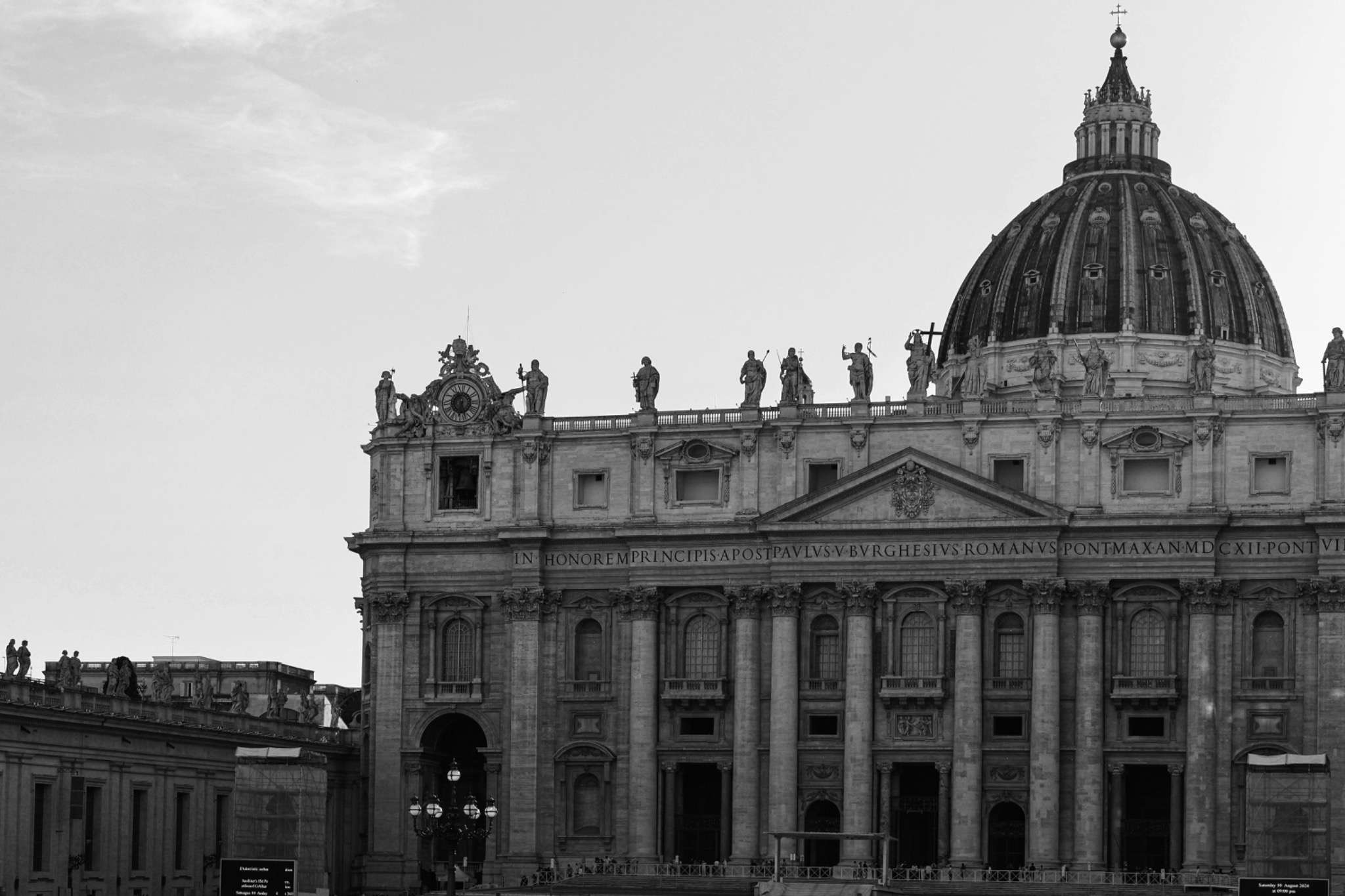
CX San Pietro is under development in Via del Crocifisso SNC, between Roma San Pietro railway station, Via Gregorio VII and Vatican City.
Its location is one of the project’s strongest competitive advantages.
The property will be positioned to capture:
-
religious tourism;
-
cultural tourism;
-
international leisure demand;
-
organised groups;
-
Vatican-related events;
-
corporate guests;
-
professionals on temporary assignments;
-
employees relocating to Rome;
-
young professionals;
-
students and researchers;
-
bleisure demand;
-
extended-stay guests.
Its proximity to Roma San Pietro railway station further improves accessibility, connecting the asset with other parts of the capital and the regional rail network.
Location is even more important for a long-stay product than it is for a traditional hotel. Guests staying for several weeks or months assess not only the room, but also public transport, neighbourhood services, dining options, workspaces, security and overall quality of life.
The project in numbers
The latest primary sources indicate:
-
296 rooms in total;
-
110 short-stay hotel rooms;
-
186 long-stay rooms;
-
395 beds;
-
approximately 12,000 square metres of gross floor area;
-
approximately 8,460 square metres of net floor area;
-
a rooftop lounge bar overlooking St Peter’s Basilica;
-
all-day dining;
-
a gym;
-
coworking facilities;
-
meeting rooms;
-
modular event and conference spaces.
Some industry sources have reported 294 rooms, while an earlier announcement referred to 298 units and 387 beds.
The difference may appear minor, but it is not irrelevant to an investor.
Even two or four additional or fewer rooms can affect:
-
potential revenue;
-
construction cost per unit;
-
staffing requirements;
-
average room size;
-
the incidence of common areas;
-
value per key;
-
debt sustainability;
-
return on invested capital.
For conservative underwriting purposes, the most appropriate figures are therefore those provided by the latest primary sources: 296 rooms, including 110 hotel rooms, and 395 beds in total.
Techbau as owner and developer
Official information identifies Techbau S.p.A. as both the owner and developer of the property.
The architectural design is by Mario Cucinella Architects, while the project is being marketed under the CX Rome | San Pietro brand.
The structure therefore appears to distinguish between:
-
real estate ownership;
-
development;
-
brand;
-
operations;
-
management of the short-stay component;
-
management of the long-stay component.
However, the complete contractual arrangements between the owner and operator have not been publicly disclosed.
A proper hotel investment assessment must establish:
-
who bears the real estate risk;
-
who finances the development;
-
who assumes the operating risk;
-
who funds the pre-opening phase;
-
who is responsible for future capital expenditure;
-
how revenue and profit are allocated;
-
whether the agreement involves fixed rent, variable rent or management fees;
-
what guarantees are in place;
-
which performance tests govern the relationship.
This is the difference between describing a hotel and genuinely analysing an investment.
Investhotel specialises in valuations, extraordinary transactions, deal structuring and advisory services for hospitality assets, owners and investors.
What hybrid hospitality means
Hybrid hospitality combines functions that, until recently, were generally treated as separate real estate and operating categories:
-
hotels;
-
residences;
-
serviced apartments;
-
student housing;
-
coworking;
-
food and beverage;
-
gyms;
-
meetings;
-
events;
-
community spaces.
The same property can therefore accommodate:
-
a tourist staying for two nights;
-
an executive staying for one week;
-
an employee relocated to Rome for three months;
-
a young professional staying for six months;
-
a conference delegate;
-
an external rooftop guest;
-
a company hosting an event.
The economic principle is clear: diversify revenue streams and reduce dependence on a single demand segment.
The model only works, however, when the different components are managed as separate business units.
Short stay and long stay are not the same product.
Hotel guests compare daily rates, location, reputation and services. Long-stay guests assess monthly pricing, utilities, cleaning, room functionality, work facilities, community spaces and contractual flexibility.
The challenge lies in serving both markets without creating confusion in positioning or inefficiencies in operations.
A rooftop overlooking St Peter’s as a standalone revenue centre
One of the development’s most distinctive features will be the rooftop lounge bar overlooking St Peter’s Basilica.
In a city such as Rome, a panoramic rooftop can generate value far beyond the service provided to in-house guests.
Potential revenue streams include:
-
aperitifs;
-
dining;
-
private events;
-
receptions;
-
corporate presentations;
-
parties;
-
brand partnerships;
-
local customers;
-
packages combining rooms and events.
Profitability will depend on the property’s ability to attract external guests as well as hotel residents.
If the rooftop is used almost exclusively by in-house guests, it risks remaining primarily a branding feature. If it becomes a recognised city destination, it could operate as a high-margin standalone business unit.
The key questions will therefore include:
-
average spend;
-
table turnover;
-
staffing costs;
-
seasonality;
-
number of operating days;
-
private-event demand;
-
beverage revenue mix;
-
security costs;
-
maintenance;
-
noise management and relations with the local neighbourhood.
Meetings and events for more than 250 guests
The project includes modular meeting and event facilities.
Available information refers to:
-
two configurable event rooms;
-
four meeting rooms;
-
a full-open hall of more than 300 square metres;
-
maximum theatre-style capacity of more than 250 guests.
This component could attract:
-
companies;
-
associations;
-
religious organisations;
-
international institutions;
-
corporate meetings;
-
conferences;
-
presentations;
-
institutional events;
-
small congresses.
The proximity to the Vatican may also support events organised by religious bodies, foundations, cultural organisations and international institutions.
The potential is significant, but it will require a dedicated sales operation.
Conference facilities do not generate revenue simply because they exist. They require:
-
dedicated sales managers;
-
relationships with professional conference organisers and agencies;
-
corporate agreements;
-
meeting packages;
-
efficient catering;
-
audiovisual technology;
-
rapid quotation processes;
-
the ability to sell rooms and events together.
How much could the hotel component generate?
No official budget, final public rate structure or operating forecast has been disclosed.
However, it is possible to build a conservative theoretical scenario for the 110 short-stay hotel rooms.
Conservative scenario
Assumptions:
-
110 rooms;
-
70% average occupancy;
-
average daily rate of €180;
-
365 operating days.
The theoretical annual room revenue would be:
110 × 365 × 70% × €180 = approximately €5.06 million.
Mid-range scenario
Assumptions:
-
75% average occupancy;
-
average daily rate of €210.
The theoretical annual room revenue would be:
110 × 365 × 75% × €210 = approximately €6.32 million.
High-performance scenario
Assumptions:
-
80% average occupancy;
-
average daily rate of €240.
The theoretical annual room revenue would be:
110 × 365 × 80% × €240 = approximately €7.71 million.
Additional revenue could be generated by:
-
the long-stay component;
-
food and beverage;
-
the rooftop;
-
meetings;
-
events;
-
the gym;
-
ancillary services;
-
commercial partnerships.
These are illustrative scenarios, not forecasts for CX San Pietro.
They do, however, demonstrate the sensitivity of the investment to two variables: occupancy and ADR.
A €30 difference in average daily rate across 110 rooms at a strong occupancy level can alter annual revenue by more than €1 million.
The potential value of the long-stay component
The 186 long-stay rooms could provide greater revenue stability than a hotel-only model.
Potential demand in Rome includes:
-
diplomatic personnel;
-
relocated executives;
-
consultants;
-
temporary workers;
-
film and audiovisual professionals;
-
researchers;
-
lecturers;
-
postgraduate students;
-
employees of international organisations;
-
staff working with religious institutions;
-
digital nomads.
A theoretical exercise is also useful here.
At an average monthly rate of €1,500 and 90% occupancy, the 186 units could generate:
186 × €1,500 × 12 months × 90% = approximately €3.01 million per year.
At an average monthly rate of €1,800 and 92% occupancy, theoretical annual revenue would rise to:
186 × €1,800 × 12 months × 92% = approximately €3.70 million.
Again, these figures are illustrative scenarios only.
The actual margin would depend on:
-
average length of stay;
-
utilities included;
-
frequency of cleaning;
-
maintenance costs;
-
distribution commissions;
-
guest turnover;
-
included services;
-
bad debt;
-
seasonality;
-
tax and contractual treatment.
Potential revenue above €10 million
At a purely indicative level, combining:
-
€5 million to €7.7 million from short stay;
-
€3 million to €3.7 million from long stay;
-
revenue from the rooftop, food and beverage, meetings and events;
the complex could theoretically generate more than €10 million in annual revenue under strong operating conditions.
But revenue and value are not the same thing.
The decisive figure will be the operating margin remaining after:
-
payroll;
-
housekeeping;
-
energy;
-
maintenance;
-
OTA commissions;
-
marketing;
-
food costs;
-
management fees;
-
insurance;
-
technology;
-
local taxes;
-
furniture, fixtures and equipment reserves;
-
common-area operating costs.
A hybrid project can produce substantial revenue while simultaneously losing margin if its complexity is not tightly controlled.
Why the opening date is a financial variable
Public communications are not yet fully aligned.
One source has indicated September 2026, while the commercial microsite has referred to December 2026. Other announcements have stated only that the property will open by the end of the year.
For a development of this scale, a three-month difference has a material impact on:
-
revenue;
-
recruitment;
-
pre-opening costs;
-
staff training;
-
procurement;
-
supplier agreements;
-
corporate contracts;
-
distribution;
-
financing costs;
-
cash flow;
-
return on invested capital.
A September opening would allow the property to capture a significant share of Rome’s autumn demand.
A December opening would effectively shift the true operating ramp-up into 2027.
For an investor, the opening date is therefore not merely a marketing announcement. It is an underwriting variable.
An urban development story spanning decades
The Via del Crocifisso project has followed a particularly long administrative process.
The publicly available timeline includes:
-
a 1997 development agreement;
-
a 2001 planning convention;
-
a 2004 building permit;
-
the start of works in 2005;
-
an extension of the convention in 2008;
-
a revised permit and approval in 2021;
-
continuation of the construction site in 2026.
The project has also faced issues related to land remediation and archaeological discoveries.
The case demonstrates how complex the development of a major hospitality asset in Rome can be.
Every delay can lead to:
-
higher financing costs;
-
capital remaining tied up for longer;
-
additional technical costs;
-
lost revenue;
-
budget revisions;
-
rising material costs;
-
changes to the original concept;
-
the need to update the property’s market positioning.
A hospitality due diligence process must therefore extend well beyond projected operating accounts.
It should also include planning status, building permits, restrictions, licences, accessibility, local stakeholder relations and construction timetables.
How much could CX San Pietro be worth?
There is currently insufficient public information to produce a reliable valuation of the asset.
At a minimum, the following information would be required:
-
total investment;
-
land value;
-
construction cost;
-
debt structure;
-
capitalised interest;
-
stabilised revenue;
-
gross operating profit;
-
EBITDA;
-
central overheads;
-
operating agreement;
-
maintenance capital expenditure;
-
long-stay rates;
-
terminal value.
Some communications have referred to an investment exceeding €100 million.
If that figure applied to the entire project, the theoretical cost would exceed €250,000 per bed and €330,000 per room, based on 296 units.
However, a simple cost-per-key calculation would be misleading.
The project also includes:
-
significant common areas;
-
meeting facilities;
-
food and beverage;
-
a rooftop;
-
a gym;
-
infrastructure;
-
public-realm and planning works;
-
a long-stay real estate component.
The valuation should therefore be carried out on a sum-of-the-parts basis:
-
hotel component;
-
long-stay component;
-
food and beverage;
-
rooftop;
-
meetings and events;
-
underlying real estate value;
-
brand-development potential.
The opportunities
CX San Pietro has several clear strengths.
A location that is difficult to replicate
Proximity to the Vatican and views of St Peter’s provide a competitive advantage that cannot easily be copied.
Diversified demand
The property will not depend on a single guest segment.
More productive use of space
Common areas, coworking, the rooftop and meeting facilities can create additional revenue.
Long-stay stability
Extended stays can partially offset volatility in the hotel market.
Brand potential
The property could become the Rome flagship for CX’s evolving positioning.
Replicability
The model could be applied to former offices, colleges, convents, public buildings, student residences and obsolete hotels.
The risks
Operational complexity
Hotels, long stay, rooftop operations, meetings and food and beverage require different skills and operating models.
Unclear positioning
The customer must immediately understand the value proposition.
Common-area costs
Shared spaces create value only when they are actively used and monetised.
Delays
Every opening delay increases costs and reduces returns.
Competition
Rome is attracting new international hotels, serviced apartment operators and lifestyle brands.
Public-data consistency
Differences in published opening dates, room counts and bed numbers should be resolved before launch.
A benchmark for the future of hotel investment
CX San Pietro could become an Italian benchmark for hybrid hospitality.
Its success will not, however, be measured by guest numbers or media visibility alone.
The decisive indicators will include:
-
ADR;
-
RevPAR;
-
occupancy;
-
GOPPAR;
-
long-stay revenue per unit;
-
food and beverage margin;
-
revenue per square metre;
-
payroll cost;
-
customer acquisition cost;
-
OTA contribution;
-
average length of stay;
-
event profitability;
-
return on invested capital.
Through Necci Hotels, the professional ecosystem led by Roberto Necci operates in the management, turnaround and repositioning of hospitality assets.
RobertoNecci.it also provides specialist guides and analysis on hotel investment, valuation, governance, operations and financial control.
Conclusion
CX San Pietro is not simply another new hotel near the Vatican.
It is a project designed to integrate:
-
tourism;
-
temporary living;
-
work;
-
community;
-
food and beverage;
-
events;
-
real estate investment.
Its location, scale and functional mix offer significant potential.
However, several points still need to be confirmed:
-
final opening date;
-
definitive room count;
-
contractual structure;
-
pricing;
-
operating costs;
-
profitability of the individual business units;
-
return on invested capital.
The real question is therefore not whether CX San Pietro will be attractive or innovative.
The real question is whether it can turn its complexity into margin, cash flow and long-term value.
Are you assessing a hotel investment?
A hospitality transaction cannot be evaluated by reading a sales presentation or dividing the asking price by the number of rooms.
A proper assessment must examine:
-
market;
-
revenue;
-
costs;
-
capital expenditure;
-
contracts;
-
planning;
-
debt;
-
management;
-
financial sustainability;
-
exit value.
Hotel Management Group coordinates specialist expertise for hotel owners, investors, funds, lenders, family offices and operators involved in acquisitions, turnarounds, management agreements, restructurings and disposals.
Do not invest capital, sign a contract or accept a valuation without an independent due diligence review of the transaction.
To request a confidential assessment of the asset you are acquiring, selling or financing, contact info@investimentialberghieri.it today.
Roberto Necci - r.necci@robertonecci.it
FAQ
When will CX San Pietro open?
Public sources currently indicate dates ranging from September to December 2026. The final opening date has yet to be confirmed.
How many rooms will CX San Pietro have?
The latest primary sources indicate 296 rooms, including 110 short-stay hotel rooms and 186 long-stay rooms.
How many beds will CX San Pietro have?
The project is expected to provide 395 beds in total.
Who owns CX San Pietro?
Techbau S.p.A. is identified as both the owner and developer of the project.
Where is CX San Pietro located?
The property is located in Via del Crocifisso SNC, close to Roma San Pietro railway station and Vatican City.
What facilities will CX San Pietro offer?
The development will include hotel and long-stay accommodation, a rooftop bar, dining, a gym, coworking, meeting rooms and event spaces.
How much revenue could CX San Pietro generate?
No official financial projections are available. A purely theoretical scenario indicates potential annual revenue above €10 million across hotel rooms, long stay, food and beverage, the rooftop and events, although profitability will depend on operating costs and market positioning.