Italy’s first Delano is set to open in Monopoli in 2028. For Puglia, this is more than another luxury hotel opening: it is a sign of market maturation, growing international investor interest and progressively higher real estate and hospitality benchmarks. Yet, for investors, the key issue is not the prestige of the brand. It is whether CAPEX, seasonality, ADR, GOP and the financing structure can generate returns commensurate with the capital deployed.
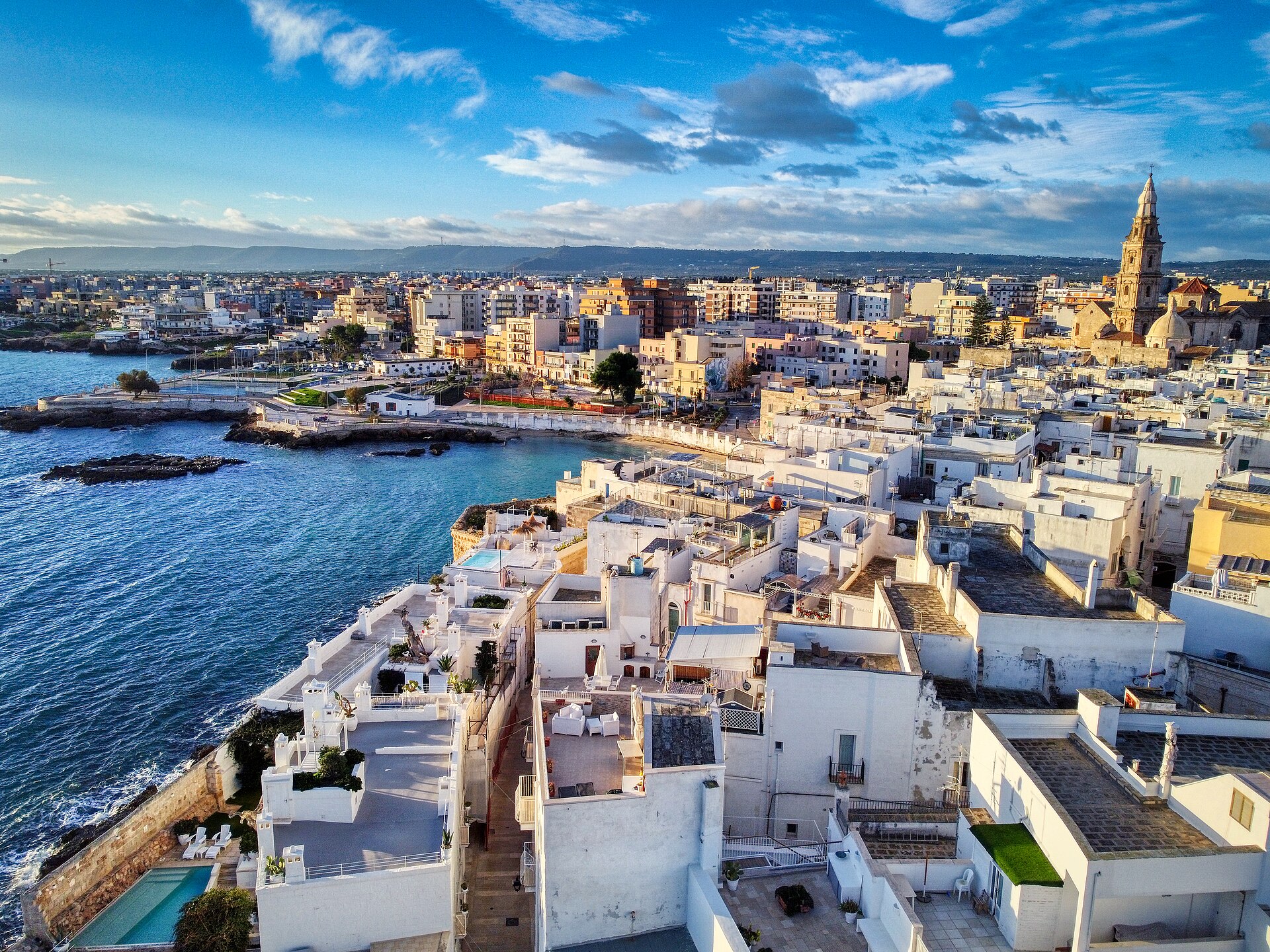
On 29 September 2026, Ennismore announced the signing of Delano Puglia, the first Italian property under the Delano brand, scheduled to open in 2028 in Monopoli, on Puglia’s Adriatic coast.
The resort will feature 76 keys, including 13 suites, alongside extensive food & beverage, wellness, social, retail and event spaces.
The project involves LIMM and Società Rinascimento Valori.
The announcement matters not simply because it brings an international brand to Puglia.
It matters because it may change the way the investment market values the destination.
From tourism destination to investment market
For many years, Puglia was primarily viewed as a leisure destination.
Masserie.
Historic villages.
Coastline.
Food and wine.
Weddings.
Experiential travel.
Boutique luxury.
The real step change occurs when a destination is no longer assessed solely on tourist demand, but on its ability to attract:
-
international brands;
-
professional capital;
-
institutional operators;
-
CAPEX-intensive developments;
-
debt providers;
-
family offices;
-
real estate funds;
-
development platforms;
-
financial and strategic advisory expertise.
That is the point at which tourism ceases to be merely a demand story and begins to behave as an investment asset class.
The arrival of Delano is one of the clearest indications of this transition.
At InvestimentiAlberghieri.it, we focus precisely on this evolution: the moment when a destination genuinely enters the radar of professional hospitality investors.
The Delano Puglia project
The resort will comprise 76 keys, including 13 suites.
The concept will have a strong lifestyle component, including:
-
a Paris Society restaurant;
-
two pool bars;
-
a lobby lounge;
-
a reinterpretation of the iconic Rose Bar;
-
The Source by Delano wellness concept;
-
event spaces;
-
retail;
-
membership;
-
social spaces.
This is therefore not simply a hotel.
It is a hospitality product designed to generate revenue from multiple business lines.
That increases its commercial potential.
But it also increases operating complexity and risk.
The real issue is not revenue. It is capital intensity
Contemporary luxury hospitality increasingly relies on multiple revenue centres.
Rooms.
F&B.
Wellness.
Events.
Membership.
Retail.
Experiences.
Yet every revenue centre also absorbs capital.
This is where the investor’s analysis truly begins.
A signature restaurant can strengthen positioning.
It can also dilute margins.
A substantial wellness facility can support ADR.
But it can require significant upfront CAPEX.
Generous public areas can enhance the guest experience.
They can also reduce real estate efficiency.
The right question is therefore not:
“How much revenue can the resort generate?”
It is:
“How much capital is required to generate that revenue, and what return does that capital produce?”
This should be the core principle behind any professional hotel investment analysis.
The brand enhances perceived value, but it cannot replace the business plan
Delano is one of the most recognisable names in the international lifestyle hospitality segment.
The brand can potentially enhance:
-
visibility;
-
distribution;
-
ADR;
-
access to international demand;
-
commercial strength;
-
perceived value;
-
future asset liquidity.
But branding does not eliminate investment risk.
An international flag can amplify a fundamentally sound project.
It cannot indefinitely turn an overcapitalised development into a compelling investment.
At Investhotel.it, we consistently emphasise this distinction: the brand is a multiplier.
It is not a substitute for financial sustainability.
How much could Delano change Puglia’s valuation benchmarks?
One of the most interesting aspects of the Delano project is its potential impact on destination benchmarks.
Every new high-end international development inevitably creates new reference points for:
ADR.
CAPEX per key.
Real estate value.
Yields.
Price per square metre.
Value per key.
Those benchmarks subsequently influence:
-
acquisitions;
-
property valuations;
-
financing transactions;
-
business plans;
-
exit assumptions;
-
comparable transactions.
This is how a single development can begin to influence an entire market.
But it also creates a risk.
A benchmark is not the same as a replicable business model.
If an internationally branded resort can sustain a certain ADR, that does not mean every property in the same destination can do so.
If one asset achieves a certain value per key, that figure cannot automatically be applied to every hotel nearby.
This is precisely one of the most dangerous analytical errors in rapidly appreciating hospitality markets.
Is Puglia at risk of a luxury investment rush?
In recent years, Italian hospitality capital has become increasingly concentrated in a number of premium destinations.
Puglia.
Sicily.
The Amalfi Coast.
Lake Como.
Tuscany.
Rome.
Venice.
The result has been a material increase in upscale and luxury supply.
This can raise the overall quality of the market.
But it can also create the risk of qualitative oversupply.
Not necessarily too many hotel rooms.
But too many rooms competing for essentially the same guest profile.
Five-star.
Lifestyle.
Wellness.
Suites.
Celebrity chefs.
Rooftops.
Experiences.
Brands.
The problem emerges when multiple projects compete for the same demand segment while carrying high fixed costs and aggressive ADR assumptions.
The risk is not simply lower occupancy.
It is lower returns on invested capital.
Puglia’s structural challenge remains seasonality
Puglia can generate exceptional demand during the core summer months.
The challenge is what happens during the rest of the year.
An internationally branded luxury resort must support:
-
highly skilled staff;
-
brand standards;
-
sophisticated F&B;
-
wellness facilities;
-
maintenance;
-
international marketing;
-
energy costs;
-
extensive public areas;
-
security;
-
landscaping;
-
fixed operating costs.
Those costs do not disappear in October.
This is where the quality of the business plan becomes visible.
The wrong question is:
“How much can a room sell for in August?”
The right question is:
“What GOP can the asset generate over a full twelve-month cycle?”
That is the metric that ultimately drives value.
The real objective: increasing economically productive days
The Delano concept appears consistent with a strategy aimed at mitigating seasonality.
Wellness.
Events.
Food & beverage.
Membership.
Lifestyle.
Experiences.
All of these components can contribute to increasing the number of economically productive days during the year.
For an investor, moving from 150 strong trading days to 220 economically meaningful days may be far more valuable than extracting an additional increase in August ADR.
That is the real industrial meaning of seasonality reduction.
Not tourism all year round as an abstract objective.
But greater utilisation of invested capital.
CAPEX per key: the number still missing
The total investment amount has not been publicly disclosed.
That is the key missing data point for a proper financial assessment.
Because ultimately everything depends on the relationship between:
Total Development Cost / Keys / EBITDA / Exit Value.
A luxury resort may achieve exceptional ADR.
But if development cost per key becomes excessive, the return profile may still be inadequate.
This is why CAPEX analysis must include:
-
land or property acquisition;
-
construction costs;
-
FF&E;
-
OS&E;
-
professional fees;
-
financing costs;
-
pre-opening costs;
-
contingency;
-
brand-related costs;
-
marketing;
-
initial working capital.
The true cost of a hotel is almost never the same as its construction cost.
The question that matters: what EBITDA must the project generate?
Hotel investment returns should not be assessed on revenue alone.
They should be assessed on the ability to produce normalised EBITDA and cash flow.
Consider a €60 million investment.
If the asset generates €3 million of EBITDA, its operating return profile is fundamentally different from that of an asset generating €6 million.
The brand may be identical.
The destination may be identical.
The number of rooms may be identical.
Yet the investment case is completely different.
This is where the advisor’s role becomes essential.
Not to describe the product.
But to test the relationship between capital deployed and returns generated.
The role of debt
A project of this nature should not be evaluated solely from an equity perspective.
The debt structure is equally important.
A lender should assess, at a minimum:
-
LTV;
-
LTC;
-
DSCR;
-
Debt Yield;
-
break-even occupancy;
-
downside ADR;
-
downside occupancy;
-
interest coverage;
-
cash sweep mechanisms;
-
financial covenants;
-
refinancing risk.
A seasonal resort also requires more rigorous stress testing than a city hotel.
Because the volatility of its cash flows is structurally different.
This is a theme we explore extensively on Investhotel.it, where a hotel is analysed simultaneously as an operating business, a real estate asset and a financing structure.
What does the exit look like for an asset such as Delano Puglia?
Every investment should begin with the end in mind.
Who could acquire the asset once stabilised?
A real estate fund?
A sovereign wealth fund?
A family office?
An operator?
An international core-plus investor?
A hospitality value-add fund?
The depth and quality of the exit market are fundamental components of today’s valuation.
A trophy asset carrying an international brand may offer greater liquidity than an independent hotel.
But once again, the price will ultimately depend on cash flow.
Not the logo.
Could Monopoli become an hospitality investment cluster?
Delano may ultimately have an impact well beyond the scale of the individual resort.
The presence of an international brand can attract:
-
additional developers;
-
other operators;
-
premium restaurants;
-
luxury services;
-
branded residences;
-
investment capital;
-
debt providers;
-
advisors;
-
infrastructure investment.
This is how hospitality clusters emerge.
The same process has already taken place in destinations such as Ibiza, Marbella, Mykonos and selected areas of the French Riviera.
The risk, however, is turning early success into excessive supply.
Asset values can only rise sustainably if demand grows with them.
Eight questions for the investment committee
Before approving an investment of this nature, an investment committee should ask at least eight questions.
1. What is the real Total Development Cost?
Not simply construction costs, but the total amount of capital absorbed by the project.
2. What stabilised ADR is required?
Not peak-season August ADR.
The sustainable annual average.
3. What is the break-even occupancy?
The point below which the business model comes under pressure.
4. What GOP margin can the project realistically generate?
Luxury does not automatically translate into high margins.
5. How much profit do F&B and wellness actually contribute?
High revenue can coexist with low profitability.
6. What is the contractual structure between owner and brand?
Management fees, incentive fees, performance tests, termination rights and owner priority.
7. How much debt can the project support?
Not how much debt the market is prepared to provide.
How much debt the project can sustainably carry.
8. What is a reasonable exit value?
And, more importantly, who is the natural buyer?
The real significance of Delano Puglia
Delano Puglia should not be viewed merely as another hotel opening.
It is a market indicator.
It suggests that Puglia is moving higher within the international hospitality hierarchy.
It indicates that global brands increasingly view the destination as sufficiently mature.
It shows that investors are beginning to assess parts of Southern Italy not merely as tourism destinations, but as genuine hospitality real estate markets.
That makes investment discipline even more important.
The faster the market grows, the greater the risk of overestimating:
-
demand;
-
ADR;
-
exit value;
-
growth;
-
value per key.
The maturity of a hospitality market should not be measured by the number of five-star hotels.
It should be measured by the quality of the investments behind them.
Investment thesis
Delano Puglia strengthens Puglia’s international positioning and may contribute to higher hospitality investment benchmarks across the region.
But the success of the investment will ultimately depend on five variables.
Disciplined CAPEX.
Sustainable ADR.
A sufficiently long operating season.
GOP consistent with the capital deployed.
An exit value supported by cash flow.
If these conditions are met, the project could become a genuine market benchmark.
If, instead, value is built primarily around expectations of destination growth and brand prestige, the project could face the classic risk of rapidly appreciating hospitality markets: paying today for the return investors hope to generate tomorrow.
Because in hospitality, the brand creates desirability.
The destination creates demand.
But cash flow is what ultimately creates value.
Delano Puglia — investment profile
Location: Monopoli, Puglia, Italy
Brand: Delano
Hospitality platform: Ennismore
Real estate partner: LIMM
Project partner: Società Rinascimento Valori
Keys: 76
Suites: 13, included within the 76 keys
Segment: Luxury lifestyle resort
Expected opening: 2028
F&B: Paris Society restaurant, Rose Bar, lobby lounge, two pool bars
Wellness: The Source by Delano
Additional components: Events, retail, membership
Disclosed investment amount: Not publicly available
Status: Signed / development pipeline
Announcement date: 29 September 2026
Hotel investment: analyse the capital before the concept
Every new hotel project should be assessed through:
-
feasibility studies;
-
business planning;
-
CAPEX analysis;
-
Total Development Cost;
-
ADR and occupancy scenarios;
-
GOP;
-
debt sizing;
-
sensitivity analysis;
-
exit value.
Our ecosystem addresses these issues across four complementary platforms:
InvestimentiAlberghieri.it — hotel investment, acquisitions, development and asset value creation.
Investhotel.it — hotel finance, debt advisory, restructuring and corporate finance.
HotelManagementGroup.it — operational advisory, hotel development and management.
RobertoNecci.it — economic and strategic analysis of the hospitality industry.
For feasibility studies, business plans, investment analysis, asset valuation and hospitality advisory:
info@investimentialberghieri.it