At a glance: APSA’s 2025 financial statements officially confirm that Domus Paolo VI will be converted into a hotel, that the required approvals have been obtained, that a prospective operator has been selected and that the parties are awaiting the signing of a preliminary agreement.
The reported 30-year term, the estimated investment of between €50 million and €60 million, and the annual rent of approximately €5 million are not disclosed in the official document but emerge from media reports. Should these figures be confirmed, the transaction would involve total nominal commitments of between €200 million and €210 million.
The conversion of Domus Internationalis Paulus VI into a hotel is not merely a story likely to fuel debate over ecclesiastical heritage, religious identity and financial sustainability.
It is, above all, one of the most significant hotel real estate value-creation projects currently being prepared in Rome’s historic centre.
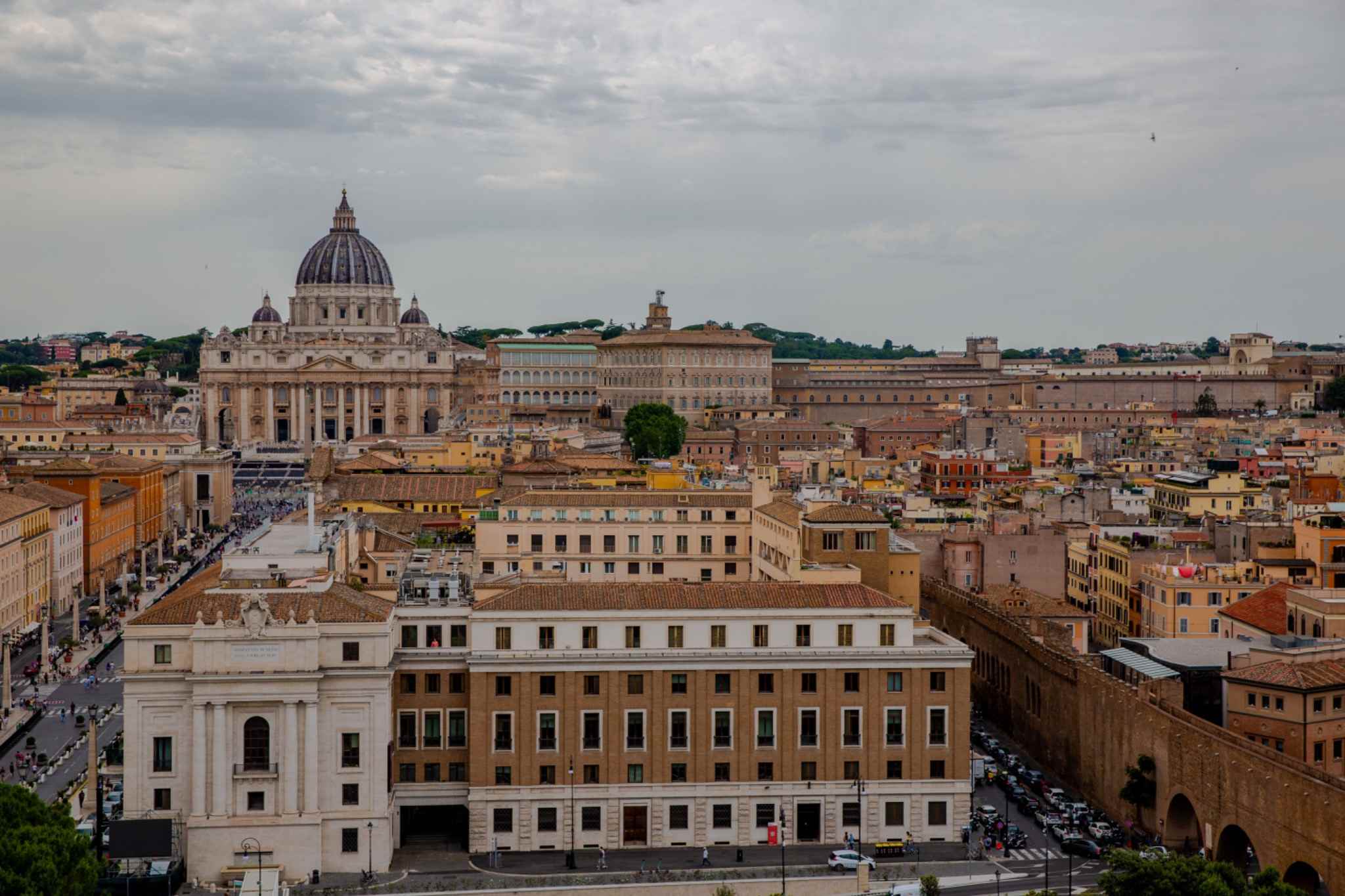
Its importance does not derive solely from its location, between Via della Scrofa, Piazza Navona and the Pantheon. It comes from the combination of five distinctive features:
-
institutional ownership;
-
a historic building;
-
substantial capital expenditure;
-
a long-term contractual structure;
-
the transfer of both property-development and operating risk to a private-sector counterparty.
The project is therefore an ideal case study for InvestimentiAlberghieri.it: a transaction in which the prestige of the asset must be converted into sufficient cash flow to support the renovation, the rent, the financing structure and the investor’s required return.
What APSA has officially confirmed
The starting point is the 2025 financial report published by the Administration of the Patrimony of the Apostolic See, commonly known as APSA.
The official document contains a particularly clear reference to Domus Paolo VI:
-
the approvals required for its conversion into a hotel have been obtained;
-
a prospective tenant or operator has been identified;
-
the parties are awaiting the signing of a preliminary agreement.
This wording confirms that the project is no longer at a purely exploratory stage. An approved conversion plan exists, a private-sector counterparty has been selected and the transaction has entered the contractual phase.
However, it is essential to distinguish between what has been officially confirmed and what has emerged through media reports.
The APSA financial statements do not disclose:
-
the identity of the future operator;
-
the final contractual term;
-
the number of hotel rooms;
-
the annual rent;
-
the required capital expenditure;
-
the hotel classification;
-
the financing structure;
-
the projected opening date.
Media reports, however, refer to a term of approximately 30 years, renovation costs estimated at between €50 million and €60 million, annual rent of close to €5 million and a four-star hotel classification.
These figures are fundamental to any investment analysis, but they will need to be verified against the final contractual documentation.
This methodological distinction is far from academic.
In the hotel sector, a five-year difference in lease duration, a €10 million capex variation or a €1 million change in annual rent can completely alter a project’s profitability.
From an ecclesiastical residence to a hotel asset
Domus Internationalis Paulus VI was originally established for a purpose entirely different from the one it is now expected to assume.
The residence was intended to accommodate clergy serving within the Roman Curia, as well as cardinals, bishops, members of the Holy See’s diplomatic service and priests visiting Rome.
In 2022, Pope Francis established Domus Vaticanae, into which the former Domus Sanctae Marthae, Domus Romana Sacerdotalis, Domus Internationalis Paulus VI and Casa San Benedetto foundations were merged. Their assets were transferred to APSA.
The conversion will therefore fundamentally change the property’s economic function.
The building will no longer be used primarily as an ecclesiastical residence. It will become an operating hotel business expected to generate revenue, profit and a return for its owner.
The transition reflects a wider trend extending well beyond Vatican-owned assets. Convents, seminaries, colleges, religious residences, public buildings and institutional properties are increasingly being converted into hospitality assets because their original use is no longer financially sustainable or cannot generate the resources required to fund major renovation works.
However, a building that can be converted into a hotel is not automatically a sound hotel investment.
The difference between value creation and value destruction depends on the sustainability of the entire financial and operating structure.
Concession, lease or hybrid contract?
Media reports have described the proposed arrangement as a “long-term concession”, while APSA’s financial statements refer to a prospective “tenant”.
The distinction is not merely semantic.
The final agreement could adopt several different structures:
-
a long-term hotel lease;
-
a concession incorporating mandatory refurbishment obligations;
-
a build-operate-transfer arrangement;
-
a right-of-use structure combined with contractual investment obligations;
-
a hybrid agreement involving a minimum guaranteed rent and a variable component;
-
a lease under which ownership of the improvements progressively passes to APSA.
Each model would have different implications for:
-
capital expenditure amortisation;
-
ownership of the completed works;
-
contractual guarantees;
-
cost deductibility;
-
rental accounting;
-
the project’s financeability;
-
residual value at the end of the term;
-
the condition in which the asset must be returned.
This is precisely the type of analysis that should precede any transaction handled through a platform such as Investhotel.it: determining the property’s value is not enough. The key issue is whether the contractual structure gives the future operator sufficient time and flexibility to recover the capital invested.
Nominal commitments could exceed €200 million
Assuming the figures reported by the media are accurate, the transaction’s nominal financial perimeter can be illustrated as follows:
| Component | Indicative amount |
|---|---|
| Annual rent | €5 million |
| Assumed term | 30 years |
| Total nominal rent | €150 million |
| Initial capex | €50–60 million |
| Total nominal commitments | €200–210 million |
It is therefore possible to describe the transaction as involving more than €200 million, but only if it is made clear that this amount represents the nominal sum of the commitments over the entire contractual term.
It does not mean that the property itself is worth €200 million.
Nor does it mean that the present financial value of the contract is €200 million.
Future rental payments must be discounted, while most of the capex would be incurred during the initial development phase. A proper discounted cash flow analysis would therefore be required to determine the actual economic value of the transaction.
Nevertheless, the nominal figure remains relevant because it demonstrates the scale of the private operator’s potential commitment.
Is annual rent of €5 million sustainable?
This is the central question.
A hotel may occupy an exceptional location, possess a unique history and enjoy a prestigious market position, but it must still generate enough cash to pay for:
-
operating costs;
-
rent;
-
debt service;
-
maintenance;
-
the FF&E reserve;
-
management fees;
-
taxes;
-
the required return on equity.
Annual rent of €5 million alone would require the following levels of revenue:
| GOP margin | Revenue required to cover rent alone |
|---|---|
| 35% | €14.3 million |
| 40% | €12.5 million |
| 45% | €11.1 million |
This calculation, however, does not take the cost of the investment into account.
The future operator would not merely be required to pay the rent. It would also have to finance a renovation project that, according to the reported figures, could cost as much as €60 million.
Financial stress test: how much revenue would the hotel really need?
To understand the potential scale of the hotel operation, it is useful to construct a purely illustrative scenario.
Working assumptions
| Item | Assumption |
|---|---|
| Capex | €55 million |
| Debt | 60%, equal to €33 million |
| Equity | 40%, equal to €22 million |
| Cost of debt | 6% |
| Debt amortisation period | 20 years |
| Estimated annual debt service | Approximately €2.9 million |
| Annual rent | €5 million |
| Target cash-on-cash return on equity | 10% |
| Expected annual equity return | €2.2 million |
Under these assumptions, the GOP required to cover rent, debt service and the minimum target return on equity would be approximately €10.1 million.
This would imply the following levels of annual hotel revenue:
| GOP margin | Indicative annual revenue |
|---|---|
| 35% | €28.8 million |
| 40% | €25.2 million |
| 45% | €22.4 million |
This is not a forecast and should not be interpreted as a valuation of the project.
It is a stress test based on conventional assumptions, designed solely to demonstrate the potential order of magnitude involved.
Furthermore, it does not fully account for:
-
pre-opening expenditure;
-
interest accrued during construction;
-
construction cost overruns;
-
reserves for future refurbishment;
-
base and incentive management fees;
-
taxation;
-
indexed rent;
-
additional capex required during the 30-year term.
The actual break-even threshold could therefore be higher.
The number of rooms is the critical missing variable
Without knowing the number of rooms, any assessment remains incomplete.
Annual revenue of €25 million has a completely different meaning in an 80-room hotel than it does in a 120-room or 180-room property.
To illustrate the issue, let us assume:
-
total annual revenue of €25 million;
-
rooms revenue representing 70% of total revenue;
-
average occupancy of 75%.
The required average daily rate would vary as follows:
| Number of rooms | Indicative required ADR |
|---|---|
| 80 | Approximately €800 |
| 100 | Approximately €640 |
| 120 | Approximately €533 |
| 150 | Approximately €426 |
| 200 | Approximately €320 |
Again, this is only a sensitivity analysis.
The final result would depend on how much revenue is generated by restaurants, events, rooftop venues, meeting spaces, wellness facilities and other ancillary services.
The table nevertheless highlights a fundamental point: if the hotel has a relatively limited number of rooms, it will necessarily require genuine luxury-level pricing, regardless of its official classification.
Four stars on the plaque, luxury in the P&L
According to media reports, the project may have moved away from an initial five-star concept in favour of a four-star classification, partly for reasons of image and consistency with the ecclesiastical nature of the asset.
From an economic perspective, however, the number of stars does not solve the underlying problem.
A hotel located between the Pantheon and Piazza Navona, involving potential initial investment of more than €50 million and reported annual rent of approximately €5 million, cannot operate as a conventional four-star property.
It will probably need to be:
-
four-star in its official classification;
-
upper-upscale or luxury in its product positioning;
-
premium in its pricing strategy;
-
international in its distribution;
-
exceptionally efficient in its operations.
Its sustainability will depend on ADR, RevPAR, TRevPAR, GOP and free cash flow, not on the plaque displayed outside the entrance.
The positioning strategy must avoid two opposite mistakes.
The first would be to create a product that is too restrained to support the required rental burden.
The second would be to develop a hotel formally classified as four-star but carrying five-star luxury service costs without being able to pass those costs on through higher room rates.
Commercial strategy, distribution and pricing must therefore be defined before opening, following an approach similar to that developed by HotelMarketingLab.it: product, demand, price and distribution channels must be aligned from the business-planning stage onward.
What type of operator could support a project of this scale?
The future operator will require a very specific set of capabilities.
A well-known brand will not be enough, nor will an operator whose only strength is the ability to generate high occupancy.
The selected counterparty will need:
-
experience in managing historic buildings;
-
proven pre-opening and hotel-launch capabilities;
-
access to international source markets;
-
strong distribution power;
-
financial discipline;
-
the ability to generate ancillary revenue;
-
rigorous control of labour costs;
-
a reputation consistent with the owner’s institutional profile;
-
the capacity to invest substantial capital;
-
sufficient financial strength to provide guarantees.
Operating an asset of this nature will require structured processes, tight margin control and the ability to preserve the property’s positioning over time, issues that sit at the heart of the work developed by NecciHotels.it.
A brand name alone does not guarantee success.
An operator may increase revenue while simultaneously destroying economic value if that revenue is achieved through excessive staffing costs, high commissions or an oversized organisational structure.
The contract must protect both parties
In a 30-year relationship, negotiating the initial rent is not enough.
The agreement will need to regulate several crucial matters with absolute precision.
Economic commencement date
Will rent become payable upon delivery of the property, at the start of construction, upon completion of the works or only when the hotel opens?
A 24-month delay in obtaining approvals could affect the return on investment by several million euros.
Indexation
An initial rent of €5 million subject to full indexation could become significantly more expensive over the life of the contract.
Capex and variations
The agreement must establish who will bear the cost of:
-
unforeseen structural issues;
-
additional regulatory requirements;
-
heritage authority prescriptions;
-
construction cost inflation;
-
changes in legislation;
-
works not included in the original budget.
Guarantees
The owner will presumably require guarantees covering both rental payments and completion of the renovation. The operator must ensure that excessive guarantees do not absorb the liquidity required for pre-opening and ramp-up.
Return condition
The parties must define the required condition of the asset upon expiry, as well as ownership of furniture, fixtures, equipment, systems and non-removable improvements.
Rebalancing mechanisms
A 30-year contract will pass through economic cycles, geopolitical crises, technological disruption and profound changes in travel demand.
Without appropriate rebalancing mechanisms, an agreement that appears sustainable at the outset may eventually become unmanageable.
Performance and permitted use
The owner will need to protect the identity of the asset, while the operator must retain sufficient flexibility to adapt the product and services to future market conditions.
A transaction consistent with APSA’s new real estate strategy
The Domus Paolo VI conversion forms part of a broader strategy.
APSA’s 2025 financial statements report net assets of €2.686 billion, an increase of approximately €89 million compared with 2024. The real estate portfolio generated a result of €44.5 million, compared with €35.1 million in the previous year.
These figures demonstrate that property management is no longer being treated as a passive function.
The objective is to preserve the portfolio while also increasing its capacity to generate income and fund the institutional activities of the Holy See.
Domus Paolo VI may therefore represent a form of asset-light ownership:
-
the owner retains the property;
-
the private operator funds the capex;
-
the operating risk is transferred;
-
the owner receives recurring income;
-
at the end of the term, the owner may recover a fully renovated asset.
This structure could also be attractive to foundations, religious institutions, public authorities, family owners and institutional investors holding prestigious properties but lacking either the capital or the expertise required to convert them directly.
As frequently highlighted in the analyses published by RobertoNecci.it, however, transferring risk does not mean eliminating it.
Excessive rent can weaken the tenant, delay future investment, compromise maintenance standards and ultimately reduce the long-term value of the property.
The project’s real risks
Capex risk
Renovation projects involving historic buildings frequently generate cost overruns, design variations and delays that cannot be fully anticipated at the outset.
Planning and approval risk
Hotel conversion may require complex approvals relating to heritage protection, structural safety, fire prevention, accessibility, building systems and permitted use.
Financing risk
An increase in the cost of capital or an extension of the construction period could materially reduce the project’s internal rate of return.
Operating risk
A hotel that is expensive to operate, because of oversized rooms, extensive public spaces or an excessively complex service offering, may generate a lower GOP than initially projected.
Reputational risk
The conversion of an ecclesiastical residence will have to be communicated carefully, avoiding the perception that financial optimisation has replaced the property’s original religious or social purpose.
Contractual risk
Unless the contract duration, rental burden and ownership of improvements are perfectly aligned, the operator may be unable to recover its investment.
The building’s history can become part of its hotel value
The history of the property should not be viewed as a commercial limitation.
It could become one of the future hotel’s most powerful differentiating features.
However, the building’s heritage cannot be reduced to artificial staging.
Architecture, interior design, food and beverage, communication and service culture must create an identity that is respectful, distinctive and contemporary.
The most effective concept will not necessarily be the most ostentatious.
It will be the one capable of transforming restraint, history and location into an experience for which international guests are willing to pay a premium.
The real question is not whether the hotel will work
The location is exceptional.
Demand for accommodation in central Rome clearly exists.
The historic character of the asset is almost impossible to replicate.
Yet none of these factors automatically guarantees profitability.
The correct question is:
Will the future hotel generate enough cash flow to support up to €60 million in capital expenditure, annual rent of approximately €5 million, the ongoing renewal of the asset and an adequate return for the investor?
Only the final business plan, the contractual structure and the actual number of rooms can provide the answer.
Domus Paolo VI could become a benchmark for the transformation of Italy’s religious real estate portfolio.
It could demonstrate that institutional owners and private capital can work together without permanently disposing of historic assets.
But it could also become a case in which the prestige of the location conceals an excessively fragile financial structure.
In hospitality investment, the real estate creates the opportunity.
The operating model determines the outcome.
Are you considering converting a property into a hotel?
A historic building, former religious residence or landmark property in the centre of a major city should not be presented to investors through a conventional real estate valuation alone.
Before approaching funds, operators, lenders or hotel groups, the project requires:
-
a feasibility study;
-
product and positioning analysis;
-
verification of the optimal room count;
-
an independent capex assessment;
-
a detailed business plan;
-
financial stress testing;
-
rental sustainability analysis;
-
operator selection;
-
contractual analysis;
-
a financing strategy;
-
a value-creation and exit plan.
Hotel Management Group advises property owners, investors, institutions, funds and hotel operators on the assessment, conversion, management and value creation of hospitality assets.
Do not sign a 30-year concession, a hotel lease or an operator agreement based solely on the prestige of the property.
Contact r.necci@robertonecci.it today to obtain an independent assessment of the transaction. A mistake in the rent, capital expenditure assumptions or contractual structure can destroy in just a few years the value accumulated over decades.