Thirty-three rooms.
A former convent.
A former prison.
Approximately 13,000 square metres.
An arena.
A museum.
Restaurants.
Artisan retail.
Events.
And total investment of approximately:
€25 million.
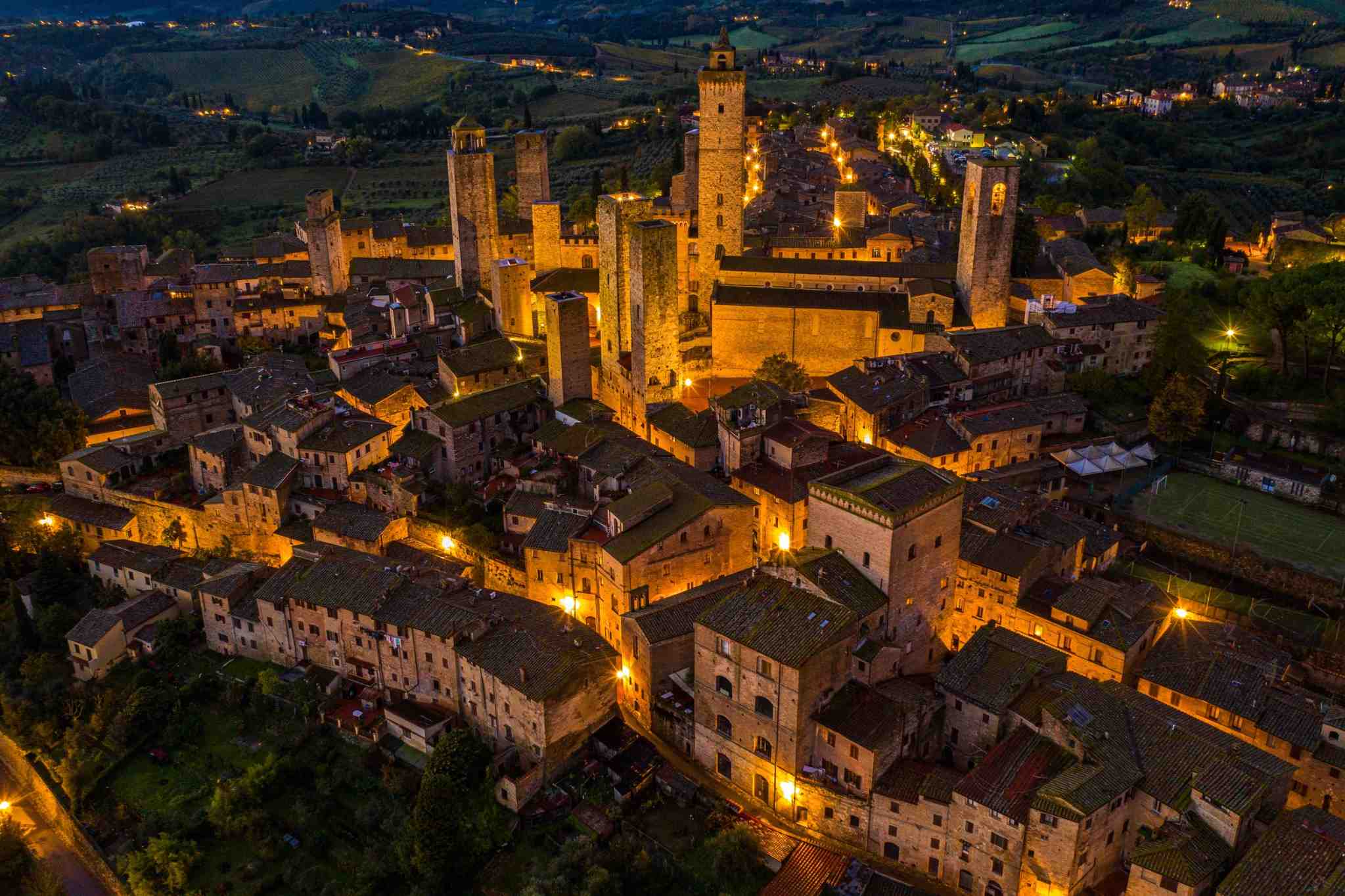
On 29 September 2026, Minor Hotels announced the signing of ExCelle Hotel San Gimignano, Colbert Collection, scheduled to open in 2027 within the historic San Domenico complex.
The hotel will comprise 33 rooms within the former convent and join Colbert Collection, Minor Hotels’ premium soft brand for distinctive independent properties closely connected to their location, culture and guest experience.
But describing the transaction simply as:
“a former convent becoming a hotel”
would miss almost entirely the economic significance of the project.
Because ExCelle is not a hotel surrounded by a few ancillary functions.
It is a:
cultural mixed-use development
within which hospitality represents one of the principal monetisation engines.
That is precisely what makes the project particularly relevant for InvestimentiAlberghieri.it.
The First Mistake Would Be to Divide €25 Million by 33 Rooms
Total investment for the wider regeneration project is approximately:
€25 million.
Dividing that figure mechanically by the 33 hotel rooms would produce:
approximately €758,000 per key.
An impressive number.
And almost certainly:
the wrong metric.
Because the €25 million does not fund the hotel alone.
It supports the regeneration of approximately:
13,000 sqm
including:
-
hospitality;
-
museum space;
-
cultural areas;
-
arena;
-
events;
-
restaurants;
-
artisan retail;
-
public circulation;
-
community spaces;
-
historic and architectural restoration.
Therefore:
€25M / 33 keys ≠ Hotel CAPEX per Key.
That distinction is fundamental.
Project Capital per Key Is Not Hotel Investment per Key
The €758,000 figure can only be described as:
Gross Project Capital per Hotel Key.
It is not the true investment cost of each hotel room.
To calculate genuine hotel investment per key, the analysis would first need to isolate:
Hotel CAPEX
Hotel FF&E
Hotel OS&E
Hotel Pre-opening
Hotel Working Capital
=
Hotel Capital Employed.
Only that figure, divided by 33 rooms, would provide a meaningful:
Hotel Investment per Key.
Anything else risks confusing:
urban regeneration capital
with:
hospitality capital.
The Hospitality Programme Itself Appears to Have Evolved
There is another particularly interesting point.
Municipal documentation presented in February 2026 referred to:
25 rooms
and:
70 beds.
Minor Hotels’ announcement of 29 September instead refers to:
33 rooms.
This suggests that the hotel programme has been refined or modified as the project developed.
That is entirely normal in a complex conversion.
The more interesting question is:
why 33?
Because the optimal number of keys should not simply be dictated by the historic configuration of the building.
It should result from:
Product Strategy
Room Size
Heritage Constraints
ADR Potential
Operating Efficiency
=
Economically Optimal Key Count.
Historical Cells ≠ Economically Optimal Keys
The rooms will be created within former convent cells.
From a storytelling perspective, that is exceptionally powerful.
But history should not become an economic constraint.
In premium and luxury heritage hospitality:
Historical Configuration
does not necessarily have to determine:
Commercial Configuration.
Some cells may become guestrooms.
Others may be combined.
Others may become:
-
suites;
-
common areas;
-
circulation space;
-
guest services;
-
back-of-house facilities.
The challenge is to preserve the heritage without converting it into:
operational inefficiency.
Colbert Collection: A Soft Brand, Not Standardisation
The choice of Colbert Collection appears particularly coherent with this logic.
A soft brand serves a different purpose from a highly standardised hotel brand.
It should allow the property to preserve:
Individual Identity
while gaining:
Distribution + Brand Architecture + Commercial Infrastructure.
The ideal equation is:
Independent Character
International Distribution
=
Branded Independence.
For a property such as San Domenico, this could be a particularly effective combination.
But the Brand Is Not the Business Plan
Joining Colbert Collection may improve:
-
distribution;
-
international visibility;
-
positioning;
-
access to premium demand;
-
brand credibility.
But it does not automatically solve:
-
payroll;
-
seasonality;
-
F&B economics;
-
maintenance;
-
energy costs;
-
operating complexity;
-
weak-day demand.
Because:
Brand Recognition ≠ Sustainable EBITDA.
Value is created only when:
Brand
Product
Operations
Demand
Cost Discipline
=
Sustainable Cash Flow.
The Real Asset Is Not the Hotel. It Is the Ecosystem.
This is probably the most important point.
San Domenico is not simply being converted into accommodation.
It is being transformed into:
a new cultural ecosystem.
The hotel sits alongside:
-
museum functions;
-
arena;
-
theatre;
-
events;
-
restaurants;
-
craftsmanship;
-
retail;
-
cultural routes;
-
public spaces.
The business case should therefore be analysed through:
Ecosystem Economics.
Not simply:
Hotel Economics.
Culture → Footfall → Hospitality
The underlying logic can be extremely powerful.
Culture
creates:
Footfall.
Footfall generates:
F&B
Events
Retail
Hotel Demand.
The hotel, in turn, produces:
-
restaurant customers;
-
event demand;
-
retail spend;
-
cultural participation.
The sequence can become:
Culture
↓
Footfall
↓
Spend
↓
Overnight Demand
↓
Higher Guest Value
↓
Ecosystem Revenue.
That is the real potential of mixed-use hospitality.
But the Opposite Risk Also Exists
Combining multiple uses does not automatically create value.
It can create:
complexity.
Museum.
Hotel.
Arena.
Restaurants.
Retail.
Events.
Artisan workshops.
Public space.
Each component has different:
-
opening hours;
-
staffing requirements;
-
cost structures;
-
maintenance needs;
-
demand patterns;
-
seasonality;
-
margins.
The critical question therefore becomes:
do these functions feed each other, or do they subsidise each other?
The distinction is substantial.
Cross-Selling or Cross-Subsidy?
Mixed-use works when:
Museum Visitors
become:
Restaurant Customers.
Hotel guests purchase:
Experiences.
Events generate:
Rooms Demand.
F&B generates:
External Footfall.
That is:
Cross-Selling.
The model becomes more problematic when:
A Profitable Hotel
has to support:
Structurally Loss-Making Functions.
That is:
Cross-Subsidy.
The first creates value.
The second can destroy it.
Each Component Should Have Its Own P&L
To understand ExCelle’s true sustainability, the analysis should separate:
Hotel P&L
F&B P&L
Events P&L
Museum Economics
Retail Economics
Cultural Programming Costs.
Only afterwards should these be consolidated into:
Consolidated Ecosystem EBITDA.
That is the number that should measure the industrial sustainability of the entire complex.
Project Financing Changes the Investment Horizon Completely
The project is being developed under a:
69-year concession.
This is economically significant.
It allows value creation to be spread over an exceptionally long period.
Capital therefore does not necessarily have to be recovered through:
immediate asset appreciation.
It can be remunerated through:
decades of operating cash flow.
The relevant framework becomes less about:
Development Margin
and much more about:
Long-Term Concession Economics.
€25 Million Over 69 Years Has to Be Read Differently
A €25 million investment made to acquire and resell an asset after five years has one economic profile.
A €25 million investment embedded in a 69-year concession has another.
The latter can potentially be supported by:
-
hotel cash flow;
-
F&B;
-
events;
-
retail;
-
cultural revenue;
-
ancillary income;
-
progressive destination maturity.
The appropriate underwriting should therefore focus on:
Long-Duration Cash Flow.
But a Long Concession Does Not Eliminate Risk
It changes it.
A 69-year concession exposes the project to:
-
economic cycles;
-
changing tourism patterns;
-
technological disruption;
-
major maintenance;
-
FF&E renewal;
-
shifts in demand;
-
cost inflation;
-
future changes in operating models.
Therefore:
Long Duration
also requires:
Long-Term Capital Discipline.
A 33-Key Hotel Cannot Be Analysed as a Standalone Hotel
With 33 rooms, theoretical annual inventory is:
33 × 365
=
12,045 available room nights.
If this were a standalone hotel, its limited scale would require close control of:
-
payroll;
-
fixed costs;
-
service intensity;
-
distribution;
-
F&B.
But ExCelle is not isolated.
It can use the wider ecosystem to generate:
Demand.
And this is where the mixed-use model can fundamentally alter hotel economics.
Three Scenarios for the Rooms Component Alone
The hotel's business plan is not publicly available.
The following figures are not forecasts.
They are purely methodological scenarios designed to illustrate the sensitivity of the hotel component.
Scenario A — Conservative
Occupancy:
60%
ADR:
€300
Room nights sold:
7,227
Rooms Revenue:
approximately €2.17 million.
Scenario B — Premium Heritage
Occupancy:
68%
ADR:
€400
Room nights sold:
8,191
Rooms Revenue:
approximately €3.28 million.
Scenario C — High Performance
Occupancy:
75%
ADR:
€500
Room nights sold:
9,034
Rooms Revenue:
approximately €4.52 million.
These figures immediately demonstrate the importance of:
Pricing Power.
Across only 33 rooms, €100 of ADR can materially alter the economics of the business.
But Stopping at Rooms Revenue Would Again Be the Wrong Analysis
The real business case should integrate:
Rooms Revenue
F&B
Events
Retail
Cultural Revenue
Ancillary Spend
=
Total Ecosystem Revenue.
This is where the development can become significantly more interesting than a conventional boutique hotel.
The Real Stress Test: What Does the Entire Ecosystem Need to Produce?
Three purely methodological scenarios can help frame the economics.
They are not forecasts.
Their purpose is to understand the scale of performance that could make approximately:
€25 million
of total project capital economically coherent.
Scenario 1 — Weak Ecosystem
Assume:
Rooms Revenue
€2.2 million
F&B
€1.3 million
Events
€500,000
Retail / Culture / Ancillary
€500,000
Total Revenue:
approximately €4.5 million.
At a consolidated EBITDA margin of:
15%
the complex would generate:
approximately €675,000 of EBITDA.
Relative to €25 million of project capital:
EBITDA / Project Capital ≈ 2.7%.
Under this scenario, the development could remain highly significant culturally, but:
economically underproductive relative to the capital invested.
Scenario 2 — Sustainable Ecosystem
Assume:
Rooms Revenue
€3.3 million
F&B
€2.0 million
Events
€1.0 million
Retail / Culture / Ancillary
€700,000
Total Revenue:
approximately €7.0 million.
At a consolidated EBITDA margin of:
25%
EBITDA would be:
approximately €1.75 million.
Relative to €25 million:
EBITDA / Project Capital ≈ 7.0%.
At this level, the economics change materially.
The mixed-use platform begins to demonstrate its ability to:
remunerate capital
rather than merely:
preserve heritage.
Scenario 3 — High-Performance Ecosystem
Assume:
Rooms Revenue
€4.5 million
F&B
€3.0 million
Events
€1.5 million
Retail / Culture / Ancillary
€1.0 million
Total Revenue:
approximately €10 million.
At a consolidated EBITDA margin of:
30%
the complex would generate:
approximately €3 million of EBITDA.
On €25 million of project capital:
EBITDA / Project Capital ≈ 12%.
At this level, ExCelle would no longer be simply a regeneration project.
It would become:
a high-productivity economic platform.
These Scenarios Are Not Forecasts
This distinction is essential.
The following information is not publicly available in sufficient detail:
-
the business plan;
-
CAPEX allocation;
-
concession payments;
-
financial structure;
-
cost allocation;
-
public contributions;
-
debt;
-
cost of debt;
-
working capital;
-
cultural revenue structure.
The scenarios therefore serve an exclusively:
methodological
purpose.
But the underlying principle is clear.
On €25 million of project capital:
€700,000 of EBITDA
and:
€3 million of EBITDA
represent two completely different investment cases.
The Real Variable Is Not the Number of Rooms. It Is the Productivity of 13,000 sqm.
This is what changes the analysis.
The most interesting KPI may not be:
EBITDA per Key.
It may be:
EBITDA per sqm.
Because the entire complex must demonstrate that it can use:
13,000 square metres
productively.
The equation becomes:
Total Ecosystem EBITDA
/
13,000 sqm
=
EBITDA per sqm.
That metric is particularly useful when comparing:
-
hospitality;
-
F&B;
-
cultural space;
-
retail;
-
events.
Mixed-Use Can Increase Total Revenue per Guest
An ExCelle guest could potentially spend across:
Room
Restaurant
Bar
Cultural Experience
Event
Retail.
The relevant KPI therefore becomes:
Total Guest Value.
Not simply:
Room Revenue.
Revenue per Guest May Matter More Than RevPAR
RevPAR will remain fundamental to the hotel.
But the wider complex may benefit from a broader measure:
Revenue per Visitor
or:
Revenue per Guest.
A guest paying €400 for a room and another €250 across the wider ecosystem may represent:
€650 of total spend.
That integration is what can economically justify mixed-use.
The 1,000+ Seat Arena Could Become a Demand Engine
The project includes a major component dedicated to theatre, opera and events.
This needs to be considered from a hospitality perspective.
An event can generate:
External Visitors
↓
F&B Demand
↓
Overnight Demand
↓
Compression.
And compression can generate:
ADR Premium.
In other words:
Event Programming can become Revenue Management.
But It Needs a Calendar, Not Merely a Venue
A major arena creates economic value only if it is:
programmed.
Space alone does not generate cash flow.
It requires:
-
events;
-
scheduling;
-
partnerships;
-
ticketing;
-
sponsorship;
-
corporate functions;
-
destination events;
-
cultural programming.
The distinction is between:
Event Space
and:
Event Business.
They are entirely different propositions.
San Gimignano Already Has Demand. ExCelle Needs to Change the Quality of That Demand.
The project's advantage is clear.
San Gimignano does not need to be invented as a destination.
It is already:
-
UNESCO-listed;
-
internationally recognised;
-
culturally powerful;
-
firmly established within Tuscany's major tourism itineraries.
The challenge for destinations of this type is often:
high visitor footfall
combined with:
limited length of stay.
That is precisely where ExCelle can become strategically relevant.
From Visit Destination to Stay Destination
The project could create value through:
Day Visitors
↓
Cultural Experience
↓
Evening Programming
↓
Dining
↓
Overnight Stay
↓
Longer Length of Stay.
If ExCelle can convert even a proportion of day visitors into overnight guests:
it creates additional hotel demand.
It does not simply redistribute existing demand among existing hotels.
Demand Capture vs Demand Creation
The distinction is fundamental.
Demand Capture
means winning customers already in the market.
Demand Creation
means generating new overnight stays because of the product itself.
A €25 million project should ideally aspire to the second.
Because:
New Demand
creates more value than:
Market Share Redistribution.
Heritage Must Become Pricing Power
Former convent.
Former prison.
Historic cells.
Cloister.
Underground spaces.
Historic walkways.
These are exceptionally powerful storytelling assets.
But heritage needs to translate into:
willingness to pay.
The sequence should be:
Heritage
↓
Differentiated Experience
↓
Guest Preference
↓
ADR Premium
↓
Higher GOP
↓
Higher Value.
Without the ADR premium:
heritage remains culture.
Not necessarily:
hospitality economics.
The Soft Brand Must Amplify That Difference
Colbert Collection may be particularly effective if it can combine:
ExCelle Identity
with:
Minor Hotels Distribution.
The result should be:
Local Uniqueness
Global Reach
=
Commercial Leverage.
This is precisely the relationship between product, distribution and economic value also explored by RobertoNecci.it.
The Real Risk Is Loading the Hotel With Costs That Belong to the Wider Complex
A cultural mixed-use project always carries one particular risk.
An excessive share of the following may be allocated to the hotel:
-
security;
-
maintenance;
-
utilities;
-
shared staffing;
-
marketing;
-
management of public spaces;
-
administrative costs.
If cost allocation is not properly structured:
Hotel EBITDA
may appear artificially weak.
Or artificially strong.
This is why the project requires:
Shared Cost Allocation Rules.
Shared Services Must Create Efficiency
The positive logic is:
Central Administration
Shared Maintenance
Shared Marketing
Shared Procurement
Integrated Sales
=
Lower Unit Costs.
But only if the savings exceed:
Coordination Complexity.
This is also one of the key operating issues examined by HotelManagementGroup.it.
The Investment Must Be Analysed at Three Levels
Level 1 — Hotel Economics
Measure:
-
ADR;
-
occupancy;
-
RevPAR;
-
GOPPAR;
-
hotel EBITDA;
-
cost per occupied room;
-
F&B capture.
Level 2 — Ecosystem Economics
Measure:
-
museum footfall;
-
event attendance;
-
external F&B;
-
retail spend;
-
cultural revenues;
-
total visitor spend;
-
shared costs;
-
consolidated EBITDA.
Level 3 — Capital Economics
Measure:
-
Total Capital Employed;
-
EBITDA / Project Capital;
-
debt service;
-
cash yield;
-
ROIC;
-
potential Equity IRR;
-
concession duration;
-
future reinvestment requirements.
Only by combining all three levels is it possible to understand whether the project:
genuinely creates value.
€25 Million Is Not the Benchmark. What That €25 Million Produces Is.
The same discipline applies to every hospitality investment.
The question is not:
“Is €25 million a lot?”
It is:
“How much sustainable cash flow can €25 million produce?”
The framework therefore becomes:
€25M Project Capital
↓
Hotel + Culture + Events + F&B + Retail
↓
Consolidated Revenue
↓
Consolidated EBITDA
↓
Long-Term Cash Flow
↓
Return on Capital.
Cost ≠ Value
Spending €25 million to restore an extraordinary heritage complex does not automatically create €25 million of economic value.
The sequence must be:
Capital
↓
Better Asset
↓
Better Experience
↓
Higher Demand
↓
Higher Spend
↓
Higher Cash Flow
↓
Higher Economic Value.
If this sequence works:
CAPEX Creates Value.
If it does not:
CAPEX Creates Cost.
The Project Has Another Responsibility: Not to Turn Heritage Into Scenery
There is a particularly sensitive risk in heritage hospitality.
Using history as:
decorative theme.
San Domenico is not scenery.
It is a former convent.
It was a prison.
It is part of the city's memory.
Effective regeneration should therefore avoid trivialising that past by converting it merely into:
luxury storytelling.
The strongest value may come precisely from:
authenticity.
Luxury Does Not Need to Erase Memory
The project can be premium without neutralising its historic identity.
In fact, in today's hospitality market:
Authenticity Can Be Luxury.
Scarcity does not derive only from:
-
marble;
-
design;
-
service.
It can derive from something no competitor can reproduce:
the place itself.
This Is ExCelle’s Real Competitive Advantage
A hotel can replicate:
-
a restaurant;
-
a design concept;
-
a spa;
-
a guestroom.
It cannot replicate:
San Domenico.
It cannot replicate:
seven centuries of layered history.
It cannot replicate:
being inside San Gimignano.
That is:
Structural Differentiation.
And it is probably the most important competitive asset in the entire project.
The ExCelle San Gimignano Investment Framework
The investment can therefore be summarised as follows:
Historic Convent + Former Prison
↓
69-Year Concession
↓
€25M Regeneration Capital
↓
13,000 sqm Mixed-Use Complex
↓
Culture + Hospitality + Events + F&B + Retail
↓
33-Room Colbert Collection Hotel
↓
Footfall
↓
Guest Conversion
↓
Total Spend per Visitor
↓
Consolidated EBITDA
↓
Long-Term Cash Flow
↓
Return on Capital.
That is the real economic architecture.
Not:
€25 million / 33 rooms.
Conclusion: The 33 Rooms Do Not Need to Remunerate €25 Million. They Need to Make 13,000 sqm More Productive.
That is perhaps the key to the entire investment.
Reading ExCelle simply as:
a 33-room hotel
means understanding only a small part of the project.
The real investment involves:
13,000 sqm of historic real estate being transformed into an economic ecosystem.
The guestrooms nevertheless play a critical role.
Because they can convert:
visitors
into:
overnight guests.
And therefore transform:
Footfall
into:
High-Value Demand.
The real equation becomes:
Culture Creates Footfall.
Events Create Demand.
Hospitality Extends the Stay.
F&B Increases Spend.
Brand Expands Distribution.
Operations Create EBITDA.
EBITDA Creates Cash Flow.
Cash Flow Remunerates Capital.
If this integration works, ExCelle could become a benchmark not merely for cultural regeneration.
It could become:
a mixed-use hospitality model demonstrating that heritage, culture and private capital can create value within the same investment platform.
If, however, the different functions fail to generate demand for one another, the opposite risk emerges:
an extraordinary architectural and cultural project that is economically too complex.
And that is precisely the line separating:
great regeneration
from:
a great investment.
InvestimentiAlberghieri.it | Hospitality Investment & Value Creation
ExCelle San Gimignano demonstrates why a mixed-use hospitality investment should be analysed by integrating:
Concession + CAPEX + Heritage + Hospitality + Culture + Events + F&B + Retail + Distribution + Consolidated EBITDA + Long-Term Cash Flow + Return on Capital.
For analysis of hotel economics, positioning, governance and value: RobertoNecci.it.
For acquisitions, developments, turnarounds, value creation and extraordinary hospitality transactions: Investhotel.it.
For business planning, organisation, revenue management and performance control: HotelManagementGroup.it.
For hotel and mixed-use investment analysis, development and hospitality asset value creation: