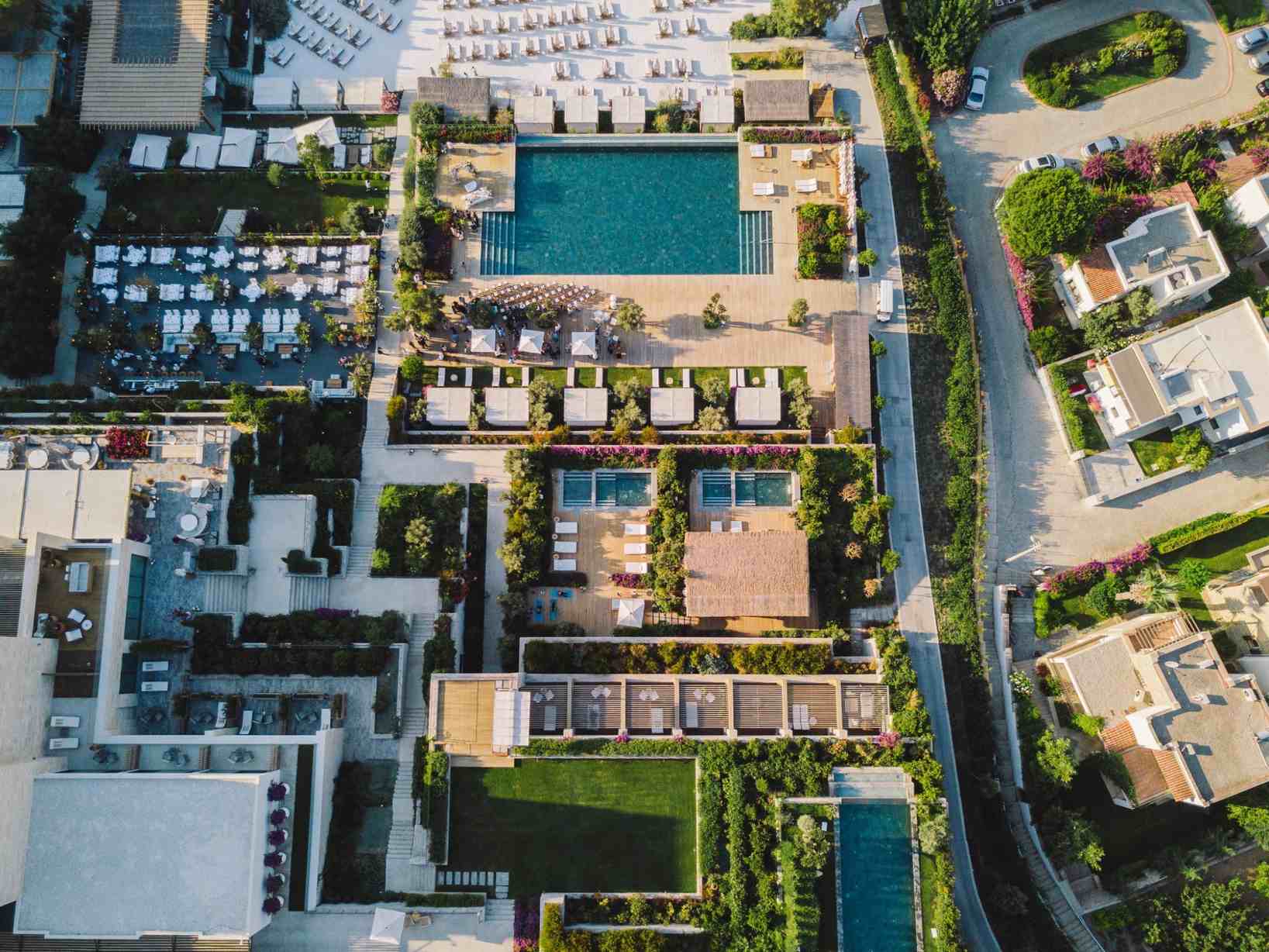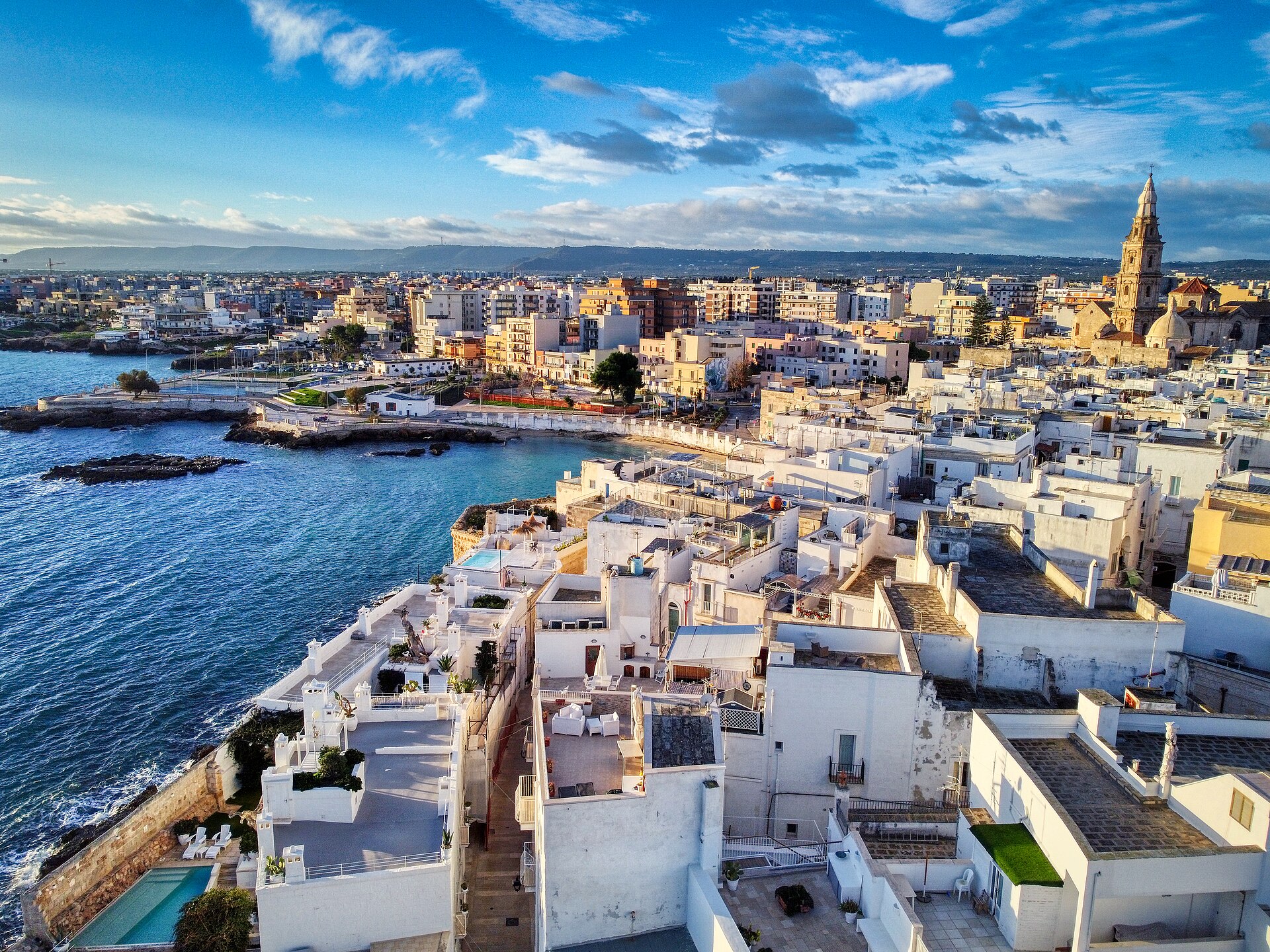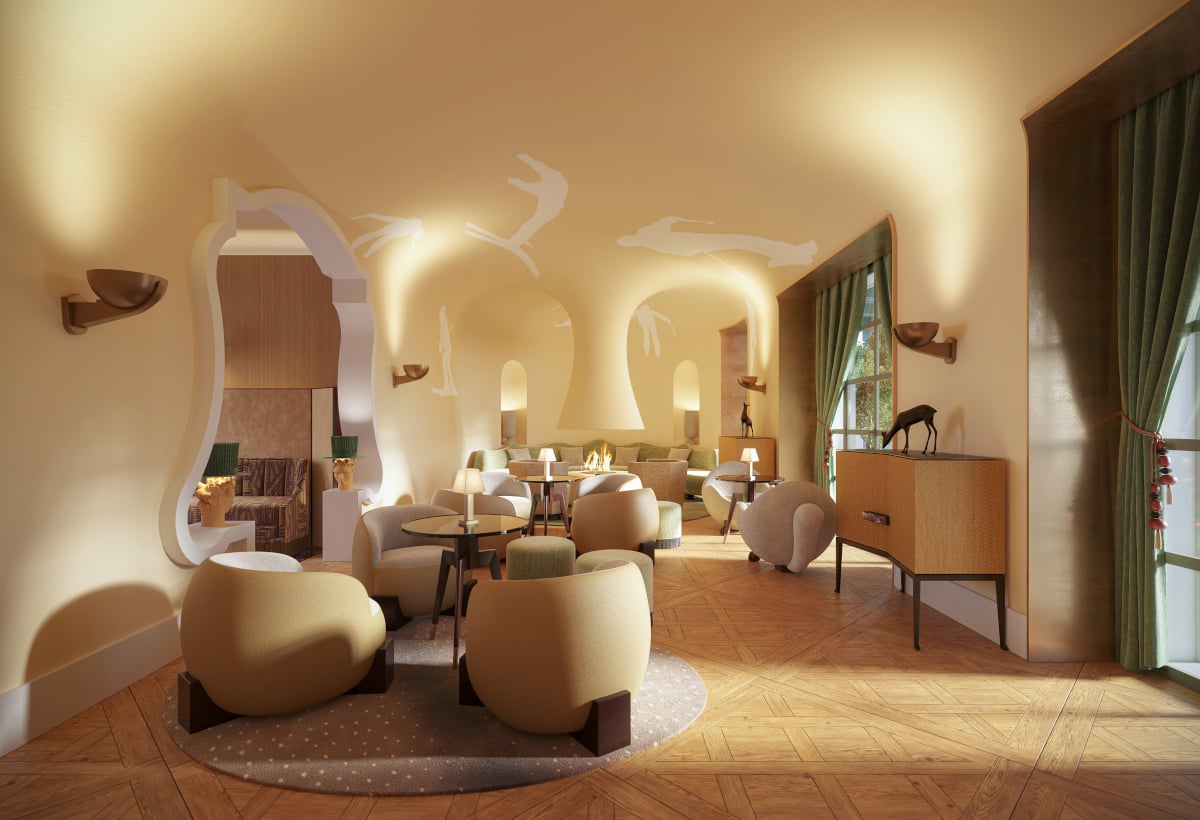
Three destinations, a small number of assets, irreplaceable properties and long-term family capital. Le Graal is not yet a hotel chain: it is an asset-backed platform attempting to combine prime real estate, hospitality and community into a single luxury proposition.
Analysis updated as of 18 August 2026.
One point needs to be made clear from the outset.
MAIRE S.p.A. is not entering the hotel business.
Le Graal is a project led by Fabrizio Di Amato through his family office, developed alongside Giuseppe Ambrosi. It does not sit within the operating perimeter of listed MAIRE and should therefore not be interpreted as a diversification move by the engineering and energy-transition technology group.
That distinction matters.
What makes Le Graal interesting is not that an industrial group has decided to become a hotel operator. It is that long-term Italian private capital is building a proprietary luxury hospitality platform around highly scarce real estate assets.
That is precisely why the project deserves attention from anyone following hotel investments.
What Le Graal is actually building
Le Graal has been conceived very differently from a conventional hotel chain.
Fabrizio Di Amato is joined in the venture by Giuseppe Ambrosi, while operational responsibility has been entrusted to Claudio Ceccherelli, a hotel executive whose career includes some of Europe’s most recognisable luxury properties, including Villa d’Este, Park Hyatt Milan, Hotel Danieli and the Martinez in Cannes.
The interiors are being designed by Achille Salvagni, while the food and beverage concept involves Giovanni Guarneri, chef-patron of Don Camillo in Ortigia.
The publicly disclosed pipeline currently comprises three destinations:
| Destination | Format | Known size | Timing |
|---|---|---|---|
| Le Graal Cortina | five-star luxury hotel | 30 rooms, including 13 suites | 2026 |
| Le Graal Private Club Rome | private members’ club with rooms | 11 rooms and suites | 2026 |
| Le Graal Lake Garda | relais and wellness destination | not disclosed | to be confirmed |
Across the first two properties, only 41 keys have so far been publicly quantified.
At first glance, that number may appear insignificant.
In fact, it explains the investment thesis extremely well.
Le Graal is not initially seeking to create value through room count. It is trying to create value through asset scarcity, pricing power, brand equity and customer relationships.
This is far closer to an asset repositioning strategy than to conventional hotel expansion.
The real estate comes first. The hotel comes second.
In Cortina, the project involves the redevelopment of the former Hotel Italia, a 1920s building being transformed into a 30-room luxury boutique hotel, including 13 suites, restaurants, bars and wellness facilities.
In Rome, the format changes entirely.
Le Graal Private Club will occupy Palazzo Medici Clarelli on Via Giulia and is expected to feature 11 rooms and suites, restaurants, lounges, an American bar, a speakeasy, cigar room, private wine cellar, gym and wellness areas.
The third destination, on Lake Garda, is expected to revolve around a historic villa with a strong wellness component.
Three assets. Three different formats.
That is important.
Le Graal does not appear to be pursuing a standardised product.
The common denominator is the exceptional property itself, over which the group is layering design, service, food and beverage, wellness and access to a carefully curated community.
The real estate therefore creates the first barrier to entry.
The hotel operation must then convert that scarcity into returns.
The capital behind the project changes the risk profile
The second defining feature of Le Graal is the nature of the capital behind it.
Maire Investments operates as the Di Amato family office and has a diversified portfolio spanning industrial holdings, private equity, venture capital and long-term investments.
In 2025, the holding company also monetised a significant stake in Nextchem through a transaction worth approximately €110 million.
That does not mean the individual Le Graal projects are necessarily entirely debt-free.
The financing structure of each asset cannot be fully reconstructed from public information alone.
What it does support, however, is a more important conclusion:
Le Graal is backed by entrepreneurial capital that does not necessarily need to exit within five or seven years.
That is a fundamental difference from a property fund or club deal.
Patient capital can tolerate longer development periods, heavier investment in brand building and a less aggressive early-stage profitability curve.
In return, it can retain a larger share of any future asset appreciation.
Anyone investing in hospitality should understand that distinction: returns do not necessarily come solely from operating cash flow.
Cortina: what could the investment economics look like?
Cortina is the first asset for which it is possible to make some meaningful financial observations.
The hotel will have just 30 rooms, but 13 of them will be suites.
Almost 43% of the inventory will therefore sit at the highest end of the rate structure.
This is not a volume strategy.
It is an ADR strategy.
Transaction and investment figures have circulated over the years regarding the former Hotel Italia, but not all of them can be directly tied to the Le Graal transaction. They therefore need to be treated with caution.
Scenario analysis is more appropriate.
Indicative stabilised scenario
For a newly repositioned ultra-luxury hotel in Cortina, operating year-round and with a very high proportion of suites, a reasonable analytical scenario might assume:
-
average daily rate: €1,100-€1,500;
-
annual occupancy: 45-55%;
-
rooms revenue: €5.5-8.5 million;
-
total revenue including F&B and wellness: €8-12 million;
-
stabilised GOP margin: 28-33%.
These are analyst estimates, not forecasts published by the company.
If the all-in investment were to fall within the €12-17 million range, the stabilised project could generate an attractive gross yield on cost.
The key word, however, is “stabilised.”
A newly opened luxury hotel does not begin life at maturity.
It must build reputation, distribution, pricing power, customer data, repeat business and organisational discipline.
The real economic test of Cortina will therefore not be the first year.
It will be the third.
That is when we should begin to see whether the capital invested in the asset and product can genuinely be converted into sustainable GOP.
When analysing projects of this kind, it is essential to distinguish between real estate value, hotel operating performance and the ability to generate sustainable profitability.
The Cortina delay matters — but not because of the Olympics
The earliest announcements pointed to an opening in June or during summer 2026.
Subsequent reporting shifted the timeline towards the autumn or, more broadly, the end of 2026.
The official website still states simply “Opening 2026.”
The timetable has therefore clearly slipped relative to the original announcements.
That does not mean Le Graal missed the Olympic season.
Milano Cortina 2026 took place in February 2026, several months before even the original target opening date.
The actual opportunity cost is different:
missing summer 2026 and potentially entering the first winter season without a meaningful operational run-in period.
For a 30-room hotel targeting very high ADRs and carrying substantial fixed costs, even a few months can materially affect the first year’s economics.
For a long-term property investment, however, a delay of several months does not necessarily invalidate the thesis.
It can, though, materially change the return on invested capital.
That is the metric worth watching.
Scale remains the main weakness
Independent luxury hotel platforms are expensive to build.
Revenue management, distribution, CRM, international sales, marketing, technology, procurement and corporate management all require sufficient room count to be economically efficient.
Le Graal does not yet have that scale.
There is, however, one important mitigating factor.
Le Graal Cortina is already part of The Leading Hotels of the World.
That substantially reduces the challenge of international distribution, global visibility and access to high-end travellers.
It does not solve the corporate-scale problem.
The question therefore becomes:
how quickly can Le Graal add its fourth, fifth and sixth properties?
A central platform designed for ten addresses makes sense when there are ten addresses.
It makes far less sense when there are three.
The true financial discipline of the project will therefore be measured by the speed at which the pipeline materialises.
Rome may be the strategically decisive asset
Cortina is probably the easiest property to understand.
Rome, however, may prove to be the asset that determines whether the wider platform works.
Palazzo Medici Clarelli is not simply being turned into a hotel.
It is being turned into a private members’ club.
That distinction is fundamental.
A hotel sells stays.
A club sells belonging.
And belonging can create a far longer customer relationship than a hotel stay ever can.
Membership, events, accommodation, food and beverage, lounges and social programming can all generate recurring revenue, but more importantly they can create a proprietary database of affluent customers.
That is where the real strategic value may lie.
A Rome club member can become a Cortina guest.
A Cortina guest can be invited to an event in Rome.
Both can later be directed towards Lake Garda.
At that point, Le Graal ceases to be simply a collection of properties.
It becomes a proprietary demand ecosystem.
That may be the most sophisticated part of the entire investment thesis.
The strongest competitive advantage may sit outside the hotels
Di Amato’s broader investment portfolio makes the strategy even more interesting.
His interests include wine, private aviation and other businesses connected to the Italian lifestyle economy.
Public reporting around Le Graal has already highlighted potential links between the hospitality platform, Esperia Aviation and the Tenuta San Filippo estate in Montalcino.
The strategic logic is straightforward.
Do not sell only a room.
Sell the customer’s entire journey.
Private transfer.
Hotel.
Restaurants.
Wine.
Wellness.
Community.
Experiences.
This is precisely the transformation we also analyse at Hotel Marketing Lab: the high-end hotel is increasingly becoming less of a place to sleep and more of a platform for relationships and experiences.
This is where a family office enjoys an advantage that conventional hotel operators may struggle to replicate.
It can integrate assets that another operator would need to buy from third parties.
Where Le Graal can actually create value
To understand the project properly, it is necessary to move beyond hotel EBITDA alone.
Value can potentially be created across at least four layers.
Real estate value
A historic property repositioned into an ultra-luxury hotel can experience a significant increase in value per key.
Operating value
ADR, occupancy, food and beverage and wellness must turn the property into a sustainable cash-generating business.
Brand value
If Le Graal becomes recognisable independently of the individual properties, the brand itself becomes an intangible asset.
Community value
The Rome club could convert occasional guests into repeat users of the wider ecosystem.
It is therefore entirely possible that the most valuable part of Le Graal will not sit inside the individual hotels, but in the space between them.
In the database.
In the brand.
In the relationship.
In the ability to move the same customer across different destinations.
That distinction is also central to hotel investment analysis: operating profitability and real estate value creation are not the same thing.
The five risks that could change the thesis
1. Execution speed
The Cortina delay shows how complex historic-property redevelopments can disrupt both timing and costs.
2. Critical mass
LHW mitigates the distribution challenge, but a luxury corporate platform remains expensive.
3. Pricing power
Cortina will need to sustain very high ADRs to justify the capital intensity of the project.
4. Rome
The private club offers significant strategic upside, but there are very few comparable models in the Italian market.
5. Pipeline
Ten addresses create a platform.
Three addresses create a collection.
The difference is enormous.
Industrial platform or private asset collection?
That is the decisive question.
Le Graal is already too structured to be dismissed as nothing more than an entrepreneur buying a handful of hotels.
There is a brand, a management layer, a recognisable architect, a defined F&B strategy, international distribution, a community concept and a stated pipeline.
At the same time, the business remains too small and too asset-heavy to be analysed like a conventional hotel chain.
The most accurate definition today may therefore be this:
Le Graal is an asset-backed investment platform attempting to become a hospitality operator.
That transition will only be completed if it can turn:
asset scarcity into pricing power;
pricing power into profitability;
profitability into brand equity;
and brand equity into a scalable platform.
Cortina will tell us whether the product works.
Rome will tell us whether the community exists.
Lake Garda will tell us whether the concept can be replicated.
But it will probably be the fifth property, not the first, that tells us whether Le Graal has genuinely become a new Italian luxury hospitality operator.
Until then, the most interesting figure to monitor will not simply be hotel revenue.
It will be how much value the capital can create between acquiring or controlling an asset and building a brand around it.
In the most sophisticated hotel investments, that is often where a large part of the return is generated.
What to monitor next
Several issues remain critical:
-
ownership and corporate structure of the individual properties;
-
separation between PropCo and OpCo;
-
any asset-level debt;
-
effective investment per key;
-
definitive opening dates for Cortina and Rome;
-
economics of the Rome membership model;
-
scale and capex of the Lake Garda project;
-
speed of the subsequent pipeline.
Those figures, far more than the design imagery, will determine the project’s true investment performance.
Investors and operators assessing comparable transactions can explore the wider analysis available through Roberto Necci, Investimenti Alberghieri, InvestHotel, Hotel Marketing Lab, Necci Hotels, Vertex Executive Search, Roberto Necci Academy and Hotel Management Group.
Are you considering the acquisition, sale, repositioning or management of a hotel? Price per key is only the starting point. Capex, potential GOP, financing structure, management quality and exit assumptions determine the real value of an investment. For a confidential discussion: r.necci@robertonecci.it
Methodological note
The financial estimates contained in this article are analytical scenarios and indicative assumptions. They are not forecasts issued by Le Graal, Fabrizio Di Amato, Maire Investments or any of the companies involved.
Figures relating to transactions or investments that cannot be independently verified through primary sources should be treated solely as market benchmarks rather than confirmed deal data.