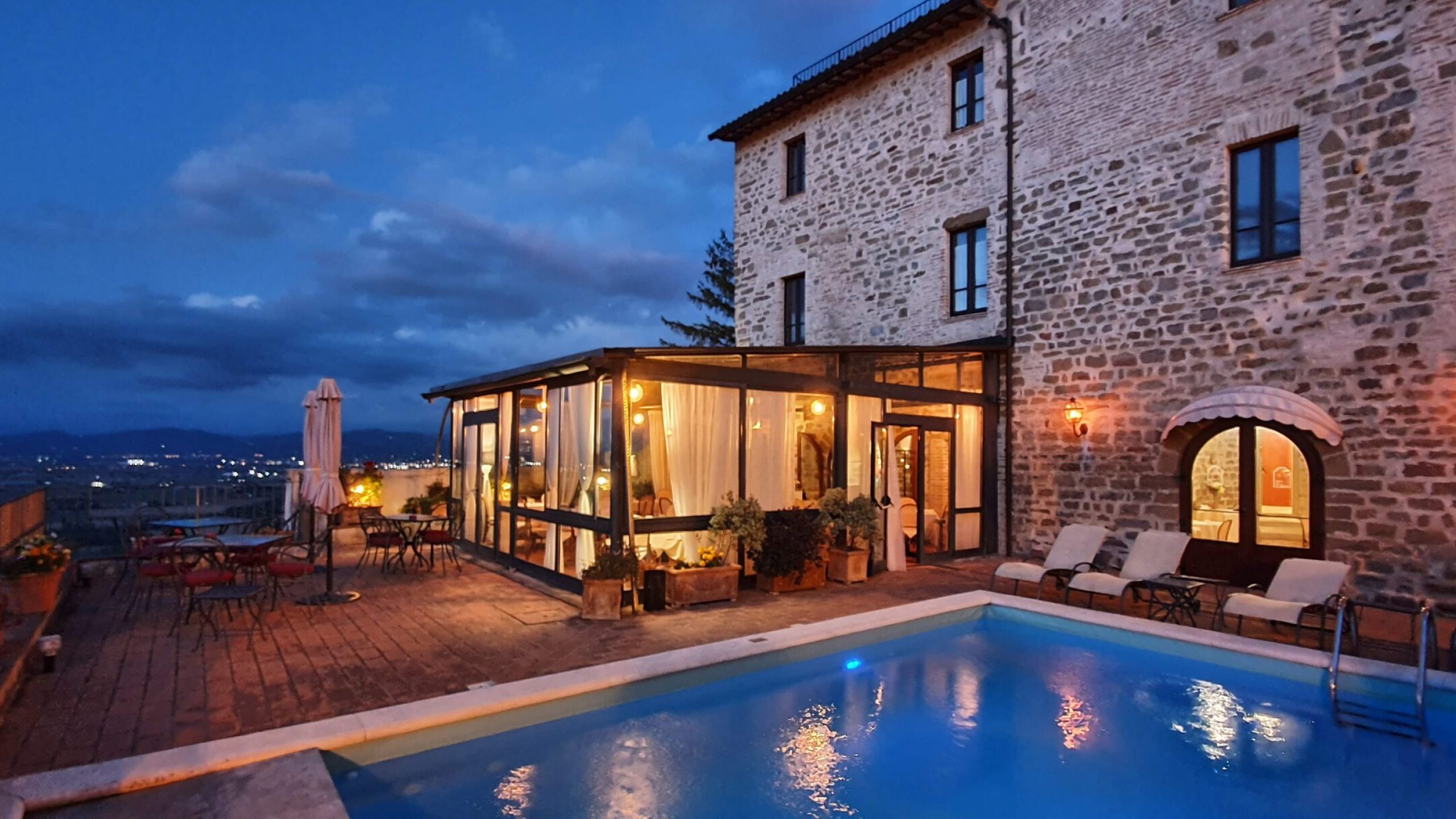
For a family office, acquiring a hotel is not simply a real estate transaction.
It means deciding to allocate capital to a complex operating asset, where real estate, operational performance, management quality, capital expenditure, financing structure and exit strategy are all deeply interconnected.
This complexity is precisely what can make hotel investments attractive — but also particularly vulnerable to valuation errors.
An asset may be located in a prime destination, benefit from a high-quality property and appear to be attractively priced.
None of these factors, on their own, is sufficient.
The right question is not:
“How much does this hotel cost?”
Nor is it simply:
“What is it worth?”
For a family office, the more relevant question is:
“What risk-adjusted return can this capital generate, through which strategy, over what time horizon, and with what degree of protection against permanent capital impairment?”
That is the question that should precede any investment decision.
At InvestimentiAlberghieri.it, we approach the sector from exactly this perspective: a hotel is not merely a real estate asset, but an economic platform whose ability to generate profitability, value and future liquidity must be assessed as a whole.
The First Mistake: Confusing Real Estate Value with Investment Value
A hotel property may have significant real estate value while still representing a poor investment.
Returns depend on a broad set of variables, including:
-
room count;
-
room size and configuration;
-
destination;
-
competitive positioning;
-
ADR;
-
occupancy;
-
RevPAR;
-
demand segmentation;
-
operating costs;
-
labour costs;
-
management quality;
-
CAPEX requirements;
-
lease or management structure;
-
cost of debt;
-
taxation;
-
prospective asset value;
-
exit liquidity.
For this reason, a family office should avoid assessing the real estate and the hotel business as separate entities.
In hospitality, the ability of the property to create value is inevitably linked to the business operated within it.
It is precisely the interaction between asset value and earnings capacity that determines the quality of the investment.
At Hotel Management Group, this approach is applied through strategic, operational and financial analysis specifically designed for the hotel sector.
1. Understand Why You Are Investing
Before analysing a specific hotel, the overall capital allocation strategy should be defined.
A family office may pursue very different objectives:
-
capital preservation;
-
recurring income;
-
long-term capital appreciation;
-
diversification;
-
core real estate exposure;
-
hospitality sector exposure;
-
value-add strategies;
-
turnaround opportunities;
-
development;
-
opportunistic investments;
-
acquisition and aggregation of multiple assets.
The same hotel may be highly suitable for one strategy and completely inappropriate for another.
An asset with a strong real estate component, modest initial yield and limited downside may fit a capital preservation strategy.
The same asset may be unattractive for an investor seeking higher returns through a value-add approach.
The correct sequence is therefore:
strategy → asset → capital structure → expected return
not the other way around.
2. Opportunity Cost: Capital Must Compete with Alternatives
Every investment should be compared with the returns available from alternative uses of capital.
This principle is particularly important for family offices.
Committing €20 million, €30 million or €50 million to a hotel investment means giving up, at least in part, other allocation opportunities, such as:
-
fixed income;
-
private equity;
-
traditional real estate;
-
infrastructure;
-
private debt;
-
public markets;
-
other illiquid investments.
The question is therefore not simply:
“Does this hotel generate an attractive return?”
The more relevant question is:
“Does the expected return adequately compensate for the risk, illiquidity and complexity compared with other available investment opportunities?”
This is the essence of risk-adjusted return.
A nominally attractive return may become significantly less compelling if it depends on:
-
excessive leverage;
-
uncertain CAPEX;
-
significant operational risk;
-
strong cyclical exposure;
-
high geographic concentration;
-
limited exit visibility.
3. Assess the Market Before the Hotel
One of the most common mistakes is to fall in love with the asset before fully understanding the market.
Before analysing the hotel itself, at least three dimensions should be assessed.
Demand
-
geographic source markets;
-
leisure/business mix;
-
average length of stay;
-
seasonality;
-
events;
-
international demand;
-
accessibility;
-
evolution of source markets.
Supply
-
existing room inventory;
-
hotel pipeline;
-
new competitors;
-
real estate conversions;
-
presence of major brands;
-
quality of existing supply;
-
category concentration.
Performance
At a minimum, the analysis should include:
-
occupancy;
-
ADR;
-
RevPAR;
-
multi-year performance trends;
-
competitive positioning;
-
the market’s ability to absorb additional supply.
A growing destination does not automatically make every hotel attractive.
Conversely, a mature market can offer excellent opportunities where the asset combines an attractive entry price, repositioning potential and a credible path to improved profitability.
4. Assess the Physical Product
The second level of analysis concerns the hotel as a physical product.
The review should consider:
-
number of rooms;
-
average room size;
-
room mix;
-
public areas;
-
food and beverage facilities;
-
meeting space;
-
wellness facilities;
-
parking;
-
underutilised areas;
-
architectural constraints;
-
expansion potential;
-
conversion potential;
-
condition of plant and equipment;
-
operational layout efficiency.
Many risks will not emerge from a spreadsheet.
A hotel may look attractive from a financial perspective while presenting structural limitations that make repositioning extremely expensive.
The quality of the product must therefore be assessed before adopting aggressive assumptions on ADR, occupancy or margins.
5. Analyse Operations: GOP Comes Before Real Estate EBITDA
Revenue, viewed in isolation, tells relatively little.
The key question is how much profitability the hotel can actually generate.
The main areas to analyse include:
-
rooms revenue;
-
food and beverage revenue;
-
ancillary revenue;
-
labour costs;
-
housekeeping;
-
OTA commissions;
-
utilities;
-
maintenance;
-
marketing;
-
administrative expenses;
-
GOP;
-
GOP margin.
Gross Operating Profit provides a clearer indication of the hotel’s operating earnings capacity before real estate, financing and tax considerations.
Two hotels generating €10 million in revenue may have radically different investment profiles if one produces a 15% GOP margin and the other 35%.
6. Reconstruct Normalised EBITDA
Historical financial statements must be interpreted carefully.
This is particularly true for independent hotels, family-owned properties or assets operated for many years by the same owner.
Potential distortions may include:
-
personal expenses;
-
intercompany services;
-
non-market rents;
-
overstaffing;
-
understaffing;
-
deferred maintenance;
-
one-off costs;
-
non-normalised management compensation;
-
commercial conditions that cannot be replicated.
An investor must therefore distinguish between:
reported accounting performance
and
sustainable economic profitability
Reconstructing normalised EBITDA is one of the most sensitive steps in any due diligence process.
At Investhotel, hotel transactions are analysed through an integrated industrial, financial and strategic framework.
7. Determine the Real CAPEX Requirement
CAPEX is one of the most frequently underestimated variables in hotel investing.
At least four categories should be distinguished.
Deferred Maintenance
Investment postponed by the previous owner.
Compliance CAPEX
Expenditure required for:
-
building systems;
-
safety;
-
fire regulations;
-
accessibility;
-
regulatory compliance;
-
technology upgrades.
Renovation CAPEX
Investment required to keep the hotel competitive.
Strategic CAPEX
Investment intended to change the property’s market positioning, including:
-
extensions;
-
additional rooms;
-
new food and beverage concepts;
-
rooftop facilities;
-
spas;
-
meeting facilities;
-
category upgrades;
-
brand affiliation.
The acquisition price should never be analysed in isolation.
An Example: Purchase Price Is Not Total Capital Invested
Assume a hotel is acquired for:
€20 million
Additional requirements include:
-
CAPEX: €6 million;
-
transaction costs: €1 million;
-
working capital: €500,000;
-
pre-opening and repositioning costs: €500,000.
The effective capital requirement becomes:
€28 million
If the hotel were to generate stabilised EBITDA of €2.2 million, the operating return should not be calculated against the €20 million purchase price.
It should be assessed against the €28 million of capital actually committed.
That distinction is material.
And it is precisely through differences of this kind that transactions which initially appear attractive may prove significantly less compelling once properly underwritten.
8. Calculate Total Invested Capital
The true capital requirement should include:
Purchase Price
Transaction Costs
CAPEX
Working Capital
Pre-opening Costs
Repositioning Costs
Financing Costs
=
TOTAL INVESTED CAPITAL
Only once this figure has been established can returns and value creation be assessed properly.
9. Build at Least Three Scenarios
A family office should never base an investment decision on a single business plan.
The underwriting should include, at a minimum:
Downside Case
A prudent scenario.
Base Case
The scenario considered most realistic.
Upside Case
A scenario in which the main value-creation levers are successfully implemented.
Variables to be stress-tested should include:
-
occupancy;
-
ADR;
-
GOP margin;
-
labour costs;
-
inflation;
-
CAPEX;
-
cost of debt;
-
ramp-up period;
-
exit multiple;
-
timing of disposal.
The most important question is not:
“Under what assumptions does the investment work?”
It is:
“Under what conditions does the investment stop working?”
That is where real risk analysis begins.
10. Measure the Right Returns
Among the most relevant metrics are:
Yield
Measures return relative to total capital invested.
Cash-on-Cash Return
Measures annual cash return on equity.
Equity Multiple
Measures how many times the invested equity is returned.
IRR
Measures the annualised return, taking into account interim cash flows and exit proceeds.
Payback Period
Measures the time required to recover the invested capital.
No metric should be considered in isolation.
A high IRR may depend on aggressive leverage.
A high cash-on-cash return may coexist with substantial exit risk.
An attractive equity multiple may be achieved only through a very long holding period.
Returns should therefore always be assessed through the combined lens of:
return + risk + duration + liquidity
11. Assess the Debt Structure
Leverage can enhance equity returns.
It can also turn a sound operating investment into a fragile financial structure.
At a minimum, the model should consider:
-
Loan-to-Value;
-
Loan-to-Cost;
-
Debt Service;
-
DSCR;
-
cost of debt;
-
amortisation;
-
covenants;
-
refinancing risk.
The model should be stress-tested against:
-
higher-than-expected interest rates;
-
performance below budget;
-
delays in ramp-up;
-
CAPEX overruns.
Debt should accelerate returns.
It should not be the only reason the investment works.
12. Brand, Lease or Management Agreement?
The operating structure can materially alter the value of the investment.
Potential models include:
-
owner operation;
-
franchising;
-
management agreement;
-
lease;
-
hybrid structures.
An international brand may improve:
-
distribution;
-
international demand;
-
corporate demand;
-
loyalty penetration;
-
brand awareness;
-
pricing power.
However, it also introduces:
-
franchise fees;
-
management fees;
-
reservation fees;
-
marketing fees;
-
loyalty programme costs;
-
PIP requirements;
-
contractual rigidity.
The value of the brand should therefore be measured economically.
Not merely perceived.
13. Understand Who Will Actually Operate the Hotel
A hotel is not a passive real estate asset.
It is an operating business running 365 days a year.
Management quality directly affects:
-
revenue;
-
costs;
-
reputation;
-
staffing;
-
maintenance;
-
distribution;
-
GOP;
-
execution of the business plan.
For a family office without direct hospitality operating capabilities, operator selection should therefore be regarded as an integral part of the investment strategy.
14. Assess Portfolio Concentration
Another frequently underestimated consideration is the weight of the transaction within the overall family portfolio.
An investment may be attractive on a standalone basis while still creating excessive concentration at portfolio level.
A family office should consider:
-
the investment’s percentage of overall NAV;
-
geographic concentration;
-
sector concentration;
-
exposure to the same economic cycle;
-
capital duration;
-
remaining liquidity;
-
ability to fund future capital calls.
The analysis should therefore not stop at the asset level.
It must also consider the broader portfolio.
15. Assess the Exit Before Entry
A professional investment strategy should consider the exit before the acquisition is completed.
The relevant question is:
Who could buy this hotel in five or seven years?
Potential acquirers may include:
-
real estate funds;
-
hospitality funds;
-
private equity firms;
-
REITs;
-
family offices;
-
hotel operators;
-
institutional investors.
Future value will depend on:
-
operating performance;
-
asset quality;
-
brand positioning;
-
operator quality;
-
contractual structure;
-
capital markets;
-
cost of debt;
-
liquidity in the relevant asset class.
An investment case that relies heavily on aggressive exit assumptions should always be treated with caution.
16. Identify the True Value-Creation Lever
Before investing, it should be possible to complete the following sentence:
“We are acquiring this asset because we can create value through…”
Potential value-creation levers include:
-
ADR growth;
-
occupancy growth;
-
improved distribution;
-
rebranding;
-
repositioning;
-
expansion;
-
cost optimisation;
-
GOP margin expansion;
-
operator replacement;
-
category upgrade;
-
better use of underutilised space;
-
refinancing;
-
platform consolidation;
-
eventual disposal.
If the answer is unclear, the strategy is probably not yet sufficiently defined.
17. The Real Investment Committee Questions
At the end of the underwriting process, a family office should be able to answer six questions clearly.
1. Why this asset?
2. Why this market?
3. Why this price?
4. Where is value being created?
5. What is the risk of permanent capital impairment?
6. Who is likely to buy the asset when we want to exit?
If one of these answers remains weak, the transaction requires further analysis.
Analyse First. Commit Capital Second.
In hotel investing, the riskiest transactions are not necessarily the most expensive ones.
They are those in which capital is committed before the investor has fully understood:
-
the market;
-
the product;
-
management;
-
profitability;
-
CAPEX;
-
debt;
-
downside risk;
-
portfolio concentration;
-
exit liquidity.
A family office should approach the investment process in the opposite order.
First, define the investment thesis.
Then, stress-test the downside.
Only then, commit capital.
Family capital generally has a distinctive characteristic: it is not expected merely to produce returns.
It must also be preserved, transferable and resilient over time.
For this reason, the quality of the analysis undertaken before investing is often more important than the speed at which the transaction is completed.
A good acquisition does not begin when the deal is signed.
It begins when the investor decides correctly what not to buy.
The work developed through RobertoNecci.it, InvestimentiAlberghieri.it, Investhotel.it and Hotel Management Group is built precisely around the integration of hotel analysis, business planning, strategy, financial assessment and asset understanding.
Are You Considering a Hotel Investment?
Before proceeding with an acquisition, committing capital or entering into final negotiations, an independent analysis of the opportunity can be developed covering:
-
market fundamentals;
-
positioning;
-
potential operating performance;
-
business plan;
-
GOP and normalised EBITDA;
-
CAPEX;
-
financing structure;
-
downside, base and upside scenarios;
-
expected returns;
-
key risks;
-
value-creation strategy;
-
exit assumptions.
Contact:
info@investimentialberghieri.it
Further insights:
InvestimentiAlberghieri.it
Investhotel.it
HotelManagementGroup.it
RobertoNecci.it