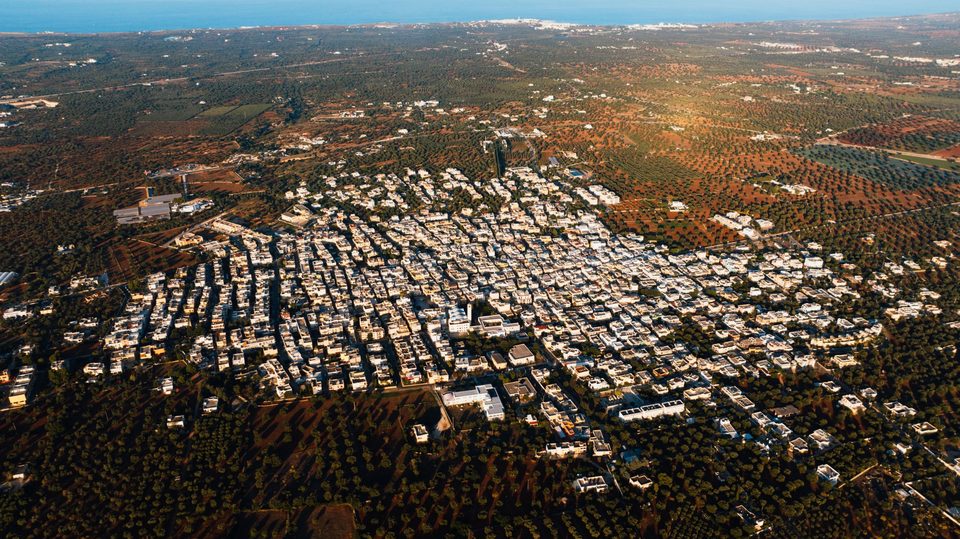
One of the most significant hotel developments currently underway in Puglia is taking shape in Fasano.
A temporary consortium led by Impredo has been awarded the contract to transform the former Relais del Cardinale into a five-star luxury resort.
The property will be renamed Masseria del Cardinale and operated by Rocco Forte Hotels, which is already established in the destination through Masseria Torre Maizza.
According to Virtù Quotidiane, the investment involves PGIM, through its real estate business, and Re.vo, a property holding company associated with branches of the Benetton family. Dekus is acting as development partner.
The structure of the transaction is itself a clear indication of the project’s significance.
Rather than relying on a single party to acquire, develop, build and operate the hotel, the investment brings together separate organisations specialising in capital, development, design, construction and hotel management.
This is the model increasingly replacing the fragmented and often speculative approach that has historically characterised parts of the Italian hotel property market.
The main stakeholders behind the project
The consortium appointed to deliver the development comprises:
-
Impredo, the lead contractor, with a 67% interest;
-
Pigroup, holding the remaining 33% and specialising in engineering systems and technological infrastructure;
-
Corbuild, supporting the consortium through technical services and agentic artificial intelligence applications, although it is not formally part of the joint venture.
Impredo is 50% owned by LMDV Capital.
The involvement of an established general contractor, specialist engineering expertise and technology-enabled construction processes reflects the complexity of the development.
A luxury resort is not simply a residential property with bedrooms and a reception desk.
It is a complex operating platform in which mechanical systems, kitchens, restaurants, spa facilities, back-of-house areas, staff circulation routes, laundries, storage rooms, security systems and maintenance access must all be designed around the hotel’s future operating model.
A mistake made during the development phase does not remain confined to the construction site.
It can create inefficiencies, higher payroll requirements, increased maintenance costs and weaker profitability throughout the entire economic life of the asset.
Masseria del Cardinale will feature 86 rooms, a spa and extensive guest facilities
Rocco Forte Hotels officially announced the project on 2 December 2025.
Masseria del Cardinale is expected to open in 2028 and will include:
-
86 rooms and suites;
-
restaurants and bars;
-
dedicated meeting and event spaces;
-
an Irene Forte Spa;
-
a large swimming pool.
The renovation will be led by Olga Polizzi, deputy chairman and director of design at Rocco Forte Hotels, in collaboration with Luigi Fragola Architects.
The resort will become Rocco Forte Hotels’ second property in Puglia, following the opening of Masseria Torre Maizza in 2019.
The number of rooms is also significant from an investment perspective.
With 86 keys, Masseria del Cardinale will have sufficient scale to support a sophisticated management structure, an international commercial operation and several revenue-generating departments, while retaining the sense of exclusivity expected in the luxury segment.
Its performance, however, will not depend on room rates alone.
The spa, restaurants, bars, events business, experiences and ancillary services will all need to contribute to total guest spend and the overall profitability of the property.
In luxury hospitality, selling rooms is only the beginning.
The real objective is to monetise the entire guest journey without compromising the quality of the experience.
Why this is more than a real estate development
The project brings together four distinct layers:
-
capital, provided by the investors and property owners;
-
development, led by a specialist development partner;
-
construction, coordinated by a consortium combining building, engineering and technological expertise;
-
hotel operations, entrusted to an international luxury operator.
This separation allows each party to oversee a clearly defined part of the value chain.
It also makes governance more important.
The greater the number of stakeholders involved, the more critical it becomes to control:
-
the allocation of responsibilities;
-
changes to the original project;
-
construction costs and contingencies;
-
the delivery programme;
-
pre-opening expenditure;
-
alignment between design and operations;
-
consistency between capital expenditure and expected returns;
-
the relationship between ownership, developer and operator.
A hotel can be delivered to an exceptional construction standard and still generate disappointing returns.
It can be visually impressive but operationally inefficient.
It can carry a globally recognised brand while being governed by an agreement that fails to protect the owner’s capital.
These factors, rather than architectural renderings or promotional imagery, determine the real quality of a hotel investment.
The role of Rocco Forte Hotels in creating value
The involvement of Rocco Forte Hotels gives the project access to a level of international positioning that would be difficult for an independent operator to reproduce.
A global luxury brand can provide:
-
international recognition;
-
access to established distribution channels;
-
a loyal customer base;
-
stronger exposure to high-spending source markets;
-
tested operating standards;
-
commercial and revenue management expertise;
-
greater recruitment power;
-
enhanced pricing potential;
-
international visibility for the destination.
The brand above the entrance, however, is not enough.
From an investor’s perspective, value also depends on the agreement between the owner and the operator.
Contract duration, rent structure, guarantees, capital expenditure responsibilities, maintenance obligations, performance tests, termination rights and future investment commitments can directly affect profitability, risk and the future marketability of the asset.
A prestigious operator tied to a poorly structured agreement can restrict value.
A properly negotiated contract can stabilise cash flows, protect ownership, reduce operating risk and make the property more attractive to lenders, funds and institutional investors.
The difference lies not in the strength of the brand alone, but in the quality of the structure supporting it.
Fasano is now firmly on the institutional investment map
Fasano and the wider Valle d’Itria have already demonstrated their ability to attract international travellers, high-end hospitality projects and globally recognised operators.
The opening of a second Rocco Forte property will further strengthen the destination.
The importance of the investment, however, goes well beyond tourism.
The arrival of international capital, professional developers and global hotel operators changes the benchmarks applied to the local property market.
It increases:
-
the standards expected by investors;
-
competition for assets with genuine hospitality potential;
-
interest in masserie, resorts and conversion opportunities;
-
scrutiny of planning permissions, building rights and development constraints;
-
selectivity towards assets lacking legal, technical or financial clarity;
-
the need for robust and defensible business plans.
Not every property in the area will automatically benefit.
In fact, the arrival of institutional capital may widen the gap between assets that are genuinely investable and properties supported by little more than an attractive narrative.
A beautiful masseria with unresolved planning issues is not an investment opportunity.
A hotel in a strong destination but burdened by disproportionate capital expenditure is not necessarily a good deal.
A property with a high room count but inadequate technical areas, service routes or back-of-house facilities can quickly become an operational liability.
Sophisticated investors do not simply acquire buildings.
They acquire projects whose value, risks and future performance can be demonstrated.
The question that matters is how much value the asset can generate
The information currently available to the public does not disclose:
-
the acquisition price;
-
the value of the construction contract;
-
total development expenditure;
-
the cost per key;
-
the financing structure;
-
the commercial terms agreed with the operator;
-
projected earnings before interest, taxes, depreciation and amortisation;
-
the expected return on invested capital;
-
the stabilised value of the completed property.
Describing the development as a major investment accurately reflects its industrial scale, but it does not yet make a financial assessment possible.
A complete evaluation would require, at a minimum:
-
a detailed development budget;
-
an appropriate construction contingency;
-
a complete pre-opening plan;
-
the hotel operating model;
-
projected average daily rate and occupancy;
-
departmental revenue forecasts;
-
staffing levels and payroll costs;
-
projected gross operating profit and earnings;
-
the cost and structure of debt;
-
the terms of the agreement with the operator;
-
the expected value of the stabilised asset.
The fact that these figures are not publicly available is not unusual.
It simply means that the strategic importance of the transaction must be distinguished from its financial performance.
An investment does not become profitable because it is large, prestigious or associated with an international brand.
It becomes profitable when the capital deployed, the risks assumed and the future cash flows are properly aligned.
The greatest risk lies between construction and opening
A decisive share of the project’s value will be created, or destroyed, between the award of the contract and the arrival of the first paying guest.
The principal areas of risk include:
-
construction cost inflation;
-
design changes and variations;
-
delays in permits and approvals;
-
postponement of the opening date;
-
increases in financing costs;
-
errors in the design of operating flows;
-
excessive space allocated to non-revenue-generating functions;
-
difficulty recruiting qualified personnel;
-
insufficient working capital;
-
underestimated pre-opening costs;
-
delays in achieving stabilised trading performance.
In a luxury resort, attention to detail cannot be limited to what guests can see.
It must also extend to everything that determines profitability.
Every square metre requires capital to build, fit out, heat, cool, clean, maintain and operate.
Every design decision should therefore answer a clear question:
Does this space improve the guest experience, generate additional revenue, make the hotel more efficient or increase the long-term value of the asset?
When the answer is no, the project risks creating visual luxury at the expense of economic performance.
The lesson for hotel owners and investors
The Masseria del Cardinale transaction demonstrates that the professional hotel investment market does not reward properties presented through a basic sales brochure.
It rewards opportunities supported by:
-
complete legal, planning and technical documentation;
-
a clear analysis of the destination;
-
a coherent hospitality concept;
-
a reliable estimate of capital expenditure;
-
a credible operating business plan;
-
a defined management strategy;
-
structured engagement with operators and brands;
-
an appropriate contractual framework;
-
effective governance;
-
a sustainable financing plan;
-
a clear value-creation or exit strategy.
Owners of hotels, masserie and conversion properties should address these elements before approaching the market.
Launching a transaction without first verifying the asset’s value, risks, technical constraints and operating potential means handing control of the negotiation to the buyer.
A professional ecosystem covering the entire hotel investment lifecycle
InvestimentiAlberghieri.it analyses transactions, market trends, valuations, developments, distressed situations and the continuing transformation of the hospitality investment market.
Hotel Management Group is the ecosystem’s platform for hotel governance, advisory and development.
RobertoNecci.it provides specialist analysis, professional guidance and strategic content focused on hotel investment, operations and value creation.
Investhotel Capital Partners operates across investment advisory, valuations, debt restructuring, structured finance and the management of hotel-related non-performing and unlikely-to-pay exposures.
HotelControl focuses on governance, management control, auditing, investor protection and the safeguarding of minority shareholders.
Hotel Marketing Lab integrates positioning, marketing, distribution, revenue management and direct sales.
Hospitech develops and integrates hospitality technology, customer relationship management platforms, automation systems and digital solutions.
Vertex Executive Search recruits general managers, asset managers, chief financial officers, financial controllers and senior executives for hotels, hospitality groups and complex investment projects.
Roberto Necci Academy delivers advanced management education for hotel entrepreneurs, executives and hospitality professionals.
HotelIntelligence provides financial, real estate and strategic intelligence for hotel assets and investment decisions.
Necci Hotels specialises in direct hotel operations, third-party management and strategic development.
Well Done Apartments focuses on the professional management of serviced apartments and the wider non-hotel accommodation sector.
Together, these businesses cover the entire hotel investment lifecycle: analysis, valuation, finance, governance, development, operations, marketing, technology, executive recruitment and management education.
Do you own a hotel, a masseria or a property with conversion potential?
Do not take it to market until you know exactly what you are selling.
Do not launch an informal sale process.
Do not circulate incomplete information.
Do not accept an expression of interest before understanding its implications.
Do not negotiate a price before establishing the asset’s real value.
Do not sign a letter of intent before identifying the risks hidden inside the transaction.
First determine:
-
the asset’s defensible market value;
-
the issues that could delay or undermine the deal;
-
the investment required to unlock its potential;
-
the operating model most likely to generate sustainable returns;
-
the contractual structure that best protects ownership;
-
the investor profile genuinely suited to the opportunity;
-
the correct way to position the asset without weakening its value;
-
the documents and evidence required before approaching qualified counterparties.
An unstructured asset will almost always be negotiated down.
A professionally prepared transaction creates competitive tension, protects the owner’s position and increases the likelihood of completing the deal on the best achievable terms.
This applies whether you own:
-
a hotel to be sold or repositioned;
-
a masseria with hospitality potential;
-
a property suitable for hotel conversion;
-
an underperforming operating business;
-
a project requiring new equity or debt;
-
a hotel company in need of financial restructuring;
-
an asset requiring an operator, tenant or international brand.
Stop any unstructured sales process before it begins to destroy value.
Submit the opportunity for professional review before approaching the market.
The initial information should include:
-
the property’s location;
-
the number of existing or potential rooms;
-
the total floor area;
-
its planning and permitting status;
-
the current operating position;
-
the owner’s strategic objective;
-
any available legal, technical and financial documentation.
Contact r.necci@robertonecci.it or request a confidential discussion through Hotel Management Group.
The market does not pay for what a property might become.
It pays for what can be demonstrated, structured, financed and made investable.
Roberto Necci - r.necci@robertonecci.it