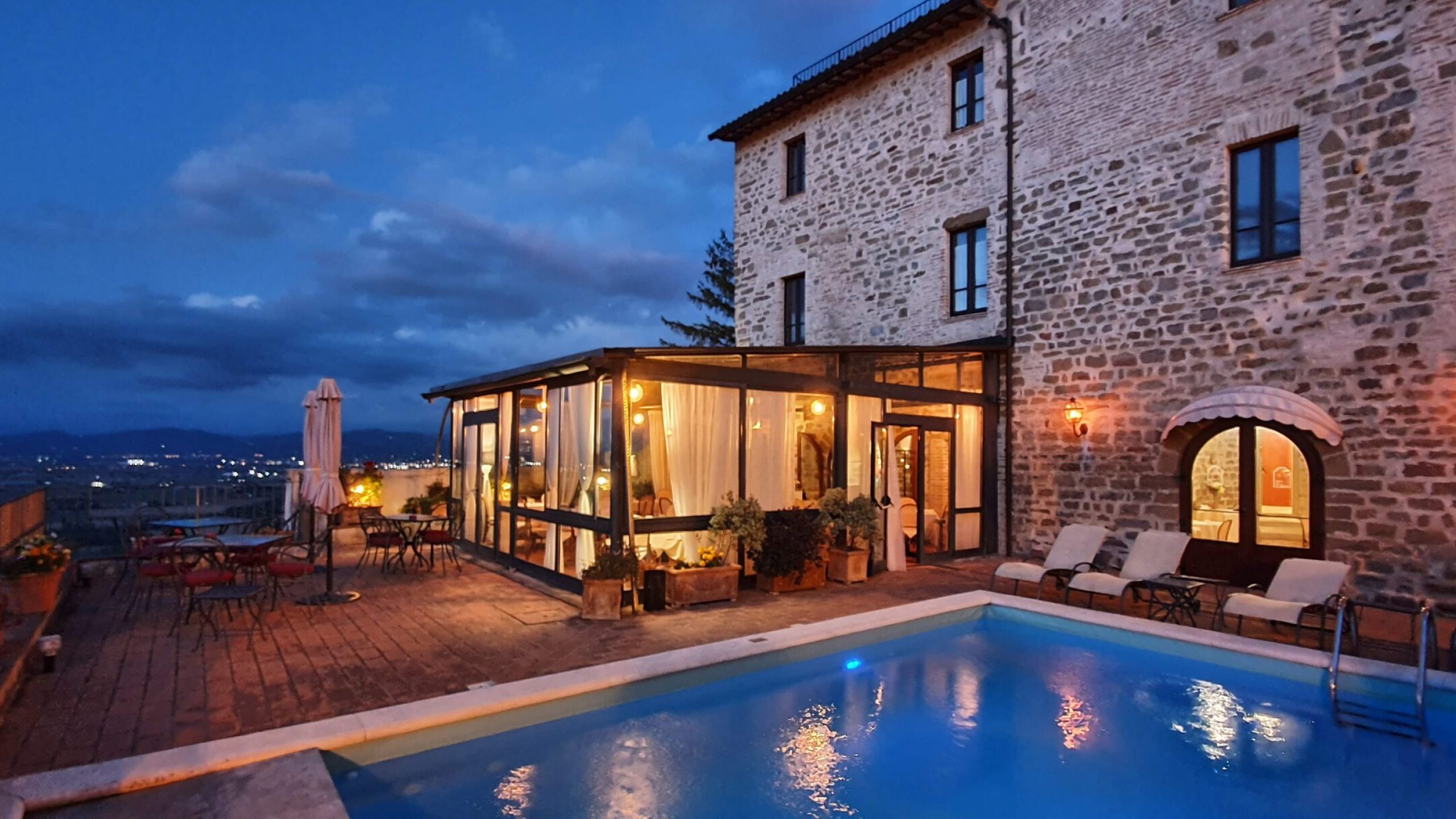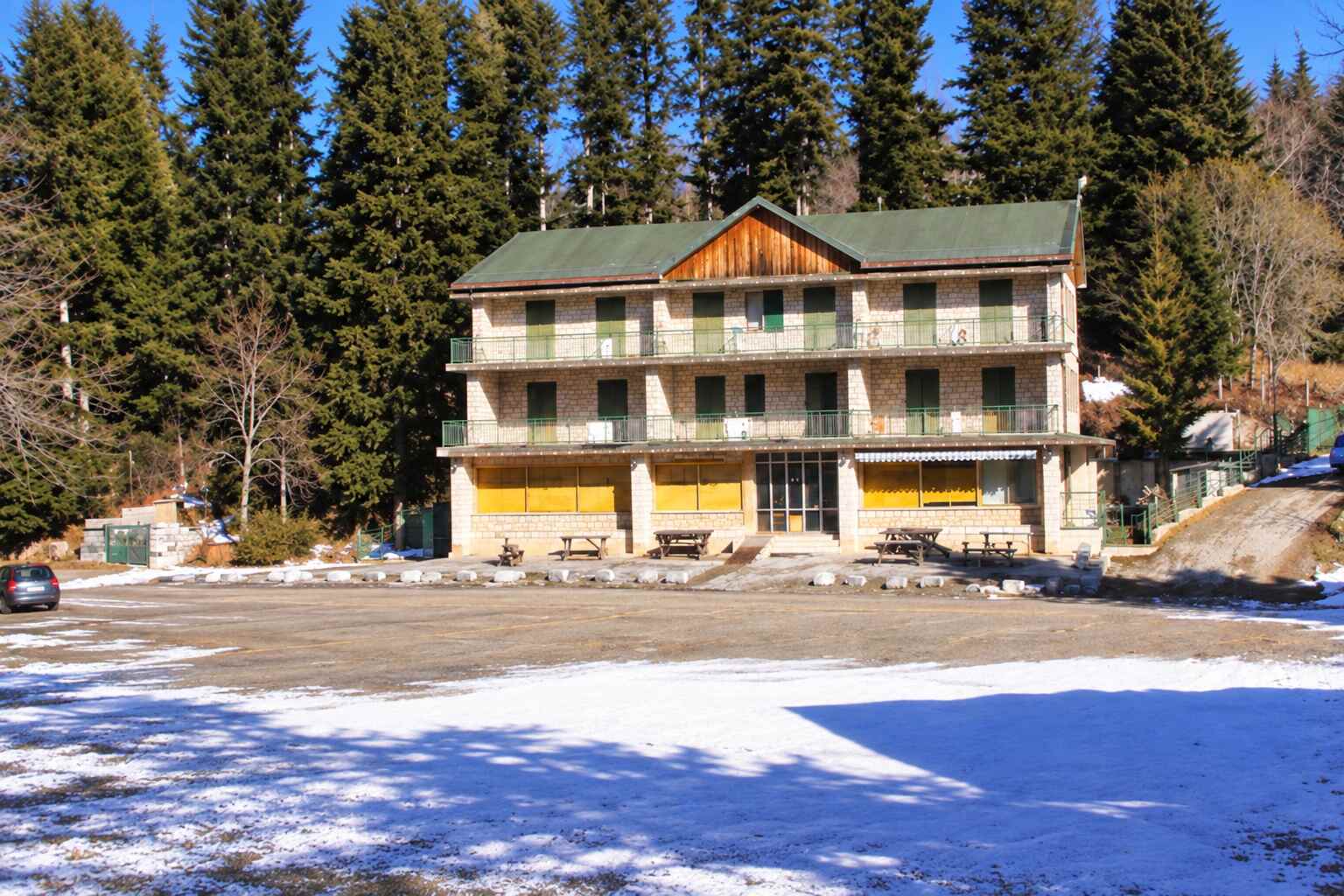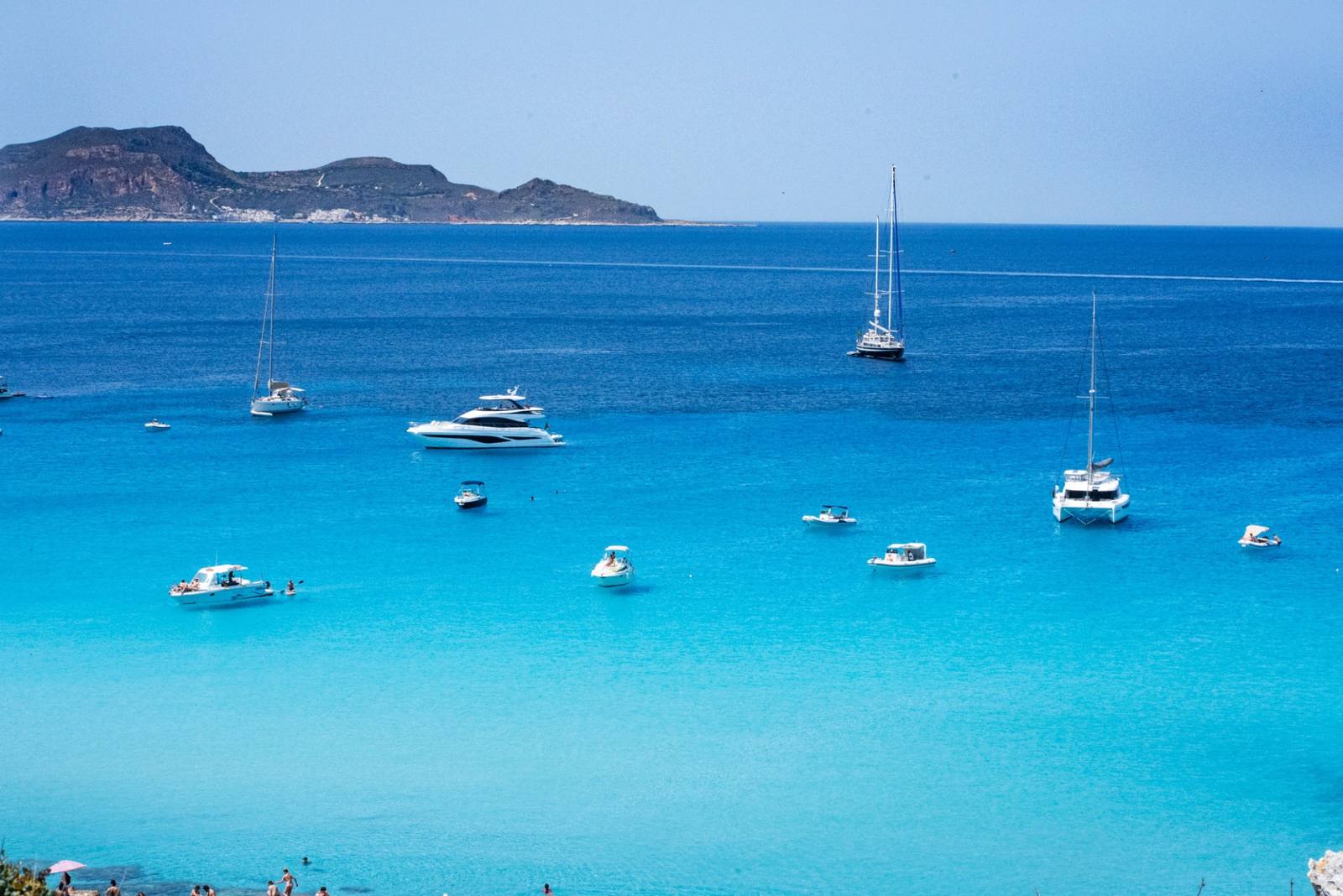
A 24-apartment residence set in landscaped grounds with a swimming pool and tennis court, and a 986 sqm hotel in the heart of Favignana. Same enforcement proceedings, same sale date, same destination. Yet two hospitality products with completely different economics. The combined minimum bids amount to €5.7 million, but the real issue for an investor is not the sum of the prices. It is determining which combination of asset, CAPEX, seasonality and operating model can generate the strongest return on invested capital.
On 25 November 2026, the Court of Trapani will offer for sale two significant hospitality assets in Favignana as part of the same real estate enforcement proceedings No. 53/2025.
The assets are being sold as separate lots.
The first is Residence Punta Longa, at Strada Costiera di Mezzogiorno 1.
The second is a hotel at Piazza Madrice 64, in the centre of the island.
This distinction is fundamental.
The procedure is not offering a single portfolio.
However, an investor may choose to view the two assets as:
two independent acquisitions
or
the components of a potential destination hospitality platform.
It is precisely this dual perspective that makes the case particularly interesting for InvestimentiAlberghieri.it.
The numbers
Residence Punta Longa — Lot 3
Reserve price: €5,100,000
Minimum bid: €3,825,000
Conventional area: approximately 2,865 sqm
Apartments: 24
Sale date: 25 November 2026
Minimum bid increment: €10,000
The complex is arranged across several buildings and includes apartments, reception, swimming pool, tennis court, technical areas and outdoor spaces.
Piazza Madrice Hotel — Lot 2
Reserve price: €2,500,000
Minimum bid: €1,875,000
Conventional area: 986 sqm
Occupancy status: vacant
Sale date: 25 November 2026
Minimum bid increment: €10,000
The property extends over several levels and is located directly within the central urban fabric of Favignana.
Combined: €7.6 million reserve price and €5.7 million minimum bids
If an investor were to acquire both lots at their respective minimum bids, the theoretical combined purchase price would be:
€5,700,000
But that is only the first layer of the analysis.
Punta Longa and Piazza Madrice are not two versions of the same hospitality product.
They represent:
two different ways of monetising Favignana.
Punta Longa sells space and length of stay
Residence Punta Longa is a leisure-oriented product.
Its apartment configuration is particularly suited to:
-
families;
-
couples;
-
small groups;
-
weekly stays;
-
longer stays;
-
self-catering demand.
The swimming pool, landscaped grounds and outdoor areas reinforce that positioning.
The product is not simply selling a bed.
It is selling:
space + privacy + length of stay + leisure experience.
Approximately €159,000 per apartment
Dividing the €3.825 million minimum bid by the 24 apartments gives an indicative value of approximately:
€159,000 per unit
It is a useful metric.
But it is not sufficient.
The purchase price also includes:
-
reception;
-
swimming pool;
-
tennis court;
-
common areas;
-
landscaped grounds;
-
operating infrastructure.
The real analysis should therefore begin with:
ADR per apartment
× Occupancy
× Opening Days
= Accommodation Revenue
and then deduct:
Payroll + Housekeeping + OTA Costs + Utilities + Pool Costs + Grounds + Maintenance + Distribution.
Only then can the investor determine the true:
Residence EBITDA.
Piazza Madrice sells centrality and scarcity
The second asset follows an almost opposite investment logic.
It sits directly in the centre of Favignana.
Here, the value is driven less by external space and more by:
location + walkability + centrality + scarcity.
The €1.875 million minimum bid divided by 986 sqm implies approximately:
€1,900 per sqm
A very different metric from Punta Longa.
But here too, value per square metre is only a starting point.
An investor should verify:
-
actual room count;
-
authorised room count;
-
layout efficiency;
-
average room size;
-
common areas;
-
accessibility;
-
potential F&B;
-
restrictions;
-
CAPEX;
-
sustainable ADR.
A premium location does not automatically produce premium EBITDA.
If the building uses its space inefficiently, centrality may fail to translate into an adequate return.
KEY ISSUE — Punta Longa vs Piazza Madrice
Residence Punta Longa
24 apartments
approximately 2,865 sqm
Swimming pool
Tennis court
Landscaped grounds
Minimum bid €3.825 million
Value drivers
Leisure + Family + Long Stay + Outdoor Experience
Key KPIs
-
apartment ADR;
-
occupancy;
-
average length of stay;
-
revenue per available apartment;
-
housekeeping cost;
-
outdoor maintenance cost;
-
seasonal EBITDA.
Piazza Madrice
986 sqm
Historic centre
Vacant asset
Minimum bid €1.875 million
Value drivers
Location + Scarcity + Short Stay + Potential Premium ADR
Key KPIs
-
actual achievable room count;
-
ADR;
-
occupancy;
-
RevPAR;
-
EBITDA per sqm;
-
CAPEX per room;
-
terminal value.
Same island.
Two products.
Two different economics.
The common underlying asset is Favignana
The properties are different.
But they share the same main demand generator:
Favignana.
In an island destination, value does not depend solely on real estate.
It also depends on:
-
destination awareness;
-
leisure demand;
-
accessibility;
-
land scarcity;
-
planning restrictions;
-
accommodation supply;
-
seasonality.
This is what can be described as:
Destination Value
The destination can enhance asset value by supporting stronger ADR and demand.
But it can also increase costs.
Island operations add complexity
A serious business plan must account for:
-
logistics;
-
procurement;
-
transport;
-
energy;
-
staffing;
-
employee accommodation;
-
waste management;
-
maintenance;
-
supplier availability;
-
seasonality;
-
working capital.
This means that:
High ADR does not automatically translate into high EBITDA.
The market may support strong rates.
But the true return depends on the cost required to generate every euro of revenue.
The scarcest form of capital is productive time
This may be the most important point in the entire investment case.
In a highly seasonal destination, the question is not simply:
How much capital am I investing?
It is also:
How many days do I actually have to earn a return on it?
An asset costing €3 million and trading 365 days a year does not have the same economics as an asset costing €3 million but generating the majority of its earnings in 130 days.
For this reason, one of the most useful KPIs in Favignana may be:
EBITDA per Opening Day
Because every productive day must contribute towards:
-
invested capital;
-
payroll;
-
fixed costs;
-
CAPEX;
-
financing;
-
risk.
Seasonality turns time itself into an economic resource.
Extending the season creates value
An investor able to increase the number of productive operating days can create value without adding a single square metre.
Potential demand drivers could include:
-
May;
-
June;
-
September;
-
October;
-
cycling;
-
diving;
-
hiking;
-
events;
-
small groups;
-
experiential tourism;
-
international guests.
Every additional week of operation can improve:
fixed-cost absorption + labour productivity + return on invested capital.
At Hotel Management Group, this type of analysis is developed through business planning, revenue strategy and assessment of operating sustainability.
Acquiring the two assets separately or building a platform?
This is where the case moves from simple real estate into investment strategy.
Strategy A — Punta Longa only
Positioning:
Leisure Residence / Family
Potential strengths:
-
apartments;
-
capacity;
-
outdoor areas;
-
pool;
-
longer stays.
Risks:
-
outdoor maintenance;
-
pool costs;
-
larger footprint;
-
seasonality;
-
operating intensity.
Strategy B — Piazza Madrice only
Positioning:
Central / Boutique Hospitality
Potential strengths:
-
location;
-
centrality;
-
scarcity;
-
stronger fit with short stays.
Risks:
-
layout;
-
room count;
-
CAPEX;
-
restrictions;
-
limited space.
Strategy C — Both assets
Positioning:
Destination Hospitality Platform
The two properties could target different segments.
Punta Longa
family + leisure + long stay
Piazza Madrice
couples + short stay + central location
This complementarity could generate meaningful synergies.
KEY ISSUE — What could be shared?
A single operator could centralise:
-
general management;
-
revenue management;
-
marketing;
-
administration;
-
procurement;
-
booking office;
-
CRM;
-
technology;
-
commercial strategy.
The result could be:
two different commercial products
but
one operating platform.
This is where potential portfolio value emerges.
But synergies should never be assumed
This is the critical point.
An investor should not acquire two assets simply because they are located in the same destination.
Synergies must be quantified.
The correct comparison is:
**Standalone Costs — Punta Longa
-
Standalone Costs — Piazza Madrice**
versus
Consolidated Platform Costs.
The difference represents:
Real Synergy Value
If the savings are marginal, the mini-portfolio does not automatically create additional value.
If major functions can be centralised, consolidated EBITDA may improve significantly.
Standalone first. Consolidated second.
The correct methodology would be:
1. Punta Longa standalone business plan
2. Piazza Madrice standalone business plan
3. Consolidated Platform Case
Only after that should the investor add:
-
economies of scale;
-
cross-selling;
-
shared management;
-
procurement savings;
-
marketing efficiency.
Assigning value to synergies before proving the standalone viability of both assets would be overly aggressive underwriting.
€5.7 million would only be the first cheque
Acquiring both lots at their minimum bids would imply a theoretical purchase price of:
€5,700,000
But the true investment would be:
**Purchase Price
-
Transaction Costs
-
Punta Longa CAPEX
-
Piazza Madrice CAPEX
-
FF&E
-
Technology
-
Working Capital
-
Pre-opening / Transition Costs
-
Financing Costs
= Total Investment Cost**
Returns must be calculated on Total Investment Cost.
Not on the €5.7 million purchase price alone.
At Investhotel Capital Partners, this distinction is particularly important in distressed transactions and special situations.
Two assets require two different CAPEX plans
Punta Longa should be assessed primarily in relation to:
-
apartments;
-
bathrooms;
-
systems;
-
swimming pool;
-
outdoor areas;
-
landscaping;
-
lighting;
-
FF&E;
-
technology.
Piazza Madrice should be assessed in relation to:
-
layout;
-
guestrooms;
-
systems;
-
fire safety;
-
soundproofing;
-
accessibility;
-
energy efficiency;
-
FF&E;
-
potential repositioning.
Two assets within the same enforcement process therefore do not carry the same technical risk.
The critical due diligence
Punta Longa
I would verify at least:
-
full appraisal report;
-
consistency of the 24 apartments;
-
title;
-
planning compliance;
-
cadastral compliance;
-
pool;
-
tennis court;
-
systems;
-
landscaped grounds;
-
FF&E;
-
authorisations;
-
current management;
-
brand;
-
OTA accounts;
-
employees;
-
ADR;
-
occupancy;
-
average length of stay;
-
opening days;
-
maintenance costs;
-
CAPEX;
-
EBITDA.
Piazza Madrice
I would verify at least:
-
appraisal report;
-
title;
-
actual vacant status;
-
planning compliance;
-
restrictions;
-
layout;
-
authorised room count;
-
potential room count;
-
systems;
-
fire safety;
-
accessibility;
-
FF&E;
-
CAPEX;
-
sustainable ADR;
-
occupancy;
-
RevPAR;
-
GOP;
-
EBITDA.
At RobertoNecci.it, further analysis explores the relationship between real estate value, operating model and the ability of hospitality assets to generate sustainable cash flows.
Favignana: not two assets, but three possible strategies
This is the real conclusion.
An investor can choose:
Punta Longa
or
Piazza Madrice
or
a platform combining both.
These are three different investment cases.
The question is not:
“Which asset is cheaper?”
Nor is it:
“What are they worth together?”
The correct question is:
“Which configuration generates the strongest sustainable EBITDA relative to Total Investment Cost and the number of days actually available to produce it?”
Because on a highly seasonal island, capital has to work within a relatively short operating window.
In Favignana, an investor is not simply buying real estate.
The investor is buying productive time.
And every operating day must contribute towards remunerating a significant amount of capital.
That is the variable that transforms:
price + location + rooms
into a genuine hospitality investment.
Investimenti Alberghieri
InvestimentiAlberghieri.it monitors and analyses hotel investments, hospitality assets for sale, distressed opportunities, NPL/UTP exposures, restructuring transactions and special situations across the Italian hospitality market.
The publication of investment opportunities is for information and analytical purposes only and does not constitute an assessment of their economic attractiveness.
Every acquisition requires dedicated:
real estate, legal, planning, technical, corporate, financial and hospitality due diligence.
For confidential analysis of hotel investment opportunities, valuations, business plans, industrial due diligence, Total Investment Cost assessments and distressed transactions:
info@investimentialberghieri.it
To submit a hospitality asset or platform for a confidential preliminary assessment:
info@investimentialberghieri.it
Further insights:
InvestimentiAlberghieri.it
Investhotel Capital Partners
Hotel Management Group
RobertoNecci.it