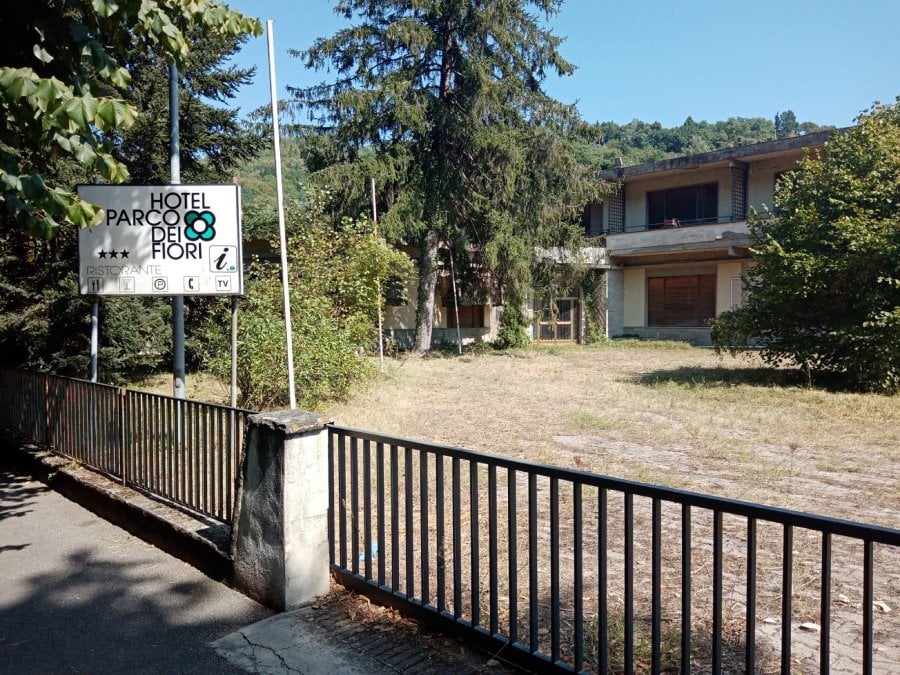
Revenue measures the size of a hotel. The property provides collateral. But the sustainability of a loan ultimately depends on the business’s ability to generate cash after tax, capital expenditure, shareholder distributions and debt service.
Family-owned hotels are a cornerstone of the Italian hospitality industry. Many benefit from a strong reputation, an established customer base and properties developed or acquired over several generations.
Yet when applying for finance, they are still frequently assessed using two primary metrics: revenue and real estate value.
Both matter, but neither is sufficient.
A hotel may own a valuable property while failing to generate enough cash to repay its debt. It may report substantial revenue but inadequate margins. It may appear to produce positive EBITDA only because essential maintenance has been deferred, family members’ work has not been properly accounted for, or personal and business expenses have become blurred.
Banks should therefore distinguish between three separate layers:
-
Primary source of repayment: the cash flow generated by the hotel operation;
-
Secondary source of repayment: the owners’ ability to provide additional capital;
-
Final layer of protection: the real estate and personal guarantees available if the loan deteriorates.
A hotel’s bankability is not determined by the value of its property alone. It arises from the alignment of the business model, capital structure, debt burden and governance.
The first mistake: confusing asset value with repayment capacity
Ownership of the underlying hotel property will naturally provide comfort to a lender. However, the property represents contingent security, not the ordinary source of repayment.
Debt service should be met from operating cash flow. Collateral becomes relevant when the business plan fails and the lender must consider alternative recovery strategies.
Even then, the amount ultimately recovered may be lower than the appraised value because of:
-
the time required to complete a sale;
-
legal and financing costs;
-
physical deterioration of the property;
-
capital expenditure required by a new buyer;
-
limited liquidity in the local market;
-
loss of goodwill and operating continuity;
-
the gap between market value and liquidation value.
In hospitality, real estate value is also closely connected to operational quality. A trading, well-maintained and properly positioned hotel may be worth substantially more than the same building stripped of its operating business, employees, reputation and customer base.
A sound credit assessment should therefore integrate real estate value with enterprise value. This is the approach applied by Investimenti Alberghieri when assessing hotel investment opportunities and by Investhotel Capital Partners when structuring transactions and turnaround strategies.
1. Normalised EBITDA: the margin the hotel can genuinely sustain
The first metric to reconstruct is normalised EBITDA: the operating profit the hotel could reasonably generate under ordinary, repeatable market conditions.
In family-owned hotels, reported earnings may be affected by:
-
directors’ remuneration that is not aligned with market rates;
-
family members working without a properly recognised salary;
-
personal expenses charged to the company;
-
rent paid between related entities;
-
exceptional costs or income;
-
services purchased from businesses connected to the owners;
-
deferred maintenance;
-
non-recurring operating items.
EBITDA must therefore be adjusted both upwards and downwards.
If three family members work full-time in the hotel without receiving market-based remuneration, reported EBITDA will overstate the property’s underlying profitability. Conversely, if the company pays personal expenses on behalf of the owners, reported EBITDA may understate the hotel’s true operating potential.
The correct question is not:
“What was EBITDA in the latest financial statements?”
It is:
“What level of EBITDA can this hotel generate consistently with a cost base, organisational structure and maintenance programme that reflect normal market conditions?”
2. Available cash flow: the true primary source of repayment
EBITDA is not the same as the cash available to service debt.
The analysis must also account for:
-
taxes;
-
changes in working capital;
-
maintenance capital expenditure;
-
mandatory investments;
-
lease payments and other financial commitments;
-
cash absorption caused by seasonality;
-
distributions to shareholders.
The result is the cash flow genuinely available for debt service.
A hotel may report positive EBITDA while consuming cash because of capital expenditure, tax arrears, seasonal fluctuations or an increase in working capital.
Banks should therefore model cash flows monthly, rather than relying solely on annual figures. Annual accounts can conceal periods of severe liquidity pressure, particularly in seasonal hotels.
3. Forward-looking and stress-tested DSCR
The Debt Service Coverage Ratio measures the relationship between cash flow available for debt service and total principal and interest payments:
DSCR = cash flow available for debt service / total debt service
A ratio above 1 theoretically indicates that the business can meet its scheduled repayments. However, DSCR should neither be treated as an automatic pass-or-fail threshold nor calculated exclusively on the borrower’s base-case projections.
The lender should assess how DSCR would change under assumptions such as:
-
occupancy below forecast;
-
lower average daily rates;
-
rising payroll costs;
-
higher energy costs;
-
increased interest rates;
-
delays to refurbishment or reopening;
-
capital expenditure above budget;
-
loss of a major tour operator or customer segment;
-
a longer-than-expected ramp-up period.
A business plan that can service its debt only if every assumption is achieved perfectly is not genuinely bankable.
The minimum acceptable DSCR must be calibrated to the hotel’s risk profile, earnings volatility, loan maturity and the lender’s required margin of safety. What matters is not merely the ratio at one point in time, but its resilience throughout the life of the loan.
4. Occupancy, ADR and RevPAR: understanding how revenue is generated
Total revenue must be broken down into its underlying operating drivers. For rooms revenue, a lender should examine at least:
-
occupancy;
-
average daily rate, or ADR;
-
revenue per available room, or RevPAR;
-
total available room inventory;
-
monthly seasonality;
-
customer segmentation;
-
geographical source markets;
-
reliance on major intermediaries;
-
share of direct bookings;
-
customer acquisition costs.
Two hotels with identical revenue can have entirely different risk profiles.
The first may generate business throughout the year, serve a diversified customer base and obtain a meaningful share of bookings directly. The second may depend on a few peak-season weeks, a single tour operator or almost entirely on online travel agencies.
Banks should therefore assess not only the volume of revenue, but also its quality, diversification, profitability and repeatability.
Restaurants, banqueting, spas and other ancillary services must also be analysed separately. An additional business line may increase total revenue while reducing operating margins, absorbing labour and requiring capital expenditure that produces an inadequate return.
5. GOP and the cost structure
Gross Operating Profit, or GOP, helps assess the efficiency of the hotel operation before ownership-related and financing costs.
The analysis should cover:
-
payroll costs as a percentage of revenue;
-
productivity per available room;
-
outsourced service costs;
-
distribution commissions;
-
energy costs;
-
departmental profitability;
-
administrative and general expenses;
-
ownership expenses incorrectly allocated to operations.
Benchmarking must be based on genuinely comparable hotels.
A year-round city hotel cannot be measured against a seasonal resort. A full-service four-star property does not have the same cost structure as a limited-service hotel. A property with restaurants and conference facilities operates differently from one focused almost entirely on rooms.
The competitive benchmark should therefore reflect location, category, size, opening period and operating model.
6. CAPEX: the hidden debt created by deferred investment
One of the most frequently overlooked aspects of hotel credit analysis is the capital expenditure required to keep the property competitive.
A hotel may appear profitable because, in recent years, it has deferred:
-
bedroom refurbishment;
-
plant and equipment upgrades;
-
energy-efficiency projects;
-
fire-safety improvements;
-
major maintenance;
-
renovation of public areas;
-
technology upgrades;
-
regulatory compliance work.
In these cases, part of reported EBITDA is not genuinely available for debt service. It represents capital that should have been reinvested in the property.
Banks should distinguish between three categories:
-
Maintenance CAPEX: required to preserve standards and competitiveness;
-
Mandatory CAPEX: required for safety, compliance and continued operation;
-
Development CAPEX: intended to increase ADR, occupancy, revenue or asset value.
Every development investment should be supported by a credible return analysis. It is not enough to claim that a refurbishment will allow the hotel to raise its rates. The lender must verify that demand, market conditions and the proposed positioning make the increase achievable.
7. Financial debt and less visible liabilities
The sustainability of a new loan cannot be assessed separately from the borrower’s existing commitments.
The analysis should reconstruct:
-
mortgages and term loans;
-
finance leases;
-
overdrafts and short-term facilities;
-
tax and social security liabilities;
-
agreed repayment plans;
-
overdue trade payables;
-
shareholder loans;
-
litigation;
-
guarantees already provided;
-
commitments involving other family-owned companies.
A hotel may appear only modestly indebted to banks while effectively financing its operations by delaying payments to suppliers, tax authorities or social security institutions.
Net Financial Debt must therefore be assessed alongside working-capital quality, payment regularity and contingent liabilities.
8. Capitalisation and genuinely available equity
Banks should establish how much equity has actually been invested and whether the owners have the financial capacity to absorb unforeseen costs.
Equity should be:
-
available;
-
verifiable;
-
contributed according to the agreed timetable;
-
proportionate to the risk of the project;
-
free from reliance on additional fragile debt.
When a family asks a bank to finance almost the entire project while retaining all the potential upside and transferring most of the downside risk to the lender, the economic alignment is weak.
An appropriate equity contribution reduces the likelihood that delays, cost overruns or a slower-than-expected ramp-up will bring the project to a halt.
9. LTV matters, but it is not decisive
Loan-to-Value measures the relationship between the amount financed and the value of the underlying property. It is an important metric, but it cannot replace cash-flow analysis.
An apparently conservative LTV can still become risky when:
-
the valuation relies on optimistic operating assumptions;
-
the property is difficult to convert to another use;
-
additional investment is required;
-
the local transaction market lacks liquidity;
-
value depends on the continuity of the hotel operation;
-
the expected disposal period is lengthy.
Alongside market value, the lender should consider:
-
a going-concern scenario;
-
an accelerated-sale scenario;
-
a liquidation scenario;
-
the expected costs and timing of recovery.
The relevant value of collateral is not simply the figure stated in an appraisal. It is the amount that could reasonably be recovered in the scenario in which enforcement becomes necessary.
10. Family withdrawals and the separation of ownership from the business
In family-owned hotels, part of the risk may sit outside the official profit and loss account.
Dividends, directors’ fees, personal use of company assets, expenses incurred for family members and transactions between related entities must all be examined carefully.
This is not about passing judgement on the family. It is about determining how much cash genuinely remains within the business and whether debt service is treated as a clear priority.
A bankable hotel business should demonstrate an adequate separation between:
-
family wealth;
-
property ownership;
-
the operating company;
-
directors’ remuneration;
-
shareholder distributions;
-
the owners’ personal financial needs.
11. Governance and succession planning
With medium- and long-term lending, the bank is not financing historical results alone. It is also financing the people and organisational structure expected to deliver future performance.
The lender should understand:
-
who actually makes the decisions;
-
what expertise those individuals possess;
-
whether an effective management control system exists;
-
how frequently management information is produced;
-
who could replace the principal owner-manager;
-
whether succession has been planned;
-
whether the next generation intends to continue the business;
-
whether the family would consider appointing external management.
A profitable hotel that depends entirely on one individual may present more risk than a slightly less profitable property supported by established processes, delegated responsibilities and a capable second management tier.
At Hotel Management Group, governance and organisational quality form an integral part of industrial assessment. Financial projections are credible only when an organisation exists that is capable of delivering them.
The essential dashboard for the credit committee
| Priority | Metric | The underlying question |
|---|---|---|
| Critical | Normalised EBITDA | Is the margin genuine, recurring and repeatable? |
| Critical | Available cash flow | How much cash remains after tax, working capital and CAPEX? |
| Critical | Base-case and stressed DSCR | Can the hotel still service its debt if performance falls short? |
| Critical | Deferred and future CAPEX | How much capital will be required to maintain competitiveness? |
| Operational | Occupancy, ADR and RevPAR | Are forecast revenues consistent with demand and market conditions? |
| Operational | GOP and departmental margins | Is the hotel operating efficiently? |
| Financial | Net debt/EBITDA and total indebtedness | Is leverage consistent with sustainable earnings? |
| Financial | Working capital | Could seasonality trigger a liquidity shortfall? |
| Asset-based | LTV and recovery value | Does the collateral protect the lender in a downside scenario? |
| Asset-based | Family equity | Are the owners sharing an appropriate proportion of the risk? |
| Organisational | Governance and succession | Who will lead the business throughout the term of the loan? |
No single metric can determine bankability in isolation. What matters is whether the indicators are consistent with one another.
An example: a loan that appears sustainable but is not
Consider a hotel reporting:
-
EBITDA: €800,000;
-
annual debt service: €550,000;
-
EBITDA-based coverage ratio: 1.45;
-
appraised property value: €12 million;
-
total financial debt: €5 million.
At first sight, the transaction appears sustainable. But EBITDA is not the correct numerator for DSCR because it does not represent cash available for debt service.
A detailed analysis identifies:
-
a €120,000 downward normalisation adjustment for family labour not reflected at market cost;
-
€150,000 of annual maintenance CAPEX;
-
€80,000 of taxes and working-capital absorption;
-
€70,000 of planned shareholder distributions.
After normalising EBITDA and accounting for cash outflows, only €380,000 remains available for debt service.
The effective DSCR is therefore:
€380,000 / €550,000 = 0.69
The property continues to provide meaningful collateral, but the operating business cannot service the debt from internally generated cash.
This does not necessarily mean that the application should be rejected. The lender could:
-
reduce the loan amount;
-
extend the maturity;
-
introduce a grace period aligned with the project timetable;
-
require a larger equity contribution;
-
restrict shareholder distributions temporarily;
-
make drawdown conditional on operational improvements;
-
introduce financial covenants and periodic testing;
-
revise the underlying business plan.
The purpose of a rigorous assessment is not merely to decide whether to lend. It is to determine which financing structure would make the debt sustainable.
What should the bank actually request?
A specialist hotel credit assessment should include:
-
at least three years of recast historical financial statements;
-
monthly management accounts;
-
room production by segment and distribution channel;
-
benchmarking against an appropriate competitive set;
-
a reconciliation of normalised EBITDA;
-
a detailed CAPEX plan;
-
monthly cash-flow projections;
-
base-case and stressed DSCR;
-
a complete financial, tax and social security debt position;
-
analysis of related-party transactions;
-
verification of the corporate structure;
-
an assessment of management capabilities;
-
a succession or business-continuity plan;
-
alternative scenarios if the business plan is not achieved.
Monitoring should continue after drawdown using a focused set of frequently updated operating indicators. Detecting a decline in ADR, occupancy, margins or liquidity allows the bank to intervene before underperformance turns into insolvency.
Finance the business, not just the building
A family-owned hotel can be an excellent borrower. It may combine reputation, local expertise, long-term ownership, resilience and a depth of market knowledge that competitors find difficult to replicate.
However, these qualities must be translated into verifiable data, sound processes and measurable cash flow.
The correct analytical hierarchy is clear:
-
Operating cash flow must service the debt;
-
Family capital must absorb unexpected variances;
-
Real estate collateral must protect the lender in a downside scenario.
Reversing this hierarchy means financing collateral and merely hoping that the business performs. Applying it correctly means financing a hotel company capable of creating value, with the property serving as protection rather than as a substitute for industrial sustainability.
Drawing on more than three decades of hospitality experience, Roberto Necci combines financial analysis with a practical understanding of hotel operations, management quality and asset value.
To discuss a hotel loan, refinancing, capital expenditure plan or hospitality credit exposure, request an independent assessment from Investimenti Alberghieri.
Contact: info@investimentialberghieri.it