The real story is not simply that Andbank intends to invest €200 million in Spanish hotels.
What matters is the investment architecture behind the operation: private capital raised through multiple distribution channels, an authorised investment manager, medium-to-large hotel assets, a clear separation between ownership and operations, and a predecessor vehicle that has already completed its first exit.
Spain is not merely attracting more capital into tourism. It is building an investment ecosystem capable of converting private savings into institutional capital for the hotel industry.
That is precisely the infrastructure Italy is still missing.
The Andbank transaction at a glance
According to information published by the Spanish financial press, Andbank aims to raise up to €100 million in equity, creating a total investment capacity of approximately €200 million through a combination of equity and debt.
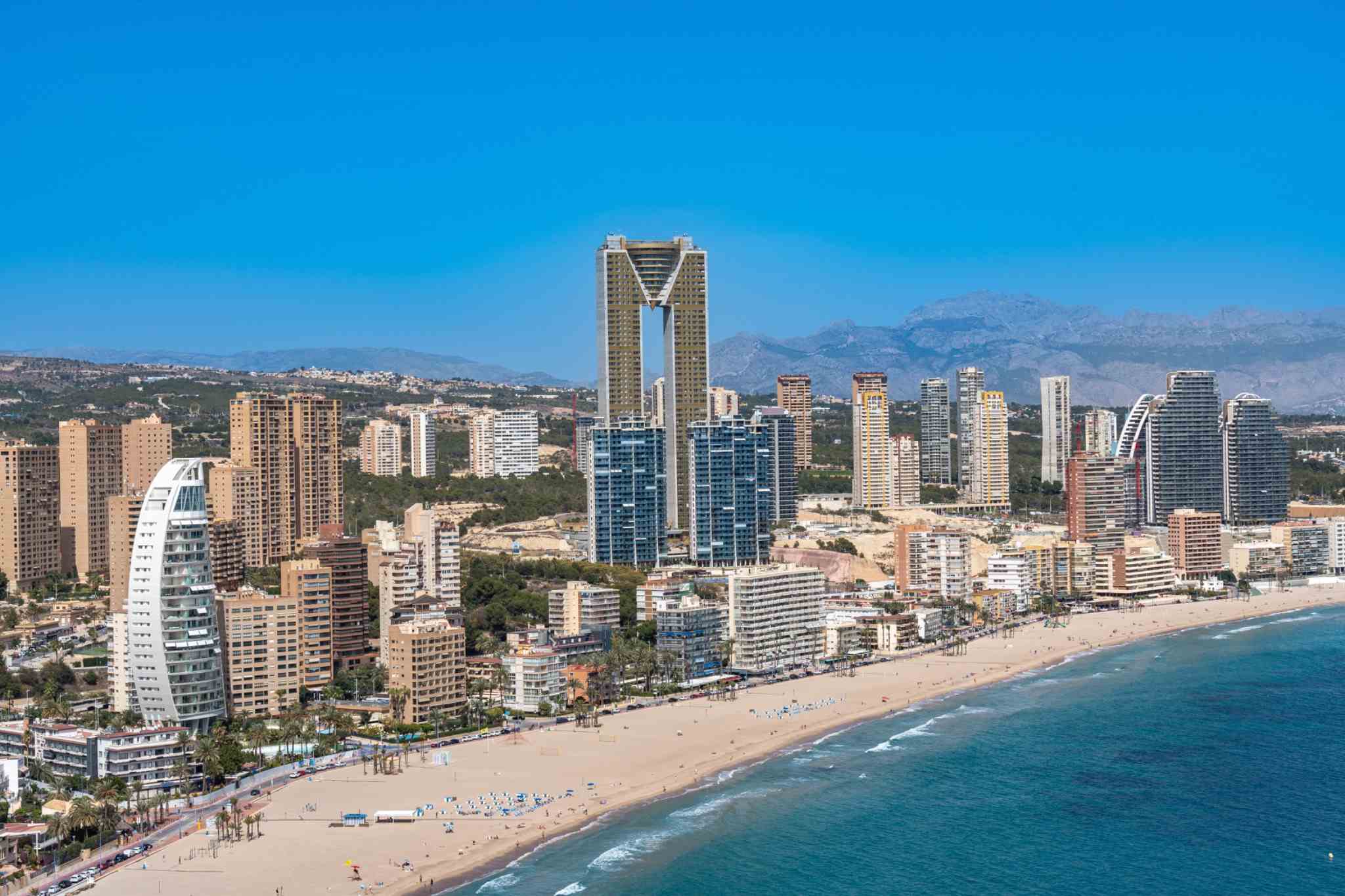
The stated objective is to acquire five or six three- and four-star hotels, representing approximately 1,000 rooms, with a focus on Spain’s leading leisure destinations: the Balearic Islands, the Canary Islands and the Costa del Sol.
The investment platform is being marketed as Actyus Hospitality Fund II, while the legal entity registered with the Spanish securities regulator is Actyus Hospitality Investments II SCR, S.A., a private equity company registered with the CNMV on 26 June 2026.
The vehicle is managed by Actyus Private Equity, Andbank’s CNMV-registered alternative investment management company. Banco Inversis acts as depositary, while Deloitte serves as auditor. The official documentation provides for an initial six-year term, with the possibility of two one-year extensions.
Technically, this is not a conventional property fund purchasing hotel buildings directly.
The vehicle invests in companies that own, control or hold sufficient rights of use over properties operated as hotels. This distinction matters because it enables the investor to intervene not only in the real estate, but also in the corporate structure, capital base and operating model of each hotel business.
The implied figure: approximately €200,000 per room
Dividing the announced €200 million investment capacity by the target of approximately 1,000 rooms produces an implied figure of around €200,000 per room.
Based on the planned €100 million equity raise, the equity contribution would amount to approximately €100,000 per room, with the remainder funded through debt.
This should not be interpreted as the expected purchase price of the hotels.
The €200,000 figure represents a theoretical investment capacity per key, which may include:
-
acquisition costs;
-
refurbishment expenditure;
-
commercial repositioning;
-
transaction costs;
-
working capital;
-
financial reserves.
Nevertheless, the calculation provides a useful indication of the fund’s positioning.
This is not a strategy focused on trophy assets or luxury hotels in major capital cities. Nor does it appear to be a purely opportunistic strategy based exclusively on distressed situations.
The profile is closer to hospitality value-add: existing hotels in established destinations, with a recognisable operating business and the potential to create additional value through capital expenditure, management improvements, distribution optimisation and repositioning.
The anticipated property size is also significant.
Five or six hotels totalling approximately 1,000 rooms implies an average of between 167 and 200 rooms per property. This scale is consistent with the search for operating efficiencies, particularly in the leisure segment, where food and beverage, swimming pools, entertainment, maintenance and ancillary facilities have a substantial impact on the cost structure.
The real strategic shift is in distribution
The most relevant aspect of the operation for the Italian market is not the use of leverage.
It is the way Andbank intends to raise and distribute the capital.
Published information indicates a minimum commitment of €250,000 for Andbank clients, while MyInvestor clients may reportedly gain access from €10,000, subject to the rules applicable to non-professional investors and to a personalised recommendation from an authorised intermediary.
MyInvestor already presents private equity investments as accessible from €10,000, subject to suitability assessments and explicit warnings regarding risk and limited liquidity.
The point is not that a retail investor automatically becomes a direct shareholder in the private equity company.
The real significance is that exposure to a hospitality private equity strategy can be made available through a digital distribution structure, while retaining:
-
a regulated investment manager;
-
an independent depositary;
-
an international auditor;
-
an investor suitability process;
-
institutional governance.
Private wealth is therefore aggregated and transformed into capital capable of acquiring, financing and repositioning a diversified hotel portfolio.
This is the step Italy has not yet managed to develop systematically.
The technical qualification that cannot be ignored
The available documentation does, however, require an important clarification.
Market communications refer to an overall equity fundraising target of up to €100 million. The prospectus currently available for Actyus Hospitality Investments II SCR indicates:
-
a single class of shares;
-
a minimum direct commitment of €1 million;
-
maximum total commitments to the company of €20 million.
These figures are not necessarily inconsistent.
The wider €100 million platform may be structured through several parallel companies, feeder vehicles, mandates or aggregation structures designed for different distribution channels.
However, until the complete documentation is available, this remains an interpretation rather than a verified fact.
The technically correct formulation is therefore:
Andbank has announced a hospitality investment platform targeting €100 million of equity and approximately €200 million of total investment capacity. The vehicle currently registered with the CNMV appears to represent at least one component of the broader investment structure.
This distinction does not make the transaction less significant.
On the contrary, it demonstrates that creating an investment product for several categories of investor requires a considerably more sophisticated corporate and distribution structure than the simple launch of a single fund.
Why the Hotel San Fermín exit matters more than the new fundraising
External observers tend to focus on the size of a newly announced fund.
Transaction professionals focus on the predecessor vehicle.
Actyus and Andbank had already participated in Atalaya, an investment vehicle that reportedly deployed approximately €120 million of equity and debt across the Spanish hotel sector.
On 6 May 2026, Atalaya completed its first disposal with the sale of Hotel San Fermín in Benalmádena to the Dorobe group. The transaction was described as the vehicle’s first asset rotation and as validation of the acquisition, operational improvement and repositioning strategy pursued since 2021.
This is the decisive step.
A hotel investment fund is not judged solely on its ability to raise capital or acquire properties. It is judged on its ability to complete the entire investment cycle:
acquisition → transformation → value creation → disposal
The sale of Hotel San Fermín demonstrates the existence of an industrial buyer willing to acquire a mid-market hotel following a value-enhancement programme.
Without a functioning secondary market, capital becomes trapped.
And without a credible exit route, raising capital at the beginning of the cycle becomes considerably more difficult.
Italy’s disadvantage is not a lack of capital
Italy has one of Europe’s largest and most fragmented hotel inventories, internationally recognised destinations and structurally strong tourism demand.
The problem is not a shortage of properties.
Nor is it an absolute shortage of capital.
The problem is the limited number of genuinely investable hotels.
An investment fund does not merely acquire an attractive property in a desirable location. It acquires a risk profile that must be capable of being:
-
measured;
-
financed;
-
managed;
-
transformed;
-
resold.
Many Italian hotels have substantial underlying real estate value but still lack the technical and organisational structure required to attract institutional investors.
There are four principal reasons.
1. Investment products remain relatively inaccessible
Italian alternative investment vehicles remain primarily directed at professional investors, family offices and high-net-worth individuals.
A sophisticated private investor seeking exposure to hospitality therefore tends to purchase a property or an individual hotel directly.
This concentrates risk in a single asset, destination, operator and corporate structure.
The Spanish model instead seeks to convert that capital into indirect participation in a diversified portfolio.
2. The supply side is excessively fragmented
Acquiring five 180-room hotels is very different from acquiring fifteen 60-room properties.
Every additional hotel involves:
-
another owner;
-
another due diligence process;
-
a different planning and licensing position;
-
a separate tax and financial structure;
-
different employment arrangements;
-
potential family or succession issues.
Origination costs consequently become one of the primary obstacles to institutional investment.
This is why the selection and aggregation work undertaken by Investhotel is not simply about identifying hotels for sale. It involves creating investment dossiers capable of passing the initial screening processes of professional investors and operators.
3. Ownership and operations remain intertwined
In many Italian hotels, the same family owns the property, controls the operating company and manages the business directly.
This model may have worked for decades, but it creates serious complications when external capital is introduced.
A buyer acquiring the real estate may also be expected to take on:
-
an operating company that has not been properly separated;
-
family relationships and informal arrangements;
-
historical liabilities;
-
an organisation built around the owner’s daily presence.
In practical terms, the buyer may be required to purchase not only an asset, but also a job.
Separating property ownership, operating activities and hotel management through leases, management agreements, franchises or hybrid structures is one of the core areas of work undertaken by Hotel Management Group.
4. The exit market lacks sufficient depth
Italy has a relatively liquid market for prime assets in Rome, Milan, Venice and Florence, as well as in selected luxury destinations.
Conditions are more complex for three- and four-star hotels in secondary leisure markets.
Buyers do exist, but the sales process is often less standardised, takes longer and depends more heavily on the individual characteristics of the asset.
For an investment fund, the absence of a clear exit strategy has a direct impact on the price it can afford to pay at acquisition.
What italian hotel owners should do today
The Andbank operation is directly relevant to Italian hotel owners, particularly those controlling leisure properties with between 80 and 200 rooms.
Not because the fund will necessarily invest in Italy.
But because the transaction illustrates the characteristics that European institutional capital is seeking.
The question is not:
What is my hotel worth today?
The correct question is:
What must I change to make my hotel capable of being acquired, financed and subsequently resold by an institutional investor?
Preparation should cover at least five areas.
Corporate and real estate perimeter. Property ownership, hotel operations, trademarks, licences and intra-group relationships must be clearly identifiable and, where necessary, capable of being separated.
Reliable financial information. Revenue, GOP, normalised EBITDA, labour costs, ADR, occupancy and ancillary revenues should be reconstructable for at least three financial years.
Vendor due diligence. Planning, cadastral, fire safety, environmental and operating authorisations should be verified before a sale process begins.
Capital expenditure planning. An investor needs to understand not only the hotel’s current performance, but also the investment required to achieve the intended positioning.
A transferable operating model. The hotel cannot depend exclusively on the personal involvement of its owner.
Operational repositioning may require support from Necci Hotels. Commercial and distribution strategy can be reviewed through Hotel Marketing Lab, while the management team required for the new operating model can be identified through Vertex Executive Search.
The education of both owners and managers is equally important. Without the ability to understand the profit and loss account, revenue management, organisational structures and asset value, even the strongest financial project remains fragile. This is the area in which Roberto Necci Academy operates.
The lesson for the italian hotel market
Spain is not ahead simply because more investors are interested in its hotels.
It is ahead because it has reduced the distance between:
private wealth, investment vehicles, hotel assets, operators and the exit market.
Italy still tends to treat these elements as separate worlds.
On one side are owners who control valuable properties but are not prepared to engage with institutional capital.
On the other are investors seeking portfolios, standardised information and execution timetables compatible with institutional decision-making processes.
What is often missing between the two is a professional advisory function capable of preparing the asset, structuring the transaction and translating the requirements of each side.
That is the role of the hotel investment adviser. It should not be confused with basic brokerage or operational consulting, as discussed in the hotel investment analyses and guides published by Roberto Necci.
The conclusion is straightforward.
Italy can continue to have an enormous number of hotels without having a sufficient number of investable hotels.
Over the coming years, this distinction — rather than the number of rooms or the beauty of the destination — will determine where institutional capital is deployed.
Transaction overview
| Item | Details |
|---|---|
| Commercial name | Actyus Hospitality Fund II |
| Legal entity | Actyus Hospitality Investments II SCR, S.A. |
| Sponsor | Andbank Group |
| Manager | Actyus Private Equity SGIIC, S.A.U. |
| Depositary | Banco Inversis |
| Auditor | Deloitte Auditores |
| CNMV registration | No. 891 — 26 June 2026 |
| Announced fundraising target | Up to €100 million of equity |
| Announced investment capacity | Approximately €200 million of equity and debt |
| Maximum commitments stated for the published direct vehicle | €20 million |
| Minimum direct subscription in the prospectus | €1 million |
| Minimum commitments reported by the press | €250,000 through Andbank / €10,000 through MyInvestor, subject to the applicable conditions |
| Investment target | 5–6 three- and four-star hotels |
| Target room count | Approximately 1,000 |
| Implied average property size | 167–200 rooms |
| Theoretical investment capacity per room | Approximately €200,000 |
| Target locations | Balearic Islands, Canary Islands and Costa del Sol |
| Indicative term | Six years, with two possible one-year extensions |
| Predecessor vehicle | Atalaya |
| First Atalaya exit | Hotel San Fermín, sold to Dorobe on 6 May 2026 |
Is Your Hotel Genuinely Investable?
Hotel owners seeking to determine whether their property could attract investment funds, professional investors or industrial operators should carry out an initial assessment before bringing the asset to market.
Contact r.necci@robertonecci.it and provide:
-
location;
-
number of rooms;
-
category;
-
revenue and EBITDA, where available;
-
current operating model;
-
ownership structure;
-
intended transaction objective.
Generic sales presentations are not sufficient. Meaningful data is required to determine whether there are credible grounds for a sale, an equity investment, a repositioning programme or the separation of ownership and operations.
Opportunities are reviewed confidentially through the professional ecosystem of Hotel Management Group.
For ongoing coverage of hotel transactions, investment funds and capital movements across the sector, visit the Investimenti Alberghieri blog.
Investimenti Alberghieri is a deal-journalism platform dedicated to hotel transactions, investment funds and hospitality capital markets in Italy and across Europe.
This article is provided solely for journalistic and informational purposes and does not constitute investment advice, an offer or a solicitation to invest.
Sources: CNMV, Actyus Hospitality Investments II prospectus, EjePrime, Actyus and MyInvestor. Information reviewed as of 6 August 2026.