Is Fonteverde for Sale? Why This Deal Matters Beyond the Price Tag
The potential sale of Fonteverde and four other Italian hotels linked to the Oaktree-Westmont portfolio is not just another real estate story. It is a test case for the real value of Italian luxury hospitality, for the maturity of thermal resorts as an investment asset class, and for the continued appetite of international capital for high-end hotel assets in Italy.
According to market reports first published by Green Street News and later picked up by Il Sole 24 Ore, Oaktree Capital Management is reportedly considering the sale of a five-hotel Italian portfolio, with an estimated value of around €350 million.
The portfolio would include approximately 600 to 650 rooms, split between thermal resorts in Tuscany and urban hotels in Florence and Milan. The properties are understood to be managed by Italian Hospitality Collection, Oaktree’s hotel platform focused on upper-upscale and luxury hospitality across Italy.
The key issue is not simply whether the transaction will happen. The real question is what this potential sale tells us about the market: how much are Italian luxury hotels worth today? What is the value of a thermal resort with a strong territorial identity? And how much international capital is still prepared to invest in Italian hospitality at institutional pricing levels?
For further insights into hotel valuations, transactions and investment strategies, see the hotel guides by Roberto Necciand the Investimenti Alberghieri blog.
The Oaktree-Westmont Portfolio: Key Numbers
The portfolio reportedly includes five properties:
| Hotel | Location | Approx. rooms | Positioning |
|---|---|---|---|
| Fonteverde | San Casciano dei Bagni | approx. 80 | Luxury thermal resort |
| Grotta Giusti | Monsummano Terme | approx. 60 | Thermal resort |
| Bagni di Pisa | San Giuliano Terme | approx. 60 | Thermal resort |
| Anglo American Hotel Florence | Florence | approx. 120 | City hotel |
| Duo Milan Porta Nuova | Milan | approx. 240 | City hotel |
If the reported valuation of €350 million is confirmed, the portfolio would imply an average value of approximately €538,000 to €583,000 per key, depending on whether the total room count is closer to 650 or 600 rooms.
This is a useful metric, but not a sufficient one. In a portfolio of this nature, value cannot be assessed through a simple arithmetic division. The assets differ in nature, market, seasonality, operating potential and likely future capital expenditure requirements.
The real question is therefore different: is the portfolio worth €350 million because it includes rooms, buildings and prime locations, or because it can become a hotel platform capable of generating superior profitability?
That distinction is where the true value of the transaction will be decided.
Fonteverde: The Symbolic Asset of Italian Thermal Luxury
Within the portfolio, Fonteverde is the most representative asset. Not necessarily because of its size, but because of its symbolic value, reputation and positioning.
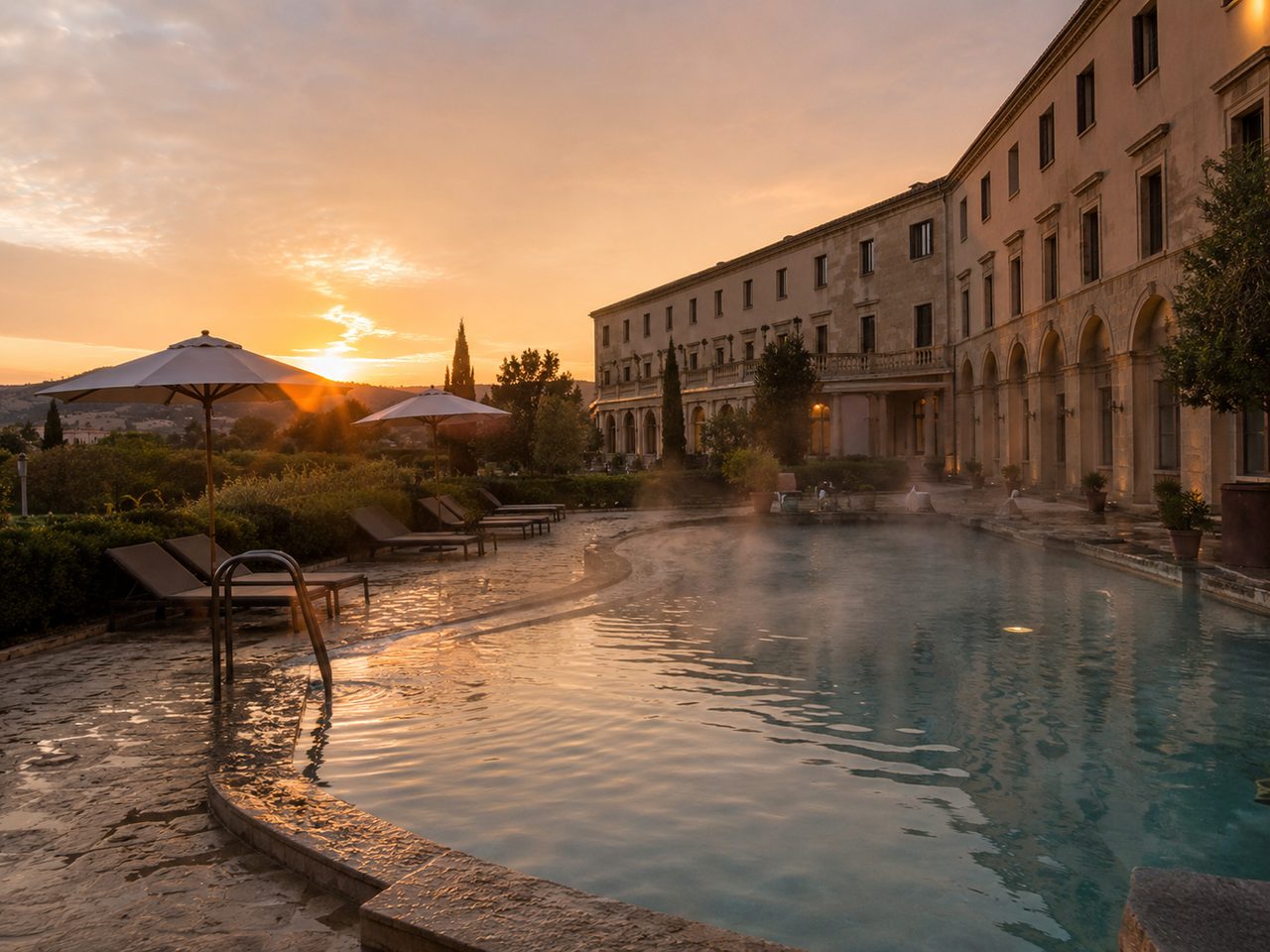
Located in San Casciano dei Bagni, in the province of Siena, Fonteverde is one of the most recognisable names in Italian luxury thermal hospitality. The resort combines history, the Tuscan landscape, wellness, high-end hospitality and a strong sense of place.
This is the crucial point: Fonteverde is not merely an 80-room hotel. It is a complex hospitality product in which value comes from the combination of real estate, destination, thermal waters, reputation, service, experience and the ability to attract high-spending guests.
In contemporary luxury hospitality, value is no longer built solely around the room. It is built around a broader promise: time, health, silence, nature, privacy, care, gastronomy, wellbeing and authenticity.
Fonteverde embodies many of these elements. For this reason, any potential change of ownership would have a significance that goes well beyond a standard hotel transaction. It would touch the future of one of Italy’s most representative high-end thermal hospitality assets.
Thermal Hotels in Tuscany: Why Investors Are Paying Attention
The portfolio would also include Grotta Giusti and Bagni di Pisa, creating, together with Fonteverde, a potential Tuscan thermal triangle.
This component is strategically important. For many years, Italian thermal hospitality was perceived as a traditional segment, often more healthcare-oriented than tourism-driven. Today, however, the international luxury market is moving in a different direction: wellness, longevity, preventive health, nutrition, mental and physical regeneration, and nature are becoming primary travel motivations.
The high-spending guest is no longer simply looking for a spa. They are looking for a transformative experience. They are looking for places where they can recover energy, balance and time.
In this context, thermal hotels can become much more than properties with pools and treatment rooms. They can become platforms for longevity hospitality, especially when located in powerful destinations such as Tuscany.
Fonteverde, Grotta Giusti and Bagni di Pisa therefore have potential that goes beyond the classic thermal hotel model. They can capture growing international demand, provided the product is managed with industrial vision, high standards, qualified personnel, distinctive programmes and coherent international distribution.
The risk, on the other hand, would be to treat these assets simply as prestigious hotels. In luxury wellness, the property is only the foundation. The real value lies in the quality, credibility and consistency of the experience.
Florence and Milan: The Urban Assets That Make the Portfolio More Liquid
Alongside the three thermal resorts, the portfolio would also include two urban hotels: Anglo American Hotel Florenceand Duo Milan Porta Nuova.
The presence of Florence and Milan changes the nature of the transaction. This is not a pure resort portfolio, but a mixed set of leisure, wellness and city-hotel assets.
Florence and Milan are deeper, more liquid and more easily understood markets for investors. They have different fundamentals from thermal resorts: more diversified demand, stronger international depth and a more established presence of brands, operators and institutional investors.
The urban hotels can therefore play a stabilising role within the portfolio. The thermal resorts offer uniqueness and repositioning potential; Florence and Milan offer liquidity, volume, international demand and greater operational standardisation.
This dual nature makes the portfolio more attractive, but also more complex. A buyer would need to decide whether to manage the assets as an integrated platform or to unlock value through differentiated strategies for each individual property.
Value per Key: Why €350 Million Is More Than Just a Price
The implied average value per key, between approximately €538,000 and €583,000, is significant. However, in a hotel transaction of this scale, price per key is only the starting point.
A professional investor does not buy rooms. They buy expected cash flows, reputation, location, rate potential, margins, contracts, capital expenditure requirements, operating risk and exit value.
To properly assess a portfolio like this, at least seven layers of value need to be separated:
-
Real estate value, linked to the buildings, locations and scarcity of the assets;
-
Operating value, connected to revenue, margins and management efficiency;
-
Brand value, especially for highly recognisable assets such as Fonteverde;
-
Destination value, particularly in Tuscany, Florence and Milan;
-
Thermal and wellness value, which can become a strong competitive differentiator;
-
Repositioning value, if there is room to improve rates and profitability;
-
Exit value, meaning the future ability to resell the assets either as a portfolio or individually.
This is the difference between buying a hotel and making a true hotel investment.
Due Diligence: Where the Real Value Is Decided
In a transaction of this kind, due diligence cannot be limited to verifying real estate, licences and contracts. It must go to the heart of the hotel business.
The decisive questions would include:
-
What is the normalised EBITDA of the portfolio?
-
Which margins are recurring and which are driven by temporary market conditions?
-
How much capital expenditure will be required over the next few years?
-
Which assets have genuine rate-growth potential?
-
How much do spa, wellness and food & beverage contribute to profitability?
-
What share of demand comes from international markets?
-
What agreements govern management, franchising and affiliations?
-
Are there urban-planning, landscape or thermal-water constraints?
-
Is the portfolio worth more as a whole or broken up asset by asset?
-
What is the most credible exit strategy?
The answers to these questions determine the sustainable price. In the hotel market, value is not the same as asset appeal. Value lies in the ability of an asset to generate income, preserve reputation and remain liquid over time.
This is where many transactions fail: when prestige is priced in before profitability has been properly tested.
Why Oaktree May Be Considering a Sale Now
A potential sale would be consistent with a capital-rotation strategy.
For an international fund, the typical cycle is clear: acquire, reorganise, invest, enhance, stabilise and exit when the market is ready to recognise the value created.
If a sale process were actually launched, Oaktree could be seeking to monetise a favourable phase in the Italian hospitality market, where luxury, resorts, iconic destinations and assets capable of attracting international demand continue to draw investor interest.
In recent years, the Italian hotel market has become more institutional. Investors are no longer looking only at individual trophy assets, but also at structured portfolios, operating platforms and repositioning projects.
The potential sale of the Oaktree-Westmont portfolio would fit naturally into this evolution.
Who Could Buy the Portfolio?
A €350 million hotel portfolio automatically narrows the field of potential buyers.
The most likely buyer categories would include five groups.
International Real Estate Funds
These are the most natural candidates for a transaction of this size. They would focus on yield, real estate value, capex, operating risk and exit potential.
European and Middle Eastern Family Offices
They may be attracted by the prestige of the assets, particularly the Tuscan component and Fonteverde. In this case, value would not be purely financial, but also patrimonial and reputational.
Luxury Hotel Groups
An international operator could see the portfolio as a platform to strengthen its presence in Italy, especially in the wellness, leisure and upper-upscale segments.
Specialised Hospitality Platforms
These are operators capable of integrating ownership, management, branding, distribution, revenue management and strategic development. For them, the portfolio would make sense if embedded within a broader platform vision.
Value-Add Investors
They may aim to acquire, invest, reposition and resell, possibly separating the more liquid assets from the more complex ones.
The real variable will be the structure of the process. A portfolio sale preserves the platform logic but limits the buyer pool. An asset-by-asset sale may increase competition for individual properties, but would weaken the industrial narrative of the portfolio.
The Strategic Question: Hotel Real Estate or Value Platform?
The most important question is this: will these hotels be sold as hotel real estate or as a value platform?
In the first scenario, the buyer will mainly look at rooms, square metres, cap rates, cost of capital and resale value.
In the second, they will look at something more sophisticated: brand, management, experience, reputation, positioning, distribution, people, international demand and the ability to generate superior margins.
In the Italian hotel sector, this distinction is fundamental. A high-quality hotel is never just a building. It is a system made up of real estate, service, destination, narrative, management and market.
Fonteverde without San Casciano dei Bagni would be something else. Grotta Giusti without its natural identity would be something else. Bagni di Pisa without its history would be something else. A hotel in Florence or Milan without the right commercial strategy would simply be a property in a competitive market.
Value comes from the whole system.
What This Deal Teaches Hotel Investors
The Oaktree-Westmont dossier offers a useful lesson for the entire market: in hospitality, price should never be read in isolation.
A portfolio can appear expensive if analysed only on a per-key basis. It can appear attractive if viewed only through location. It can look exceptional if judged only by prestige. But it becomes truly understandable only when real estate, operations, profitability and strategy are analysed together.
For hotel investors, the right questions are:
-
Which part of the value comes from the property?
-
Which part comes from management?
-
Which part comes from the destination?
-
Which part comes from the brand?
-
Which part depends on future growth that has not yet been delivered?
Only by answering these questions can one determine whether the asking price represents an opportunity, a fair balance or a risk.
For a deeper look at hotel investment analysis, hotel valuations and acquisition or disposal strategies, see the hotel guides by Roberto Necci and the insights published on the Investimenti Alberghieri blog.
Conclusion: Fonteverde Is a Signal of the New Cycle in Italian Luxury Hospitality
The potential sale of the Oaktree-Westmont portfolio matters not only because of its economic value, but because of what it represents.
Fonteverde, Grotta Giusti, Bagni di Pisa, Anglo American Hotel Florence and Duo Milan Porta Nuova reflect five different dimensions of Italian hospitality: thermal tourism, wellness, art cities, business travel, experiential luxury, international branding and professional hotel management.
If the transaction materialises, the market will gain a new benchmark for valuing high-quality hotels in Italy. If it does not, the signal remains clear: well-positioned Italian hotel assets continue to attract attention, capital and expectations.
The lesson is straightforward. The value of a hotel is not measured only by the number of rooms, nor by the price per key. It is measured by the ability to transform a property into a platform of experience, reputation and income.
In that sense, Fonteverde is not just a resort. It is an indicator of the new cycle in Italian luxury hospitality.
Transactions such as the potential Oaktree-Westmont portfolio sale require an integrated understanding of market dynamics, real estate fundamentals, hotel operations, profitability and exit strategy.
Hotel Management Group supports owners, investors and hotel operators with advisory services, hotel valuations, feasibility studies, strategic due diligence, repositioning projects and hospitality asset enhancement.
Hotel Management Group helps turn hotel assets into financially sound, commercially positioned and strategically scalable hospitality projects.
In the hotel market, value is not found only in the walls. It is built through the ability to transform a property into a sustainable, marketable and financially readable hospitality business.
Roberto Necci - r.necci@robertonecci.it