The former Valtur resort on the island of Santo Stefano is moving into the orbit of Saudi capital and the Benetton family. Yet the most significant aspect of the transaction is not the change of ownership itself. It is the expected transformation of the asset: fewer rooms, more space, enhanced services, higher ADR and a five-star positioning. In other words, a hotel value-creation strategy built not around what the resort used to be, but around what it could become after repositioning.
Italy’s hotel investment market continues to attract international capital, particularly when the opportunity involves more than simply acquiring a hotel and instead offers access to an asset that is genuinely difficult to replicate.
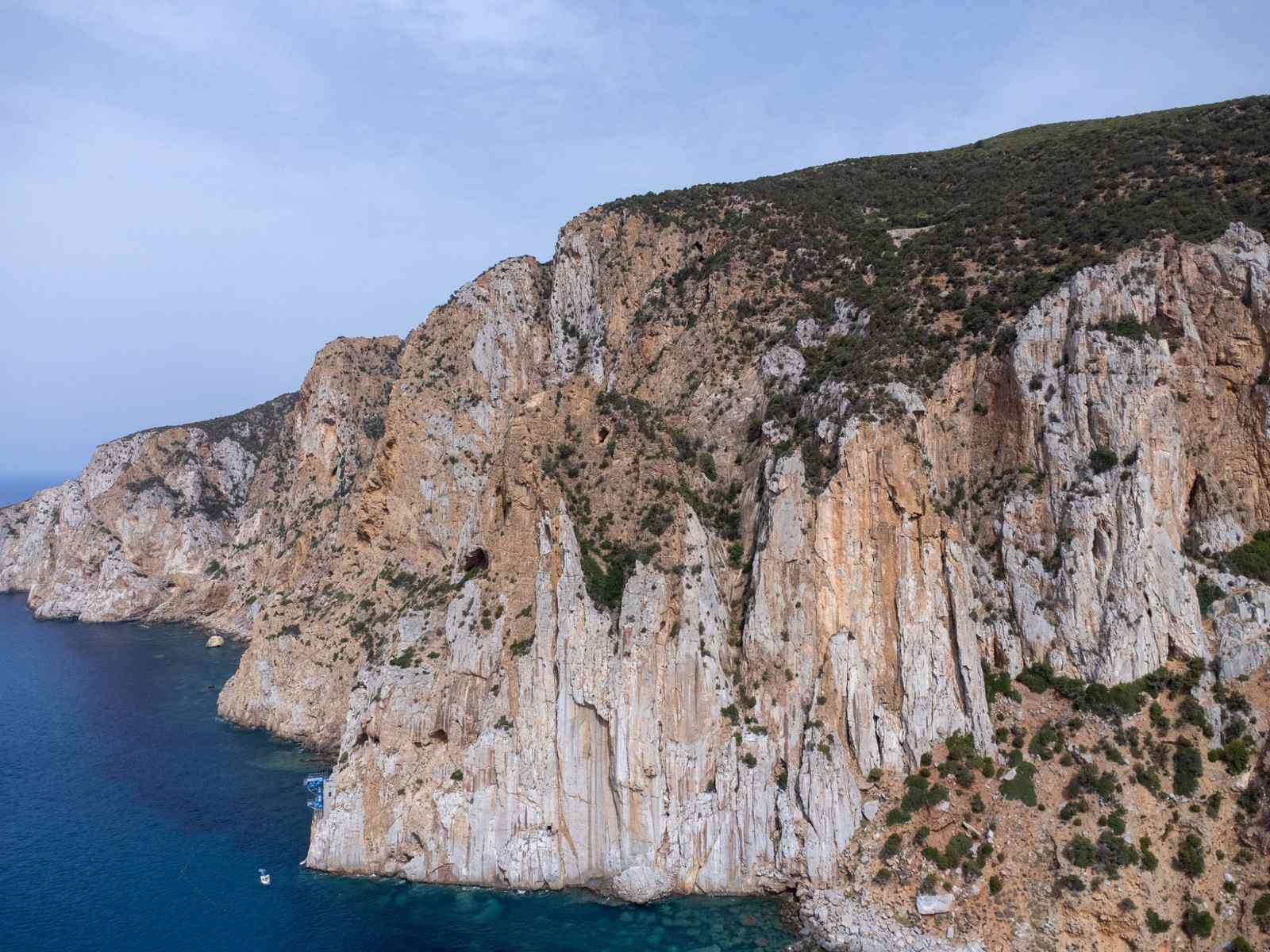
That is precisely the case with Santo Stefano, in the La Maddalena archipelago off the coast of Sardinia.
According to information disclosed in connection with the recent transaction, the property is now held by Santo Stefano Resort, with 90% of the company attributable to interests linked to Red Sea Global and the remaining 10% to an Italian interest associated with the Benetton family.
The acquisition price has not been publicly disclosed.
But the entry price alone would, in any event, provide only a partial understanding of the transaction.
The more relevant question is:
what could Santo Stefano be worth after its transformation?
This is not simply a real estate acquisition. It is a product transformation
The resort currently comprises more than 300 rooms.
Available indications regarding the future of the property point towards its repositioning as a five-star luxury resort, combined with a reduction in the overall room count.
This is the element that fundamentally changes the economics of the transaction.
In traditional hospitality, reducing the number of rooms can appear to mean reducing productive capacity.
In luxury hospitality, however, it can be one of the most powerful levers for value creation.
Fewer rooms can translate into:
-
larger average room sizes;
-
a higher proportion of suites;
-
greater privacy;
-
more sophisticated public areas;
-
a stronger wellness offering;
-
more developed food and beverage concepts;
-
personalised services;
-
higher guest spend;
-
higher ADR;
-
and greater real estate value per key.
Productive capacity should therefore not be assessed solely on the basis of room count.
It should be measured by the economic value generated by each key.
This is where the Santo Stefano project could move onto an entirely different level.
Scarcity is the real competitive advantage
A hotel room can be rebuilt.
A property can be refurbished.
A brand can be replaced.
A location such as Santo Stefano cannot be replicated.
That scarcity is likely to be one of the asset’s most important sources of value.
A resort located on an island within the La Maddalena archipelago does not compete solely on the quality of its rooms.
It competes through a combination of:
location + privacy + landscape + limited accessibility + experience + pricing power.
This has an important implication for hotel investors.
Exceptional assets cannot be valued solely on a price-per-key basis or through conventional comparable transaction multiples.
Two hotels with an identical number of rooms can have entirely different economic prospects if one occupies a location that cannot be reproduced.
The value, therefore, does not reside exclusively in the real estate.
It lies in the ability to transform that location into high-value hospitality cash flow.
This is the same approach explored by Investhotel when assessing repositioning opportunities and by Hotel Management Group when analysing hospitality assets from an operational and strategic perspective.
From holiday village to luxury resort
The transformation of Santo Stefano also reflects the broader evolution of Italy’s tourism market.
The traditional holiday-village model was primarily based on:
room count × occupancy × average length of stay.
Contemporary luxury hospitality introduces additional variables:
ADR × experience × ancillary revenue × brand × international distribution × guest spend.
That difference is fundamental.
A resort with fewer rooms can, in theory, generate higher revenue and greater value if the repositioning succeeds in materially increasing:
-
average daily rate;
-
RevPAR;
-
food and beverage spend;
-
wellness revenue;
-
experiential revenue;
-
the length of the operating season;
-
the proportion of international guests;
-
and operating margins.
The objective of a repositioning strategy is therefore not simply to sell more room nights.
It is to monetise every guest and every square metre of the asset more effectively.
CAPEX will determine whether the strategy succeeds
Transforming a traditional holiday village into a five-star resort will inevitably require significant capital expenditure.
CAPEX is therefore likely to be one of the most important variables determining the ultimate return on the investment.
The transformation may require substantial investment across:
-
rooms and suites;
-
bathrooms;
-
mechanical and electrical systems;
-
restaurants and bars;
-
swimming pools;
-
wellness facilities;
-
beach facilities;
-
landscaping;
-
public areas;
-
energy infrastructure;
-
back-of-house facilities;
-
technology;
-
sustainability initiatives;
-
internal logistics;
-
and guest services.
The island setting introduces an additional layer of complexity.
The transport of materials, construction management, workforce logistics and ongoing supply chains can all materially increase the cost of redevelopment.
For this reason, the economics of the transaction ultimately need to be assessed through at least four variables:
acquisition price + CAPEX + stabilised EBITDA + exit value.
Any assessment of the investment would be incomplete without understanding this equation.
The real question: how much EBITDA can Santo Stefano generate?
In hotel real estate, future value is not determined solely by the physical quality of the property.
It is primarily determined by the asset’s ability to generate earnings.
For an investor, therefore, the critical question is not:
how much will it cost to refurbish Santo Stefano?
It is:
how much EBITDA will Santo Stefano be able to generate once stabilised?
That is the variable capable of turning a major real estate investment into an economically sustainable hospitality operation.
The objective will presumably be to create a product capable of supporting materially higher rates than in the past, while simultaneously increasing the perceived value of the overall guest experience.
If achieved, the reduction in room count could become a positive rather than a negative.
Not less capacity.
More value per key.
Red Sea Global: capital combined with development expertise
The involvement of Saudi capital is particularly relevant because of the nature of the investor behind it.
Red Sea Global is active in the development of high-end tourism and hospitality destinations and is owned by Saudi Arabia’s Public Investment Fund.
This means the transaction potentially brings more than financial capital.
It introduces an organisation with experience in the development of luxury destinations.
That distinction matters.
A project such as Santo Stefano requires not only capital, but the ability to:
-
define the concept;
-
design the product;
-
establish the positioning;
-
attract international demand;
-
increase pricing power;
-
integrate hospitality and experience;
-
and transform a resort into a destination.
Capital alone does not create value.
Value is created by the ability to convert capital into a competitive hospitality product.
The previous transaction in 2021
The property had already been involved in a significant real estate transaction.
In 2021, Santo Stefano Resort formed part of a portfolio acquired by DeA Capital Real Estate SGR from Amundi Real Estate Italia SGR.
The overall portfolio, reportedly valued at approximately €44 million, included several properties in addition to the Santo Stefano holiday resort.
It is therefore important not to misinterpret that figure: it did not represent the standalone value of Santo Stefano Resort.
The transaction nevertheless helps illustrate how the investment thesis surrounding the asset has evolved.
Previously, the focus was predominantly:
real estate.
Today, the opportunity potentially combines:
real estate + hospitality transformation.
And it is precisely at the intersection of the two that additional value can be created.
Sardinia’s investment market is changing
Sardinia is one of the Italian markets where this transformation is becoming particularly visible.
International capital is no longer looking simply for hotels.
It is looking for:
-
irreplaceable locations;
-
repositioning potential;
-
scarcity of supply;
-
international demand;
-
scope for ADR growth;
-
opportunities to create luxury products;
-
and the ability to generate value through transformation.
This is producing an increasingly polarised market.
Ordinary hotels are primarily valued on the basis of their existing profitability.
Exceptional assets can also be valued on the basis of their future earnings potential.
That distinction is fundamental.
InvestimentiAlberghieri.it focuses precisely on these dynamics, analysing hotel acquisitions, distressed assets, turnarounds, value-add strategies, investment opportunities and the transformation of Italy’s hospitality real estate.
“Former Valtur” describes the past, not the investment thesis
The reference to “former Valtur” identifies the historical background of the resort.
It should not, however, distort the interpretation of the transaction.
The Valtur brand is currently owned by the Nicolaus Group, while the Santo Stefano transaction concerns the hospitality and real estate asset rather than the transfer of the current Valtur brand.
This distinction is also significant from an investment perspective.
Because Santo Stefano’s future value is unlikely to depend on what the resort once represented.
It will depend on what it becomes.
The real deal is not buying Santo Stefano. It is transforming it
This transaction offers a broader lesson for the Italian hospitality investment market.
Value is not necessarily created by acquiring an undervalued asset.
It can also be created by acquiring an asset that is underutilised relative to its potential.
The distinction is considerable.
In the first case, the investment thesis is built around price.
In the second, it is built around transformation.
Santo Stefano combines many of the characteristics currently sought by international hospitality capital:
an irreplaceable location, scarcity, luxury potential, repositioning opportunities and the theoretical ability to significantly increase value per key.
The investment thesis can therefore be summarised in a simple formula:
acquire a large traditional resort, reduce density, increase quality, raise ADR, grow EBITDA and transform a tourism property into an internationally positioned luxury hospitality asset.
Execution will, of course, require capital, time, operational expertise and disciplined management.
But that is precisely the point.
The value of Santo Stefano does not lie in the former Valtur resort that has been acquired.
It lies in the resort they are able to create.
Further insights into hotel investments, transactions and value-creation strategies are available at RobertoNecci.it, Investhotel, InvestimentiAlberghieri.it and Hotel Management Group.
Hotel investment analysis and value creation
For preliminary acquisition assessments, feasibility studies, business plans, economic valuations, repositioning strategies, value-add transactions and hotel asset enhancement strategies:
info@investimentialberghieri.it