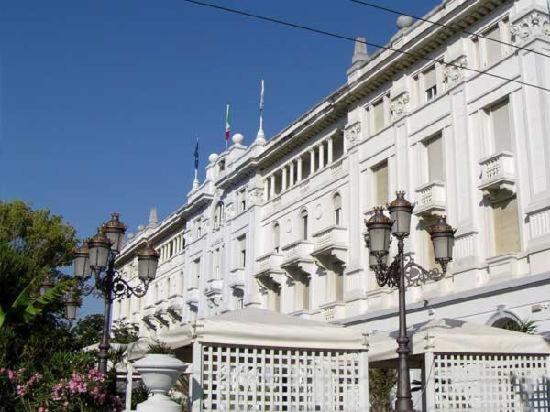
The successful bid for the Grand Hotel Riccione marks the beginning of a new phase of analysis: understanding the investor’s ownership structure, its previous investments in the area, and the financial and strategic rationale that may underpin the redevelopment of one of the Adriatic Riviera’s best-known hospitality assets.
This article was produced in collaboration with HotelIntelligence.it, a platform specialising in financial, real estate and strategic intelligence for the hospitality industry. HotelIntelligence supports investors, banks, funds, family offices and hotel owners in assessing assets, operators, markets, financial sustainability and risk.
On 23 September 2026, the Grand Hotel Riccione complex was awarded as part of insolvency proceeding no. 5/2023 before the Court of Rimini.
The starting price was:
€24.864 million
The final successful bid reached:
€29.365 million
The successful bidder was New Eden Srl, a Rimini-based company incorporated in 2023.
It is important to clarify that, as of the publication date of this article, €29.365 million represents the successful bid price in the sale procedure, subject to the subsequent steps required before the transfer can be fully completed.
The transaction could simply be read as the conclusion of a sale process.
In reality, it raises a more interesting question:
what ownership structure and investment strategy sit behind the transaction?
That is where the Grand Hotel Riccione story now deserves a second level of analysis.
From the Property Price to the Investor Structure
InvestimentiAlberghieri.it had already analysed the Grand Hotel Riccione before the sale in:
That analysis started from a fundamental principle.
A hotel does not create value simply because it is famous.
It does not automatically create value because of its history.
Nor does it create value merely because it occupies an irreplaceable location.
Economic value ultimately depends on the ability to transform invested capital, real estate and operations into sustainable cash flow.
The same principle was explored by RobertoNecci.it in:
Grand Hotel Riccione: perché storia e immobili non bastano a salvare un hotel
Now that the procedure has produced a successful bid of €29.365 million, the analysis can move to a different level:
the ability to turn that acquisition price into value.
Who Is New Eden?
New Eden Srl is a relatively young company.
It was incorporated in 2023 and is headquartered in Rimini.
According to corporate information reported by the press on the basis of Italian Companies Register records, its share capital is held:
-
98% by MLA Realty Limited, a company registered in Hong Kong;
-
2% by Red Count Srl, a Rimini-based company.
The publicly traceable ownership structure can therefore be summarised as follows:
MLA Realty Limited
↓
98%
↓
New Eden Srl
with the remaining 2% held by Red Count Srl.
MLA Realty Limited is therefore a particularly relevant part of the structure.
The company was incorporated in Hong Kong in May 2023, only a few weeks before New Eden was established.
The proximity of the two incorporation dates is an objective fact.
Publicly available information does not, however, establish the specific purpose for which MLA Realty Limited was originally incorporated.
Likewise, the available public documentation allows the direct ownership of New Eden to be reconstructed, but does not provide sufficient evidence to identify the ultimate beneficial owner of the wider ownership structure with certainty.
That should not in itself be interpreted as unusual.
It simply reflects the limits of the information currently available in the public domain.
One Name Appears in Earlier Transactions: Paolo Monzoli
The name Paolo Monzoli has appeared publicly in connection with previous New Eden transactions in Riccione.
In May 2026, during the transaction involving the former Bertazzoni seaside colony, Il Resto del Carlino referred to him as a “company representative” of New Eden.
The scope of that information needs to be clearly defined.
This article attributes to Paolo Monzoli only the role specifically reported by the cited source.
Based on the public sources reviewed for this analysis, there is insufficient evidence to identify him as:
-
the ultimate beneficial owner of MLA Realty Limited;
-
the ultimate owner of the corporate structure;
-
the financier of the Grand Hotel transaction;
-
the source of the capital deployed in the acquisition.
These are separate issues and should not be conflated.
To fully understand a hospitality and real estate transaction of this size, it would be necessary to analyse separately:
-
the acquisition vehicle;
-
the direct shareholder;
-
the ultimate beneficial owner, where identifiable;
-
the equity structure;
-
the debt structure;
-
any shareholder or intercompany financing.
These are legally and financially distinct concepts.
New Eden Did Not Start with the Grand Hotel
The Grand Hotel Riccione is not New Eden’s first investment in the city.
The company had already developed The Manhattan/The Erika, a project arising from the redevelopment of the former Casadio and Eden hotels.
The project has been described by the press as one of the more significant developments involving new hospitality and real estate formats on the Riviera, with an overall investment reported to be in the region of €10 million.
This was followed by another significant transaction:
the former Bertazzoni seaside colony.
In 2026, New Eden emerged as the selected party in the process relating to the acquisition of the property complex.
The Municipality of Riccione indicated an economic component of €3.15 million, to which a further amount could potentially be added subject to specific redevelopment conditions.
The proceedings were also considered by the Emilia-Romagna Regional Administrative Court, which rejected an interim request to suspend the process filed by another participant.
It is worth emphasising that an interim ruling does not necessarily amount to a final determination of every potential issue in the underlying proceedings.
Taken together, the publicly known transactions are:
The Manhattan/The Erika
↓
Former Bertazzoni Colony
↓
Grand Hotel Riccione
This sequence shows a growing concentration of investment activity in Riccione.
It does not, however, by itself establish any future strategy beyond what has been publicly disclosed or documented.
The Grand Hotel Represents a Step Change in Scale
The Grand Hotel nevertheless represents a clear increase in scale.
The official sale procedure covers a complex extending well beyond the main hotel building and includes additional properties and uses.
According to the sale documentation, the assets include:
-
the Grand Hotel;
-
Villa Bianca;
-
tourist-residential accommodation;
-
retail and food & beverage premises;
-
the Magazzini building;
-
a restaurant;
-
residential units;
-
Torre 900;
-
Villa Bruna;
-
commercial premises;
-
a nightclub;
-
a swimming pool;
-
ancillary areas and appurtenances.
The main site identified in the procedure has a cadastral area of approximately 11,731 square metres.
This fundamentally changes the economic analysis.
This is not simply a hotel acquisition.
It is the acquisition of a multi-use real estate complex.
The business plan may therefore need to consider more than:
rooms × ADR × occupancy.
Potential value drivers could include:
-
hospitality;
-
tourist-residential accommodation;
-
food & beverage;
-
wellness;
-
entertainment;
-
events;
-
retail;
-
real estate redevelopment;
-
uses permitted under applicable planning rules;
-
functional integration between the different components of the complex.
Which of these levers will actually be pursued will ultimately depend on the project that is designed, approved and implemented.
€29.365 Million Is the Entry Price, Not Necessarily the Total Investment
One of the most common mistakes in analysing hotel acquisitions is to confuse:
acquisition price
with
total investment.
They are two very different figures.
The €29.365 million represents the price reached in the sale procedure.
A property complex of this scale could, however, require substantial additional investment in:
-
CAPEX;
-
building systems and technical upgrades;
-
energy efficiency;
-
public-area refurbishment;
-
FF&E;
-
OS&E;
-
design;
-
professional fees;
-
pre-opening;
-
working capital;
-
marketing;
-
financing costs;
-
contingency.
There is also another factor that is frequently underestimated:
the cost of time.
In complex hospitality and real estate projects, planning approvals, design, construction and operational ramp-up can lock up capital for several years.
That capital also needs to generate an adequate return.
The Financial Question: How Will the Transaction Be Funded?
According to press reports based on available corporate information, New Eden closed 2025 with total assets of almost €17 million.
It subsequently became the successful bidder for a property complex at:
€29.365 million.
The comparison between these two figures does not in itself indicate any financial irregularity or imbalance.
A real estate company can finance an acquisition through different combinations of:
-
equity;
-
shareholder loans;
-
intercompany financing;
-
bank debt;
-
acquisition financing;
-
bridge financing;
-
capital increases;
-
new investors;
-
other forms of debt.
A meaningful assessment of the transaction’s capital structure would therefore require an analysis of:
-
the balance sheet;
-
shareholders’ equity;
-
cash and cash equivalents;
-
shareholder debt;
-
bank debt;
-
intercompany receivables and payables;
-
guarantees, where applicable;
-
any new equity injections;
-
financing provided by the parent company or third parties.
The geographic location of the parent company does not establish the geographic origin of the capital.
The fact that MLA Realty Limited is registered in Hong Kong does not, in itself, mean that the capital deployed in the Grand Hotel transaction originates from Hong Kong.
That distinction is important.
Why HotelIntelligence Is Part of This Analysis
This article was produced in collaboration with HotelIntelligence.it.
HotelIntelligence operates in the field of financial, real estate and strategic intelligence applied to hospitality capital.
Its approach combines four principal areas of analysis.
Asset Intelligence
Assessment of underlying real estate value, asset condition, CAPEX requirements and obsolescence risk.
Management & Operator Intelligence
Analysis of management and operator track records, the sustainability of the operating model and alignment between ownership and management.
Market & Competitive Intelligence
Assessment of the market, development pipeline, competitive positioning and demand dynamics.
Credit & Financial Risk Intelligence
Analysis of debt sustainability, financing structures and downside or stress scenarios.
The objective is not simply to determine:
how much a hotel costs
but rather to understand:
how much capital it requires, which risks it carries and what return it can realistically generate.
HotelIntelligence operates within the broader HotelManagementGroup.it ecosystem, focused on governance, advisory and development within the hospitality and tourism sector.
Can The Manhattan Provide a Useful Reference Point?
It is still too early to attribute any specific future development plan for the Grand Hotel to New Eden.
Based on the information currently available in the public domain, there is insufficient evidence to establish the final configuration of the property complex.
The experience gained through The Manhattan/The Erika can nevertheless be considered as part of the company’s previous operating track record.
That development combines hospitality, real estate and residential components.
This raises a legitimate analytical question:
could a mixed-use hospitality strategy also be considered for the future redevelopment of the Grand Hotel complex?
There is currently no public answer.
Any such scenario would have to be assessed against:
-
planning restrictions;
-
heritage protections;
-
regulatory approvals;
-
economic viability;
-
permitted uses;
-
the final approved development plan.
It is therefore possible to analyse theoretical scenarios such as:
-
a pure luxury hotel;
-
hotel plus serviced residences;
-
hospitality plus food & beverage;
-
hospitality plus residential components, where legally permitted;
-
a broader mixed-use development.
These are analytical scenarios, not plans being attributed to New Eden.
Value Will Ultimately Depend on the Capital Structure and the Project
For Investhotel.it, which focuses on investment strategies, governance and hospitality transactions, deals such as this demonstrate why an acquisition cannot be assessed solely on the purchase price.
A professional investor should consider at least three levels.
Level One: Asset
What is it worth today?
Level Two: Transformation
How much capital will be required to reposition it?
Level Three: Exit
What could it be worth after the transformation?
Only then can metrics such as the following be properly calculated:
-
equity multiple;
-
IRR;
-
cash-on-cash return;
-
DSCR;
-
break-even;
-
downside scenario;
-
terminal value.
The total economic investment will therefore be driven by:
acquisition price + CAPEX + financing cost + operating ramp-up.
Only once these figures are known will it be possible to assess the economic sustainability of the project in a meaningful way.
From a Single Investment to a Growing Presence in Riccione
Viewed together, Manhattan/Erika, Bertazzoni and the Grand Hotel demonstrate New Eden’s increasing presence in Riccione.
Geographic concentration can potentially create several advantages:
-
deeper market knowledge;
-
familiarity with local procedures;
-
established professional relationships;
-
design and development efficiencies;
-
better understanding of demand;
-
operating synergies;
-
greater investor visibility.
These are, however, potential strategic advantages, not outcomes that have already been demonstrated.
The more appropriate question is therefore:
is New Eden progressively building a hospitality and real estate investment platform in Riccione?
The sequence of transactions makes the question relevant.
The answer will depend on future developments and additional information.
The Lesson for Hotel Investors
The Grand Hotel Riccione is an especially interesting case because it demonstrates how modern hospitality investment requires at least five distinct elements to be analysed separately:
real estate
business
operations
capital
exit strategy.
A landmark property does not automatically make a good investment.
A historic brand does not automatically generate cash flow.
And a high acquisition price does not, by itself, tell us whether a transaction is attractive or unattractive.
The investment case will depend on the ability to:
-
define the right development concept;
-
finance the transaction efficiently;
-
control CAPEX;
-
establish the correct market positioning;
-
generate sustainable margins;
-
create real estate value;
-
define a coherent exit strategy.
That is the real phase that begins now.
Conclusion
The successful €29.365 million bid by New Eden for the Grand Hotel Riccione closes one phase of the process and opens a far more complex one: value creation.
New Eden enters the transaction following other significant investments in Riccione and, according to the corporate information reported by the sources reviewed, has an ownership structure in which MLA Realty Limited, a Hong Kong-registered company, holds 98% of its share capital.
The next issues to monitor will therefore be:
-
capital structure;
-
financing arrangements;
-
development strategy;
-
CAPEX;
-
permitted uses;
-
potential hotel operator;
-
positioning;
-
investment returns;
-
exit strategy.
Because in hospitality, the acquisition price tells us how much capital was required to enter the deal.
Value is measured by the ability to turn that entry price into sustainable returns.
Further Reading
For the full background to the transaction:
→ Grand Hotel Riccione: perché storia e immobili non bastano a salvare un hotel
Analysis and Advisory Ecosystem
InvestimentiAlberghieri.it — hospitality transactions, investments, asset enhancement and market analysis.
HotelIntelligence.it — financial, real estate and strategic intelligence for investors, banks, funds and hotel owners.
RobertoNecci.it — hospitality strategy, management and industry analysis.
Investhotel.it — hospitality investment, governance, finance and value creation.
HotelManagementGroup.it — advisory, governance and development within the hospitality sector.
Are You Assessing a Hotel Investment?
Acquiring a hotel requires an integrated assessment of the real estate, operating business, market, CAPEX requirements, financing structure and potential value-creation opportunities.
Investimenti Alberghieri supports owners and investors in the preliminary assessment of hospitality assets and transactions.
Contact: info@investimentialberghieri.it