The conclusion, upfront. The acquisition of the Hilton Garden Inn Rome Claridge by the joint venture between Extendam, Eternam, Sofiparc and Sohoma International is not just a real estate transaction. It is a precise snapshot of how European institutional capital is now reading the Rome hotel market: hard-to-replicate locations, limited supply, existing assets with solid fundamentals, and clear value creation potential through renovation, active management and commercial repositioning.
The real point is not only who is buying. The real point is what is being valued.
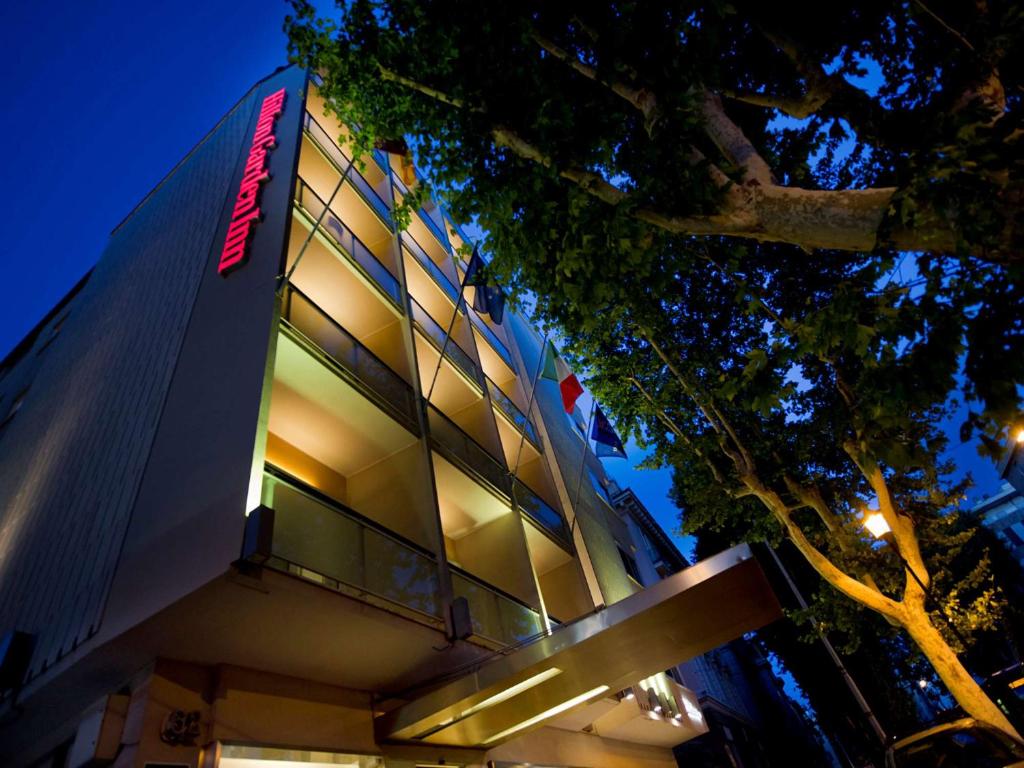
The joint venture is acquiring a 93-room hotel in Parioli, one of Rome’s most resilient and least replicable submarkets, with an international brand, underlying demand potential and a clear path to product enhancement. This is a typical value-add transaction: the buyer is not merely acquiring the asset as it stands today, but the gap between what the hotel is now and what it can become after a coordinated programme of capex, revenue management and professional hotel operations.
It is a dynamic we are seeing with increasing frequency in our hospitality investment observatory: international capital is looking for existing hotel assets that are well located, operational, historically established and ready for a new industrial phase.
The facts of the transaction
The Hilton Garden Inn Rome Claridge is located at Viale Liegi 62, in the Parioli district, one of the most solid and least replicable areas of the Rome market. The property comprises 93 rooms, a restaurant, a bar, four meeting rooms, a fitness area with sauna and private parking.
The transaction brings together four players with distinct roles:
-
Extendam, a specialist investor in European hospitality;
-
Eternam, an investment platform;
-
Sofiparc Hotels, a hotel group expanding internationally;
-
Sohoma International, the operator appointed to manage the property.
The industrial plan is already defined. From 2027, a full renovation of the rooms and common areas is expected to begin, without interrupting operations. Alongside the capex programme, the strategy will include more advanced revenue management and a commercial repositioning of the asset.
The transaction price has not been disclosed, as is often the case in hotel deals of this type. But the economic logic is clear: for a 93-room hotel in Parioli, value does not depend only on location or key count. It depends on the ability to turn an existing asset into a more competitive, higher-performing product aligned with today’s demand.
The real issue: capex as a value creation lever
The most interesting aspect of the transaction is industrial rather than financial. According to the buyers, the property has not undergone major renovation works in the last twenty-five years. This should not be read polemically, but strategically.
Many Italian hotels have followed long ownership cycles, often family-led, in which asset preservation, operational continuity and patrimonial stability have been key strengths. In many cases, this approach has allowed hotels to navigate complex market phases, maintain control of their location and preserve real estate value.
When a new institutional investor enters, however, the reading changes. Capital does not look only at the history of the asset. It looks at its next stage of development. It assesses the capex required, the repositioning potential, the opportunity to increase ADR and RevPAR, the quality of demand that can be captured and the ability of a new operator to extract greater management efficiency.
This is a dynamic that anyone involved in hotel transactions and advisory knows well. The value of a hotel is never static. It changes according to the market cycle, the condition of the product, the quality of management, the depth of demand and the availability of capital to finance a new industrial phase.
In the case of the Claridge, the investment thesis appears clear: a strong location, an upgradable product, a selectively growing Rome market, limited prime supply, a recognised brand and the potential to improve performance through renovation and active management.
Why Parioli makes the transaction particularly interesting
Location is one of the central elements of the thesis. Parioli is not just another Roman neighbourhood. It is a submarket with a rare combination of high-end residential demand, diplomatic offices, proximity to Villa Borghese, connections to the city centre, business demand, qualified leisure demand and a hotel supply that is not easily expandable.
This means one very simple thing: when a well-located hotel asset comes to market, institutional capital analyses it very carefully, even when the product requires upgrading. In fact, the possibility of upgrading the product can itself become a core part of the investment strategy.
Scarcity supports pricing. Capex creates the uplift. Professional hotel management monetises the difference.
This is where the role of Sohoma International becomes particularly relevant. In a value-add strategy, returns do not come only from real estate appreciation, but from the ability to extract stronger operating performance: RevPAR, ADR, channel mix, disintermediation, demand segmentation, cost management and GOP control.
Real estate alone is no longer enough. What is required is professional hotel management, integrated with revenue management, management control and commercial positioning. Otherwise, capex risks remaining a construction expense. Only when product, pricing and distribution move together does capex become hotel value.
Rome: a market where scarcity has become an asset class
The Claridge transaction must be read within a broader context. Rome is now one of the European hotel markets most closely watched by international capital. Tourist demand remains deep, international pressure is strong, religious and institutional events support flows, while the development of new hotel supply in prime locations remains structurally limited.
This is the point investors understand very well: in Rome, creating new quality hotel product in the best areas is not easy. Urban planning constraints, authorisation timelines, real estate complexity, fragmented ownership and the scarcity of convertible buildings make greenfield development extremely difficult.
For this reason, every existing, well-located and repositionable hotel becomes a rare object.
The most important data point is not only the number of visitors. The most important data point is asset turnover. In a city with more than 900 hotel properties, truly relevant hotel transactions are few each year. The market is large, but available product is scarce. And when product is scarce, capital moves decisively.
It is a dynamic we regularly analyse through market intelligence and deal journalism on robertonecci.it: Rome is not an easy market, but that is precisely why it attracts strong interest from investors with patient capital, operational expertise and execution capability.
The message from investors is clear
The statements from the parties involved confirm the strategic reading of the transaction. Extendam highlights the search for assets in privileged locations, with solid fundamentals and strong value creation potential. Eternam places Rome among the European capitals where an underutilised quality hotel supply can support long-term value creation strategies. Sofiparc and Sohoma confirm their intention to grow in Italy with a more structured operational presence.
This is the decisive point: this is not just a hotel acquisition. It is a positioning signal.
French capital is not looking at Rome as an episodic market. It is looking for assets capable of supporting an industrial strategy: existing hotels in strong locations, with upgradable product, operating margins to optimise and the potential to create value through a coordinated intervention across structure, management and commercial strategy.
What this transaction teaches Italian hotel owners
The lesson for Italian hotel owners is very clear.
First: capex is not just a cost. It is a lever to protect and create value.
Every hotel goes through different cycles. There is a time for stabilisation, a time for preservation, a time for ordinary management and a time for transformation. The point is not to judge past choices, but to understand when an asset is entering a new phase of its industrial cycle.
When the market changes, when demand becomes more selective, when competition upgrades and when investors begin searching for repositionable product, capex becomes a strategic variable. It is not only about renovating rooms and common areas. It is about defending ADR, improving RevPAR, supporting online reputation, attracting higher-quality demand and making the asset more legible to banks, funds and buyers.
Second: today’s market rewards those who are prepared.
Owners of hotels in prime locations are operating in a favourable market window, but they need to decide which path to take. They can invest directly, structuring a capex, repositioning and active management plan. They can evaluate the entry of an industrial or financial partner. Or they can sell, maximising value at a time when institutional demand for Italian hotel assets remains strong.
The riskiest path is the absence of strategy.
Not because every hotel must necessarily be sold or renovated immediately, but because every asset needs a thesis: hold, relaunch, aggregate, partner, refinance, change management or exit. Without a clear thesis, value risks being interpreted only by the market rather than governed by ownership.
The issue is not whether to sell. The issue is being prepared
Not every owner needs to sell. But every owner needs to know what their asset is truly worth and which levers can increase its value.
A hotel is not valued only by square metres, number of rooms or location. It is valued by its ability to generate sustainable income, the level of capex required, the quality of management, commercial strength, the readability of its numbers, the bankability of its industrial plan and the real competitive context of its submarket.
This is where many Italian owners can make a qualitative leap. Not necessarily by changing ownership, but by changing method.
An orderly data room, readable management accounts, a realistic capex plan, a coherent commercial strategy and an independent valuation allow ownership to sit at the table with greater strength. Whether the objective is to sell, refinance, attract a partner or directly relaunch the asset, the principle is the same: value must be prepared before it is negotiated.
The Hilton Garden Inn Rome Claridge case tells precisely this story: a solid asset, in a strong location, enters a new phase through an international platform that clearly states where it sees value. In capex. In repositioning. In management. In the gap between what the hotel is today and what it can become tomorrow.
The real question for Italian hoteliers
The question every owner should ask is not only: “What is my hotel worth today?”
The correct question is: “Which strategy can increase, protect or monetise the value of my hotel over the next few years?”
International capital is reading the Italian market with great clarity. It is looking for scarcity, location, operating potential and transformation opportunities. This is a rational strategy, fully aligned with the current phase of the European hotel market.
For this reason, the Claridge case is not only about Parioli. It is about Rome. It is about Florence, Venice, Milan, Naples, the Amalfi Coast, Lake Como and every Italian destination where excellent hotel assets, often with an important history, can enter a new phase of value creation.
Capital does not buy only the past. It buys the future.
And hotel owners must decide whether they want to build that future directly, share it with a partner, refinance it or monetise it through a structured sale.
Do you own a hotel in Rome or elsewhere in Italy and want to understand what your asset is worth today — and which strategy can best enhance its value?
With experience across more than 100 hotel dossiers and transactions, we analyse the potential of your property, identify the capex required, build a value thesis, prepare the asset for the market and connect you with the right investors: funds, family offices, hotel platforms and international operators currently active in the Italian market.
The market window is open now. Not when the product has become too dated. Not when margins have already declined. Not when the market has already expressed the value of the asset on your behalf.
Write now to info@investimentialberghieri.it for a confidential, no-obligation valuation of your asset. We reply within 24 hours.