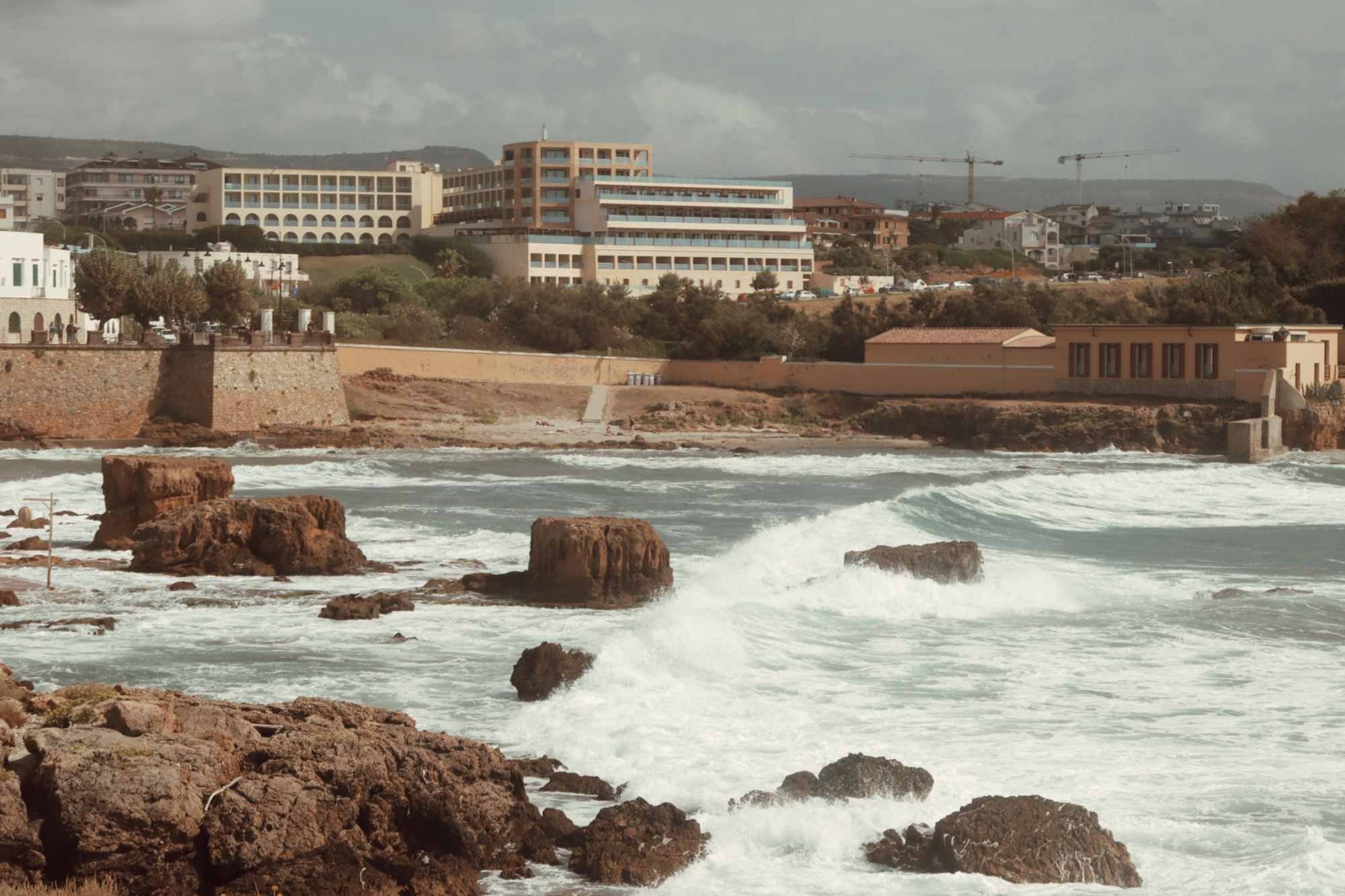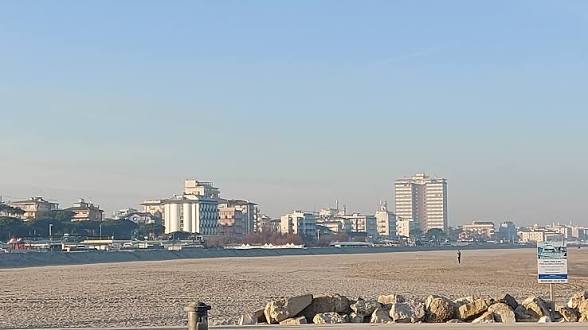
Thirty-five rooms, one of the best-known leisure destinations on the Adriatic Riviera, approximately 250 metres from the beach and a new base price of €1.84 million. Hotel Atmosfere is returning to the market following a repricing of approximately 43.7% compared with 2024. But the real investment case is not about acquiring 35 rooms at roughly €39,400 per key: it is about determining whether there is sufficient spread between the asset’s current value and its potential stabilised value following CAPEX, repositioning and operational improvement.
That is the core of the investment case.
Strong location. Product to be assessed. Repriced entry point. Potential value-add opportunity.
Among the hospitality special situations currently emerging in the Italian market, Hotel Atmosfere in Milano Marittimapresents a particularly interesting profile.
It is not a large resort requiring complete redevelopment.
Nor is it simply a property that once operated as a hotel.
It is a relatively compact hospitality asset located in a destination with strong commercial recognition, while at the same time maintaining a visible market presence.
Real Estate Enforcement Proceeding no. 170/2021 before the Court of Ravenna concerns a property located at Viale Francesco Baracca 4, arranged over five above-ground floors and comprising 35 guestrooms, all with private bathrooms and a balcony or terrace.
The next competitive sale process is scheduled to begin on 24 November 2026, with the asynchronous bidding process running until 27 November.
Deal Snapshot
| Item | Details |
|---|---|
| Asset | Hotel Atmosfere |
| Location | Milano Marittima – Cervia |
| Proceeding | Real Estate Enforcement 170/2021 |
| Court | Ravenna |
| Auction opening | 24 November 2026 |
| Auction closing | 27 November 2026 |
| Base price | €1,840,000 |
| Minimum bid | €1,380,000 |
| Rooms | 35 |
| Implied minimum price per key | approx. €39,400 |
| Implied base price per key | approx. €52,600 |
| Site area | approx. 1,240 sq m |
| Location | approx. 250 metres from the beach |
| Core issue | Current Asset Value vs Stabilised Hospitality Value |
From €3.27 Million to €1.84 Million
The sale history shows a progressive reduction in the base price.
| Sale attempt | Base price |
|---|---|
| February 2024 | €3,270,000 |
| November 2025 | €2,452,500 |
| November 2026 | €1,840,000 |
The current base price is therefore approximately 43.7% below the 2024 level.
Compared with the previous sale attempt, the new price represents a further reduction of approximately 25%.
The repricing is material.
But a lower price does not, in itself, constitute an investment thesis.
A lower entry point may reflect:
-
a more attractive acquisition basis;
-
CAPEX that has yet to be fully priced in;
-
insufficient operating profitability;
-
higher execution risk;
-
or a combination of these factors.
The procedural price therefore needs to be translated into a proper underwriting case.
€39,400 per Key: Useful Data, Not an Investment Conclusion
Dividing the €1.38 million minimum bid by the 35 rooms identified in the proceedings produces an implied value of approximately €39,400 per key.
It is an eye-catching figure.
It may also be dangerously incomplete.
Price per key only becomes meaningful once the investor understands:
Acquisition Perimeter
Technical Condition
CAPEX
FF&E
Operating Continuity
Historical Trading
Normalised EBITDA
Without these variables, price per key is merely a preliminary indicator.
The wrong question is:
“Are 35 rooms at €39,400 each inexpensive?”
The right question is:
“How much total capital is required to bring these 35 rooms to the product standard that Milano Marittima can actually monetise?”
That is a fundamentally different way of underwriting the transaction.
The First Question: What Is Actually Being Acquired?
The proceedings concern the hotel real estate.
That must be distinguished from the hotel operating business.
It should not be assumed that acquisition of the property automatically includes:
-
the hotel business;
-
brand;
-
employees;
-
reservations;
-
customer database;
-
contracts;
-
distribution systems;
-
FF&E;
-
operating licences;
-
supplier relationships;
-
historical commercial activity.
The first due diligence question is therefore extremely practical:
what does the successful bidder actually control on the day following transfer of title?
Yet the Hotel Retains a Commercial Presence
Alongside the real estate proceedings, Atmosfere continues to be marketed through tourism and booking channels.
The property is presented as a four-star hotel in central Milano Marittima offering:
-
guestrooms;
-
seasonal restaurant;
-
sauna;
-
gym;
-
relaxation area;
-
whirlpool facilities.
The continued commercial presence of the hotel is relevant.
It does not, however, establish:
-
who currently operates the business;
-
on what legal basis the property is occupied;
-
who owns the hotel business;
-
which movable assets form part of the sale;
-
whether the going concern is transferable.
That is precisely where the special-situation element begins.
Location Quality vs Product Quality
The most valuable element in the Hotel Atmosfere investment case may ultimately be the location.
Milano Marittima remains one of the Adriatic Riviera’s most established leisure destinations.
The property is located within short distance of:
-
the beach;
-
the town centre;
-
local services;
-
the principal retail and leisure areas.
This raises one of the most important questions in the entire dossier:
is the quality of the location greater than the quality of the current product?
If the answer is yes, there may be a genuine value-add gap.
In simplified terms:
Location Quality > Current Product Quality
may create the potential for:
Repositioning → Higher ADR → Higher GOP → Higher EBITDA → Higher Enterprise Value
That is the value-creation chain that needs to be tested.
The Real Asset May Be Pricing Power
A value-add investor should not focus solely on the physical property.
The key question is how much additional pricing power can be extracted from the location.
With only 35 rooms, even a relatively modest increase in ADR can have a meaningful impact.
For purely illustrative purposes, assuming:
-
35 rooms;
-
75% annual occupancy;
-
a €30 increase in ADR;
the theoretical incremental rooms revenue would be:
35 × 365 × 75% × €30 = approximately €287,000 per year
This is not a forecast for Hotel Atmosfere.
It simply demonstrates how sensitive the economics of a small hotel can be to pricing improvement.
The same sensitivity works in reverse.
With only 35 rooms, an inefficient cost structure can erode GOP very quickly.
CAPEX Must Be Built Around the Future Product
The real question is not:
“How much will it cost to fix the hotel?”
It is:
“How much will it cost to bring the property to the product standard that maximises the value of its location?”
At least four categories should be separated.
Maintenance CAPEX
Investment required simply to maintain the asset.
Compliance CAPEX
Fire safety, building systems, safety, accessibility and regulatory compliance.
Repositioning CAPEX
Investment required to materially change the perceived quality and market positioning of the hotel.
FF&E CAPEX
Guestrooms, bathrooms, furniture, reception, restaurant and wellness areas.
To these should be added Energy CAPEX, which is increasingly critical to hotel profitability.
Wellness: Revenue Centre or Amenity?
The property is marketed with:
-
sauna;
-
gym;
-
relaxation area;
-
whirlpool facilities.
However, the physical presence of these amenities does not automatically translate into profitability.
The investor needs to determine whether wellness:
-
increases ADR;
-
improves conversion;
-
generates standalone revenue;
-
supports shoulder-season demand;
-
or primarily represents an operating cost.
The correct framework is:
Wellness Revenue + ADR Uplift – Operating Costs = Net Contribution
Economic contribution is what matters.
Not the number of amenities on a brochure.
35 Rooms: Manageable Scale, but Less Margin for Error
The compact inventory is both an advantage and a risk.
Potential Advantages
-
more controllable CAPEX;
-
stronger potential to create a differentiated product;
-
leaner organisation;
-
greater scope for personalised service;
-
potentially faster repositioning.
Key Risks
-
lower absorption of fixed costs;
-
high sensitivity to payroll;
-
high sensitivity to seasonality;
-
less ability to absorb pricing mistakes;
-
greater EBITDA volatility.
Cost structure therefore becomes central to the investment case.
The Real Total Investment Cost
The €1.38 million minimum bid is only the entry price.
The full capital requirement is:
Acquisition Price
Transaction Costs
CAPEX
FF&E
Working Capital
Pre-opening / Repositioning
Contingency
=
Total Investment Cost
That is the number that matters.
If, for example, the new owner were required to invest an additional €1.5 million in the product, the transaction would no longer be a €1.38 million investment.
It would already be approaching €3 million, before working capital and financing costs.
EBITDA Before Maximum Bid Price
The correct underwriting sequence should be:
Historical Trading
↓
Normalised ADR
↓
Normalised Occupancy
↓
Normalised RevPAR
↓
Normalised GOP
↓
Normalised EBITDA
↓
CAPEX
↓
Debt Capacity
↓
Target Equity Return
↓
Maximum Bid Price
Only after completing this sequence is it possible to determine how much an investor should bid.
Not the other way around.
Investment Thesis
The potential investment thesis can be summarised as follows:
acquire a 35-room hotel real estate asset in a strong Milano Marittima location at a materially repriced entry point and test whether repositioning can convert locational strength into higher ADR, GOP and enterprise value.
Potential strengths include:
-
Milano Marittima;
-
proximity to the beach;
-
proximity to the town centre;
-
35 rooms;
-
balconies or terraces;
-
four-star positioning;
-
manageable scale;
-
wellness facilities;
-
existing commercial presence;
-
significant repricing;
-
value-add potential.
Key Risks
The principal risks include:
-
predominantly real estate transaction perimeter;
-
going concern requiring verification;
-
FF&E to be mapped;
-
CAPEX;
-
building systems;
-
compliance;
-
seasonality;
-
payroll;
-
limited inventory;
-
OTA dependency;
-
pricing power still to be demonstrated;
-
risk of overinvestment;
-
potential disruption to commercial continuity after acquisition.
Value Creation Plan
1. Guestroom Repositioning
Targeted investment in:
-
bathrooms;
-
furniture;
-
lighting;
-
comfort;
-
soundproofing;
-
technology.
2. ADR Strategy
Improved segmentation and dynamic pricing.
3. Direct Booking
CRM, proprietary website and lower customer acquisition costs.
4. Reputation Management
A stronger guest experience can translate directly into greater pricing power.
5. Wellness Strategy
Determine whether wellness should become a genuine revenue centre or remain an efficient guest amenity.
6. F&B Strategy
Assess the configuration most consistent with the hotel’s inventory, demand profile and margin structure.
7. Energy Efficiency
Reduce structural operating costs.
Investment Committee Summary
Key Numbers
-
35 rooms
-
€1,840,000 base price
-
€1,380,000 minimum bid
-
approx. €39,400 implied minimum price per key
-
43.7% below the 2024 base price
-
approx. 250 metres from the beach
-
auction period: 24–27 November 2026
Investment Thesis
Premium location + repriced asset + potential gap between destination quality and current product quality.
Key Risks
CAPEX + going concern + seasonality + limited inventory + payroll + operating continuity.
Next Catalyst
24 November 2026: opening of the new competitive sale process.
Decision Driver
The decision should not be driven by €39,400 per key.
It should be driven by:
Stabilised EBITDA
less
Required CAPEX
less
Execution Risk
relative to
Total Investment Cost
Ten Questions to Answer Before Bidding
-
What is the historical ADR?
-
What is the actual occupancy level?
-
What is RevPAR?
-
What is GOP?
-
What is the normalised EBITDA?
-
How much CAPEX is required for guestrooms, bathrooms and common areas?
-
What is the technical condition of the building systems?
-
How much of the going concern can be preserved?
-
How much pricing power can the location genuinely support?
-
What Maximum Bid Price is consistent with the target return?
These ten answers matter more than the headline price per key.
Do Not Buy €39,400 per Key. Buy the Spread.
That is the central point.
The investor should not ask whether €39,400 per room is cheap or expensive.
The real question is whether there is sufficient spread between:
Current Asset Value
and
Stabilised Hospitality Value
That spread must be wide enough to absorb:
-
CAPEX;
-
transaction costs;
-
working capital;
-
operating risk;
-
financing costs;
-
required equity return.
Only what remains after these items represents genuine value creation.
For InvestimentiAlberghieri.it, this is the fundamental distinction between acquiring a repriced asset and underwriting an investment.
Investhotel.it focuses on debt capacity, DSCR, capital structure and financial sustainability.
HotelManagementGroup.it analyses operations, GOP, cost structure and repositioning.
RobertoNecci.it places these transactions within the broader context of hospitality economics and hotel investment.
Price Opens the Dossier. The Spread Determines the Return.
The current base price is €1.84 million.
The minimum bid is €1.38 million.
But the real investment case depends on four variables:
Current EBITDA
Required CAPEX
Stabilised EBITDA
Stabilised Enterprise Value
If the difference between current value and stabilised value is wide enough, Hotel Atmosfere may represent a genuine value-add opportunity.
If CAPEX and the cost structure absorb most of the upside, the procedural discount becomes far less meaningful.
Price creates attention.
The spread creates value.
Hospitality Ecosystem
RobertoNecci.it
Strategy, hotel economics and hospitality market analysis.
InvestimentiAlberghieri.it
Hotel assets, investments, transactions and hospitality special situations.
Investhotel.it
Hotel finance, capital structure, debt advisory, turnaround and value-add transactions.
HotelManagementGroup.it
Hotel management, operational advisory and performance improvement.
Hospitality Investment & Special Situations Advisory
For hotel investment analysis, business planning, CAPEX assessment, normalised EBITDA analysis, operational due diligence, repositioning and hotel value-creation strategies:
info@investimentialberghieri.it
Methodological Note and Disclaimer
Information concerning the sale is based on publicly available documentation relating to Real Estate Enforcement Proceeding no. 170/2021 before the Court of Ravenna.
Information relating to the property’s commercial presence, classification and services is derived from publicly accessible tourism and commercial sources.
Such information does not, by itself, establish:
-
ownership of the hotel operating business;
-
identity of the current operator;
-
legal basis for occupation;
-
transferability of the going concern;
-
ownership of FF&E;
-
transferability of licences, contracts or reservations.
Any references to ADR, EBITDA, CAPEX, debt capacity, repositioning, Maximum Bid Price or stabilised value are analytical in nature only and do not represent a specific valuation of Hotel Atmosfere.
This article does not constitute:
-
a real estate valuation;
-
a fairness opinion;
-
due diligence;
-
an investment recommendation;
-
a solicitation to acquire the asset;
-
a forecast of the outcome of the proceedings.
Any potential investment should be preceded by independent legal, corporate, real estate, cadastral, planning, technical, administrative, tax, financial and operational due diligence.