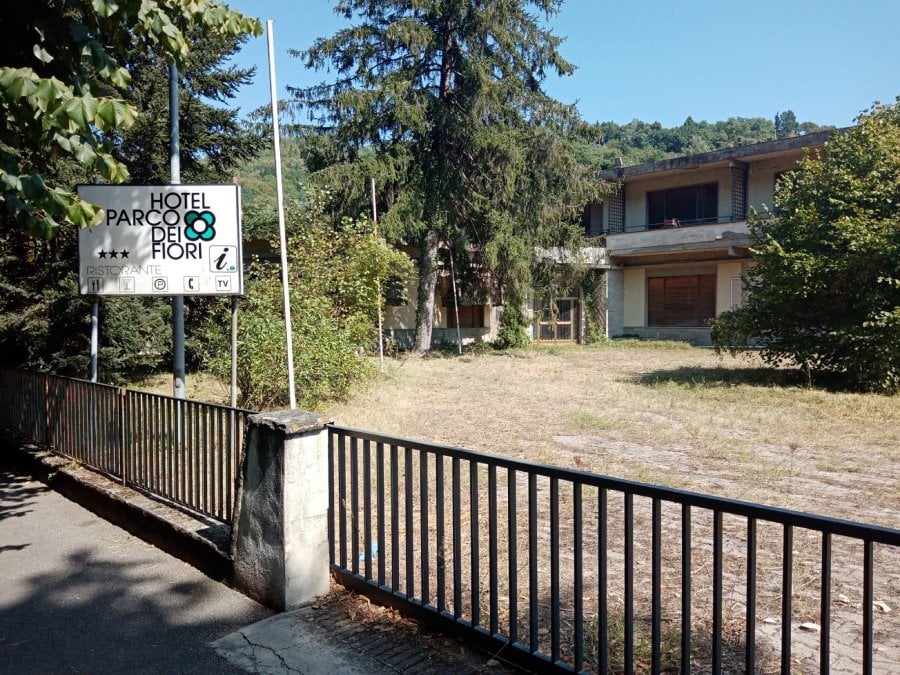
A flawed diagnosis can turn a recoverable liquidity issue into a permanent loss. Equally, it can lead stakeholders to continue supporting a hotel business that has already lost its underlying ability to generate cash.
In the hotel sector, decisions based exclusively on an appraisal value, a projected DSCR or the contractual security package may appear sound on paper while remaining economically fragile.
A hotel is not simply a property securing a loan. It is an operating business whose value depends on product quality, market positioning, reputation, distribution, management capabilities and the capital expenditure required to remain competitive.
This is the premise behind:
“Credit, Distress and Value in the Hotel Sector”
Produced by Investimenti Alberghieri and Investhotel Capital Partners and edited by Roberto Necci, the guide sets out five analytical perspectives for banks, NPL and UTP servicers, lenders, investors and hotel owners.
It is not intended to replace a full due diligence exercise. Its purpose is to identify the questions that should be addressed before any financing, workout, acquisition or disposal decision is made.
The Most Expensive Risk Is an Incomplete Diagnosis
In hotel special situations, analytical errors have tangible financial consequences:
-
fresh money used to absorb operating losses rather than fund a recovery plan;
-
covenant waivers or maturity extensions that merely postpone the recognition of an industrial crisis;
-
accelerated disposals completed at a greater discount than necessary;
-
overvaluation of the real estate security;
-
underestimation of required capital expenditure;
-
loss of employees, reputation, contracts and forward bookings;
-
delayed intervention, when the available restructuring options have already narrowed.
Avoiding these outcomes requires an integrated assessment across four dimensions.
Industrial
Product, positioning, organisation, distribution, reputation and the ability to deliver a sustainable, normalised GOP.
Financial
Cash generation, debt structure, maturities, covenants, working capital requirements and debt-service capacity.
Real Estate
Going-concern value, market value, liquidity, capital expenditure, legal and planning constraints, disposal timeframe and alternative uses.
Strategic
A comparison of continued operations, turnaround, debt restructuring, operator replacement, an orderly sale and liquidation.
The central principle of the guide is straightforward:
Value is not the figure stated in an appraisal. It is the net outcome that can realistically be achieved, within the timeframe and risk profile of the selected strategy.
The Five Critical Questions
1. Can the Hotel Actually Generate the Cash Forecast in the Business Plan?
A DSCR above 1.0 does not automatically make a hotel sustainable or financeable.
The ratio may appear satisfactory even when the assumptions underpinning the business plan are inconsistent with the hotel’s operational capabilities and prevailing market conditions.
The analysis should test:
-
occupancy against historical performance and seasonality;
-
ADR and RevPAR against the relevant competitive set;
-
whether forecast rate growth is supported by the quality of the product;
-
payroll costs;
-
OTA commissions and the full cost of customer acquisition;
-
non-deferrable capital expenditure;
-
working capital requirements;
-
taxes and exceptional cash outflows;
-
the time required to reach stabilised performance;
-
the plan’s resilience under downside scenarios.
A hotel does not repay debt through the theoretical value of its building. It repays debt through cash generated by the operating business.
A bank is therefore not merely financing a property or an Excel model. It is also assuming exposure to the hotel’s underlying operating risk.
2. Is the Distress Financial or Operational?
Not all hotel crises have the same origin.
Financial distress may arise from concentrated maturities, extraordinary investment requirements, higher interest rates or a debt structure that fails to reflect the seasonal nature of the business.
If the hotel remains competitive and continues to generate sustainable operating margins, an appropriate financial restructuring may restore equilibrium.
Operational or industrial distress affects the fundamental ability of the business to compete. It may result from:
-
an outdated or unsuitable product;
-
an unsustainable cost base;
-
weak positioning;
-
organisational inefficiencies;
-
an ineffective distribution strategy;
-
deteriorating reputation;
-
excessive reliance on intermediaries;
-
repeatedly deferred capital expenditure.
In the first case, the hotel may need time, fresh capital or a different debt profile. In the second, management or the operating model must change.
Failing to distinguish between the two can result either in additional capital being used to fund continuing losses or in the premature sale of a fundamentally recoverable business.
3. What Is the Hotel Security Really Worth?
Appraised value, market value, liquidation value and net recoverable value are not interchangeable concepts.
Apparently adequate real estate security may prove insufficient once the following factors are considered:
-
actual market liquidity;
-
a realistic disposal timeframe;
-
deferred capital expenditure;
-
planning, licensing and regulatory constraints;
-
conversion costs;
-
alternative-use potential;
-
taxation, senior claims and enforcement costs;
-
the impact of suspending hotel operations;
-
deterioration in reputation and market positioning;
-
a reduced pool of potential purchasers.
An operating hotel includes components of value that extend well beyond the underlying real estate. If operations cease, part of that value may disappear before a sale can be completed.
The recovery strategy should therefore compare continued operations, the appointment of a new operator, a business lease, an orderly disposal and liquidation on the basis of expected net recovery rather than headline value.
4. Which Indicators Anticipate UTP and NPL Classification?
A hotel does not become distressed on the day it stops servicing its debt.
Default is often the final visible stage of a deterioration process that began much earlier.
Relevant early-warning indicators include:
-
declining GOP;
-
ADR and RevPAR underperforming the competitive set;
-
increasing dependence on OTAs;
-
a rising cost of customer acquisition;
-
repeatedly deferred capital expenditure;
-
a product becoming progressively uncompetitive;
-
deteriorating online reputation;
-
lengthening supplier payment terms;
-
systematic use of credit facilities;
-
tax and social security liabilities being used to fund operations;
-
rent or debt service exceeding the cash generated by the business.
An individual indicator may reflect a temporary issue. Several simultaneous and persistent signals, however, point to a structural threat to both business continuity and asset value.
For banks and servicers, early intervention does more than contain credit risk. It preserves a broader range of workout options before value deterioration becomes irreversible.
5. Could Restructuring Preserve More Value Than a Sale?
An accelerated sale does not necessarily maximise recovery.
A distressed disposal may reflect:
-
an urgency discount;
-
weakened trading performance;
-
deferred capital expenditure;
-
limited competitive tension among bidders;
-
operating uncertainty;
-
enforcement costs and procedural delays;
-
erosion of business value.
Where the hotel retains sound underlying fundamentals, an operational and financial workout may deliver a higher recovery than an immediate disposal.
Restructuring, however, cannot be reduced to extending debt maturities. It requires the establishment of a new operating, economic and financial equilibrium.
The assessment should address:
-
normalised GOP;
-
free cash flow after essential capital expenditure;
-
the capital required to implement the turnaround;
-
the recovery timeframe;
-
the quality and credibility of the operator;
-
the asset’s going-concern value;
-
execution risk;
-
net recovery under each alternative scenario.
The decision should emerge from a like-for-like comparison of:
-
continued operations under the existing operator;
-
operational turnaround;
-
financial restructuring;
-
appointment of a new operator;
-
business or asset leasing arrangements;
-
an orderly sale;
-
liquidation.
A Decision-Making Tool for Different Stakeholders
For Banks and Lenders
The guide provides an initial framework for assessing the quality of a business plan, the hotel’s actual debt-service capacity and the alignment between fresh funding and the company’s underlying capital requirements.
For NPL and UTP Servicers
It helps distinguish between financial and operational distress and compare workout, management replacement, disposal and liquidation strategies on the basis of expected net recovery.
For Hotel Funds and Investors
It supports an assessment of whether distress represents a genuine value-creation opportunity or conceals underestimated capital expenditure, timing constraints and execution risk.
For Hotel Owners
It helps identify early signs of distress while there is still sufficient time to negotiate, restructure, attract new capital, appoint a new operator or arrange an orderly sale.
From Diagnosis to Asset Strategy
Investimenti Alberghieri and Investhotel Capital Partners advise qualified stakeholders on hotel businesses, credit exposures and real estate assets.
The scope of work may include:
-
operational and financial diagnosis;
-
independent review of the business plan;
-
assessment of cash-generation capacity;
-
stress-testing of key assumptions;
-
identification of the principal risk drivers;
-
valuation under going-concern and alternative scenarios;
-
assessment of capital expenditure and fresh-money requirements;
-
comparison of turnaround, restructuring and disposal strategies;
-
assessment or selection of a replacement operator;
-
preparation of confidential decision-support reports.
The specialist capabilities available through Hotel Management Group allow the analysis to cover the operational, organisational, commercial, distribution and technology factors that determine hotel performance.
Engagements are coordinated by Roberto Necci, who brings 31 years of direct hotel-sector experience spanning operations, investment, advisory, turnaround and industry representation.
Submit a Hotel Case for Confidential Review
Banks, NPL/UTP servicers, lenders, funds, investors and hotel owners may submit a credit exposure, operating business or hotel asset for confidential review.
The analysis may address:
-
the sustainability of the business plan;
-
prospective debt-service capacity;
-
whether the distress is primarily financial or operational;
-
the net value that may realistically be recovered;
-
capital expenditure and fresh-money requirements;
-
turnaround potential;
-
appointment or replacement of the operator;
-
comparison of continued operations, restructuring and disposal.
To request a confidential professional discussion:
info@investimentialberghieri.it
Download the Full Guide
“Credit, Distress and Value in the Hotel Sector”
Five analytical perspectives for banks, investors, servicers and hotel owners
DOWNLOAD THE FULL GUIDE IN ITALIAN
The guide is currently available in Italian.
This document is intended solely for informational purposes and for qualified professional audiences. It does not constitute legal, tax or financial advice, nor does it represent a contractual offer. Each transaction or credit exposure requires a case-specific review and the involvement of the appropriate professional advisers.