3,315 sq m in the heart of Sabaudia’s Rationalist town centre, years of closure and deterioration, repeated attempts at redevelopment and, ultimately, a different structure: a 9+9-year lease, stepped rent, private refurbishment investment and a landlord cash contribution. The Hotel del Lago case demonstrates why, in hotel investment, the real issue is rarely just the price of the property.
Hotel del Lago in Sabaudia provides a particularly compelling case study of the difference between owning a hotel property and creating an economically sustainable hotel investment around that property.
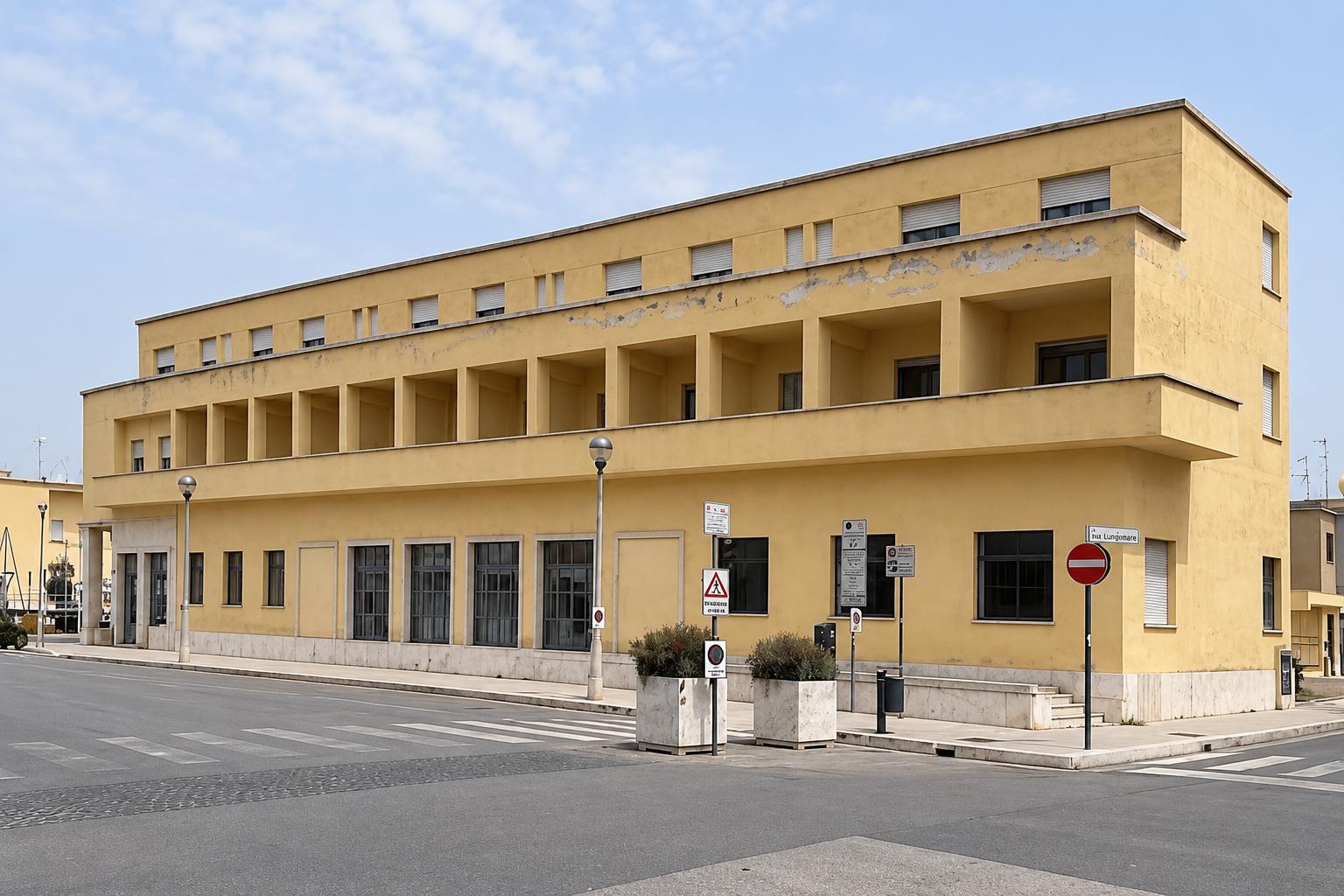
Historically also known as Hotel Sabaudia al Lago, the property is located in Piazza del Comune, at the heart of the town.
Invimit SGR describes the building as comprising approximately 3,315 sq m, arranged over three above-ground floors plus a basement level. In 2025, the company announced that it had received a proposal to bring the hotel back into operation through a 9+9-year lease, featuring stepped rent through to the fifth year, refurbishment works to be undertaken by the proposing party and a cash contribution from Invimit. Reopening was targeted for 2027.
But the most significant development came afterwards.
As of September 2026, Invimit lists the property at Piazza del Comune 23, Sabaudia, among its “Awarded Redevelopment Projects – Off-Market Assets”, with hospitality confirmed as its intended use.
The competitive process has therefore been completed and the property is no longer being marketed.
This is precisely what transforms Hotel del Lago from a local real-estate story into a genuine hotel investment case study.
A Closed Hotel Demonstrates That Time Has a Cost
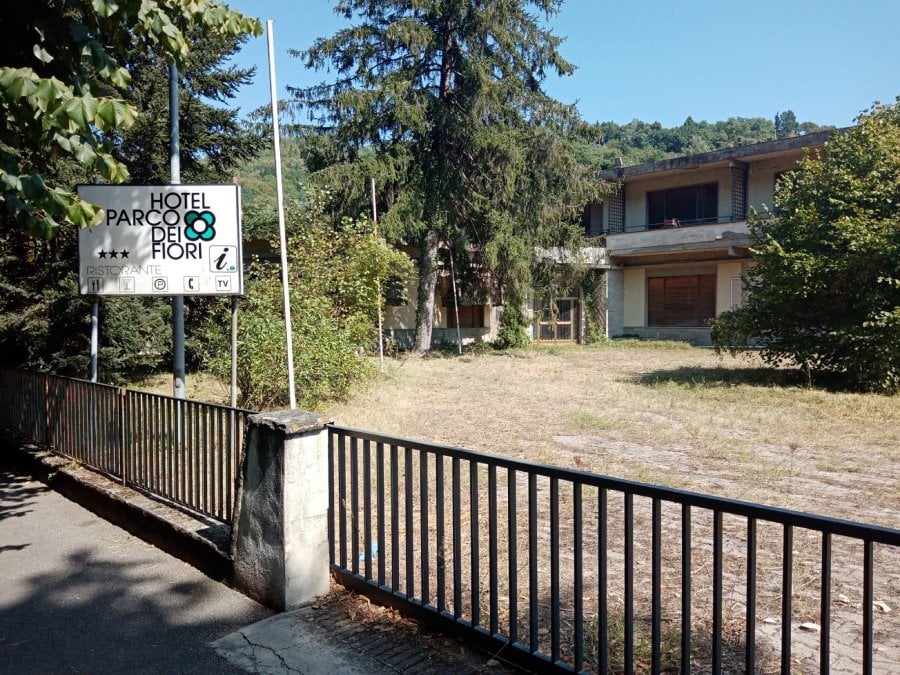
By November 2018, the condition of the property had become particularly problematic.
Heavy rainfall had exposed widespread water ingress, potential deterioration affecting the floor structures and issues involving the covered walkway beneath the building. Following inspections, the Fire Brigade called for urgent safety, refurbishment and structural consolidation works.
This is a typical problem affecting hospitality properties that remain vacant for extended periods.
An empty hotel does not automatically preserve its value.
Every additional year of closure can mean:
-
further deterioration of the building envelope;
-
increasing obsolescence of building services and systems;
-
higher CAPEX requirements before reopening;
-
additional regulatory compliance costs;
-
greater energy-efficiency and technology requirements;
-
erosion of the property’s previous commercial positioning;
-
the need to rebuild the operating structure, distribution network and demand base virtually from scratch;
-
greater financial risk during pre-opening and ramp-up.
This is why, in distressed hotel transactions, an apparently low acquisition price can sometimes be the least important figure in the entire investment case.
These dynamics are also central to the turnaround, restructuring and hotel repositioning work undertaken by Investhotel Capital Partners.
The Property Price Is Not the Total Investment Cost
An investor assessing a hotel requiring substantial redevelopment should not simply ask:
“How much does the property cost?”
The more relevant question is:
“How much capital will have to be invested before this hotel reaches stabilised cash flow?”
The real investment equation is considerably broader:
Total Investment = Entry Value + CAPEX + Design & Professional Fees + Planning and Regulatory Costs + Interest During Construction + Pre-Opening Costs + Working Capital + Ramp-Up Losses
Only after establishing this figure can the return analysis begin.
The sequence therefore becomes:
Revenue → GOP → EBITDA → Free Cash Flow → Return on Invested Capital
This is the fundamental difference between a purely real-estate valuation and a true hotel investment analysis.
A building can be acquired at what appears to be an attractive price and still generate mediocre investment returns.
Conversely, an asset that struggles to find a buyer may become investable once the transaction structure is redesigned.
That is precisely what makes the Sabaudia case so interesting.
The Turning Point: From Property Disposal to a 9+9-Year Lease
In August 2025, Invimit announced that it had received a proposal to bring Hotel del Lago back into operation.
The structure fundamentally changed the financial profile of the transaction.
Invimit outlined:
a 9+9-year lease;
refurbishment of the hotel by the proposing party;
stepped rent increasing until reaching its stabilised level in year five;
a cash contribution from Invimit;
reopening targeted for 2027.
The proposal was subsequently subjected to a competitive process allowing other investors to submit improved offers.
That phase has now concluded: Invimit formally classifies the asset as an awarded redevelopment project and off-market asset.
Why Leasing May Have Achieved What a Sale Could Not
From an investor’s perspective, acquiring and simultaneously redeveloping a hotel requires capital to be committed to two fundamentally different components:
real estate and the hotel operating business.
A lease separates at least part of these two risks.
Capital that would otherwise have been absorbed by the acquisition of the property can instead be deployed into:
-
refurbishment;
-
FF&E;
-
building systems;
-
technology;
-
pre-opening;
-
marketing;
-
working capital;
-
the development of the hotel’s commercial positioning.
For an asset requiring a complete repositioning, this can materially alter the return on equity.
The Stepped Rent May Be One of the Most Intelligent Features of the Structure
Even more interesting is the mechanism of rent increasing progressively until year five.
A newly opened hotel rarely reaches stabilised performance immediately.
Its first years typically have to absorb:
-
opening costs;
-
reputation building;
-
customer acquisition;
-
distribution ramp-up;
-
increasing occupancy;
-
ADR progression;
-
team development;
-
the inevitable inefficiencies associated with the opening phase.
Charging a stabilised rent from day one can undermine the very period during which the hotel needs liquidity most.
A stepped-rent structure, by contrast, allows the property cost to increase progressively alongside the hotel's ability to generate cash flow.
It does not eliminate operating risk.
It allocates that risk more intelligently over time.
The Cash Contribution Further Changes the Economics
The third significant element is the landlord’s participation in the refurbishment programme through a cash contribution.
The final amount does not appear to be publicly disclosed in the information currently available.
But the underlying financial principle is important.
Where the property owner contributes to CAPEX while the private party assumes the operating risk and part of the investment burden, the structure effectively becomes a form of economic co-investment, even though ownership of the property does not change.
The result can be a structure in which:
the owner brings an unproductive property back into use;
the investor reduces the amount of equity required at entry;
the operator can allocate more resources to hotel performance;
the destination recovers an economic function that had remained dormant.
This is therefore more than simply a lease.
It is a form of public-private asset regeneration.
The Final Room Count Will Be Critical
Invimit reports an overall surface area of 3,315 sq m, but the publicly available information does not yet disclose the hotel’s final configuration.
This is a crucial point.
Total floor area alone is not enough.
The key question is how many economically sustainable keys can be created after taking into account:
-
guestrooms and bathrooms;
-
reception and lobby areas;
-
food & beverage;
-
common areas;
-
back of house;
-
technical rooms;
-
potential meeting facilities;
-
wellness facilities;
-
vertical and horizontal circulation.
Purely for illustration:
| Illustrative Configuration | Gross Area per Key |
|---|---|
| 60 rooms | approx. 55 sq m/key |
| 65 rooms | approx. 51 sq m/key |
| 70 rooms | approx. 47 sq m/key |
| 75 rooms | approx. 44 sq m/key |
These are not assumptions regarding the actual project. They simply demonstrate how the number of guestrooms can fundamentally alter the economics.
Higher density generates more inventory.
Lower density may enable larger rooms, stronger product quality and a higher ADR.
The correct objective is therefore not necessarily to maximise the number of rooms.
It is to maximise the economic value generated by each square metre of available space.
How Much Revenue Would the New Hotel Need to Generate?
Even without knowing the final design, it is useful to demonstrate how revenues can change according to just three variables: room count, occupancy and ADR.
The equation is straightforward:
Room Revenue = Keys × 365 × Occupancy × ADR
A purely illustrative sensitivity analysis could look as follows:
| Illustrative Scenario | Keys | Occupancy | ADR | Room Revenue |
|---|---|---|---|---|
| Conservative | 60 | 65% | €180 | approx. €2.56m |
| Mid Case | 60 | 70% | €220 | approx. €3.37m |
| Upside | 70 | 72% | €240 | approx. €4.42m |
Food & beverage and other operating revenues could then be added to these figures.
However, none of these scenarios constitutes a forecast for Hotel del Lago. Their sole purpose is to demonstrate how relatively small changes in occupancy, ADR and room configuration can fundamentally change the hotel’s ability to support CAPEX, rent and the required equity return.
A proper assessment will require the final development scheme and a detailed business plan.
From RevPAR to Sustainable Rent
One of the most common mistakes in hotel investment is starting with the rent the property owner wants to receive.
The process should work in exactly the opposite direction.
The investor should first estimate:
ADR
× Occupancy
= RevPAR
× Available Rooms
= Room Revenue
-
Other Revenue
= Total Revenue
− Operating Costs
= GOP
Only then should the analysis determine what property cost the underlying hotel business can sustainably support.
The right question is therefore not:
“What is the property worth?”
but:
“What level of rent can this hotel support without destroying the operator’s return?”
This principle is central to the valuation, business-planning and advisory work developed across Hotel Management Group and to the hotel investment analysis published by RobertoNecci.it.
Five Numbers Will Determine Whether This Is Ultimately a Good Investment
The award of the redevelopment project is clearly a positive development.
From an investor’s perspective, however, this alone is not enough to determine the financial quality of the project.
At least five figures will be essential.
1. Total CAPEX
Not simply construction works, but building systems, FF&E, professional fees, regulatory costs, technology, pre-opening expenditure and contingency.
2. The Landlord Cash Contribution
This will materially influence the amount of private equity ultimately required.
3. Stabilised Rent
The stepped-rent mechanism is attractive, but the real test will come in year five, when rent is expected to reach its stabilised level.
4. Final Hotel Configuration
Keys, room sizes, F&B, potential meeting space, wellness and services will determine the achievable market positioning.
5. Operator and Brand
A property does not generate performance on its own.
Distribution capabilities, management quality, branding and commercial execution can dramatically change the value of the investment.
The Sixth Number Is the One Often Forgotten: Equity Return
Even a profitable hotel can represent a poor investment if the amount of capital required to generate that profit is excessive.
The ultimate question must therefore be:
How much capital is actually invested, and what cash flow does that capital generate?
It is the relationship between these two figures that turns a property development into an investment.
This is why the analysis developed by InvestimentiAlberghieri.it considers hotel value from three perspectives simultaneously:
real estate, operating performance and finance.
Considering one in isolation from the others can lead to fundamentally flawed valuations.
Sabaudia Could Become a Replicable Model
Perhaps the most interesting aspect of the case extends well beyond this individual hotel.
Italy has a significant stock of public and quasi-public properties with potential hospitality uses that can be difficult to place through a straightforward sale process.
In many cases, the problem is not a lack of tourism potential.
It is the financial equation.
If:
Acquisition Price + CAPEX + Financing Costs + Operating Risk
exceeds the economic value the hotel can reasonably create, a rational investor will simply not enter the transaction.
Reducing the sale price alone is not always sufficient.
Sometimes it is necessary to redesign the architecture of the deal itself.
Long-term leases, stepped rent, landlord contributions, pre-opening periods, appropriate guarantees and a proper allocation of refurbishment expenditure can make investable what a conventional property sale could not.
That may ultimately be the most important lesson from Hotel del Lago.
Conclusion: The Value Was Not Only in the Property, but in the Deal Structure
For years, Hotel del Lago was a highly visible building without a productive economic function.
Its prolonged closure progressively increased the cost of any future reopening.
A solution appears to have emerged when the challenge was approached not simply as the disposal of a property, but as the structuring of a viable hotel investment.
The move to a 9+9-year lease, stepped rent, a landlord contribution and private investment fundamentally changes the allocation of capital and risk.
The asset is now classified as awarded and off market, with hospitality as its intended use.
The project has targeted a 2027 reopening.
From this point onwards, the market should focus on four issues in particular:
who the operator will be, how much capital will ultimately be invested, what the stabilised rent will be and what level of operating performance the new hotel will need to achieve.
If those elements are properly aligned, Sabaudia could become a compelling Italian case study in the regeneration of a distressed public hotel asset through private capital and hotel operations.
And that is the fundamental distinction:
The value of a hotel is not determined by its price per square metre. It comes from the ability of the real estate, the capital structure and the operating business to generate a sustainable return together.
For hotel investment analysis, business planning, valuations, distressed opportunities, turnaround strategies, transaction structuring and hospitality asset repositioning:
info@investimentialberghieri.it
InvestimentiAlberghieri.it
Investhotel Capital Partners
RobertoNecci.it
HotelManagementGroup.it