Cherry Bank has initiated proceedings to recover possession of the property, the operating agreement is due to expire in October, and the owner is reportedly considering a sale. The Hotel Elvezia case illustrates how a hotel can enter pre-distress without being insolvent
Not every hospitality crisis begins with debt.
In some cases, the first point of disruption lies elsewhere: in the relationship between real estate ownership, the hotel operator and the operator’s continuing right to occupy and use the asset.
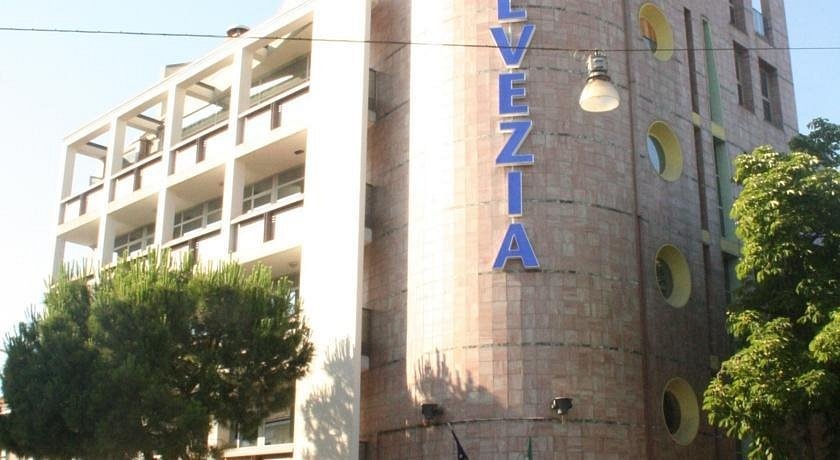
Hotel Elvezia in Pesaro is a particularly relevant example.
According to information reported by ANSA on 14 July 2026, Cherry Bank, the owner of the property, has initiated proceedings to recover possession of the building, while the existing operating agreement is due to expire in October 2026 and the owner is reportedly considering a subsequent disposal of the asset.
Based on the publicly available information, this is therefore not a case involving judicial liquidation, composition with creditors or a formal debt restructuring.
The risk arises earlier.
It stems from the potential breakdown of the link between the real estate asset and the hotel operating business.
This is precisely where hospitality pre-distress begins.
Hotel Elvezia: the asset and its context
Hotel Elvezia is located at 67 Viale Fiume, close to both the seafront and the centre of Pesaro.
Major accommodation platforms identify the property as a three-star hotel with approximately 30 rooms and ancillary services.
Hotel Elvezia Pesaro S.r.l.s., registered at the same address, operates in the hospitality sector.
These elements, however, should not be confused with ownership of the underlying real estate.
That distinction lies at the heart of the entire case.
A hotel may involve:
-
a real estate owner;
-
an operating company;
-
a contractual arrangement connecting the two;
-
licences and operating permits held by different entities;
-
an operating business legally and economically separate from the property itself.
When any one of these elements changes, the investment proposition changes with it.
Cherry Bank and the recovery-of-possession proceedings
The decisive development emerged during summer 2026.
According to ANSA, Cherry Bank had initiated proceedings to recover possession of the property.
At that time, the building was reportedly accommodating approximately 65 people, including workers, elderly individuals and vulnerable residents, meaning that its use had also extended beyond conventional tourist accommodation.
The same source reported that the operating agreement was due to expire in October 2026 and that the bank, as property owner, intended subsequently to consider the sale of the building.
The recovery process was expected to lead to the progressive vacating of the property.
This changes the nature of the case entirely.
It is no longer simply a contractual issue between landlord and operator.
It becomes a question of operational continuity for the hotel asset itself.
The risk does not necessarily sit within the operating company
This is arguably the most important point for an investor.
A hotel may still be operating.
It may have guests.
It may generate revenue.
Its operating company may not even be experiencing formal financial distress.
Yet if the right to occupy and operate from the property disappears, the business may lose the fundamental platform on which its activity depends.
Hotel Elvezia therefore illustrates an essential principle:
hospitality risk is not necessarily the same as the insolvency risk of the hotel operating company.
At least three distinct layers must be analysed:
real estate
operating business
the contractual right connecting the business to the property
If the third layer disappears, even an economically viable operating business can lose continuity.
This is one of the reasons why asset analysis on InvestimentiAlberghieri.it cannot be limited to financial statements.
Ownership and operations: the hidden driver of value
Across the Italian hotel market, many properties are not operated directly by their real estate owners.
The contractual structures may include:
-
property leases;
-
business leases;
-
management agreements;
-
concessions;
-
hybrid contractual arrangements;
-
agreements between real estate companies and operating entities.
As a result, the sustainability of a hospitality investment depends not only on hotel performance.
It also depends on the duration, stability and transferability of the legal right allowing the operator to use the property.
An investor therefore needs clear answers to a number of fundamental questions.
Who owns the real estate?
Who owns the hotel operating business?
Who holds the licences and permits?
Who actually operates the property?
When does the agreement expire?
Are renewal options available?
Are there any disputes?
Are there contractual obligations to vacate the property?
Questions that may appear predominantly legal quickly become financial.
This is precisely the type of analysis that should precede any hospitality investment assessed through Investhotel.it.
When contract expiry changes the value of a hotel
Assume that a hotel generates positive EBITDA.
An investor might be tempted to apply a market multiple and derive a value for the operating business.
But if the agreement giving the operator access to the property expires only a few months later, that valuation may change fundamentally.
The value of a hotel business depends on its ability to continue generating those cash flows in the future.
If access to the real estate is lost, the business may also lose:
-
guestrooms;
-
food and beverage operations;
-
reservations;
-
distribution channels;
-
customers;
-
dedicated employees;
-
the reputation associated with that specific location.
This is why EBITDA, real estate value and contractual structure must be analysed together.
Treating them separately risks assigning value to cash flows that may not be sustainable or transferable over time.
A potential sale would fundamentally change the investment case
According to the information reported by ANSA, Cherry Bank is considering the sale of the property once possession has been recovered.
If that intention is confirmed, the nature of the case will change.
What is currently a situation of operational and contractual pre-distress could evolve into a genuine asset-repositioning opportunity.
At that point, an entirely different set of questions arises.
Will the property continue to operate as a hotel?
Will it be sold with vacant possession?
Will a future buyer retain its hospitality use?
Could alternative uses generate superior economics?
How much CAPEX would be required to reposition the asset?
What hotel category could the market support?
Which operators could potentially be interested?
What return would justify the investment?
And above all:
what is the value of the real estate once it has been separated from the current operating business?
This is the real financial discontinuity within the Hotel Elvezia case.
When real estate and the operating business separate
In a conventional hospitality transaction, the real estate and operating business may be analysed as components of one integrated economic system.
Once ownership and operations begin to separate, however, the market must reassess the value of each independently.
The operating business may lose value if it no longer has access to the property.
The property may lose value if it becomes vacant and requires substantial capital expenditure.
Alternatively, it may gain value if vacant possession creates the opportunity for a more profitable repositioning.
This is precisely the point at which a special situation can emerge.
Historical value becomes less relevant.
The new equation becomes:
**current asset value
-
cost of disruption
-
required CAPEX
-
time to stabilisation
-
prospective value of the repositioned asset**
For an investor, this shift is critical.
The highest and best use question
In Pesaro, the concept of highest and best use becomes particularly relevant.
The fact that a building has historically operated as a hotel does not necessarily mean that hospitality remains its most economically productive use.
An investor should therefore compare at least two scenarios.
Hospitality scenario
Refurbishment of the property, relaunch of hotel operations, repositioning, appointment of a new operator and eventual stabilisation of the business.
Alternative-use scenario
Repositioning of the real estate for a different use, where planning regulations, technical characteristics and market conditions allow it.
The purpose is not to assume in advance that one option is superior.
The objective is to quantify the economics of both alternatives.
That distinction separates a static real estate valuation from a genuine investment analysis.
What could Hotel Elvezia be worth after vacant possession?
If the property were ultimately offered for sale with vacant possession, a hospitality investor should not begin with the seller’s asking price.
The analysis should begin with the economics of the hotel that could realistically be created.
The process should therefore work backwards.
First, determine:
-
sustainable room count;
-
ADR;
-
occupancy;
-
RevPAR;
-
total revenue;
-
normalised EBITDA;
-
CAPEX;
-
FF&E;
-
potential pre-opening costs;
-
working capital requirements;
-
target investment return.
Only then should the investor determine the maximum price that can rationally be paid for the real estate today.
This approach avoids one of the most common mistakes in opportunistic hospitality investment:
starting with the price of the building rather than the prospective value of the business that the building can support.
At Robertonecci.it, these issues are analysed extensively in relation to hotel valuation, operating risk and the interaction between real estate and hotel management.
The cost of operational discontinuity
A closed hotel is not simply an operating hotel temporarily generating zero revenue.
Over time it may lose:
-
employees;
-
customers;
-
distribution;
-
commercial contracts;
-
reviews;
-
online visibility;
-
supplier relationships;
-
operational know-how.
The longer the disruption, the greater the cost of returning the asset to a stabilised operating condition.
If a future investor intends to retain the hotel use of the Elvezia, the period between the departure of the current operator and the arrival of a new one should therefore be treated as a genuine financial variable.
Time itself becomes an indirect form of CAPEX.
Every month of inactivity can create:
-
lost revenue;
-
holding costs;
-
staff attrition;
-
commercial erosion;
-
additional funding requirements.
This is why speed of execution can directly affect investment value.
The essential due diligence workstreams
Before any credible valuation of Hotel Elvezia can be undertaken, at least eight areas should be reconstructed and verified.
1. Ownership
Legal title to the property, existing encumbrances and the ownership structure.
2. Operating agreement
Nature, duration, expiry date, renewal provisions and surrender obligations.
3. Recovery-of-possession proceedings
Legal basis, current status and realistic timing.
4. Hotel operating business
Assets, contracts, licences, permits and commercial relationships capable of being transferred.
5. Planning status
Existing permitted use and the feasibility of any alternative uses.
6. Physical condition
Building systems, maintenance requirements, compliance and required CAPEX.
7. Historical trading performance
ADR, occupancy, RevPAR, revenue and normalised EBITDA, adjusted where necessary for atypical recent uses of the property.
8. Alternative-use value
Comparison between the value of the property as a hotel and the value potentially achievable under other viable configurations.
This type of due diligence requires an integrated combination of real estate, financial and operational expertise, consistent with the approach developed by HotelManagementGroup.it.
This is not an insolvency case
Precision matters.
Based on the publicly available information, there is currently insufficient evidence to describe Hotel Elvezia as insolvent or as being involved in formal restructuring or insolvency proceedings.
The warning signals instead arise from:
-
the recovery-of-possession process;
-
expiry of the operating agreement;
-
the progressive reduction in use of the property;
-
the potential future sale of the real estate.
The case should therefore be viewed as one of operational and contractual pre-distress, rather than formal financial distress.
That distinction is precisely what makes it interesting from an investment perspective.
The opportunity emerges when the asset and the operator separate
When distressed hospitality is discussed, attention usually turns immediately to courts, lenders and insolvency proceedings.
Yet some of the most interesting investment situations emerge earlier.
They arise when the real estate and the operating business begin to separate.
When the operator loses continuity.
When the owner must decide whether to sell.
When a new investor must choose between a hospitality relaunch and an alternative use.
At this stage, the market has to reprice both the real estate and the operating business.
This is where analysis becomes genuinely strategic.
Hotel Elvezia should therefore remain under observation through the expected expiry of the current arrangement in October 2026, and particularly in relation to any subsequent marketing or disposal process.
Because the true informational advantage is not simply knowing when a hotel is officially offered for sale.
It is understanding when its economic model is changing before the market has had the opportunity to reprice the asset.
Hospitality investment analysis, special situations, pre-distress and repositioning opportunities
InvestimentiAlberghieri.it analyses hotels, hospitality real estate and pre-distress situations through an integrated assessment of ownership, operations, contractual structures, performance and value-creation potential.
For confidential enquiries and analysis:
info@investimentialberghieri.it