Hotel, restaurant, spa, meeting facilities, operating equipment and real estate: the Hotel Formula International & Puravita Spa in Rosolina is returning to the market at a new price point. The next competitive sale is scheduled for 16 December 2026, with a base price of €2.87 million and a minimum bid of €2.1525 million, approximately 25% below the previously published base price. But the real investment case is not the discount itself: it is determining the value of an already diversified hospitality platform, the CAPEX it requires and the level of normalised EBITDA it can sustainably generate over the medium term.
In distressed hospitality, the most compelling opportunities are not necessarily those showing the deepest price reduction.
They are those where the entry price can be assessed against:
Asset Quality
Operating Continuity
Normalised EBITDA
CAPEX Requirements
Debt Capacity
Stabilised Value
The Hotel Formula International & Puravita Spa in Rosolina, in the province of Rovigo, falls squarely within this category.
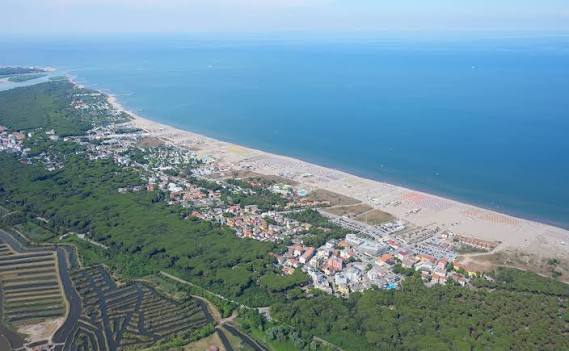
The property is located at Via Santa Teresa 41, along the SS 309 Romea corridor and within the wider tourism ecosystem of the Venetian Po Delta.
The complex is part of Judicial Liquidation Proceeding no. 3/2026 before the Court of Rovigo.
The next competitive sale is scheduled for 16 December 2026.
Deal Snapshot
| Item | Details |
|---|---|
| Property | Hotel Formula International & Puravita Spa |
| Location | Rosolina (RO) |
| Proceeding | Judicial Liquidation no. 3/2026 |
| Court | Rovigo |
| Lot | Single lot |
| Sale date | 16 December 2026 |
| Bid deadline | 15 December 2026 |
| Base price | €2,870,000 |
| Minimum bid | €2,152,500 |
| Minimum bid increment | €20,000 |
| Deposit | 10% |
| Reported surface area | approx. 3,245 sq m |
| Previously published base price | €3,819,000 |
| Base-to-base reduction | approx. 24.9% |
| Asset mix | Hotel + restaurant + spa + meeting facilities + operating assets |
| Core issue | Going-concern value relative to Total Investment Cost |
The key point is that the perimeter is not described as a simple hotel property.
The proceedings identify a tourism and hospitality business complex comprising the real estate used for hotel, restaurant and wellness activities, together with furnishings, systems, equipment and assets instrumental to operations.
This feature is what makes the transaction particularly interesting.
From €3.819 Million to €2.87 Million: The Repricing
The previous pricing level was:
-
Base price: €3,819,000
-
Minimum bid: €2,864,250
The new sale process brings the transaction to:
-
Base price: €2,870,000
-
Minimum bid: €2,152,500
The base price has therefore been reduced by approximately €949,000, or roughly 24.9%.
The repricing is material.
But it should not be confused with value creation.
A procedural discount simply means that the market is being tested again at a lower price.
It does not automatically establish that the new price is:
-
attractive;
-
sustainable;
-
below economic value;
-
compatible with required CAPEX;
-
supported by EBITDA;
-
financeable.
A proper underwriting exercise is required to determine that.
This Is More Than a Real Estate Shell
Many distressed hospitality transactions involve hotel properties without an operating business, furniture or commercial continuity.
Hotel Formula appears to present a broader configuration.
The perimeter described includes:
-
real estate;
-
hotel operations;
-
food and beverage;
-
wellness;
-
furnishings;
-
systems;
-
equipment;
-
operational assets.
This potentially makes the opportunity closer to a hospitality operating platform than to a standalone hotel requiring a full restart.
However, the distinction must still be handled carefully.
The inclusion of operating assets does not automatically mean that the following transfer seamlessly:
-
employees;
-
contracts;
-
licences;
-
reservations;
-
supplier relationships;
-
historical trading activity;
-
distribution systems;
-
agreements with the current operator.
Due diligence must distinguish between:
what is legally transferred
and
what is operationally preserved
These are not the same thing.
Preserving the Going Concern Is the Core Issue
Alongside the insolvency proceedings, Hotel Formula continues to maintain a commercial presence.
The property is marketed with:
-
guestrooms and junior suites;
-
Puravita Spa;
-
food and beverage;
-
meetings and events;
-
business stays;
-
leisure packages;
-
parking;
-
experiences linked to the Po Delta.
This indicates that the hotel product remains commercially identifiable.
In hospitality, that can be highly valuable.
A hotel that retains:
-
its name;
-
distribution;
-
employees;
-
reservations;
-
operating processes;
-
reputation;
-
market positioning;
-
commercial relationships;
can be worth materially more than the same real estate following a prolonged shutdown.
The fundamental question therefore becomes:
how much of the going concern survives the transfer?
Hotels Management S.r.l.: The Operating Relationship to Be Reconstructed
The hotel’s commercial presence refers to Hotels Management S.r.l.
This is relevant because it introduces another layer to the transaction.
Due diligence should establish:
-
the relationship with the liquidation proceedings;
-
whether a management agreement exists;
-
whether a business lease exists;
-
whether the operator uses assets included in the lot;
-
which contractual relationships can continue;
-
who controls bookings and distribution;
-
who employs the staff;
-
who holds the operating licences.
The transaction can therefore be represented as follows:
Liquidation Estate → Real Estate → Operating Assets → Current Operator → Going Concern
Until this chain is reconstructed, the price cannot be interpreted correctly.
Puravita Spa: Asset or Cost Centre?
The presence of a sizeable spa is one of the distinguishing features of the complex.
Puravita Spa is marketed as a wellness centre of approximately 900 sq m.
This is strategically relevant.
But it should not automatically be treated as an advantage.
The spa may simultaneously represent:
A Revenue Driver
Through:
-
admissions;
-
treatments;
-
packages;
-
day-spa demand;
-
wellness stays;
-
external customers.
An ADR Driver
If it supports higher average rates and value-added packages.
A Destagionalisation Tool
If it generates demand during weaker trading periods.
A Cost Centre
Through:
-
energy;
-
water;
-
payroll;
-
maintenance;
-
plant and equipment;
-
periodic refurbishment;
-
products.
The appropriate analysis should therefore assess:
Spa Revenue – Direct Costs – Payroll – Energy – Maintenance = Spa Contribution
Only then is it possible to determine whether the spa creates value or absorbs margin.
Rosolina: A Demand Mix Broader Than Beach Tourism Alone
Hotel Formula is not a conventional beachfront resort.
Its location along the Romea corridor creates a different demand profile.
The property can potentially capture:
-
leisure;
-
wellness;
-
Po Delta tourism;
-
corporate demand;
-
business transient;
-
groups;
-
events;
-
meetings;
-
weekend stays;
-
transit demand.
This matters because it creates the possibility of reducing seasonality.
The more useful question is not:
“How much beach tourism does Rosolina generate?”
but:
“What combination of demand segments can sustainably support rooms, F&B, spa and meeting facilities throughout the year?”
That is a much more relevant question for an investor.
Four Revenue Centres Should Be Underwritten Separately
Hotel Formula should not be analysed as a single undifferentiated business.
The business plan should separate at least four revenue centres.
Rooms
Key metrics include:
-
available rooms;
-
occupancy;
-
ADR;
-
RevPAR;
-
channel mix;
-
OTA dependency;
-
direct booking;
-
segmentation;
-
cancellation rate.
Food & Beverage
This should be broken down between:
-
breakfast;
-
restaurant;
-
in-house guests;
-
external customers;
-
events;
-
contribution margin.
Wellness
The spa should be analysed almost as a standalone business unit:
-
admissions;
-
treatments;
-
packages;
-
memberships;
-
external revenue;
-
payroll;
-
energy costs;
-
products;
-
maintenance.
MICE & Events
This should be assessed through:
-
utilisation rate;
-
average spend;
-
room-night conversion;
-
seasonality;
-
profitability.
Only after properly reconstructing these four business units can an investor arrive at a credible GOP.
The Purchase Price Is Not the Capital Requirement
The minimum bid of €2.1525 million is only the first number.
The correct formula is:
Acquisition Price + Transaction Costs + CAPEX + Working Capital + Repositioning + Ramp-up + Contingency = Total Investment Cost
This is the appropriate denominator for measuring returns.
The investor should therefore assess:
-
room condition;
-
MEP systems;
-
spa;
-
kitchens;
-
restaurant;
-
meeting rooms;
-
common areas;
-
roofs;
-
façades;
-
windows;
-
energy efficiency;
-
fire-safety compliance;
-
FF&E;
-
IT systems;
-
deferred maintenance;
-
marketing;
-
working capital.
An asset acquired for €2.15 million can easily become a €4 million, €5 million or larger investment once all required capital is included.
Returns must be measured against the total capital invested.
Normalised EBITDA: The Real Starting Point
A rational maximum bid should not be derived from the court-sale base price.
It should be derived from the business.
The correct sequence is:
Historical Revenue
↓
Normalised Revenue
↓
Normalised GOP
↓
Normalised EBITDA
↓
Required CAPEX
↓
Debt Capacity
↓
Target Equity Return
↓
Maximum Bid Price
This is the critical step.
A hotel is not worth what it costs in a court process.
It is worth what it can sustainably generate, net of the capital required to make it competitive.
Debt Capacity
The financing dimension should be analysed independently.
At a minimum, the investor should model:
-
stabilised EBITDA;
-
DSCR;
-
debt yield;
-
LTV;
-
interest coverage;
-
tenor;
-
amortisation;
-
potential balloon;
-
seasonality resilience;
-
working capital.
A hotel with spa and F&B may generate substantial revenue.
But it may also carry high fixed costs.
Its financeability will therefore depend on the quality and resilience of cash flow, not merely on the real estate value.
Investment Thesis
The investment thesis can be summarised as follows:
acquire a hospitality platform combining real estate, rooms, food and beverage, wellness and MICE at a materially repriced entry point, while testing whether the going concern and diversified revenue base can deliver an adequate return on Total Investment Cost.
Potential strengths include:
-
real estate included;
-
operating assets;
-
hotel commercially active;
-
meaningful spa component;
-
F&B;
-
MICE;
-
parking;
-
accessibility;
-
mixed leisure/business demand;
-
potential for reduced seasonality;
-
material repricing.
Key Risks
The principal risks are:
-
CAPEX not yet quantified;
-
spa energy consumption;
-
payroll;
-
seasonality;
-
restaurant profitability;
-
OTA dependency;
-
quality of the demand mix;
-
transferability of contracts and licences;
-
status of the current operator;
-
working capital;
-
deferred maintenance;
-
scale of services relative to actual demand;
-
post-acquisition stabilisation.
Potential Value Creation
The main value-creation levers may include:
Revenue Management
Optimising ADR and segmentation.
Direct Booking
Reducing OTA commission leakage.
Spa Monetisation
Expanding external demand and wellness packages.
F&B Repositioning
Reassessing the restaurant’s profitability and market positioning.
MICE
Increasing use of meeting facilities during weaker leisure periods.
Energy Efficiency
Reducing utility costs, particularly important for a spa-led asset.
Distribution
Creating a more balanced mix across:
-
direct;
-
OTA;
-
corporate;
-
groups;
-
tour operators;
-
leisure.
Cost Structure
Reviewing:
-
payroll;
-
outsourcing;
-
utilities;
-
maintenance;
-
procurement.
Investment Committee Summary
Key Numbers
-
Base price: €2,870,000
-
Minimum bid: €2,152,500
-
Reduction: approx. 24.9%
-
Reported surface area: approx. 3,245 sq m
-
Spa: approx. 900 sq m
-
Asset mix: hotel + restaurant + spa + meeting facilities + operating assets
-
Sale date: 16 December 2026
Investment Thesis
Acquire not merely real estate, but a hospitality platform potentially capable of generating diversified revenue streams.
Key Risks
CAPEX, energy, payroll, seasonality, transferability of operating relationships and quality of EBITDA.
Next Catalyst
16 December 2026, next competitive sale.
Decision Driver
Maximum Bid Price = a function of Normalised EBITDA, CAPEX, Debt Capacity and Target Equity Return.
Ten Questions to Answer Before Bidding
-
What is the normalised EBITDA?
-
What is the five-year CAPEX requirement?
-
How much does the spa actually contribute?
-
What margin does F&B generate?
-
What is the leisure/business mix?
-
What percentage of revenue is absorbed by payroll?
-
How dependent is the property on OTAs?
-
Which contracts are transferable?
-
What is the true debt capacity?
-
What Maximum Bid Price is consistent with the target return?
Without these answers, the discount remains no more than a procedural data point.
The Real Value Lies in the Platform, Not the Discount
Hotel Formula represents one of the more interesting types of special situation in the Italian hospitality market.
Not because the price has been reduced.
But because the perimeter combines:
Real Estate
Rooms
F&B
Wellness
MICE
Operating Assets
If these components are managed effectively, their combined value may exceed the sum of the underlying real estate and equipment.
If instead they generate structurally unsustainable costs, the entry price quickly becomes less relevant.
For InvestimentiAlberghieri.it, the central question is therefore:
what is the gap between Total Investment Cost and Stabilised Enterprise Value?
Investhotel.it addresses the transaction from the perspective of debt capacity, capital structure, DSCR and financial sustainability.
HotelManagementGroup.it focuses on operations, GOP, cost structure and revenue management.
RobertoNecci.it places the case within the broader evolution of hotel economics and the hospitality market.
Price Attracts. EBITDA Decides.
The base price is now €2.87 million.
The minimum bid is €2.1525 million.
The repricing matters.
But the investment decision will not ultimately be made on those numbers.
It will be made on:
what the property generates today
what it can generate tomorrow
how much capital is required
how much debt it can sustain
what it can be worth once stabilised
Only after these questions have been answered will it be possible to determine whether Hotel Formula is simply a repriced asset or a genuine hospitality investment opportunity.
Hospitality Ecosystem
RobertoNecci.it
Strategy, hotel economics and hospitality market analysis.
InvestimentiAlberghieri.it
Hotel assets, investments, transactions and hospitality special situations.
Investhotel.it
Hotel finance, capital structure, debt advisory, turnaround and value-add transactions.
HotelManagementGroup.it
Hotel management, operational advisory and performance improvement.
Hospitality Investment & Special Situations Advisory
For hotel investment analysis, business planning, operational due diligence, CAPEX assessment, normalised EBITDA analysis, turnaround and value-creation strategies:
info@investimentialberghieri.it
Methodological Note and Disclaimer
Information concerning the proceedings, pricing, sale date and general scope of the lot is based on publicly available documentation relating to Judicial Liquidation Proceeding no. 3/2026 before the Court of Rovigo.
The public documentation describes the lot as a tourism and hospitality complex comprising hotel, restaurant and wellness real estate together with furnishings, systems, equipment and operational assets.
The exact legal, contractual and business perimeter of what is transferable must be verified against the complete procedural documentation.
Information regarding the current commercial offering, spa and hotel services is derived from the property's publicly available commercial presence.
The reference to Hotels Management S.r.l. does not, by itself, establish ownership, contractual relationships, ownership of the operating business or rights over the complex.
References to:
-
EBITDA;
-
CAPEX;
-
debt capacity;
-
value-creation strategies;
-
repositioning scenarios;
-
Maximum Bid Price;
-
stabilised value;
are analytical in nature only.
This article does not constitute:
-
a real estate valuation;
-
a fairness opinion;
-
due diligence;
-
an investment recommendation;
-
a solicitation to purchase;
-
a forecast of the outcome of the proceedings.
Any investment should be preceded by independent legal, corporate, real estate, planning, technical, administrative, tax, financial and operational due diligence.