From recent Italian transactions to multi-billion-dollar development pipelines in the Middle East, a structural shift is becoming increasingly clear: capital is no longer investing solely in hotels. It is investing in platforms, real estate regeneration, mixed-use developments, branded concepts and capital structures designed to distribute risk and returns across multiple components. As a result, the way investors assess hotel projects is changing as well.
Five signals to watch
1. The single hotel is giving way to the platform.
Multi-asset strategies can generate economies of scale, stronger distribution capabilities and potential operating-platform value beyond the underlying real estate.
2. Mixed-use is redistributing risk.
Hotels, residential, retail and leisure are increasingly being integrated to diversify revenue streams and accelerate monetisation.
3. Heritage regeneration is becoming an investment category in its own right.
Historic assets provide scarcity and identity, but require rigorous discipline around CAPEX, planning constraints and operating costs.
4. Capital structure matters as much as the business plan.
Equity, bank debt, private credit, Recovery Fund resources and public incentives can fundamentally alter investor returns.
5. Competitive advantage is shifting towards capital allocation.
Owning a good hotel is no longer enough. What matters is how much capital the asset absorbs, what cash flow it generates and how efficiently it is financed.
From the hotel to the platform
For many years, hotel investment analysis focused primarily on:
keys,
ADR,
occupancy,
RevPAR,
GOP,
real estate value.
These remain essential metrics.
But they are no longer sufficient.
Recent transactions point to a clear evolution:
single-hotel investment
is increasingly becoming
hospitality platform investment.
Capital is no longer being deployed solely into individual properties.
Portfolios are being built.
Hotels are being combined with residential components.
Historic buildings are being repositioned.
F&B, retail, events and leisure are being integrated.
Real estate funds, private equity, bank debt, public funding instruments and institutional capital are increasingly being deployed together.
Hotel investment is therefore evolving into a far more sophisticated industrial and financial structure.
This is precisely the transformation we analyse at InvestimentiAlberghieri.it: not only where capital is being invested, but how it is being allocated and what return it is expected to generate.
Invel and YellowSquare: when the platform itself creates value
One of the most interesting recent Italian cases is the partnership between Invel Real Estate and YellowSquare.
The acquisitions in Bologna, Milan and Venice represent an aggregate investment exceeding €75 million, while Naples adds a long-term lease structure.
The new properties will bring the YellowSquare platform to approximately 3,300 beds.
The superficial interpretation is straightforward:
“YellowSquare is opening new properties.”
The investment interpretation is very different.
What is being built is a genuine:
platform strategy
Real estate capital and the operator are being integrated within a multi-city growth strategy.
Value no longer depends solely on the performance of each individual building.
It also depends on the ability to generate:
-
economies of scale;
-
shared distribution;
-
centralised functions;
-
integrated revenue management;
-
brand awareness;
-
commercial efficiencies;
-
greater capacity to attract future capital.
This also changes the exit strategy.
An investor may no longer be acquiring simply an asset.
It may be acquiring:
an operating platform with multiple assets, a brand and future growth capacity.
Real estate value and operating platform value
A portfolio is not necessarily worth the simple sum of its individual properties.
Where a scalable operating platform exists, the market may assign value to:
brand + management capability + pipeline + distribution + operating platform.
It therefore becomes necessary to distinguish between:
Real Estate Value
and:
Operating Platform Value
It is precisely this combination that is attracting increasing amounts of private equity and institutional capital.
At Investhotel.it, this distinction is also central from a financing perspective: financing a single asset and financing a platform are fundamentally different propositions.
Heritage and regeneration: when capital also buys identity
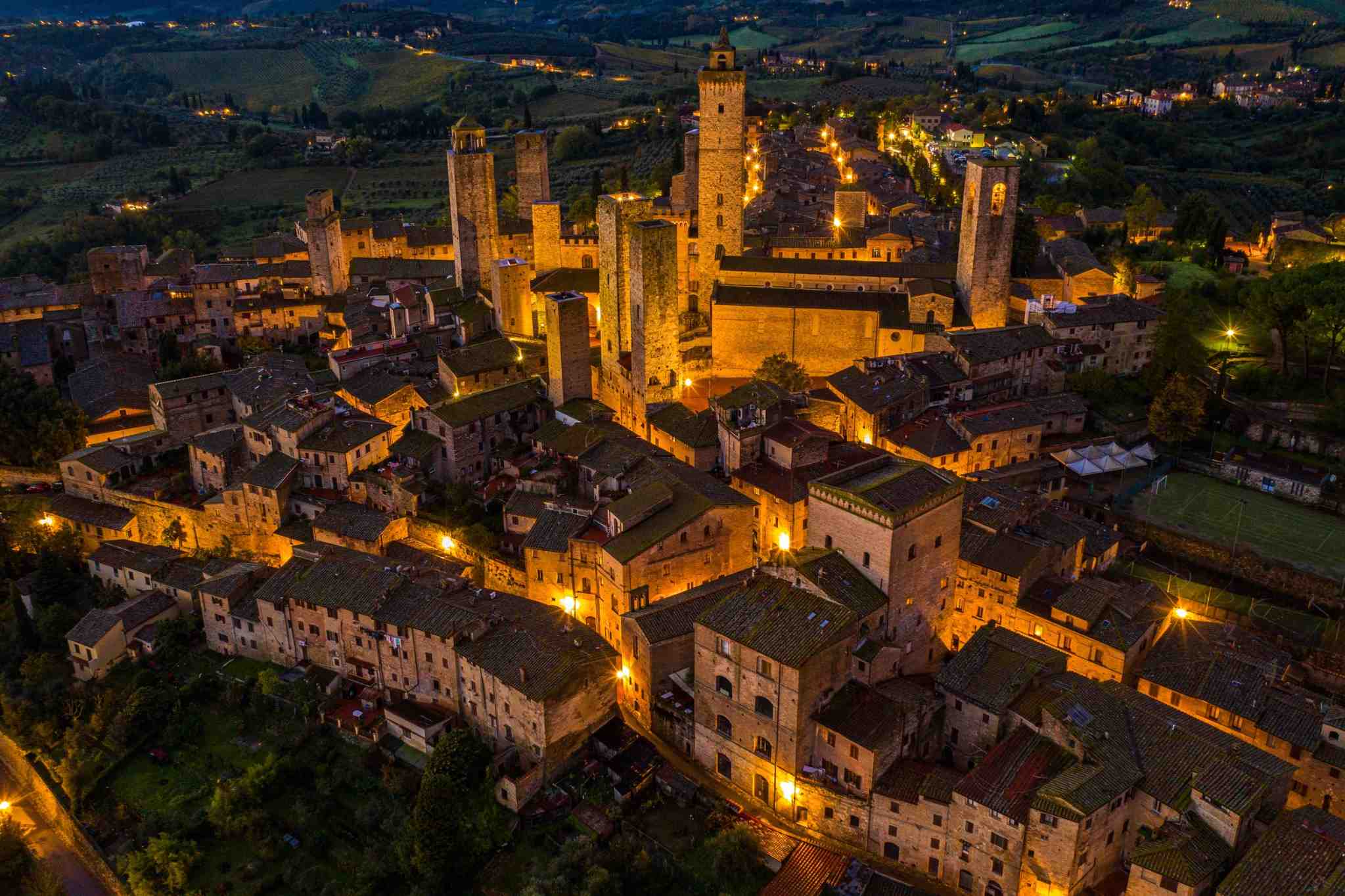
The ExCelle Hotel San Gimignano, part of Minor Hotels’ Colbert Collection, represents a different model.
The hotel will feature 33 rooms and form part of the broader regeneration of the former San Domenico convent and prison complex.
The wider project combines hospitality, culture, events, F&B and retail.
The analytical mistake would be simply to divide:
Total Project CAPEX / Number of Hotel Rooms.
Because the capital is not financing the hotel alone.
It is financing an ecosystem.
A proper analysis must distinguish between:
Hotel CAPEX
Cultural CAPEX
Retail CAPEX
Infrastructure CAPEX
FF&E
OS&E
Pre-opening Costs
Working Capital
Only then can the investor calculate the true:
Hotel Capital Employed
and therefore:
Return on Hotel Capital
This distinction is fundamental.
Project CAPEX is not the same as Hotel CAPEX.
Scarcity as part of the investment thesis
In heritage assets, part of the value derives from features that are difficult or impossible to replicate:
location,
history,
architecture,
identity,
scarcity.
A competitor can build better rooms.
It can create a larger spa.
It can spend more on design.
But it cannot reproduce the history of a unique property.
Scarcity can therefore form part of the:
investment thesis
But only where the value premium exceeds the additional costs associated with:
-
CAPEX;
-
maintenance;
-
planning and preservation restrictions;
-
inefficient layouts;
-
higher operating costs.
The principle is straightforward:
Scarcity Premium > Additional Capital and Operating Cost
Chandris: returns also depend on how capital is structured
The strategy adopted by Chandris Hotels offers another important lesson.
The group is pursuing a new investment cycle of approximately €60 million across Milos and Thessaloniki.
The programme combines:
-
acquisition;
-
development;
-
expansion;
-
refinancing;
-
subsidised financing.
The plan includes the acquisition of Milos Cove, the refurbishment of The Met and the development of a new five-star hotel in Thessaloniki.
A bond loan of up to approximately €39.845 million has been approved, supported by Recovery Fund resources and Alpha Bank financing.
The central issue is therefore not simply the investment itself.
It is the capital structure:
Equity
Bank Debt
Recovery Fund
=
Optimised Capital Structure
A good hotel can still be a poor investment
Two projects can generate exactly the same EBITDA.
Yet different financing structures can produce dramatically different equity returns.
This is why it is not enough to assess:
EBITDA / Total Investment.
The analysis must also cover:
-
leverage;
-
interest rate;
-
amortisation;
-
grace period;
-
DSCR;
-
debt yield;
-
refinancing risk;
-
subsidies;
-
public incentives;
-
cost of equity.
A sound operating project with the wrong financing structure can become a mediocre investment.
A disciplined project with properly structured capital can significantly enhance equity returns.
Mixed-use: the hotel becomes part of a broader real estate ecosystem
The new Avani+ Hanoi illustrates another major trend.
The hotel will feature 310 rooms, but it will represent only one component of a much broader development incorporating a lifestyle mall, residential units and serviced apartments.
This changes the economics of the investment.
The hotel can generate:
-
traffic;
-
services;
-
F&B;
-
brand value;
-
meetings and events;
-
destination value.
Residential can generate:
-
sales proceeds;
-
early-stage monetisation;
-
capital recycling;
-
local demand.
Retail can generate:
-
footfall;
-
rental income;
-
services.
The development should therefore not be viewed as a collection of independent businesses.
It should be viewed as an:
Integrated Real Estate Ecosystem
Mixed-use means distributing risk
In a traditional hotel, most invested capital is ultimately remunerated through future hotel operating cash flows.
In a mixed-use project, several monetisation mechanisms can coexist:
Hotel Cash Flow
Residential Sales
Retail Rents
F&B
Management Income
Asset Appreciation
This diversification can reduce dependence on a single revenue source.
But it also increases complexity.
The financial model must therefore separate:
Sources of Capital
Sources of Revenue
Timing of Cash Flow
Exit Strategy
for each individual component.
The Woods at West Mountain: hotel or destination development?
The Woods at West Mountain project in New York State should be assessed through the same lens.
With an estimated investment of approximately US$170 million, the scheme combines a hotel, condominiums, retail and ski-in/ski-out accommodation.
This is not merely a hotel.
It is a real estate destination.
And that fundamentally changes the way risk should be analysed.
ADR,
occupancy,
and RevPAR
are no longer enough.
The model must also address:
Residential Absorption Rate
Sales Price per sqm
Retail Occupancy
Infrastructure CAPEX
Phasing
Construction Finance
Working Capital
Hotel Stabilisation Period
From the individual asset to the capital ecosystem
In the GCC and North Africa, the scale becomes even more significant.
Regional development pipelines run into tens of billions of dollars and hundreds of thousands of hotel rooms.
In markets such as Saudi Arabia, hospitality investment is increasingly becoming part of:
national economic infrastructure
Public capital finances destinations.
Private capital develops assets.
International brands provide distribution.
Operators run the hotels.
Banks and debt funds provide financing.
Institutional investors acquire stabilised assets.
The result is a genuine:
Hospitality Capital Ecosystem
Scale does not remove risk
The amount of capital committed does not automatically determine the amount of value created.
The central question remains:
how much future demand will be required to remunerate the capital being deployed?
Supply growth must be supported by:
-
air connectivity;
-
leisure demand;
-
corporate demand;
-
events;
-
conventions;
-
entertainment;
-
domestic tourism;
-
infrastructure;
-
destination marketing.
If supply grows faster than demand, even an exceptional development can come under pressure.
This is where the advisor’s role becomes critical:
not at the announcement stage,
but in the:
downside scenario
Hospitality as a capital allocation industry
This may be the most important transformation of all.
A hotel is no longer simply:
Real Estate + Operations
It is becoming:
Real Estate + Operations + Finance + Brand + Capital Allocation
An investor must determine:
-
where equity should be deployed;
-
how much leverage should be used;
-
which brand to select;
-
which operator;
-
what level of CAPEX;
-
which ancillary revenue streams to develop;
-
which PropCo/OpCo structure;
-
which exit strategy.
In other words:
understanding hotels is no longer enough.
Investors must understand capital.
The seven metrics that really matter
In this new environment, an investment committee should assess at least seven dimensions.
1. Total Development Cost
How much capital is actually being absorbed?
2. Stabilised EBITDA
What is the normalised earnings profile?
3. Return on Invested Capital
What return does the total capital employed generate?
4. Debt Capacity
How much debt can the underlying cash flow genuinely support?
Not how much the bank is willing to lend.
5. Equity IRR
What return does the equity generate under different scenarios?
6. Exit Value
What valuation is realistically achievable once the asset has stabilised?
7. Downside Protection
What happens if ADR, occupancy, opening timelines or CAPEX fail to meet the business plan?
These issues are also central to Investhotel.it, where debt is analysed as an integral part of the investment rather than as a financing step that follows it.
The brand matters. But it must generate incremental EBITDA
The expansion of global hotel groups can create the impression that branding automatically reduces investment risk.
It does not.
A brand can improve:
-
distribution;
-
pricing power;
-
loyalty;
-
marketing;
-
commercial reach;
-
asset liquidity.
But it also introduces:
-
management fees;
-
incentive fees;
-
franchise costs;
-
PIPs;
-
brand standards;
-
FF&E requirements.
The right question is not:
“Is it a strong brand?”
It is:
“How much incremental EBITDA does the brand generate relative to its total cost?”
That is an investor’s question.
The operator’s role is changing as well
The operator can no longer always be selected at the end of the development process.
It increasingly needs to be involved much earlier.
Because the operator can influence:
-
key count;
-
room mix;
-
F&B;
-
back-of-house design;
-
payroll;
-
technology;
-
distribution;
-
positioning;
-
CAPEX.
A design error can become a recurring operating cost for the next twenty years.
This is why HotelManagementGroup.it approaches hotel development from the perspective of operational sustainability, rather than real estate configuration alone.
Italy: turning fragmentation into scale
Italy has several particularly attractive structural characteristics:
-
historic real estate;
-
independent hotels;
-
family ownership;
-
convertible buildings;
-
globally recognised destinations;
-
a still highly fragmented market.
The next phase of the market may therefore be driven not only by new developments, but by:
Consolidation
Conversion
Repositioning
Platform Building
Refinancing
Generational Transition
PropCo/OpCo Structures
Mixed-Use Development
The Italian investment thesis can be summarised in one sentence:
Italy offers fragmentation; international capital seeks scale. The role of advisory is to transform the former into the latter.
This may represent one of the most significant structural opportunities in Italian hospitality.
International capital is looking for investability
Institutional capital typically prefers:
-
meaningful ticket sizes;
-
governance;
-
reporting;
-
professional management;
-
scale;
-
liquidity.
The Italian hotel market, by contrast, still offers a very large number of individual assets.
The real transformation therefore consists of turning:
Fragmented Hospitality Assets
into:
Investable Hospitality Platforms
This requires far more than conventional hotel brokerage.
It requires:
-
origination;
-
due diligence;
-
business planning;
-
restructuring;
-
operator selection;
-
financing;
-
governance;
-
asset management;
-
exit planning.
And this is precisely where the value of advisory increases.
At RobertoNecci.it, we have long examined how tourism, finance, real estate and hotel operations are becoming increasingly interdependent components of the same industry.
From the deal to the investment thesis
The market should therefore stop asking only:
“How much does this hotel cost?”
The more relevant question is:
“What financial thesis justifies this investment?”
For YellowSquare, it is platform scalability.
For ExCelle, it is the integration of heritage, culture and hospitality.
For Chandris, it is capital structure.
For Avani+ Hanoi, it is mixed-use.
For West Mountain, it is destination development.
For the Gulf, it is the creation of entire tourism ecosystems.
Different models.
One discipline:
capital must generate returns
Conclusion: we are no longer financing hotels alone
Recent transactions point in a very clear direction.
Hospitality investment is becoming more sophisticated.
Value is no longer derived from the property alone.
It comes from the ability to combine:
Real Estate
Operations
Brand
Finance
Alternative Revenue Streams
Capital Structure
=
Sustainable Return on Capital
That is the real transformation.
The future of hotel investment may not necessarily be dominated by those who own the greatest number of hotels.
It may be dominated by those who are best able to:
allocate capital efficiently.
Build platforms.
Integrate assets.
Use leverage appropriately.
Control CAPEX.
Create scalable operating models.
Generate cash flow.
And, above all, distinguish between an attractive hotel project and a genuinely sustainable investment.
Because a great hotel can be an exceptional product.
But a great investment is something different.
It must create value.
Hotel investment and advisory
Hotel investment analysis increasingly requires an integrated understanding of real estate, operations and finance.
Our ecosystem operates through four complementary platforms:
InvestimentiAlberghieri.it — hotel investment, acquisitions, development, asset enhancement and investment analysis.
Investhotel.it — hotel finance, debt advisory, restructuring, refinancing and corporate finance.
HotelManagementGroup.it — hotel advisory, development, repositioning and operational management.
RobertoNecci.it — economic, strategic and industry analysis of the hospitality sector.
For investment analysis, feasibility studies, business plans, capital structure, debt advisory and hotel asset valuation:
info@investimentialberghieri.it