The J44 was not sold simply because it was worth €17 million. It was sold because it was legible to an investor.
The sale of J44 in Jesolo, the five-star hotel owned by the Rizzante family, is not just another real estate headline. It is a clear signal of how the Italian hotel investment market is changing: quality hotels are no longer being assessed merely as properties, but as economic, operational and financial platforms.
According to press reports, the Rizzante family is selling the ownership of the asset while remaining involved in the hotel’s management for a multi-year period. This is the central point of the transaction: it is not a standard sale of hotel real estate, but a more evolved model in which real estate capital, management continuity and asset value realisation are brought together.
The price makes the headline.
The structure of the deal explains the market.
The real story is not the price, but the model
When a hotel is sold for a significant amount, the first question is almost always the same: “How much was paid per room?”
It is an understandable question, but often a misleading one.
In the hotel sector, the price cannot be interpreted properly without understanding the economic and contractual variables behind it. In the absence of public data on EBITDA, revenue, rent, capex, debt, the duration of the operating agreement and the contractual structure, the price cannot be treated as a meaningful comparable multiple.
To truly understand a hotel transaction, one would need to know at least:
-
historical and projected profitability;
-
room revenue and ancillary revenue;
-
occupancy, ADR and RevPAR;
-
operating margins;
-
investments already made;
-
future capex requirements;
-
the relationship between ownership and management;
-
the duration and sustainability of the operating agreement;
-
the level of risk perceived by the investor;
-
the potential for future value creation.
The €17 million figure is the headline number. The real investment takeaway is different: an upper-upscale or luxury hotel asset, located in an established tourism destination, can attract capital when it combines real estate, management, positioning and future profitability in a credible way.
Why Jesolo matters
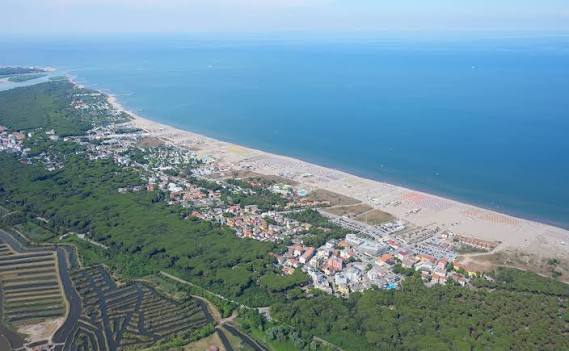
Jesolo is not a marginal destination. It is a structured leisure market, with established tourist demand, a readable seasonal pattern and a hospitality sector that has progressively moved towards a higher-quality offer.
In destinations of this kind, well-positioned hotels become scarce assets.
Scarcity is not only about the number of available rooms. It is above all about the difficulty of creating new high-quality hotel products in mature markets, where urban planning constraints, construction costs, permitting timelines, major refurbishment requirements and increasingly specialised management capabilities all weigh heavily.
For an investor, acquiring an existing, recognised hotel that remains overseen by an established entrepreneurial family can be more attractive than developing a product from scratch.
The buyer is not simply acquiring a building.
The buyer is entering a functioning system.
Management continuity reduces risk
The fact that the Rizzante family remains involved in management is one of the most important aspects of the transaction.
A hotel is not a passive property. It is an operating business made up of people, procedures, reputation, pricing, distribution, maintenance, service standards, commercial relationships and the daily ability to turn demand into margin.
For this reason, acquiring a hotel without stable management can represent a significant risk for a real estate investor.
Management discontinuity can weaken positioning, create uncertainty among staff, disrupt the relationship with guests and reduce performance precisely at the most delicate stage: immediately after closing.
Management continuity, by contrast, creates value because it preserves:
-
the hotel’s reputation;
-
operational know-how;
-
market relationships;
-
team stability;
-
knowledge of the destination;
-
commercial consistency;
-
predictability of cash flows.
In many mature hotel transactions, the seller does not exit completely. The seller crystallises value while remaining involved in operations. It is a formula that can create balance: the seller realises value, the buyer reduces operational risk, and the hotel preserves continuity.
Ownership and management are two different values
The J44 case highlights an issue that many Italian hotel-owning families need to address with greater clarity: real estate value and management value are not the same thing.
A hotel can be a good property but a poor business.
It can be a good business within a property requiring heavy investment.
It can have excellent management but a contractual structure that is not suitable for institutional capital.
It can generate revenue without generating yield.
It can have potential value without yet being investable.
In professional transactions, these elements are separated, analysed and then recomposed.
The real estate investor looks at asset yield, capital protection, contractual stability and future appreciation potential.
The operator looks at operating margins, cost sustainability, product quality, reputation and the ability to improve performance.
The seller looks at the monetisation of accumulated value, family continuity, risk reduction and the possibility of freeing up resources for new projects.
When these three perspectives are aligned, the transaction can work. When they are confused, the result is often fragile acquisitions, unsustainable rents, compressed operations and unrealistic return expectations.
A hotel is not sold when the owner decides to sell it
One of the most common mistakes in the hotel market is to believe that a hotel can be brought to market the moment the owner decides to sell.
Formally, that is true.
Strategically, it is not.
A hotel sells well only if it has been prepared in advance.
It needs an orderly document structure, readable financial statements, reliable operating data, clear contracts, traceable maintenance, clear permits and compliance documentation, organised staff, a solid reputation and a credible economic narrative.
A professional investor does not buy only what the hotel is today. The investor buys what the hotel can become tomorrow, at a given level of risk.
This is why valuation should not come at the end of the process, when the owner is already looking for a buyer. It should come at the beginning, when the decision is made to make the hotel understandable, financeable and investable.
Before going to market, an owner should ask:
-
is my hotel legible to an investor?
-
do the numbers correctly describe performance?
-
is profitability demonstrable?
-
is the real estate value consistent with the business value?
-
are future capex requirements clear?
-
is the management agreement sustainable?
-
can perceived risk be reduced?
-
is there a credible growth thesis?
The difference between a hotel that is simply “for sale” and a hotel that is truly “investable” lies exactly here.
The market is not frozen. It is selective
The sale of J44 confirms that the Italian hotel investment market is not frozen. It is more selective.
Investors are not buying everything. They are buying assets with an understandable economic story, credible management, a solid destination, a sustainable contractual structure and clear value creation potential.
This applies to five-star hotels, but not only to them.
It also applies to three- and four-star hotels in urban, leisure, thermal, business or mixed destinations. In every segment, the market increasingly distinguishes between generic hotel properties and assets capable of supporting a genuine investment thesis.
The key question is no longer: “What is my hotel worth?”
The better question is: what investment thesis can support the value of my hotel?
The lesson for hotel-owning families
Many Italian entrepreneurial families own hotels that were built, acquired or developed over decades. In many cases, these hotels represent wealth, work, family identity and local reputation all at once.
But the market is changing.
Generational transition, rising costs, the need for investment, the complexity of distribution, margin pressure and the growing interest of professional capital are forcing a new reflection.
Should the family continue to own?
Should it continue to operate?
Should it sell?
Should it lease?
Should it look for a partner?
Should it separate ownership from management?
There is no single answer.
There is, however, a method: analyse the hotel as an asset, not only as a family business.
This means distinguishing emotional value from economic value. Historical value from prospective value. The value of the walls from the value of management. Potential value from bankable value.
Those who do this work before others can govern the process.
Those who postpone it risk being governed by the market.
Conclusion: J44 is a signal, not an isolated case
The sale of J44 in Jesolo for €17 million matters because it reflects a new phase in the Italian hotel market.
Hotels are no longer seen only as properties to be owned or businesses to be run directly. They are increasingly regarded as complex assets in which capital, management, contracts, destination, profitability and risk must be aligned.
The market will reward hotels that can present themselves clearly.
It will reward entrepreneurs who prepare their assets before starting a negotiation.
It will reward transactions in which management continuity is not a detail, but a value driver.
And it will reward those who understand that the final price is not created at the negotiating table, but in the strategic quality with which the hotel has been built, managed, documented and made investable.
Before going to market, a hotel must be prepared as an investment dossier.
Not as a simple real estate listing.
Do you want to understand what a hotel is really worth?
Hotel Management Group supports hotel owners, investors and operators in the strategic valuation of hotels, real estate transactions, business lease agreements, repositioning projects, value creation plans and sale processes.
If you are considering the sale, acquisition or repositioning of a hotel asset, the first step is not to look for a buyer. It is to build a professional reading of value.
Read more case studies, market analyses and transactions on the Investimenti Alberghieri blog:
https://investimentialberghieri.it/blog
Explore the hotel guides by Roberto Necci:
https://www.robertonecci.it
Roberto Necci - r.necci@robertonecci.it