The UK hotel market is not simply recovering. It is becoming more disciplined.
The rebound in UK hotel investment activity, described by Patrick Whyte in Hospitality Investor, does not point to a broad, indiscriminate return of liquidity to the hotel sector. It signals something more important: capital is back, but it is now more selective, more technical and more focused on risk-adjusted returns.
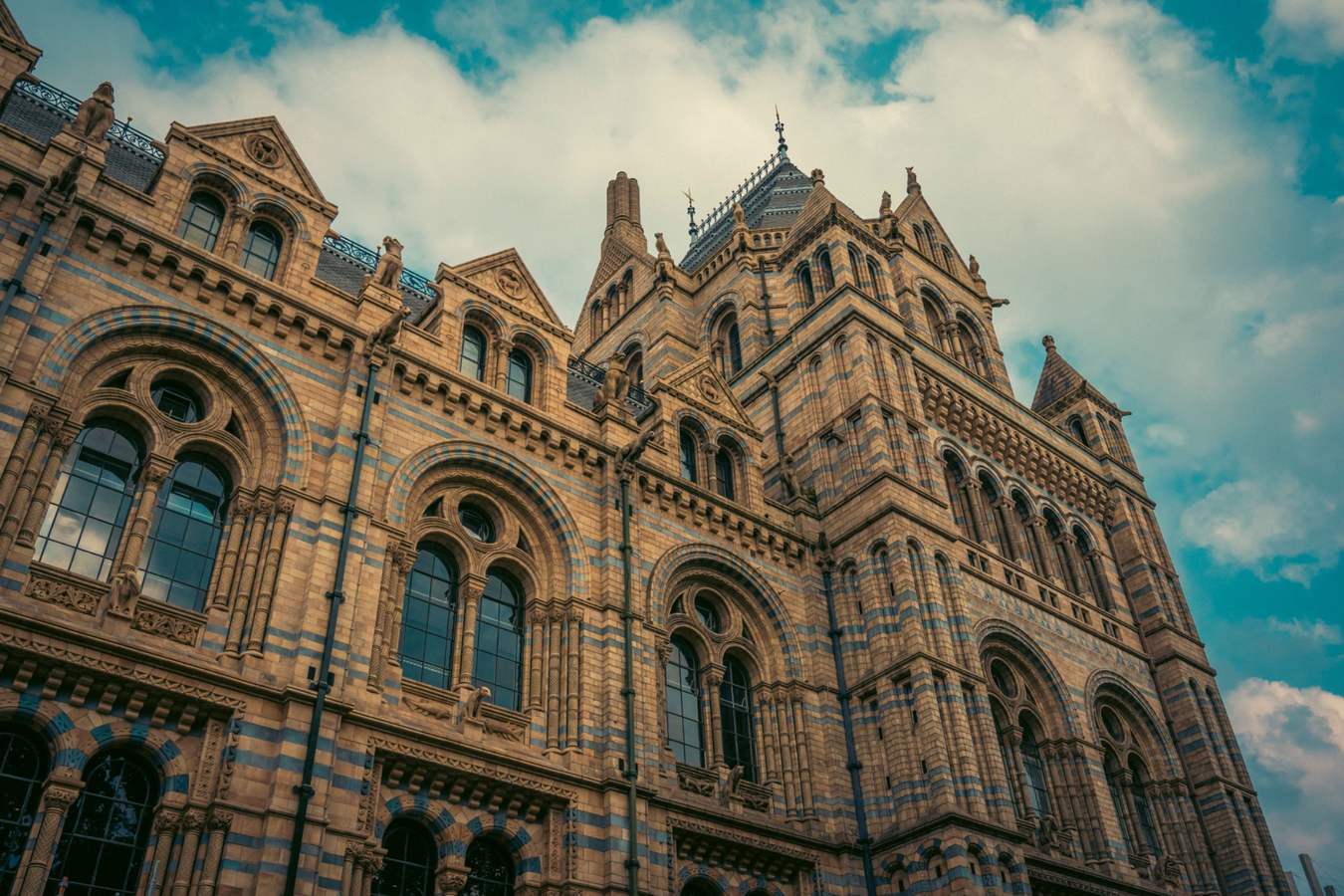
In the first quarter of 2026, according to the figures reported by Whyte, the UK hotel market recorded approximately USD 1.6 billion in transactions, with a second-quarter pipeline estimated at around USD 0.7 billion. Yet the headline volume only tells part of the story. The real message is that much of the recovery has been driven by major London single-asset transactions, including The Westminster London, W London and St Giles Hotel.
That is the central point.
Capital is not buying generic hospitality exposure. It is underwriting specific hotel assets with clear, financeable value-creation plans.
For the Italian market, the lesson is highly relevant. Over the next cycle, value will not accrue simply to those who own a hotel in a strong destination. It will accrue to owners and investors who can demonstrate how that hotel can generate returns, support debt, absorb capex and convert operational performance into capital value.
This is the shift from a real estate mindset to a capital markets mindset.
Executive insight
The major London single-asset deals are not just market news. They are capital allocation signals.
They show that hotels remain an attractive asset class, but only when location, scale, operations, brand, capex and returns are aligned.
They show that capital no longer accepts valuations based solely on scarcity, destination reputation or historical pricing.
They show that hotel operations are now central to real estate valuation.
They show that price is not the starting point of a transaction. It is the output of an underwriting model.
Above all, they show that the European hotel investment market is entering a more mature phase: less narrative, more numbers; less exuberance, more discipline; fewer undifferentiated portfolios, more asset-by-asset underwriting.
This approach is consistent with the themes explored in the Investimenti Alberghieri blog, where the hotel is analysed not merely as a property asset, but as an economic platform made up of real estate, operations, brand, contracts, capital and cash-flow generation.
The London deals: not just pricing, but strategic capital allocation
Patrick Whyte highlights three particularly significant transactions.
The Westminster London, affiliated with Curio Collection by Hilton, was acquired by RIU Hotels & Resorts for approximately GBP 290 million.
W London was reportedly acquired by Punta Na, the family office of the Andic family, owners of Mango, for approximately GBP 260 million.
St Giles Hotel was acquired by Criterion Capital, linked to Asif Aziz, for approximately GBP 220 million.
Three different transactions, but one common logic: capital is concentrating on urban, liquid, recognisable and operationally actionable assets.
These are not simple property acquisitions. They are control transactions over operating platforms.
A hotel of this scale is not acquired only for its price per square metre or its location. It is acquired because it can generate a combination of current yield, operational upside, capital protection and future exit liquidity.
That is what separates an investable hotel asset from a hotel merely offered for sale.
The 5C Method for hotel investment
To read this new phase correctly, Investimenti Alberghieri proposes a simple but rigorous investment framework: the 5C Method for Hotel Investment.
A hotel is truly investable when five dimensions are aligned.
Capital
What type of capital is entering the transaction? Equity, senior debt, potential mezzanine debt, capex funding, operating reserves and transaction costs must all be consistent with the risk profile of the asset.
Cash flow
Does the hotel generate sufficient cash? Revenue is not enough. The decisive metric is the ability to convert revenue into GOP, EBITDA and cash available to service debt and remunerate equity.
Capex
What investment is required? The real return is not measured before capex, but after the capex required to maintain, comply with or reposition the product.
Contract
What is the operating structure? Owner operation, business lease, management agreement, franchise or hybrid structures have very different implications for risk, control, bankability and value.
Control of operations
Who truly controls performance? Revenue management, distribution, payroll, F&B, online reputation, brand and management reporting determine whether potential becomes sustainable EBITDA.
When even one of these five dimensions is misaligned, value becomes fragile.
When all five are coherent, the hotel becomes bankable, manageable and potentially liquid.
Investment thesis: why capital now prefers single assets
During the years of abundant liquidity, portfolio transactions allowed investors to deploy large amounts of capital quickly. Portfolios offered scale, diversification and speed of deployment.
That logic is no longer automatic.
With higher interest rates, more cautious lenders, rising operating costs and greater geopolitical uncertainty, buying a portfolio often means acquiring excellent assets, average assets and problematic assets at the same time. Capital no longer wants to pay a premium for scale if that scale embeds unwanted risk.
A single-asset deal allows for more precise underwriting.
One market is analysed.
One profit and loss account is assessed.
One capex plan is measured.
One debt structure is negotiated.
One operating thesis is built.
One exit strategy is defined.
That precision has value.
In a more selective market, investors would rather pay a meaningful price for a fully understandable asset than acquire scale with opaque risks.
For Italy, the message is clear: the most liquid hotels will not necessarily be the most beautiful or iconic, but those that are best documented, best positioned and easiest to underwrite in terms of return.
Capital stack: the hotel transaction from the perspective of capital
A hotel is not acquired with one single form of capital. It is acquired through a financial structure.
A typical transaction may include equity, senior debt, potential mezzanine debt, capex funding, operating reserves and transaction costs. The investor’s return depends on how these elements interact.
A professional buyer does not simply ask: “How much does the hotel cost?”
The real questions are different.
How much equity must be invested?
How much debt can the asset support?
At what cost can financing be obtained?
What capex is required?
What normalised EBITDA does the hotel generate today?
What stabilised EBITDA can it generate after the business plan?
What DSCR can be maintained?
What net return on equity can be achieved?
At what yield or multiple can the asset be exited?
This is the difference between buying a property and structuring an investment.
The purchase price is only one variable. The real metric is the risk-adjusted return.
A hotel acquired at an apparently high price may be rational if it offers strong operational growth, sustainable leverage and credible exit value. Conversely, a hotel acquired at an apparent discount can destroy capital if it requires unforeseen capex, produces weak margins or cannot support its debt service.
From real estate value to operating value
In traditional real estate, value is often linked to rent stability, tenant quality, lease duration and the applicable cap rate.
In hospitality, the logic is more complex.
A hotel is not just a leased property. It is an operating business housed within a property.
That means value depends on dynamic variables:
ADR;
occupancy;
RevPAR;
TRevPAR;
GOPPAR;
EBITDA;
payroll;
energy costs;
distribution costs;
OTA dependency;
food and beverage margins;
meeting and events performance;
online reputation;
brand positioning;
ordinary and extraordinary capex.
Hotel valuation must therefore integrate two dimensions: real estate value and operating value.
A hotel in an excellent location but with inefficient operations may be worth less than the owner believes, but significantly more than its historical profit and loss account suggests if there is a clear opportunity for improvement.
This is where value is created for capital.
A professional investor does not buy the past. It buys normalised, financeable potential.
For readers interested in the Italian hotel investment market, the Investimenti Alberghieri blog offers further analysis on hotel valuation, hotel transactions, hospitality capital and investment strategies.
Returns: why EBITDA, capex and debt determine the price
The central metric in a hotel transaction is not revenue. It is the ability to convert revenue into cash available to remunerate capital, service debt and compensate risk.
A hotel may generate high revenue and still have limited value if margins are compressed. Conversely, a hotel with lower revenue but strong margins, controlled capex and stable demand may represent a more defensible investment.
The logic is as follows.
Room revenue and ancillary revenue.
Less operating costs.
Equals GOP.
Less undistributed costs, management fees, maintenance and overheads.
Equals EBITDA.
Less recurring capex and debt service.
Equals cash available to equity.
Capital focuses primarily on the final part of this chain.
This is why the maximum sustainable price is not determined only by real estate comparables, but by the asset’s ability to generate stable and improvable EBITDA.
If a hotel generates EUR 3 million of normalised EBITDA and the market applies an implied yield of 6.5%, the theoretical operating value is approximately EUR 46 million.
If, through better management, distribution, revenue management and cost control, EBITDA rises to EUR 3.8 million, at the same yield the theoretical value may increase to approximately EUR 58 million.
The difference is EUR 12 million.
This is not passive appreciation. It is operating value creation.
And it is exactly what sophisticated investors are looking for.
Economic model example: how management creates value
Imagine a 150-key urban hotel in a primary Italian destination.
Asking price: EUR 45 million.
Historical EBITDA: EUR 2.4 million.
Capex required over the first three years: EUR 6 million.
Potential senior debt: 50% loan-to-value.
Cost of debt: 5%.
Initial equity requirement, including capex and transaction costs: approximately EUR 28-30 million.
At first sight, the transaction may appear expensive. The initial yield on historical EBITDA is approximately 5.3% against the purchase price, and lower once capex is included.
However, the key point is not the historical yield. The key point is the stabilised yield.
If the business plan allows the investor to:
increase ADR through repositioning;
improve the customer mix;
reduce OTA dependency;
optimise payroll and energy costs;
relaunch F&B and meetings;
improve the GOP margin;
increase EBITDA from EUR 2.4 million to EUR 3.6 million within three years,
then the value of the asset changes.
Applying an exit yield of 6.25% to stabilised EBITDA of EUR 3.6 million produces a theoretical gross value of approximately EUR 57.6 million.
If residual debt is approximately EUR 22 million, the potential equity value exceeds EUR 35 million before exit costs.
In this scenario, the return is not generated by “buying well” in a static sense. It is generated by transforming the asset.
Capital enters through inefficiency, finances change and monetises stabilisation.
This is the core of modern hotel investment.
DSCR: the metric that separates a saleable asset from a bankable asset
Many owners value a hotel starting from their desired price. Banks and investors start from financial sustainability.
The DSCR, or debt service coverage ratio, measures the asset’s ability to cover debt service through operating cash flow.
If a hotel generates EUR 3 million of EBITDA and requires EUR 1.8 million per year for interest and principal repayment, the DSCR is 1.67. The coverage is relatively comfortable.
If debt service rises to EUR 2.6 million, the DSCR falls to 1.15. The transaction becomes fragile.
This point is decisive in the current market.
With higher interest rates, debt is no longer a neutral form of leverage. It is a variable that directly influences the maximum sustainable price.
When the cost of capital increases, asset value must be justified by stronger EBITDA growth, lower capex or a lower entry price.
This is where the bid-ask spread emerges: the seller looks at the potential value of the property, while the buyer looks at the net return after debt, capex and risk.
As long as these two perspectives remain far apart, many transactions will not close.
Capex: the true return is measured after the required investment
In the hotel sector, capex is not a technical detail. It is a structural component of return.
A hotel may appear profitable, but if it requires major investment in rooms, systems, façades, public areas, fire safety, energy efficiency or brand standards, the effective return for equity can be significantly reduced.
The right question is not: “How much EBITDA does the hotel produce today?”
The right question is: “How much EBITDA will it produce after the capex required to keep it competitive?”
There are at least three levels of capex:
maintenance capex, required to prevent product deterioration;
compliance capex, required for regulation, safety, systems or standards;
repositioning capex, designed to change rate level, brand or customer target.
The first protects value.
The second avoids risk.
The third can create value.
A serious investment committee distinguishes between these three levels and links each of them to an expected return. Capex should not be merely a cost. It should become productive capital.
If EUR 5 million of capex generates EUR 700,000 of incremental EBITDA, the operating return on that investment is 14% per year before the capitalisation effect on asset value.
Capitalised at a 6.5% yield, that incremental EBITDA can create approximately EUR 10.8 million of theoretical value.
This is the logic that makes a hotel repositioning opportunity attractive. But it only works if the business plan is credible.
Full-service hotels: why complexity can increase returns
According to Patrick Whyte’s analysis, approximately 80% of UK hotel transactions involved full-service hotels.
This is important because full-service hotels are complex assets, but precisely for that reason they offer more value-creation levers.
A limited-service hotel offers efficiency, predictability and lower operating intensity. A full-service hotel, by contrast, allows investors to intervene across multiple profit and cost centres:
rooms;
food and beverage;
meetings and events;
spa and wellness;
banqueting;
ancillary services;
retail spaces;
commercial partnerships;
brand experience;
direct distribution;
revenue management;
labour organisation.
Complexity increases risk, but it also increases upside.
An investor with operating capability can create value where a passive owner only sees costs. It can transform marginal departments into profit centres, reduce inefficiencies, rethink spaces and improve productivity per square metre and per available room.
In this sense, a full-service hotel is not merely a more expensive asset. It is a more actionable asset.
Value does not come from complexity itself. It comes from the ability to manage it.
Hotel operations: the real multiplier of value
Operations are where hospitality separates itself from pure real estate.
Two hotels in the same city, with the same number of rooms and a similar category, can have very different values. The difference is not only the property. It is the ability to generate margins.
A hotel can destroy value through:
underpriced rates;
excessive OTA dependency;
labour costs misaligned with revenue;
structurally loss-making F&B;
under-commercialised meeting spaces;
weak online reputation;
incoherent branding;
poor revenue culture;
deferred maintenance;
absence of management reporting.
The same hotel can create value through:
rate repositioning;
more profitable demand segmentation;
lower customer acquisition costs;
improved labour productivity;
GOP control;
targeted capex;
new branding;
more effective management agreements;
stronger operating governance.
This means that operations are not a post-acquisition issue. They are part of the price.
An experienced investor does not evaluate only the historical profit and loss account. It evaluates the normalised, stabilised and potential P&L.
This is where management capability becomes capital.
For those wishing to explore the relationship between operations, valuation, revenue, contracts and economic sustainability, the hotel guides by Roberto Necci provide a technical framework for reading the hotel as a business rather than only as a property asset.
The role of the brand: protection, rate premium and exit liquidity
In major London deals, the brand is not an accessory. It is part of the investment thesis.
A strong brand can generate three economic effects:
increase pricing power;
reduce perceived risk for lenders;
improve exit liquidity.
However, brand does not automatically create value. It must be consistent with the market, product, size, customer base and cost structure.
A poorly chosen rebranding can increase costs and capex without producing sufficient rate uplift. The right brand, by contrast, can change the risk-return profile of the asset.
The advisory question is not: “Which brand is the most prestigious?”
The question is: “Which brand maximises net return after fees, capex, standards, distribution and ADR potential?”
In some cases, an international brand is decisive. In others, a soft brand or advanced independent management may produce a better result.
Investors should not fall in love with the flag. They should model its economic impact.
London as a safe-haven market: liquidity has a price
London continues to attract capital because it offers what investors seek in uncertain phases: depth of demand, liquidity, global reputation, access to qualified operators and a higher probability of exit.
Liquidity has economic value.
An investor may accept a lower initial yield on a prime asset if it believes the exit risk is lower. In other words, it is not only buying cash flow. It is also buying the probability of being able to resell the asset in the future to a broad universe of buyers.
The same principle applies to Italy.
Rome, Milan, Venice, Florence, Lake Como, the Amalfi Coast, selected high-end resort destinations and certain art cities can attract international capital. But not every asset located in these destinations is automatically institutional.
Location opens the door.
The numbers determine whether capital enters.
Hotel Investment Readiness Score: when a hotel is ready for capital
To assess whether a hotel is truly ready for the investor market, it is useful to apply a second operating framework: the Hotel Investment Readiness Score.
An asset should be assessed across ten areas:
quality of destination;
asset size and liquidity;
documented historical performance;
normalised EBITDA;
operational growth potential;
identified and quantified capex;
clear contractual structure;
sustainable debt and compatible DSCR;
operating governance;
plausible exit strategy.
A hotel that does not pass this test may still be interesting, but it is not yet ready for professional capital.
A hotel that does pass it becomes more readable, more bankable and more competitive in a sale process or capital-raising process.
In a selective market, asset preparation is worth as much as asset location.
Italy: which hotels are truly investable
The Italian market has significant potential, but also a structural weakness: many hotel assets are not prepared for institutional capital.
Often, they lack:
normalised management data;
credible business plans;
detailed capex plans;
competitive benchmarking;
clear separation between ownership and operations;
analysis of sustainable debt;
complete planning and permitting documentation;
contractual clarity;
a defined exit view.
This does not mean Italian hotels are not attractive. On the contrary, it means there is substantial room for value creation.
The most attractive assets will be those combining at least five characteristics:
a destination with deep demand;
sufficient scale for professional operators;
potential EBITDA improvement;
sustainable and productive capex;
clear contractual structure;
potential for rebranding or repositioning;
pricing consistent with risk and return;
transparent and verifiable data;
plausible exit strategy.
A family-owned hotel in a strong destination, with traditional management, improvable margins and deferred capex, can be highly interesting if the price reflects the work required.
The same hotel can become unsaleable if the owner expects to be paid today for value that the buyer will have to create tomorrow.
That is the difference between potential value and transactable value.
Family-owned hotels: the major Italian theme
A significant share of the Italian hotel market is made up of family-owned properties, often in excellent locations but with operating models not always aligned with the expectations of professional capital.
These assets may present recurring issues:
non-industrial accounting;
family-related costs embedded in operations;
long-standing staff structures with limited flexibility;
suboptimal pricing;
limited digital culture;
weak direct distribution;
deferred capex;
weak brand positioning;
lack of departmental reporting.
For an investor, these issues are risks. But they can also be opportunities.
If the asset is well located and the price is coherent, capital can intervene in governance, operations, product and distribution to create value.
The point is that this transformation must be modelled before acquisition.
It is not enough to say: “The hotel has potential.” The investor must demonstrate how much incremental EBITDA can be generated, with what capex, over what timeframe and with what risk.
Business lease, management agreement or owner operation: structure matters
In the Italian market, value creation also depends on the operating structure.
A hotel may be owner-operated, leased as a going concern, managed under a hotel management agreement or placed within a hybrid structure.
Each model has different implications for value.
A business lease can provide greater predictability for the owner, but reduces participation in operating upside.
A management agreement allows the owner to retain exposure to performance, but requires greater control capability and acceptance of operating risk.
Owner operation can maximise value if the owner has the required operating expertise, but can destroy value if management discipline is lacking.
For the investor, the contractual structure affects:
return;
risk;
bankability;
control;
cash-flow volatility;
exit value.
A hotel with an unsustainable rent is not a solid investment. It is a restructuring waiting to happen.
A hotel with an ineffective management agreement is not an asset-light structure. It is poorly transferred operating risk.
The operating structure is not a legal detail. It is an economic component of value.
The InvestHotel blog focuses precisely on these themes, exploring how hotels become investable products through transactions, advisory, operations, value creation, contracts, capital and economic sustainability.
Hotel valuation: value is not a number, it is a scenario
A professional hotel valuation should not merely indicate a point value. It should build scenarios.
Base case: normalised performance and minimum capex.
Upside case: operating improvement, rebranding and EBITDA growth.
Downside case: cost pressure, weaker demand and higher-than-expected capex.
Exit case: terminal value based on stabilised EBITDA and market yield.
This logic is essential because a hotel is an operating asset. Value changes when operations, market conditions, costs, brand and capital structure change.
A mature approach should distinguish between:
as-is value;
after-capex value;
stabilised value;
value for an owner-operator;
value for a financial investor;
value for a strategic operator.
The same hotel may have different values for different buyers.
A hotel operator may pay more if it sees operational synergies. A fund may be more disciplined if it focuses on IRR and exit. A family office may accept a longer time horizon. A hotel group may value strategic location more than immediate yield.
Value is not universal. It depends on the capital looking at the asset.
Bid-ask spread: why many hotels do not sell
The European hotel market is not constrained by an absolute lack of capital. It is constrained by the gap between sellers’ expectations and buyers’ discipline.
The seller often thinks in terms of:
prime location;
product scarcity;
historic value;
tourism potential;
past market pricing;
emotional or family value.
The professional buyer thinks in terms of:
normalised EBITDA;
required capex;
cost of debt;
DSCR;
operating risk;
exit yield;
expected IRR;
downside protection.
This gap creates the bid-ask spread.
The solution is not simply to lower prices. The solution is to make the asset readable.
A hotel with transparent data, a credible business plan, a clear capex profile and a verifiable operating scenario can reduce the discount required by the buyer.
Uncertainty has a cost.
Transparency creates value.
Advisory: turning a hotel into an investment committee product
In this new market phase, the role of the advisor is not simply to find a buyer. It is to build an investment thesis.
A professional process should include:
destination analysis;
competitive benchmarking;
historical performance review;
P&L normalisation;
GOP and EBITDA analysis;
capex assessment;
sustainable debt analysis;
DSCR analysis;
three-, five- or seven-year business plan;
as-is and stabilised valuation;
analysis of the optimal operating structure;
buyer universe identification;
investment memorandum preparation;
competitive process management.
This is what makes a hotel understandable for capital.
A professional buyer does not buy a brochure. It buys a verifiable financial thesis.
Implications for Italian hotel owners
For Italian hotel owners, the lesson from the London deals is clear.
Those wishing to sell, bring in capital or attract a partner must prepare the asset before going to market.
This means:
cleaning the data;
normalising costs;
separating family and operating components;
documenting capex;
defining an industrial plan;
clarifying licences and planning status;
analysing rent sustainability;
building an operating scenario;
demonstrating EBITDA potential;
accepting that value depends on return.
The market no longer pays generically for the history of a hotel. It pays for its future ability to generate cash.
Implications for investors
For investors, the message is equally clear.
The best opportunities will not always be the most visible assets. They will be the assets where the price does not yet reflect operational potential.
In Italy, there are many interesting situations:
under-managed hotels in strong destinations;
family-owned properties with improvable margins;
assets with deferred capex but excellent locations;
independent hotels suitable for soft branding;
properties with potential for hotel conversion;
business leases to be restructured;
operators under pressure but with valid assets;
non-optimised family-owned portfolios.
But every opportunity must be read with discipline.
Capital should not buy stories. It should buy future cash flows at the right price.
The new grammar of hotel investment
The single-asset London deals described by Patrick Whyte reveal the new grammar of the market.
Location without return is not enough.
EBITDA without a capex plan is not enough.
Brand without cost control is not enough.
Price without DSCR is not enough.
Potential without a business plan is not enough.
Management without reporting is not enough.
Capital is looking for assets where every element is coherent: property, market, product, management, contracts, debt, capex, return and exit.
This is the new discipline of hotel investment.
Conclusion: capital does not buy hotels, it buys governable returns
The hotel market is not frozen. It is more selective.
London shows that capital is still willing to pay significant prices for high-quality hotels. But it no longer pays for just any narrative. It pays for assets capable of demonstrating returns, liquidity, operational control and value protection.
For Italy, this phase represents a major opportunity.
Many hotels have unexpressed potential. Many destinations have strong demand. Many assets can be repositioned. Many operating models can be improved. Many properties can become more efficient return-generating platforms.
But potential must be translated into numbers.
And numbers must be translated into a capital thesis.
The future of hotel investment will not reward those who merely own hotels. It will reward those who can make hotels investable, bankable and manageable according to an industrial logic.
In a more mature market, value does not arise from asset ownership alone. It arises from the ability to convert operational inefficiencies into sustainable EBITDA that can be underwritten, financed and capitalised into value.
That is the difference between a hotel for sale and a hotel investment.
To assess a hotel transaction, structure an investment thesis or analyse the economic and financial sustainability of a hotel asset, contact Roberto Necci r.necci@robertonecci.it