From the story of an iconic acquisition to the reality of an increasingly complex transaction
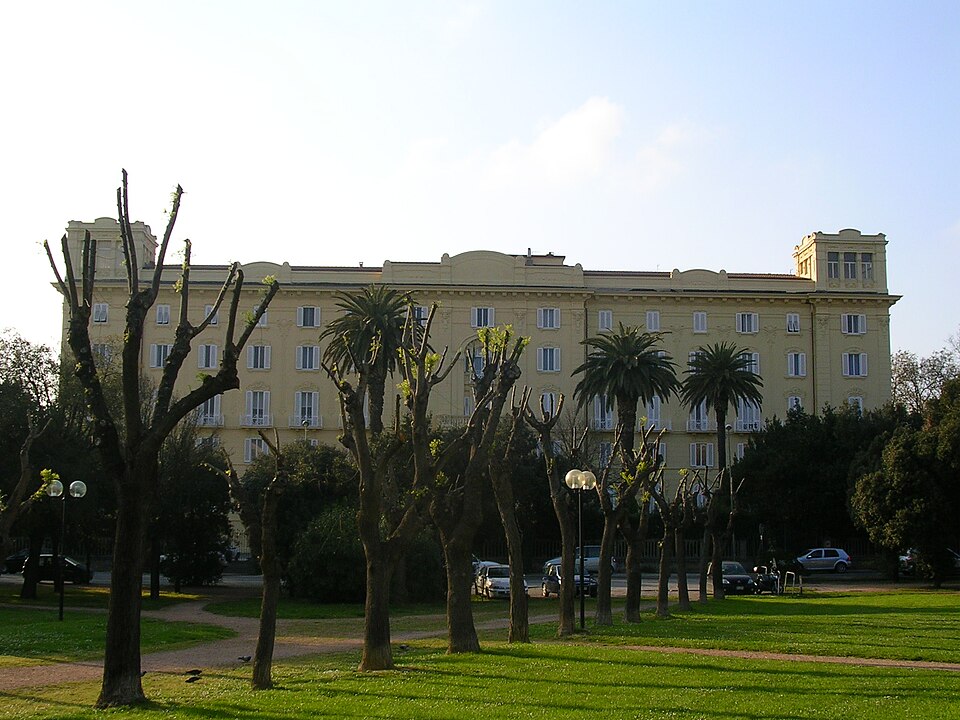
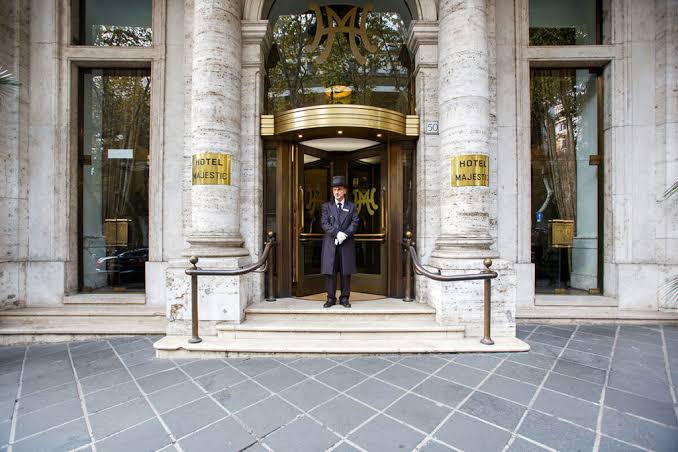
The former Hotel Majestic in Rome should not be viewed simply as the repositioning of a historic five-star hotel on Via Veneto. More accurately, it should be seen as the gradual transformation of a real estate thesis into a genuinely complex hospitality finance transaction. This is precisely the point the market too often overlooks: acquiring an iconic asset is not enough to create value. What matters is the ability to align capital, brand, product, execution timing and expected returns. It is on this ground that the Majestic case becomes truly compelling.
In June 2022, Boscalt Hospitality, a strategy linked to Edmond de Rothschild Private Equity, announced the acquisition of the historic Hotel Majestic, an 1889 landmark on Via Veneto, with a clear stated thesis: acquire a trophy asset, reduce the room count from the original c.100 keys, redesign the layout and reposition the property within the ultra-luxury lifestyle segment. Yet even in the original announcement there was one element that, from an advisory standpoint, mattered more than many of the celebratory headlines: Boscalt stated that it was already working with a leading international operator for the future repositioning of the asset. In other words, at the time of acquisition the PropCo component appeared defined, while the OpCo component was still taking shape.
That distinction is critical. A high-end hotel asset does not become bankable simply because it is rare, centrally located or historically prestigious. It becomes bankable when the real estate thesis and the operating thesis converge credibly: who will manage it, under which brand, with what pricing power, with what service standards, and with what ability to turn capex into sustainable ADR and GOP. In the Majestic case, the sequence of public developments suggests that this convergence was not fully locked in at the outset, but instead emerged through successive stages. This is not a nuance. It is the core of the transaction.
The second major milestone came in October 2022, when SH Hotels & Resorts, together with Boscalt, announced Baccarat Hotel Rome. At that stage, the project was presented as an 83-room-and-suite hotel, with an opening scheduled for 2025. The arrival of the Baccarat brand immediately altered the economic nature of the deal: this was no longer a generic luxury repositioning, but a wager on ultra-luxury, brand-led hospitality, in which the intangible value of the brand becomes a fundamental driver of pricing and future asset appreciation. That same operating platform now trades under the Starwood Hotels name, following the official rebranding of SH Hotels & Resorts in March 2025.
It was in 2023, however, that an even more meaningful signal emerged: the project had already been redefined. In the May 2023 announcement with Pierre-Yves Rochon, Baccarat Hotel Rome was no longer described as an 83-key hotel, but as an 87-room-and-suite property, while the hotel itself was said to be in the early stages of renovation. This is not a secondary detail. When, in an ultra-prime hospitality transaction, the key count, product design and expected timeline all shift, it means that the underwriting, the operating brief and the value-creation framework are still searching for their final equilibrium.
What makes the picture even more interesting is that the Majestic was never an “equity-only” story. Market sources reported that, as early as autumn 2022, Boscalt Hospitality had issued a €48 million bond to partially finance the acquisition and repositioning of the hotel, with EY advising Boscalt and Majestic Investments on the legal and tax aspects of the issuance. This step, often overlooked in more superficial readings, matters because it confirms that the financial sophistication of the deal did not begin in 2025; it simply became more visible in 2025.
The real market turning point came in February 2025, when Invel Real Estate announced €111.2 million of financing to support the transformation of the former Hotel Majestic into Baccarat Hotel Rome. At that point, the project was described as an 87-key ultra-luxury hotel featuring a restaurant on Via Veneto, a Grand Salon and a rooftop bar and lounge, with the reopening pushed back to the end of 2026. This is where the transaction definitively ceased to be describable as a straightforward renovation story and revealed its true nature: a sizeable, multi-layered capital structure typical of private equity strategies built around urban trophy assets.
The one figure that more than any other demands a mature reading of this transaction is this: the Invel financing alone equates to approximately €1.28 million per key, based on 87 rooms. That is an extraordinary number in itself, and it must be interpreted for what it actually represents: not the total project cost, which is necessarily higher given that the equity component has not been publicly disclosed in detail, but clear evidence that the cost base of the transaction sits at an exceptionally elevated level. At this end of the market, it is no longer enough simply to create a beautiful hotel. One must deliver ADR levels, international desirability and terminal value consistent with an unusually high capital intensity.
This is where the analytical assessment of the Majestic case changes. The real question is not whether Baccarat Hotel Rome can become an iconic hotel. The real question is whether it can become a hotel that is economically consistent with the capital invested. From an advisory perspective, the principal risk is not aesthetic but financial: when the cost base rises to this extent, so too does the risk of overcapitalisation—that is, a total investment so elevated that it requires highly selective operating performance and exit values in order to justify the equity return. This is not a criticism of the project. It is its industrial reality.
The other issue the market should examine more closely is time slippage. In 2022, the target opening was 2025; by 2025, the reopening had been pushed back to the end of 2026. In assets of this type, time is not an operational footnote but a decisive financial variable: the longer design, permitting, construction and pre-opening phases extend, the more risk-adjusted returns are compressed, the more the opportunity cost of capital increases, and the more the entire investment thesis becomes dependent on an exit at highly ambitious values. In other words, with trophy assets, delay is never just delay: it is a potential erosion of the equity story.
That is precisely why the arrival of Baccarat and the operator should not be interpreted as a simple branding upgrade. It should be understood as a condition of economic sustainability for the transaction itself. The more capital becomes tied up in the asset, the more the project needs a brand capable of legitimising very high ADRs, generating international desirability and supporting a long-term narrative that also holds up in refinancing or exit scenarios. In this case, the brand is not a commercial accessory; it is an element of bankability.
The Roman context helps explain why institutional investors and opportunistic capital continue to pursue transactions of this kind. In 2024, Rome recorded the highest hotel investment volume in Italy, at €465 million, while the five-star segment accounted for 45% of national volumes; according to HVS, the city’s development pipeline is also increasingly concentrated in the luxury segment, with approximately 1,500 rooms expected over the coming years. This means that the Majestic/Baccarat case is not an isolated exception: it is part of an increasingly intense competition among capital sources seeking scarcity, global brands and symbolic assets in prime locations.
Yet precisely because Rome’s luxury hotel market is becoming more crowded, the execution threshold is rising. Competitive advantage will not stem solely from the Majestic’s history or from the evocative power of Via Veneto, but from the ability to translate those elements into a genuinely superior proposition and into performance capable of standing up against a broader and increasingly international luxury supply landscape. As the segment expands, the brand helps; but it does not replace operational discipline.
From this perspective, the Majestic is no longer the “same transaction” that was presented in 2022. It has become something else: a new financial structure, a new project scope, a new value-creation thesis and, above all, a new risk-return equation. This is not a sign of failure; it is a reflection of how ultra-high-end hotel transactions actually work, where the gap between initial announcement and final execution is often far wider than the market likes to admit.
The lesson for the Italian market is clear. Iconic assets are not shortcuts to value: they are complex platforms requiring four difficult conditions to be held together. First, a clear separation between real estate logic and operating logic. Second, a brand genuinely aligned with the level of capital invested. Third, a financial structure capable of absorbing delays, redesigns and business plan revisions. Fourth, specialist advisory expertise able to correct course without undermining the transaction’s credibility with banks, investors and the market. More than an isolated case, the Majestic is a living manual of all this.
Baccarat Hotel Rome may well become one of the new symbols of Roman luxury. But the real lesson of this case lies elsewhere, and it deserves to be stated plainly: in high-end hospitality real estate, value is not created when an extraordinary building is acquired; value is created when one proves, over time, the ability to finance it, rethink it, brand it and bring it to market without losing the project’s economic coherence. Everything else is narrative.
Roberto Necci
Visit the website:
https://www.hotelmanagementgroup.it
Need assistance with hotel deals in Italy?
r.necci@robertonecci.it