The first sign of distress in a hotel does not always appear in the financial statements. Quite often, it appears in operations first.
That is the most useful way to read the case of Hotel Perla in Cesenatico, a three-star property located at Via Cavour 42 in the Ponente area.
Under Municipal Order no. 340 dated 22 September 2026, the Municipality of Cesenatico ordered the immediate suspension of the hotel’s accommodation activity following inspections carried out at the property as part of an inter-agency control operation.
According to reports describing the order, the inspections identified a number of hygiene, maintenance and technical issues. Following a request to remedy the deficiencies and the failure to complete the required actions within the prescribed timeframe, the accommodation activity was suspended.
The case is particularly relevant for InvestimentiAlberghieri.it because it pushes the analysis of hotel distress beyond the traditional categories of NPLs, UTPs, restructurings and judicial liquidations.
A hotel crisis can begin much earlier.
It can begin when the asset loses its ability to generate revenue.
And that is precisely the type of signal investors should try to identify before the financial distress becomes explicit.
The Hotel Perla case
Hotel Perla is located at Via Camillo Benso Conte di Cavour 42 in Cesenatico, a short distance from the seafront.
Its official website continues to present the property as offering:
-
guestrooms;
-
restaurant;
-
cocktail bar;
-
parking;
-
shuttle service;
-
pet-friendly facilities.
The website’s privacy policy identifies F.J.B. & Co. S.r.l. as the data controller.
This establishes a commercial connection between the company and the website, but it does not, by itself, clarify:
-
ownership of the real estate;
-
ownership of the hotel business;
-
the nature of any management agreement;
-
the structure of any lease arrangements.
And it is precisely this separation between real estate, operating business and hotel operator that makes the case interesting.
Operational distress: the crisis before the crisis
In hospitality investment, the discussion usually revolves around:
NPLs.
UTPs.
Restructuring proceedings.
Judicial liquidations.
But there is an earlier stage that may be even more important for investors looking for opportunities before they reach the public market.
That stage is operational distress.
It occurs when issues affecting the property or its management progressively undermine the hotel’s ability to generate revenue.
The causes may include:
-
underinvestment in maintenance;
-
technical or plant-related deficiencies;
-
licensing or regulatory issues;
-
safety concerns;
-
hygiene shortcomings;
-
fire-safety problems;
-
product deterioration;
-
reputational damage;
-
disputes;
-
deferred CAPEX.
The economic outcome can eventually become identical to that of a financial crisis:
rooms that cannot be sold and revenue that stops.
When an operational problem becomes a financial problem
An administrative suspension creates a very simple economic dynamic.
The hotel may still have to bear:
-
rent;
-
payroll;
-
utilities;
-
maintenance;
-
insurance;
-
supplier costs;
-
operating systems;
-
debt service;
-
remediation costs.
At the same time, its ability to generate revenue may fall sharply or disappear altogether.
The equation becomes:
Fixed Costs + Remediation CAPEX – Revenue = Liquidity Burn
That is the point at which a technical or administrative problem can begin to evolve into a financial one.
A bank default is not required.
It is enough for the asset to stop producing cash flow.
The CAPEX that does not create value
In hospitality, CAPEX is usually discussed as a value-creation tool.
New guestrooms.
Design upgrades.
Spa facilities.
Rooftops.
Repositioning.
But there is another form of CAPEX that is far less attractive:
Remediation CAPEX
This is capital required not to improve the positioning of the hotel, but simply to restore the conditions necessary for it to operate.
It may relate to:
-
MEP systems;
-
water infiltration;
-
bathrooms;
-
windows and fixtures;
-
safety systems;
-
fire compliance;
-
hygiene standards;
-
ventilation;
-
extraordinary maintenance.
The distinction is critical.
Value-add CAPEX
is intended to increase ADR, demand and EBITDA.
Remediation CAPEX
is first and foremost required to restore the right and ability to operate.
For an investor, remediation CAPEX must effectively be deducted from value before repositioning is even considered.
What is a temporarily non-operational hotel worth?
This is the most interesting question in the case.
Hotels are normally valued on their prospective ability to generate EBITDA.
When operations are interrupted, value does not automatically disappear.
Risk, however, increases materially.
An investor should therefore rebuild at least five variables.
Normalised EBITDA
How much EBITDA could the hotel generate once normal operating conditions are restored?
Remediation CAPEX
How much capital is required to resolve the issues preventing or limiting operations?
Repositioning CAPEX
How much additional capital is required to make the product commercially competitive again?
Downtime
How long will it take before the property returns to full operation?
Working Capital
How much liquidity will be required during the restart phase?
The valuation framework therefore becomes:
Stabilised Value
– Remediation CAPEX
– Repositioning CAPEX
– Downtime Losses
– Risk Discount
= Current Investment Value
That is the logic that should drive the valuation.
Not historical turnover alone.
A live website does not mean the hotel is operating
Hotel Perla’s website remains accessible online.
That point requires clarification.
Digital visibility is not evidence of actual operating status.
OTAs, proprietary websites, Google listings and other distribution channels may continue to display a hotel even after an administrative suspension.
An investor therefore needs to verify:
-
licences;
-
SCIA filings;
-
municipal orders;
-
certificates;
-
fire-safety compliance;
-
the actual operating status of the property.
In distressed due diligence, administrative reality takes precedence over digital visibility.
Owner, operator and hotel business may all be different entities
Historic documentation relating to the property at Via Cavour 42 indicates that, at different points in time, lease and sublease arrangements existed in connection with the hotel use of the property.
This does not mean that those contractual arrangements remain in force today.
But it illustrates an important principle.
A distressed hotel may involve, simultaneously:
PropCo
the owner of the real estate;
OpCo
the hotel operator;
Hotel Business
the entity holding licences, employees and operating contracts;
Brand or Commercial Entity
the entity facing the market.
These may all be different parties.
At Investhotel.it, it is often precisely within the separation of these layers that the most interesting opportunities emerge.
The real hotel distress chain
A hotel crisis can develop along a relatively recognisable path:
1. Reduced CAPEX
↓
2. Product deterioration
↓
3. Declining guest experience
↓
4. Pressure on reputation and revenue
↓
5. Technical or regulatory problems
↓
6. Reduced or suspended operations
↓
7. Liquidity burn
↓
8. Financial stress
↓
9. Restructuring, sale or insolvency proceedings
For investors looking for distressed opportunities, stage 9 is not necessarily the most interesting point.
Stages 5 and 6 often are.
That is where the problem becomes visible before the asset reaches the judicial market.
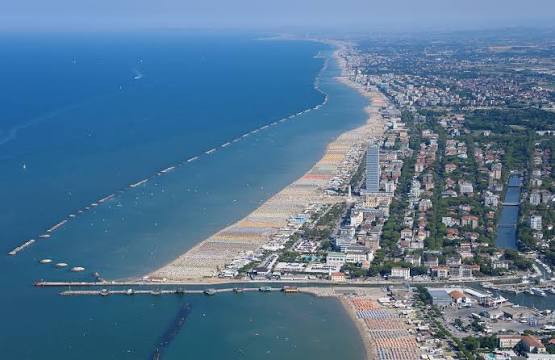
Cesenatico remains a strong destination. That is not enough
Cesenatico is an established destination on the Adriatic Riviera.
Tourist demand exists.
But a strong destination does not automatically guarantee the performance of an individual hotel.
A property may sit in a dynamic market and still lose competitiveness because of:
-
product deterioration;
-
underinvestment in maintenance;
-
inefficient operations;
-
weak reputation;
-
ineffective distribution;
-
unsustainable costs.
At Robertonecci.it, the underlying principle is straightforward:
the destination may generate demand, but the hotel must still be capable of converting that demand into revenue, GOP and EBITDA.
The opportunity appears before the auction
The Hotel Perla case also contains an important lesson for hotel origination.
If investors only look for opportunities once they appear on judicial-sale platforms, they are often arriving too late.
The earlier warning signs include:
-
suspensions;
-
disputes;
-
temporary closures;
-
operational deterioration;
-
deferred CAPEX;
-
problematic lease relationships;
-
licensing issues;
-
repeated management changes;
-
shareholder tensions;
-
debt restructurings.
These signals may precede:
-
lease renegotiations;
-
operator replacement;
-
sale of the business;
-
sale of the real estate;
-
lender intervention;
-
formal insolvency proceedings.
There is no certainty that any of these developments will occur in the Hotel Perla case.
But that is exactly why the situation belongs on an Early Warning Radar.
Early warning does not mean insolvency
As of the date of this analysis, there is no documented insolvency proceeding involving F.J.B. & Co. S.r.l. in connection with Hotel Perla.
It would therefore be incorrect to describe the property as:
-
an NPL;
-
a UTP;
-
insolvent;
-
in liquidation.
The objective fact is different:
the accommodation activity has been suspended by administrative order.
That is sufficient to classify the situation as:
Operational Distress / Early Warning
but not to draw conclusions about the solvency of the company.
This distinction is equally important in the advisory work carried out by Hotel Management Group.
Our view
The Hotel Perla case shows why hotel distress should be analysed before it appears in deteriorating financial statements and long before the asset reaches an auction process.
A hotel may still have:
-
an active website;
-
rooms listed on OTAs;
-
a visible brand;
-
underlying tourist demand;
-
recognition within the destination;
and, at the same time, have temporarily lost the ability to operate.
At that point, three questions matter most:
How much will it cost to restore full operations?
How long will it take?
How much EBITDA can the property generate once normalised?
Those three answers determine value.
Not the simple distinction between “open” and “closed”.
In one sentence
The first sign of distress in a hotel does not always appear in the balance sheet: often, it appears in operations first.
And when a hotel can no longer convert rooms into revenue, distress has already begun — even if the bank has not yet classified the exposure as UTP and no court has opened formal proceedings.
Analysis and advisory
InvestimentiAlberghieri.it, together with Investhotel.it, Hotel Management Group and Robertonecci.it, monitors distressed hotel assets, operational stress, special situations, turnaround opportunities and value-add investments through financial analysis, due diligence, business planning and repositioning strategies.
For confidential analysis of hotel assets, distressed situations and investment opportunities:
info@investimentialberghieri.it