Hotel San Marco S.r.l., a company registered at Via Lido 57 in Alghero, is subject to judicial liquidation proceedings opened in September 2026. At the same address, the namesake hotel continues to maintain an active commercial presence online. For investors assessing hospitality special situations, the relevant question is therefore not to assume that the hotel itself is being sold, but to understand how the real estate, hotel operating business, management, movable assets and contractual relationships are currently structured.
In distressed hospitality, the most interesting opportunities do not necessarily begin with an auction.
They often begin much earlier.
They begin when a company enters insolvency proceedings while a hospitality business associated with the same name or address continues to present itself to the market.
That is the situation currently emerging in Alghero.
According to publicly available information, Hotel San Marco S.r.l., registered at Via Lido 57, is subject to Judicial Liquidation proceeding no. 24/2026 before the Court of Sassari, opened in September 2026, with the subsequent examination of creditors’ claims forming part of the proceedings.
This is a documented fact.
It does not, however, by itself support the conclusion that:
-
the entire Hotel San Marco is being sold;
-
the real estate is wholly owned by the company in judicial liquidation;
-
the current hotel operation is carried out by that same company;
-
the entire going concern falls within the liquidation perimeter;
-
FF&E, licences, brand and contracts belong to the company in liquidation.
These distinctions are fundamental.
Distress Snapshot
| Item | Current Position |
|---|---|
| Commercial property | Hotel San Marco |
| Location | Alghero |
| Address | Via Lido 57 |
| Company in proceedings | Hotel San Marco S.r.l. |
| Procedure | Judicial liquidation |
| Court | Sassari |
| Opening | September 2026 |
| Hotel commercial presence | Observable online |
| Inventory indicated by commercial sources | Approx. 125 rooms |
| Asset perimeter | To be verified |
| Real estate ownership | To be established through documentary evidence |
| Current operating entity | To be reconstructed |
| Core issue | Separation between company, asset and going concern |
A Company in Judicial Liquidation Does Not Automatically Mean a Hotel Is for Sale
This is the first point that needs to be established clearly.
The proceedings concern Hotel San Marco S.r.l.
The judicial liquidation of a hotel company is a material signal.
However, without documentation identifying the precise asset perimeter, it would be incorrect to convert that information into an assumption that the entire hotel complex is being sold.
Hospitality assets may involve several separate parties:
-
real estate owner;
-
owner of the hotel business;
-
operator;
-
business lessee;
-
holder of operating licences;
-
owner of FF&E;
-
commercial company;
-
brand or distribution platform.
The first question for an investor should therefore not be:
“How much does the hotel cost?”
but:
“Which components of the hotel actually belong to the company in judicial liquidation?”
The Hotel Maintains a Commercial Presence
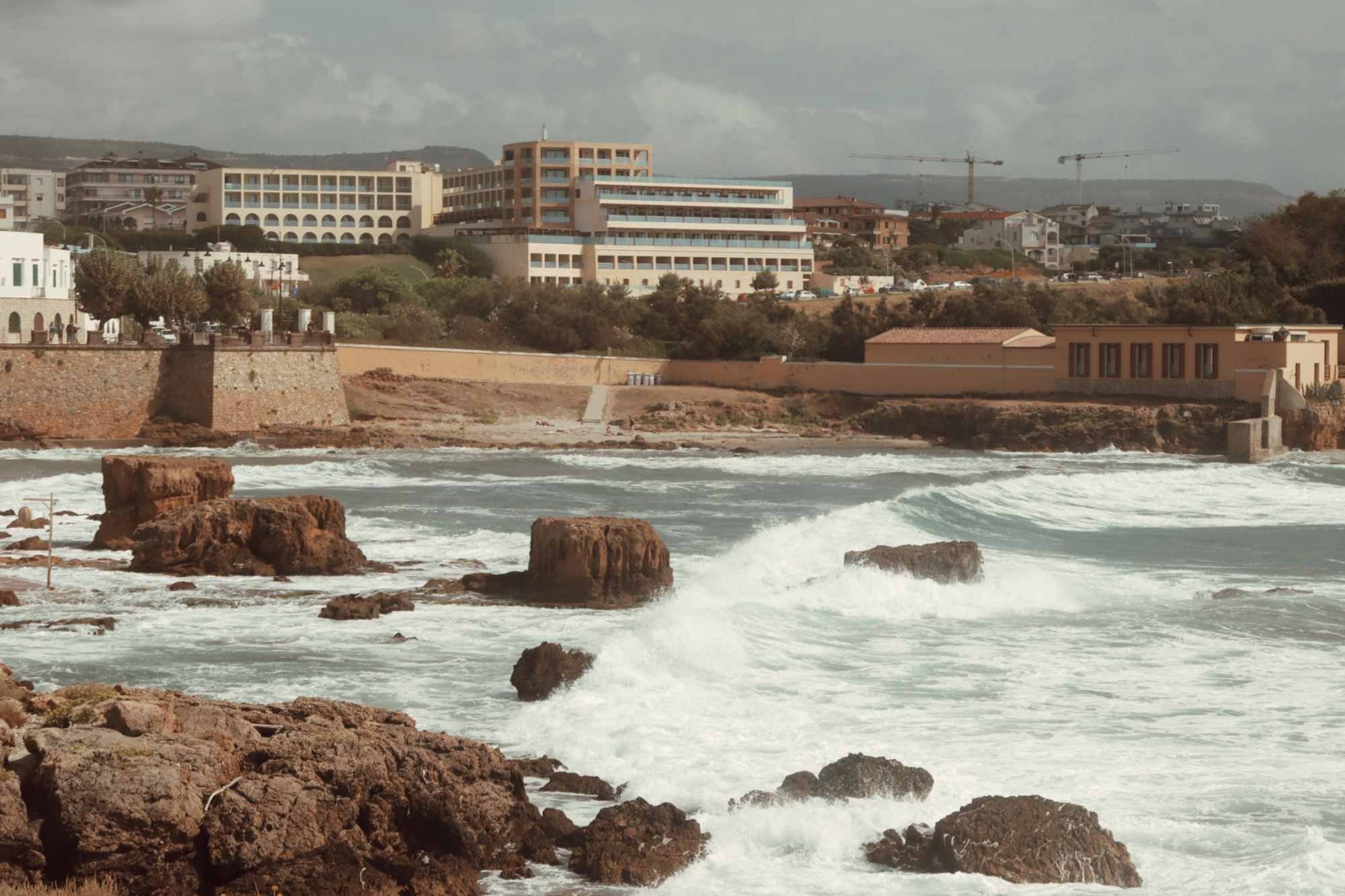
Alongside the corporate proceedings, Hotel San Marco continues to maintain an online presence through its commercial channels and through booking and tourism platforms.
The property is marketed as a seafront hotel offering:
-
guestrooms;
-
apartments;
-
swimming pool;
-
food and beverage;
-
beach-related services;
-
a leisure-oriented product.
Commercial sources indicate an inventory of approximately 125 rooms.
This suggests continuity of the hotel’s presence in the market.
It does not establish:
-
that the business is operated by the company in judicial liquidation;
-
that the company in liquidation owns the real estate;
-
that the property falls within the insolvency estate;
-
that current bookings belong to the company in proceedings;
-
that the hotel business is intended to be sold.
It is precisely the gap between these elements that makes the case relevant.
T.H.M. S.r.l. and ST Hospitality: A Second Perimeter to Analyse
The hotel’s commercial website contains references to T.H.M. S.r.l. in connection with data processing.
Hotel San Marco also appears within the commercial offering of ST Hospitality.
These elements document the existence of a separate commercial perimeter.
They do not, however, by themselves establish that T.H.M. S.r.l. or ST Hospitality own or hold:
-
the real estate;
-
the hotel business;
-
FF&E;
-
a hotel management agreement;
-
a business lease;
-
any other specific rights over the property.
The professionally appropriate question is therefore:
what legal and economic relationship exists between Hotel San Marco S.r.l., T.H.M. S.r.l., ST Hospitality and the current hotel operation?
Until that relationship is reconstructed through corporate records, agreements and other documentary evidence, any further conclusion would be premature.
Reconstructing the Structure: PropCo, OpCo and Management
In professional hotel transactions, at least three distinct layers should be considered.
PropCo
The company that owns the real estate.
OpCo
The company that operates the hotel business.
Management Company
The entity responsible for the operational management of the hotel, potentially on behalf of the owner or OpCo.
Further layers may include:
-
FF&E owner;
-
brand owner;
-
distribution company;
-
service concessionaire;
-
food and beverage operator;
-
entities involved in beach-related services.
When one of these parties enters financial distress, the entire hotel ecosystem does not necessarily become distressed at the same time.
However, the complexity of the investment case increases materially.
The Seven Priority Due Diligence Questions
1. Real Estate Ownership
Ownership should be reconstructed through title, cadastral and mortgage records, including:
-
ownership;
-
mortgages;
-
encumbrances;
-
possible co-ownership;
-
appurtenant areas;
-
external spaces;
-
any relationships involving concessions.
The fact that the company’s registered office coincides with the hotel address does not constitute evidence of property ownership.
2. Hotel Business Perimeter
It must be established whether, and to what extent, the company in judicial liquidation owns or controls:
-
the operating business;
-
goodwill;
-
employees;
-
contracts;
-
licences;
-
reservations;
-
commercial relationships.
3. Legal Basis of the Current Operator
The legal relationship supporting the hotel’s current commercial presence needs to be identified.
Possible structures could include, purely by way of example:
-
business lease;
-
property lease;
-
management agreement;
-
commercial agreement;
-
another contractual arrangement.
The nature of this relationship must be verified through documentation.
4. FF&E
Furniture, operating equipment, kitchens, movable systems and hotel operating assets may have a different owner from the real estate.
Their inclusion in any future competitive sale process should not be assumed.
5. Licences and Authorisations
The relevant holders of the following should be identified:
-
hotel operating authorisation;
-
CIN registration;
-
food and beverage licences;
-
any concessions or permits linked to ancillary services;
-
swimming pool authorisations;
-
other operating permits.
6. Relationship with the Commercial Platform
The presence of the hotel within ST Hospitality requires an assessment of the nature, duration and scope of that relationship.
7. Strategy of the Judicial Liquidation
The decisive issue will be to determine which assets and rights actually fall within the liquidation estate.
These could potentially include:
-
shareholdings;
-
business assets;
-
individual assets;
-
receivables;
-
contractual rights;
-
real estate;
-
other rights.
It would be inappropriate to anticipate the answer without supporting documentation.
Why Commercial Continuity Matters
The potentially most relevant feature of the case is that the hotel product retains a commercial presence in the market.
In hospitality, this can carry significant value.
A hotel that preserves:
-
distribution;
-
employees;
-
bookings;
-
reputation;
-
tour operator relationships;
-
customer base;
-
commercial systems;
may retain a materially higher going-concern value than the same physical asset after a complete shutdown.
However, that value must still be attributed to the correct legal and economic entity.
Operational continuity does not automatically form part of the assets of the company in judicial liquidation.
Alghero as a Driver of the Investment Case
Location strengthens the strategic relevance of the dossier.
Alghero is an established leisure destination, and Hotel San Marco is commercially presented as a seafront property combining:
-
hotel accommodation;
-
apartments;
-
swimming pool;
-
food and beverage;
-
a beach-related leisure component.
This configuration may potentially attract interest from:
-
hotel operators;
-
leisure hotel groups;
-
family offices;
-
value-add investors;
-
real estate investors;
-
hospitality platforms.
But a strong location does not automatically turn a distressed corporate situation into an attractive investment.
Location is a demand driver.
It is not a substitute for due diligence.
Investment Thesis
The potential investment thesis should not be:
“the company is in judicial liquidation, therefore the hotel will become available at a discount.”
That conclusion is not currently supported by the available evidence.
The more appropriate thesis is:
“a hotel company is subject to judicial liquidation while a property sharing the same name and address continues to maintain a commercial presence; the key task is to identify which value components fall within the judicial liquidation estate and which sit outside it.”
That is where a special situation may emerge.
Not necessarily from an auction.
But from the ability to reconstruct the perimeter before the wider market does.
Potential Upside
Factors that warrant further analysis include:
-
established leisure destination;
-
seafront location;
-
meaningful scale;
-
approximately 125 rooms indicated commercially;
-
apartment component;
-
swimming pool;
-
food and beverage;
-
continued commercial presence;
-
potential separation between asset ownership and operations;
-
possible interest from professional operators.
None of these factors, individually, constitutes a positive investment conclusion.
They are simply value drivers that merit further analysis.
Key Risks
The principal risks include:
-
asset perimeter not yet fully reconstructed;
-
real estate ownership still to be verified;
-
current operator requiring documentary identification;
-
potential separation between real estate and the operating business;
-
FF&E ownership requiring analysis;
-
operating licences requiring verification;
-
any concessions requiring review;
-
creditors and encumbrances;
-
related-party relationships;
-
employees;
-
CAPEX;
-
seasonality;
-
duration and enforceability of existing contracts;
-
potential future disruption to operations.
Next Catalyst
The next relevant procedural development will be the evolution of the judicial liquidation and the progressive availability of documentation concerning:
-
inventory;
-
creditors;
-
assets;
-
contracts;
-
any reports filed by the court-appointed liquidator;
-
business continuity;
-
potential competitive sale processes.
Any future publication of a sale process should be treated as a subsequent event, not as an already established fact.
The Information Advantage Arises Before the Sale
This case illustrates one of the principles underlying the analytical approach of InvestimentiAlberghieri.it.
In distressed hospitality, the most useful information rarely first appears when a sale notice is published.
By then, the opportunity is visible to the entire market.
The analysis becomes more valuable when earlier signals emerge:
-
corporate proceedings;
-
changes in management;
-
PropCo/OpCo separation;
-
financial stress;
-
liquidations;
-
operating continuity entrusted to different parties.
Investhotel.it explores these situations from the perspective of financial structure, debt, turnaround and capital structure.
HotelManagementGroup.it focuses on operations, organisation and hotel performance.
RobertoNecci.it examines the wider strategic and economic dynamics of the hospitality sector.
What We Know — and What We Do Not Yet Know
Facts Currently Supported by Public Information
-
the existence of Hotel San Marco S.r.l.;
-
judicial liquidation proceedings involving the company;
-
the registered address at Via Lido 57;
-
the commercial presence of Hotel San Marco;
-
references to T.H.M. S.r.l.;
-
the commercial inclusion of the property within ST Hospitality.
Matters Requiring Further Verification
-
ownership of the real estate;
-
ownership of the hotel business;
-
ownership of FF&E;
-
relationships between the companies involved;
-
legal basis of the current operation;
-
precise perimeter of the judicial liquidation estate;
-
existence of mortgage or financial creditors;
-
whether the proceedings intend to sell the business, real estate or other assets;
-
economic value of the individual components.
This distinction is fundamental.
A strong special-situations article must separate verified facts, working hypotheses and potential scenarios.
The Real Investment Case Has Yet to Fully Emerge
Today, there is a hotel company subject to judicial liquidation.
At the same time, there is a property sharing the same name and address that continues to maintain a commercial presence.
Between those two facts lies an information gap that still needs to be reconstructed.
That gap is precisely what makes the case interesting.
Not because an acquisition opportunity has already been demonstrated.
But because the analysis of the proceedings and corporate relationships may reveal a separation between:
Real Estate
Hotel Business
Management
Contracts
Commercial Platform
That is where a professional investor should look.
Before the auction.
Before the price.
Before the opportunity becomes obvious to the broader market.
Hospitality Ecosystem
RobertoNecci.it
Strategy, hotel economics and hospitality market analysis.
InvestimentiAlberghieri.it
Hotel investments, assets, transactions and hospitality special situations.
Investhotel.it
Hotel finance, debt advisory, turnaround, capital structure and value-add transactions.
HotelManagementGroup.it
Hotel management, operational advisory and performance improvement.
Special Situations & Hospitality Advisory
For preliminary analysis of hotel companies and assets, PropCo/OpCo reconstruction, business planning, operational due diligence, CAPEX assessment, turnaround strategies and hotel value creation:
info@investimentialberghieri.it
Editorial and Methodological Disclaimer
This article is provided solely for informational, analytical and professional research purposes.
The information contained herein is based on publicly accessible sources available as of the date of publication.
The opening of judicial liquidation proceedings in respect of a company does not, in the absence of specific supporting documentation, permit an automatic conclusion regarding:
-
ownership of specific real estate assets;
-
ownership of the hotel operating business;
-
cessation of hotel operations;
-
sale of the hotel;
-
inclusion of the real estate within the judicial liquidation estate;
-
future disposal of the assets;
-
the existence of liabilities attributable to entities other than the company formally subject to the proceedings.
Any reference to potential PropCo/OpCo structures, management scenarios, contractual relationships, value-creation strategies or possible future transactions represents an analytical hypothesis requiring documentary verification.
The online presence of a hotel, booking engine or corporate reference does not, by itself, constitute evidence of real estate ownership, ownership of the hotel business, operational continuity or the legal nature of relationships between the entities mentioned.
This article does not constitute:
-
a real estate valuation;
-
a fairness opinion;
-
an investment recommendation;
-
a solicitation to acquire an asset;
-
due diligence;
-
an assessment of the solvency of entities other than those formally subject to the proceedings;
-
a statement that a future sale or competitive process will take place.
Any economic or investment decision should be preceded by independent legal, corporate, real estate, cadastral, planning, tax, financial, administrative and operational due diligence.