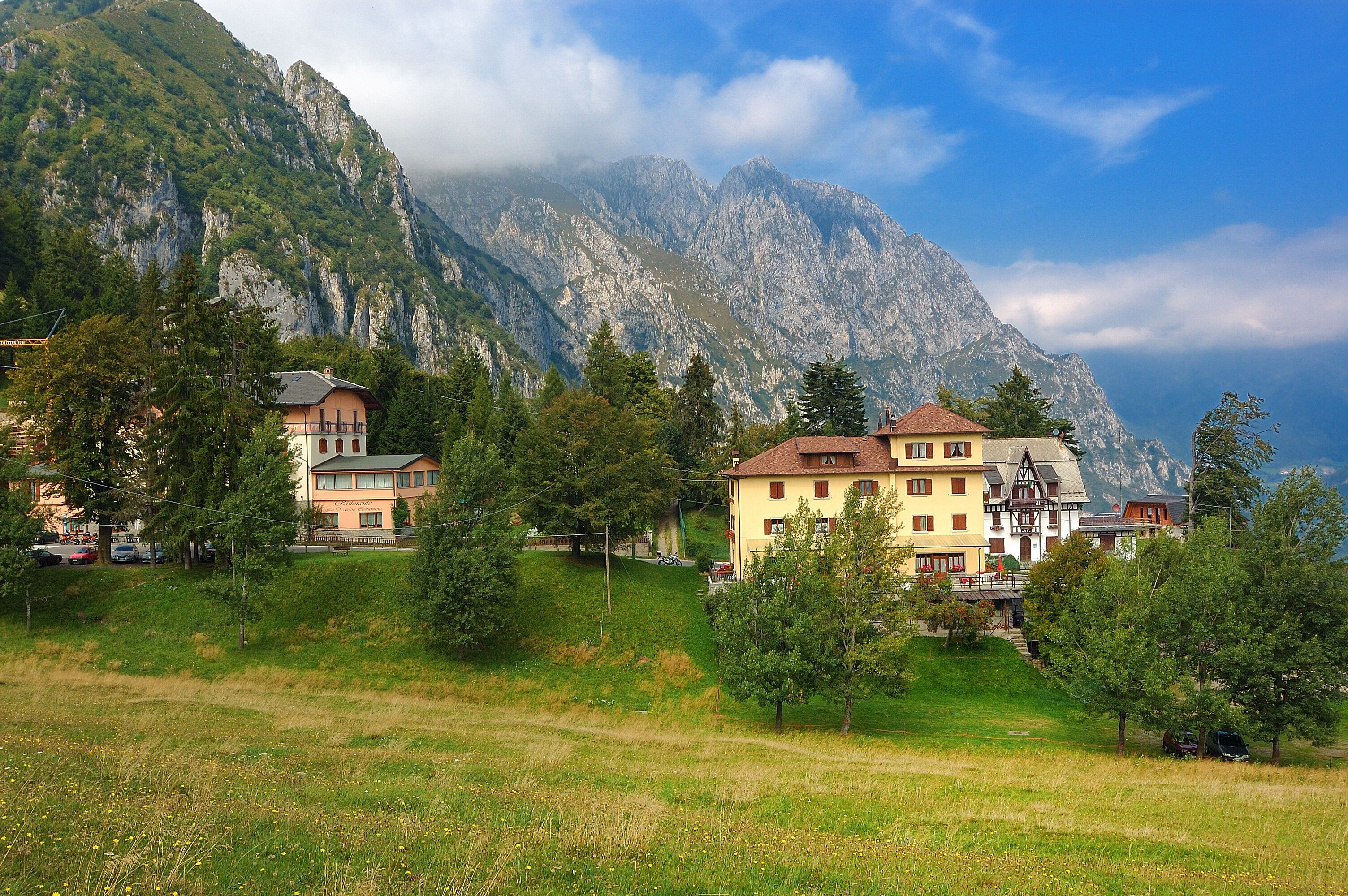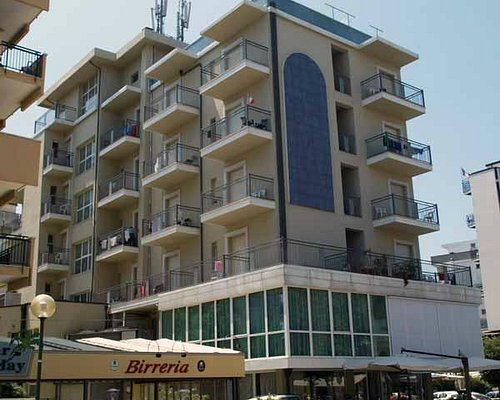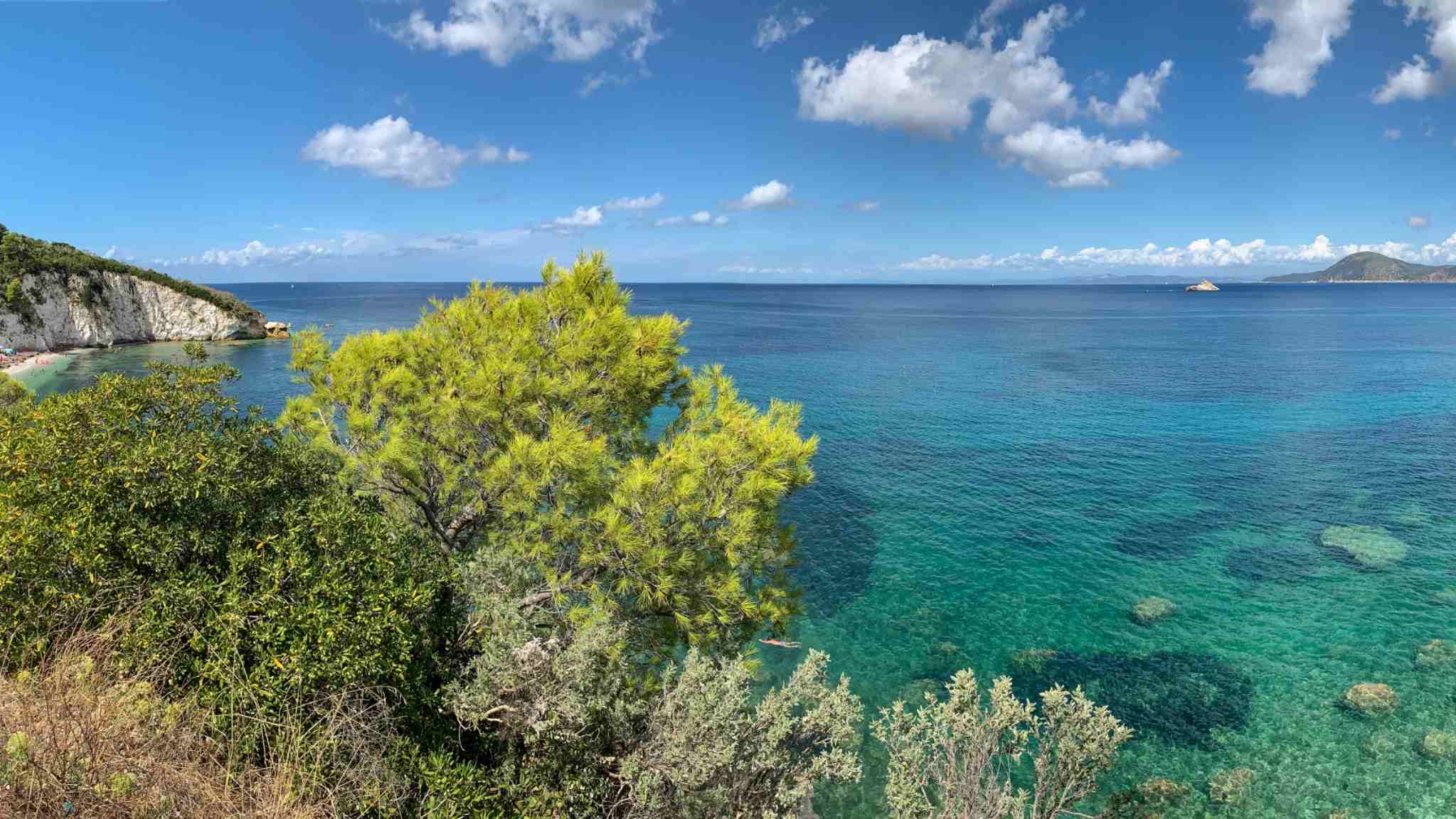
Forty-one rooms approximately 200 metres from the beach in Marina di Campo, an operating hotel business, guest-room furniture, a professional kitchen, laundry facilities, operational equipment and administrative authorisations. Hotel Santa Caterina on the Island of Elba is being offered with a minimum entry price of €1.65 million. But this is not simply a real estate transaction: the key variable is how much of the existing hotel operating platform will survive the expiry of the current business lease and remain available to the incoming investor.
The sale of Hotel Santa Caterina, a three-star property at Viale Elba 85 in Marina di Campo, is scheduled for 25 September 2026.
The minimum bid for the current sale process is:
€1,650,000
with minimum bid increments of €30,000.
The sale documentation reports an appraised value of approximately €3.748 million.
The gap between the appraisal and the minimum bid is therefore significant.
But, once again, price represents only the first layer of the investment analysis.
The key numbers
Minimum bid: €1,650,000
Commercially advertised room count: 41
Category: 3-star hotel
Sale date: 25 September 2026
End of the advertised 2026 operating season: 27 September 2026
Expiry of the current business lease: 31 October 2026
Indicative value per key: approximately €40,000
The hotel is located a short distance from the beach in Marina di Campo and remains commercially active.
That makes this case particularly interesting.
This is not an analysis of a hotel that has been closed for years.
It is an analysis of a going concern that remains commercially alive only days before the sale.
Three dates tell the story of the transaction
25 September
Sale of the hotel complex.
27 September
End of the operating season indicated by tourism sources.
31 October
Expiry of the current business lease and the date from which the complex is expected to become available to the procedure.
This timeline is arguably the core of the entire investment case.
The transaction is taking place at precisely the point at which one hotel season ends and a new owner could begin preparing for the next.
For an investor, this potentially creates a full winter period in which to reposition the asset and prepare for the 2027 season.
More than bricks and mortar
The sale documentation includes a significant proportion of the infrastructure required to operate the hotel.
The perimeter includes:
-
the hotel real estate;
-
guest rooms and related furniture;
-
professional kitchen;
-
F&B equipment;
-
laundry and ironing facilities;
-
cold-storage equipment;
-
operational equipment;
-
back-of-house areas;
-
administrative authorisations identified as supporting the hotel operation.
This is materially different from acquiring a vacant D/2 hotel property.
A hotel acquired without an operating platform normally requires:
Real Estate + FF&E + OS&E + Authorisations + Organisation + Start-up
In the Santa Caterina case, a substantial part of this infrastructure appears to be already included within the transaction perimeter.
This distinction between the price of the real estate and the true economic perimeter of the investment is central to the analysis published by InvestimentiAlberghieri.it.
KEY ISSUE — What actually survives after 31 October?
This is the critical due diligence question.
1. Real estate
This is the most straightforward component.
It includes the hotel property and the relevant appurtenances included in the sale.
This value survives a change of operator.
2. FF&E and operating equipment
Guest-room furniture, kitchen equipment, laundry facilities and other operating assets appear to be substantially included in the sale perimeter.
This could allow an incoming investor to avoid a meaningful portion of the traditional hotel start-up cost.
3. Authorisations
The sale documentation refers to administrative authorisations.
Their actual transferability or ability to be reissued or transferred to the new operator, however, must be verified individually.
Their inclusion in the sale documentation does not automatically mean the hotel can resume operations the following day.
4. Employees and operational know-how
This is where continuity becomes less certain.
The investor needs to establish:
-
which employees are currently engaged;
-
which are seasonal;
-
which employment relationships may continue;
-
which obligations may transfer to the incoming operator;
-
how much operational know-how can be preserved.
5. Brand and commercial identity
Ownership of the following must be verified:
-
Hotel Santa Caterina name;
-
internet domain;
-
logo;
-
photography;
-
commercial content.
Acquiring the building does not necessarily mean automatically acquiring the brand.
6. OTAs and distribution
Booking.com, Expedia and other distribution channels can represent a meaningful part of a hotel's commercial value.
Due diligence should determine:
-
who owns the accounts;
-
whether reviews remain attached to the property;
-
ranking and visibility;
-
contractual terms;
-
whether continuity or migration is possible.
7. Booking engine and forward reservations
The investor must establish what happens to bookings extending beyond 31 October and who controls:
-
the booking engine;
-
channel manager;
-
PMS;
-
advance payments;
-
deposits;
-
booking data.
8. Customer database
A customer database may have substantial commercial value, but its transfer is subject to contractual and data-protection constraints.
It should not be assumed to transfer automatically with the property.
9. Online reputation
Reviews, Google profiles and accumulated digital reputation form part of the commercial capital of a hotel.
The ability to preserve them may have a direct impact on the cost and speed of reopening.
The incoming investor may therefore acquire almost the entire physical hotel infrastructure while still having to rebuild part of the commercial operating platform.
That distinction determines the real value of the going concern.
An operating hotel is worth something different from a closed hotel
In distressed hotel transactions, one of the least visible costs is the destruction of the going concern.
When a hotel remains closed for months or years:
-
employees move elsewhere;
-
customers select alternative properties;
-
commercial accounts lose relevance;
-
reviews become dated;
-
OTA history deteriorates;
-
supplier relationships disappear;
-
digital visibility weakens;
-
reopening requires additional working capital.
Santa Caterina presents a potentially different situation.
The hotel reaches the transaction date while still commercially active during the 2026 season.
If the transition between the existing operator and the incoming investor is properly managed, a meaningful portion of the operating value may be preserved.
That possibility has genuine economic value.
Approximately €40,000 per key: attractive, but incomplete
Dividing €1.65 million by the commercially indicated 41 rooms results in approximately:
€40,000 per key.
It is certainly an attention-grabbing figure.
But in this case, price per key is even less complete than usual.
The consideration does not appear to cover bricks and mortar alone.
It also includes:
FF&E + operating equipment + authorisations + hotel infrastructure.
The numerator therefore contains more value than in a conventional real estate-only price-per-key comparison.
The correct question is not:
“How much am I paying for each room?”
It is:
“How much of the capital required to make each room generate revenue is already included in the €1.65 million purchase price?”
Marina di Campo: the destination already exists
The location represents another important investment consideration.
Marina di Campo is one of the Island of Elba’s best-known seaside destinations.
The hotel is located close to the beach and offers services consistent with a leisure-oriented product.
The investor does not therefore need to create the destination.
The task is to improve the hotel’s ability to capture existing demand.
The industrial challenge becomes:
ADR + Occupancy + Opening Days + Distribution
The real value-creation opportunity may lie in extending the season
One of the structural limitations of many Italian resort hotels is the concentration of revenue into a relatively short operating period.
The value-creation opportunity does not necessarily come from adding rooms.
It may come from increasing the number of productive operating days.
A new strategy could target:
-
May;
-
June;
-
September;
-
October;
-
hiking;
-
cycling;
-
groups;
-
events;
-
international guests;
-
sports tourism;
-
experiential stays.
Extending the season means generating more productive days from the same real estate.
And that can have a greater impact on EBITDA than simply increasing August room rates.
At Hotel Management Group, this type of analysis is developed through business planning, repositioning, revenue analysis and hospitality asset value-creation strategies.
CAPEX must be considered alongside the cost of continuity
Even a furnished and operating hotel requires investment.
Due diligence should assess at least:
-
guest rooms;
-
bathrooms;
-
technical systems;
-
air conditioning;
-
windows and insulation;
-
energy efficiency;
-
kitchen;
-
laundry;
-
furniture;
-
fire safety;
-
technology;
-
Wi-Fi;
-
PMS;
-
CRM;
-
booking engine.
The sale documentation also identifies infrastructure-related matters requiring verification in relation to:
-
sewer connections;
-
water-system routes;
-
gas supply.
These items must be incorporated into the Total Investment Cost.
But physical CAPEX is only one part of the equation.
There is also a second cost:
the cost of preserving or rebuilding operating continuity.
If OTAs, employees, distribution and brand continuity can be maintained, this cost may remain relatively limited.
If they have to be recreated from scratch, the required investment rises materially.
Three investment scenarios
Scenario 1 — Near-immediate continuity
This is the most favourable scenario.
The investor acquires the hotel complex, completes the necessary transfers and uses the winter period to prepare for the 2027 season.
The investment equation becomes:
Purchase Price + Light CAPEX + Working Capital = Total Investment Cost
to be measured against:
Stabilised EBITDA
Scenario 2 — Operational repositioning
The investor preserves the existing base while improving:
-
rooms;
-
branding;
-
distribution;
-
pricing;
-
breakfast;
-
guest services;
-
marketing;
-
customer journey;
-
length of season.
Value creation is driven by:
ADR + Occupancy + Opening Days + EBITDA Margin
Scenario 3 — Rebuilding the going concern
This is the most demanding scenario.
The real estate and operating equipment are acquired, but a substantial portion of the commercial platform must be rebuilt.
The investor may need:
-
new employees;
-
new systems;
-
new commercial accounts;
-
marketing expenditure;
-
pre-opening costs;
-
working capital;
-
new distribution channels;
-
demand rebuilding.
Under this scenario, the €1.65 million purchase price represents only one component of the overall investment.
At Investhotel Capital Partners, the focus is precisely on distressed and restructuring situations in which the value of the real estate must be assessed alongside the ability to preserve business continuity.
The critical due diligence
Before assigning a definitive value to Hotel Santa Caterina, an investor should verify at least:
-
full appraisal report;
-
title to the property;
-
cadastral compliance;
-
planning compliance;
-
operating authorisations;
-
transferability of authorisations;
-
business lease;
-
identity of the current business lessee;
-
effective termination of the arrangement on 31 October;
-
employees;
-
FF&E inventory;
-
ownership of equipment;
-
kitchen;
-
laundry;
-
technical systems;
-
sewer infrastructure;
-
water supply;
-
gas;
-
fire safety;
-
brand rights;
-
internet domain;
-
website;
-
PMS;
-
booking engine;
-
OTA accounts;
-
customer database;
-
online reputation;
-
forward bookings;
-
historical revenue;
-
ADR;
-
occupancy;
-
RevPAR;
-
GOP;
-
normalised EBITDA;
-
CAPEX;
-
working capital;
-
pre-opening budget;
-
strategy for the 2027 season.
At RobertoNecci.it, further analysis explores the relationship between hotel operations, ownership, governance and the ability of hospitality assets to generate sustainable cash flows.
The real value is not simply the 41 rooms
The headline number is straightforward:
41 rooms for €1.65 million.
But the number that ultimately determines the quality of the investment is different:
How much additional capital will be required after 31 October to turn the acquired complex into a fully operational hotel for the 2027 season?
If a meaningful proportion of the going concern survives the transition, the Total Investment Cost may remain relatively close to the purchase price.
If distribution, employees, systems, brand and organisation have to be rebuilt, the gap can widen rapidly.
The real value driver is therefore what survives the change of operator.
The building remains. The furniture remains. The equipment may remain.
But a hotel’s true operating capital also consists of:
people + customers + reputation + distribution + procedures + data + organisation.
The more of that capital successfully crosses the 31 October transition, the greater the real economic value of the transaction.
That is where simple real estate value ends and the value of the hotel going concern begins.
Investimenti Alberghieri
InvestimentiAlberghieri.it monitors and analyses hotel investments, hospitality assets for sale, distressed situations, NPL/UTP exposures, restructuring transactions and special situations across the Italian hospitality market.
The publication of an investment opportunity is for information and analytical purposes only and does not constitute an assessment of its economic attractiveness.
Every potential acquisition requires dedicated:
real estate, corporate, contractual, legal, planning, technical, financial and hospitality due diligence.
For confidential analysis of hotel investment opportunities, valuations, business plans, industrial due diligence, Total Investment Cost assessments, going-concern analysis and special situations:
info@investimentialberghieri.it
To submit a hotel or investment opportunity for a confidential preliminary assessment:
info@investimentialberghieri.it
Further insights:
InvestimentiAlberghieri.it
Investhotel Capital Partners
Hotel Management Group
RobertoNecci.it