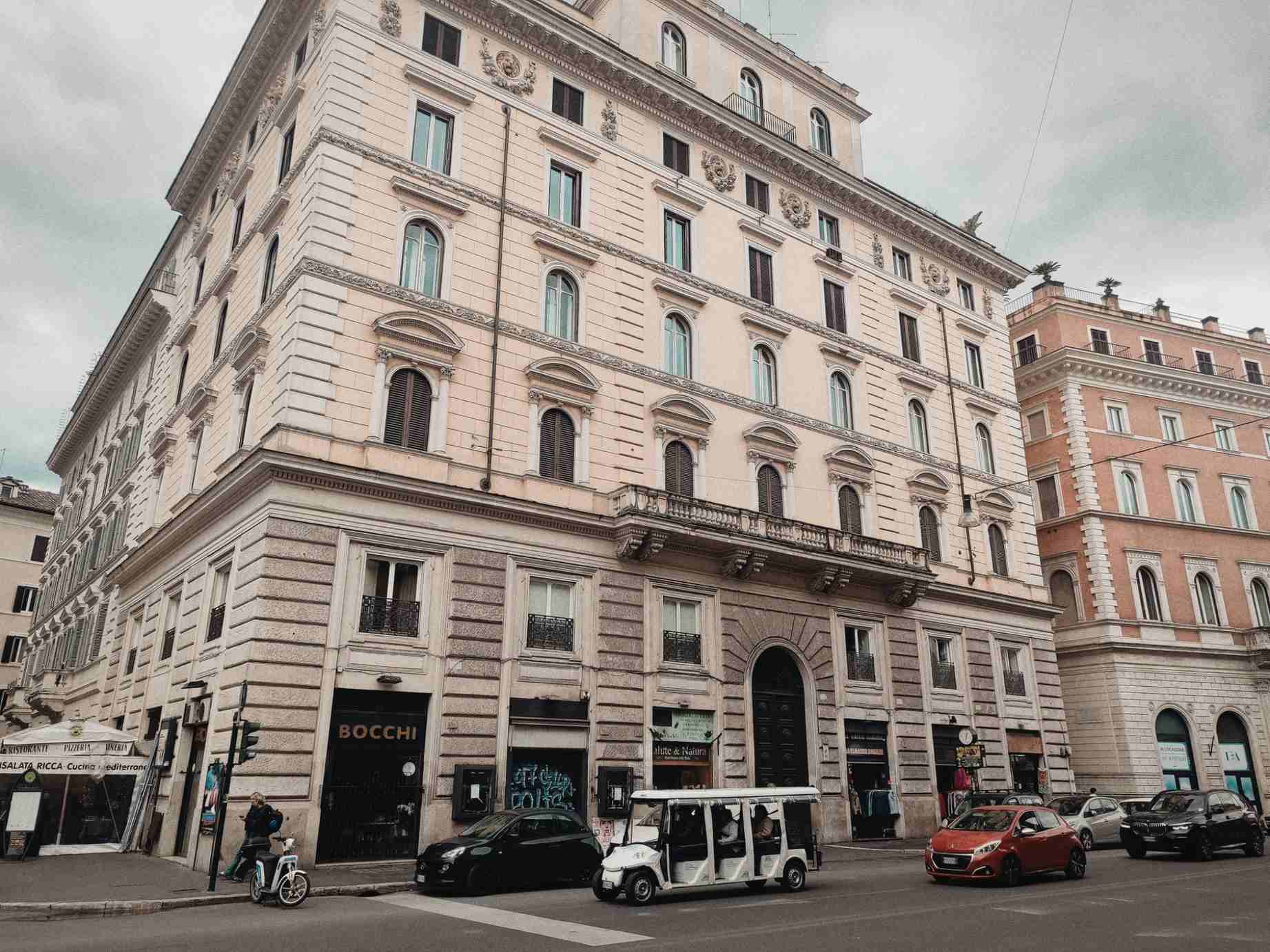
Isrotel’s acquisition of Hotel Savoy in Rome is one of the most meaningful hospitality transactions seen in the Italian capital in recent months. The headline numbers make that clear enough: €68 million for the acquisition of a 130-room hotel on Via Veneto, plus a further €30 million allocated to refurbishment and repositioning under Aluma, the group’s international brand platform. In practical terms, this brings the total investment close to €100 million, with an entry price of roughly €523,000 per key. This is not a standard operating acquisition. It is a transformation play.
The industrial logic behind the transaction is sound. Isrotel is not entering Rome through a secondary asset or an opportunistic foothold. It is entering through a recognizable property in one of the city’s best-known micro-locations, with a clear repositioning strategy already embedded in the deal. Aluma, after all, is the vehicle through which the group is building its international presence beyond Israel. In that sense, Savoy is not simply another hotel added to the portfolio. It is a strategic point of entry into a highly visible market.
The wider market backdrop reinforces that logic. Rome is no longer just a prestigious destination; it is a market with proven depth, rate resilience and sustained investor appeal. The city has re-established itself as one of the most attractive hospitality investment destinations in Italy, supported by strong operating fundamentals and continued international demand. That matters, because it means Savoy is not being acquired in a recovery story. It is being acquired in an already solid market, where value creation will depend less on cyclical rebound and more on product quality, positioning discipline and execution.
The first real strength of the deal is the asset itself. Via Veneto remains one of the most recognizable addresses in Rome. In upper-upscale and luxury urban hospitality, location is not just part of the story; it is one of the core drivers of value. A property in a location of this kind starts with an advantage that cannot be manufactured. It can only be leveraged.
The second strength lies in the nature of the strategy. Isrotel is not acquiring Savoy in order to preserve the status quo. It is acquiring the hotel in order to rethink it, reposition it and bring it back to market with a stronger competitive profile. That is exactly how sophisticated hospitality capital operates today. The objective is no longer simply to own a hotel in a good city. The objective is to create value through capital expenditure, branding, product enhancement and sharper market alignment.
This is what makes the transaction interesting. Savoy is not compelling because it is historic, or because it sits on Via Veneto, or because the buyer is an established international operator. It is compelling because the deal combines a strong address, a recognizable building, a defined repositioning thesis and a market capable of rewarding quality. When those elements come together, the investment case becomes far more substantial than the entry price alone.
That said, a strong deal is not the same as an easy one. The first and most obvious challenge is execution. Once acquisition and refurbishment costs move toward the €100 million mark, good execution is no longer sufficient. Execution has to be excellent. Timing, cost control, design coherence, service standards, commercial strategy and rate architecture all need to work together. In a transaction of this scale, the risk is not simply overspending. The real risk is spending heavily without delivering a sufficiently visible improvement in the final product for the market to recognize and reward.
The second area of attention is the nature of the asset itself. Savoy is a historic property, and that brings both value and constraint. Historic hotels offer character, identity and market presence, but they also limit freedom of intervention. In assets of this type, value is not created by refurbishment alone. It is created by striking the right balance between modernization and authenticity. If the project is too conservative, it may fail to move the hotel far enough. If it is too aggressive, it may dilute the very identity that gives the asset its appeal. That balance is where the real quality of the project will be tested.
There is also a third issue, and perhaps the most important one commercially: final positioning. The classic risk in major urban repositioning projects is not outright failure. It is landing in the middle. A hotel can be materially improved and still fail to become truly distinctive. It can become more polished, more expensive and more contemporary without becoming meaningfully more powerful in the eyes of the market. If Savoy reopens as a better version of itself, the deal will be good. If it reopens as a clearly reimagined asset with a stronger identity and unmistakable market positioning, the deal may prove exceptional. In transactions like this, the difference between a good investment and an outstanding one lies almost entirely in the finished product.
The advisory roster involved also reflects the complexity of the transaction. This was not treated as a straightforward acquisition, but as a multi-layered deal requiring legal, corporate, tax and financial sophistication. That is entirely consistent with the profile of the asset and with the strategic ambition behind the investment. Transactions of this kind demand more than capital. They demand structure.
The conclusion, therefore, should be clear. Savoy is a strong acquisition. It is strong because of the quality of the asset, the strategic coherence of the buyer, and the strength of the Roman market. But it is not a deal that can be judged solely on announcement day. Price, brand, location and buyer profile tell only the opening chapter. The real verdict will come later, when the repositioning is complete and the market can assess the finished product.
Because in high-end historic city hotels, buying well is only the starting point. The real test is whether the asset is returned to the market in a meaningfully stronger form than the one that was acquired.
Roberto Necci
Please visit : https://www.hotelmanagementgroup.it
Do you need assistance for deal in Italy? r.necci@robertonecci.it