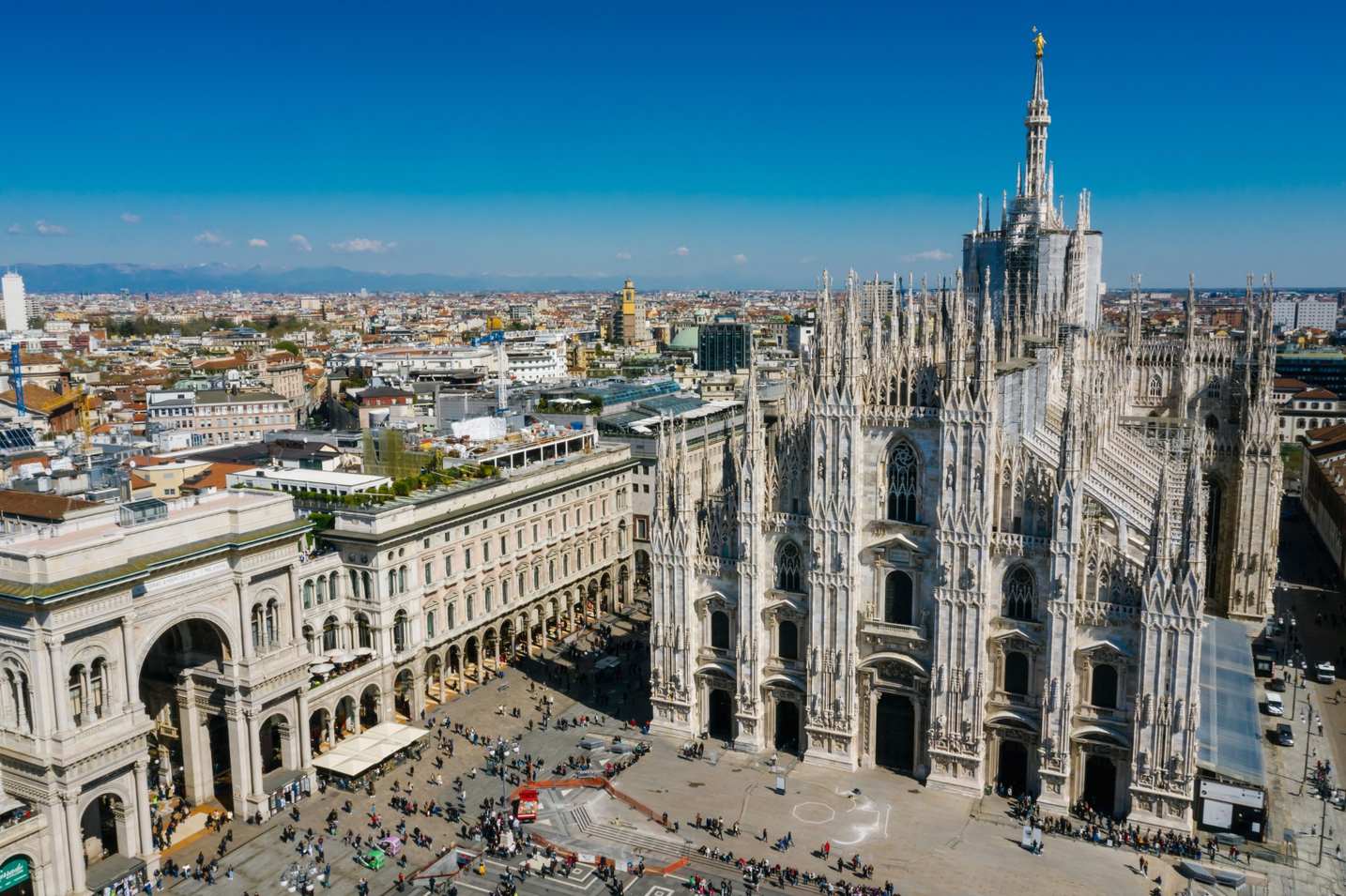
Milan stands among the leading Italian and European markets for hotel investment capital. Following a 2023–2024 period in which hotel investment volumes in Italy stood at approximately €1.6–2.1 billion, the market gained further momentum in 2025, surpassing €2.5 billion. While Milan is not always the top Italian city in terms of transaction volumes — Rome led the market in 2025 with 25% of national volumes, compared with Milan’s 16% — it remains one of the most closely monitored destinations for institutional and international investors. The most telling signal is forward-looking: in 2026, Milan ranks as the most sought-after European city among hotel investors, reinforcing its central role in hospitality capital allocation strategies.
The reasons are structural. While much of the country lives on seasonal leisure demand and a fragmented, family-owned ownership base, Milan offers corporate and MICE demand that holds up all year, a pipeline of branded openings, international capital, and a transaction market that is both liquid and legible. This guide sets out where the Milan hotel investment market stands in 2026: who is buying, what they are buying, how an asset is valued, and which contractual structures govern deals — closing with our own read on where value will move in the months ahead.
Why institutional capital is drawn to Milan
Milan's strength lies in the quality of its demand, not merely its volume. The city posts some of the highest income performance in Italy: occupancy indicatively in the region of 68–73% in stabilised periods, average daily rates (ADR) on the order of €190–210 market-wide and well above €400–600 in the luxury segment, with RevPAR sitting indicatively in the €135–150 range in strong quarters. Above all, these numbers rest on low seasonality — the very feature investors reward, because it makes cash flows more predictable and, in turn, more financeable on better terms.
Layered on top is the depth of Milan's capital markets: real estate investment managers, private equity funds, family offices, and international branded operators are structurally present in the city. This concentration of investment demand has compressed prime hotel yields in Milan below the national average, placing them indicatively in the 5.0–5.75% range for core assets, against figures that rise to 6.5–7.5% and beyond for secondary or repositioning product — the classic gap between a market considered core and the rest of the country.
Sources & methodology. The orders of magnitude reported here are observatory estimates drawn from public and industry data
The legacy of Milan-Cortina 2026
The Milan-Cortina 2026 Winter Olympics acted as an accelerator on a trend that was already underway. In the years before the event, the Olympic horizon attracted capital, supported new openings, and fast-tracked refurbishment projects, particularly in the upscale and luxury tiers.
The strategic question today is no longer "what will the Games bring," but what happens to these assets in the legacyphase. This is where the most interesting opportunities open up for investors able to read the cycle: assets brought online on the back of the event that now need to stabilise their cash flows, properties weighing a tier repositioning, and situations where post-investment financial pressure creates discounted entry points. Value is often created in the aftermath, not in the event itself.
Who's buying: the map of Milan investors
The Milan market is populated by distinct capital profiles, each with its own logic and time horizon:
- Private equity and value-add funds. Pursue returns through value creation — repositioning, rebranding, operational turnaround — over 3–7 year horizons, targeting double-digit returns.
- Real estate funds and core / core-plus managers. Favour stabilised assets with a solid operator and predictable cash flows; they accept Milan's compressed yields in exchange for contained risk.
- Family offices and HNWIs. Often oriented toward prime real estate and the long horizon, with less pressure on near-term returns and a strong eye for trophy value.
- International branded operators. Enter chiefly via management or lease structures, occasionally with direct investment in flagship assets.
Understanding which of these profiles you are addressing is the first decision in any deal, because it sets the structure, the expected price, and the deal narrative. Individual transactions on the market, analysed deal by deal, are tracked in our dedicated observatory at investimentialberghieri.it, where we follow Italian hotel deals with a price-per-key lens and an investment rationale.
What gets valued, and how: cap rate, price per key, RevPAR
Valuing a hotel in Milan moves across three planes that must be read together.
RevPAR (revenue per available room) measures the asset's income performance, blending occupancy and average rate. It is the starting point of any analysis, because it translates the quality of demand into numbers: in Milan, as noted, it sits indicatively in the €135–150 range in strong periods, with far higher peaks in the luxury segment.
Price per key is the benchmark metric for comparing transactions: it normalises total price by the number of keys. In Milan the figures break down sharply by tier — indicatively €120,000–200,000 per key for midscale product, €250,000–400,000 for upscale, and from €500,000 to well over €1 million per key for prime and luxury assets in central locations.
The cap rate (capitalisation rate) expresses the expected return and, by extension, perceived risk: the safer and more core an asset is considered, the more the cap rate compresses and the higher the value. In Milan, prime yields are among the most compressed in Italy, consistent with its core-market status.
For operating hotels, however, the correct approach is the going concern valuation: the hotel business is valued as a whole — real estate plus operating activity — because value depends on the capacity to generate income, not on square metres alone. This is the technical distinction that separates a property appraisal from a hotel valuation done by someone who knows the sector.
Deal structures: ownership, management, lease, key money
Several contractual architectures coexist in Milan, and the choice between them is often the real strategic heart of a deal:
- Direct ownership and operation. The investor owns and operates: maximum control and maximum exposure to operational risk.
- Management contract. The investor retains ownership and entrusts operations to a branded operator in exchange for management fees. This is increasingly the structure of choice in Milan's high-end new openings.
- Business lease (affitto d'azienda). The investor leases the hotel business to a tenant in exchange for rent, transferring operational risk. Widely used in Italy to combine stable income with asset protection.
- Key money. A sum the operator pays the owner to secure a strategic asset, or vice versa. It is a negotiating lever that affects the overall economics of the deal and must always be assessed in the context of the full contract.
The choice of structure determines who bears the risk, how income is distributed, and how liquid the asset will be in future. We explore key money dynamics and the other structures in dedicated articles on investimentialberghieri.it, while the full set of structuring and operational advisory services is on investhotel.it.
Where value is created: repositioning, distressed, and use restrictions
The most rewarding opportunities in Milan are rarely already-perfect assets: they are situations that demand technical reading and intervention.
Repositioning — moving an underperforming asset up a tier, changing the flag, redesigning the operating model — is the classic value-add lever and the best suited to a quality-demand market like Milan, where the ADR differential between tiers can quickly translate into value.
Hotel NPLs and distressed situations offer discounted entry, but require specific competence in valuing the underlying business and managing the turnaround: this is ground for investors accompanied by expert advisory, not for improvised opportunistic plays.
Finally, the hotel-use restriction (vincolo alberghiero) must always be checked — the regulatory instrument that, in many Italian cities, requires a building's hotel use to be preserved. It weighs heavily on value and on exit options, and must be analysed before any offer. To navigate these technical themes, the hotel guides on robertonecci.it provide the regulatory and operational framing of the sector.
How we read a Milan deal: the four-question matrix
Having analysed more than a hundred hotel businesses and advised banks and funds on valuations, I have reduced the Milan investment decision to four questions, in sequence. If even one lacks a solid answer, the deal is not ready.
- What is the thesis? Core, value-add, or distressed: the thesis precedes the asset, not the other way round. Buying in Milan "because it's Milan" is not a thesis.
- Does the asset support the thesis? Demand, positioning, revenue structure: the asset must be profiled against the thesis, valued as an operating business (going concern), not on its square metres.
- Is the structure right? Ownership, management contract, or business lease determine who carries the risk and how financeable and liquid the asset will be. This is where many deals are born crooked.
- Where is the exit? The exit is designed before you enter. Without a credible exit assumption, the expected return is a theoretical exercise.
Our read: where value is moving in Milan in 2026
Our view is clear-cut. The easy phase of the Milan cycle — when buying a good core asset and riding yield compression was enough — is behind us. With prime yields already among the lowest in Italy, stabilised core product now offers little margin for error and thin returns: fine for patient, risk-averse capital, not for those chasing yield.
Value, in the coming months, shifts onto two fronts. The first is post-Olympic value-add: a portion of the new supply brought online around the Games will have to prove it can stabilise cash flows at scale, and not every property will manage it on the same terms — those who can read a forward-looking P&L will find repositioning opportunities and negotiated entry points. The second is selective distressed: the financial tail of pre-event investment, in a context of still-elevated debt costs, will produce situations of stress that reward those with the technical competence to value the underlying business, not just capital to deploy.
In short: in Milan, in 2026, the margin no longer sits in the market — it sits in selection. The winner is whoever brings the discipline of the matrix and the ability to value the hotel business, not whoever chases the "Milan deal" for its own sake.
Want to assess a Milan hotel deal with a top-tier advisor?
Hotel Management Group works alongside investors, funds, and owners on the analysis, valuation, and structuring of hotel deals: going concern valuations, due diligence, business plans to support financing, buy- and sell-side M&A, repositioning, and distressed management.
Talk to a top advisor → hotelmanagementgroup.it
We turn analysis into investment decisions. A first feasibility review is the starting point for understanding whether and how to move in the Milan market.
Frequently asked questions about hotel investment in Milan
How much does it cost to buy a hotel in Milan? Price is measured per key (room) and varies by tier: indicatively €120,000–200,000 per key for midscale product, €250,000–400,000 for upscale, and from €500,000 to over €1 million per key for prime and luxury assets in central locations. The correct value, however, is not estimated on square metres but on the operating business, via a going concern valuation.
What is the return on a hotel investment in Milan? Prime cap rates on core Milan assets are among the most compressed in Italy, indicatively in the 5.0–5.75% range, while secondary or repositioning product can rise to 6.5–7.5% and beyond. A lower cap rate means an asset perceived as safer, and therefore a higher value.
Is it worth investing in hotels in Milan in 2026? Milan remains the core market of Italian hospitality thanks to corporate and MICE demand, low seasonality, and the depth of its capital markets. The post Milan-Cortina 2026 legacy phase opens opportunities, especially value-add (repositioning and stabilising recent assets). The case depends on the investment thesis and the quality of upfront analysis: in a compressed-yield market, the margin is made through selection, entry price, and deal structure.
What is the difference between a management contract and a business lease? Under a management contract, the owner keeps operational risk and pays a branded operator a management fee; under a business lease (affitto d'azienda), operational risk passes to the tenant in exchange for rent, giving the owner more stable income and asset protection.
Roberto Necci - r.necci@robertonecci.it