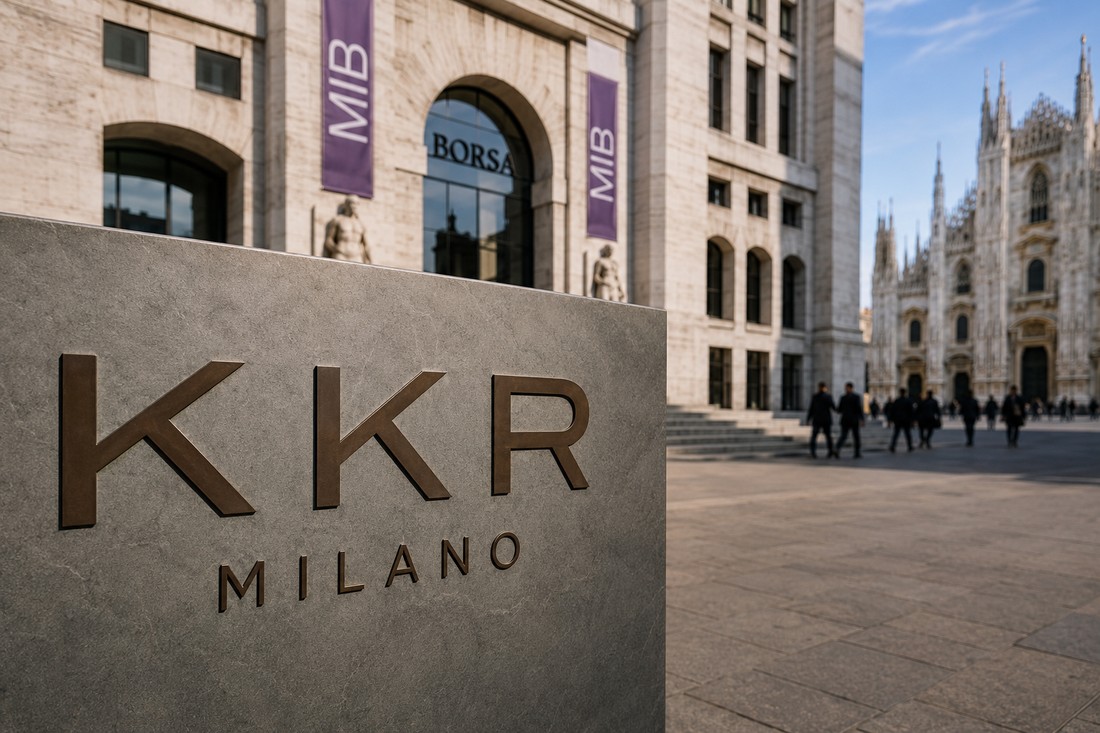
KKR’s Milan office is more than a financial headline: it is a signal for Italian hospitality real estate
When a global investment firm such as KKR decides to open an office in Milan, the message should be read well beyond the financial news cycle.
This is not simply the physical arrival of a major international fund in Italy’s financial capital. It marks a change in posture: Italy is no longer a market to be monitored only from London, Paris or New York. It is becoming a market to be covered directly, through a local presence designed to originate opportunities, build relationships, improve execution and deepen market intelligence.
For hospitality real estate, this is particularly relevant.
Italian hotels have been on the radar of international capital for years. Yet the market remains fragmented, family-owned, often opaque in terms of data and not always fully prepared to engage with institutional investors. KKR’s Milan office could help narrow that gap. A stronger local presence means a greater ability to understand the market, meet owners, assess assets, structure transactions and build platforms.
The real question is not whether KKR will acquire an Italian hotel tomorrow.
The real question is what kind of Italian hospitality market could become attractive to an investor like KKR.
And the answer is clear: not simply a market of hotels for sale, but a market of transformable assets, scalable platforms, aggregatable portfolios, special situations, hospitality credit opportunities and properties capable of becoming institutional-grade investment products.
Why local presence changes the investment equation
In private equity, real estate and credit, local presence matters.
A local office is not just a representative outpost. It allows an investor to see opportunities earlier, build trust with entrepreneurs and family owners, engage with banks, advisors, operators, managers, developers, institutions and private wealth networks.
In Italy, this is critical.
Many hospitality transactions do not originate from perfectly structured international auctions. They often emerge from confidential conversations, generational transitions, complex financial situations, family-owned portfolios that have not yet been institutionalised, assets requiring repositioning, debt refinancing needs or owners willing to open their capital structure without necessarily selling outright.
To access these opportunities, proximity matters.
Milan is therefore a natural platform. It is Italy’s financial centre and the point of connection with banks, law firms, advisors, family offices, real estate funds, asset managers, credit operators and large industrial groups.
For KKR, a Milan office can become a cross-sector accelerator across private equity, real assets, credit, infrastructure, insurance and wealth management. For the lodging sector, it means one thing above all: Italian hospitality assets may increasingly be assessed within a broader investment strategy for the country.
KKR and hospitality: not just properties, but operating platforms and data
To understand KKR’s potential interest in the Italian hotel market, it is useful to look at what the firm has already done internationally.
One of the most significant transactions was the acquisition, together with The Baupost Group, of a portfolio of 33 Marriott hotels in the United Kingdom. This was not a simple real estate acquisition. It was an investment in a full-service hospitality portfolio, with international brands, geographic diversification, repositioning potential and management through Amante Capital, a vertically integrated European hospitality platform.
The message is clear.
KKR does not look at hotels as static properties. It looks at them as economic infrastructure capable of generating cash flow, margins, operating value and future appreciation.
That distinction is essential.
A traditional real estate investor may focus primarily on location, bricks and mortar and lease income. A more sophisticated investor looks at the combination of property, operations, brand, CapEx, distribution, technology, data, margins, governance and exit potential.
Another important piece of the puzzle is KKR’s investment in Lighthouse, a commercial intelligence platform for the travel and hospitality industry. This investment shows that, for KKR, hotel value is not generated only through asset ownership. It also comes from the ability to read demand, optimise pricing, control distribution and improve commercial performance through data.
This is where the Italian opportunity becomes particularly interesting.
Italy has a large number of hotels in extraordinary locations, but many of them still lack the managerial, digital and financial infrastructure required to fully unlock their potential. Many assets have considerable embedded value, but they are not yet fully optimised from a commercial, operational and strategic perspective.
For an investor like KKR, the gap between current value and potential value can become a powerful opportunity.
Why Italy is a natural market for international hotel capital
Italy has a characteristic that few European markets can match: structurally global tourism demand combined with a hotel supply that remains highly fragmented.
That combination is powerful.
On the demand side, the country has an almost unrivalled ability to attract travellers: Rome, Milan, Florence, Venice, Naples, the Amalfi Coast, Puglia, Sicily, Sardinia, Tuscany, the lakes, the Dolomites, art cities and lifestyle destinations.
On the supply side, a significant portion of the hotel stock is still owned by families, small groups, independent operators and real estate owners that are not always organised according to institutional standards.
For international capital, this means three things.
First, there is a shortage of high-quality hotel product that is already institutional and ready to acquire.
Second, there is substantial value-creation potential through repositioning, aggregation and professionalisation.
Third, whoever succeeds in building solid hospitality platforms may gain a significant competitive advantage.
Italy is therefore not attractive simply because it is beautiful.
It is attractive because it remains inefficient.
And in inefficient markets, sophisticated capital can create value.
KKR’s likely approach in Italy: selectivity, control and platforms
KKR is unlikely to adopt a broad opportunistic approach in Italy, acquiring hotels simply because they are located in attractive tourism destinations.
A firm of this scale is not merely looking for “beautiful hotels”. It looks for transactions where the relationship between risk, control, invested capital and future value is clear.
The most likely approach can be summarised in five words: selectivity, control, scale, data and transformation.
1. Destination selectivity
KKR may focus primarily on liquid, international and defensible markets. Rome and Milan are natural candidates, but Florence, Venice, Naples, Bologna and selected high-end leisure destinations may also come into focus.
In the resort segment, the most attractive areas are those with international recognition, high barriers to entry, limited supply and pricing power: the Amalfi Coast, Capri, Puglia, Sicily, Sardinia, Tuscany, Lake Como and the Dolomites.
2. Governance control
Institutional capital wants to be able to influence outcomes. This means control, or at least strong influence, over management, CapEx, branding, contracts, asset management, reporting and the business plan.
Hotels where ownership is unwilling to revisit governance, management and commercial strategy will be less attractive.
3. Search for scale
A single hotel may be interesting, but a platform is far more compelling.
KKR has already shown that it can think in terms of hotel portfolios. In Italy, the key question will be whether aggregatable portfolios exist: small family-owned hotel groups, collections of assets in coherent destinations, urban hotels with similar characteristics or resorts that can be integrated under a common strategy.
Scale allows operational efficiencies, stronger negotiating power, better access to debt, greater distribution strength and a more attractive exit.
4. Data centrality
A global investor does not buy a story. It buys numbers.
Clear data is required on revenue, GOP, EBITDA, RevPAR, ADR, occupancy, customer segmentation, distribution channels, OTA dependency, labour costs, historical CapEx, deferred maintenance, contracts, permits, disputes and restrictions.
Many Italian hotels have good fundamentals, but poorly organised data. This reduces perceived value, increases risk and slows down transactions.
5. Operational transformation
Real value is created when a hotel can change gear.
A new brand, a new concept, new management, improved revenue management, a stronger distribution system, targeted renovation, better cost control, greater international demand, more direct bookings and a revised market positioning can all materially change the economics of a hotel.
The investor is not looking only for passive yield. It is looking for a value-creation thesis.
The most concrete hotel opportunities for KKR in Italy
KKR’s Milan office could make it more likely for the firm to identify opportunities in at least six areas.
1. Urban hotels requiring repositioning
Italy’s major cities still include many hotels with excellent locations but a product that does not fully match the potential of the demand.
Rome is probably one of the most interesting markets. The city combines international tourism, business, events, luxury, culture, religion, institutions and long-term leisure demand. Yet part of its hotel supply remains below the standards of comparable European capitals.
Milan offers a more balanced demand base across corporate travel, trade fairs, events, fashion, design, business travel and urban tourism. Here, the opportunity may lie in repositioning towards lifestyle, upper-upscale, serviced hospitality and hybrid hospitality models.
Florence, Venice and Naples are more tourism-driven, but they offer strong product constraints, limited new supply and premium positioning potential.
2. High-end resorts and luxury leisure
Italian leisure is one of the most attractive segments for international capital.
Global travellers are looking for experience, authenticity, landscape, culture, cuisine, wellness and lifestyle. Italy has all of these elements, yet many resorts still require capital, professional management and international standards.
For KKR, assets with clear repositioning potential could be particularly interesting, especially if they can be integrated into broader platforms or affiliated with international brands.
3. Family-owned hotel portfolios
Many Italian hotel groups were built as family businesses and have developed attractive portfolios over time, but they have not always become fully institutional.
Generational transition may open new windows of opportunity.
Some families may not want to sell entirely, but they may be open to partnerships, capital increases, investor entry, separation between ownership and management, joint ventures or partial disposals.
For a global investor, these situations can be complex, but highly attractive if they allow scale to be built.
4. Special situations and undercapitalised hotels
Higher financing costs, margin pressure, CapEx requirements and increasing management complexity can put pressure on owners who have good assets but fragile capital structures.
This is where credit can become important.
KKR does not operate only through equity. Credit and real asset strategies may become relevant tools to finance, refinance or restructure hotel situations.
In Italy, this approach may be especially relevant because many owners do not necessarily want to sell, but they do need capital to renovate, grow or overcome financial pressure.
5. Real estate conversions into hospitality
Another possible area of opportunity involves non-hotel properties that can be converted into hotels, serviced apartments, aparthotels, branded residences or hybrid accommodation models.
Obsolete office buildings, historic properties, former convents, office complexes, underused tourism assets and public or semi-public real estate may become opportunities if location, permits and demand support the project.
This is not an easy path. Italy presents significant planning, authorisation and regulatory complexity. But that same complexity can create barriers to entry and therefore value for investors capable of managing it.
6. Technology, distribution and commercial intelligence
KKR’s investment in Lighthouse points to a clear direction: hotel technology is no longer optional.
Many Italian hotels still have significant upside in revenue management, pricing, CRM, direct booking, business intelligence, online reputation and channel control.
This means an investor can create value not only by renovating rooms and common areas, but also by improving the commercial engine of the hotel.
A hotel can increase its value even before a change of ownership, simply by becoming more transparent, more efficient and more manageable.
What this means for Italian hotel owners
The message for Italian hotel owners is straightforward: international capital is looking at Italy, but it will not buy everything.
It will buy, finance or support the assets that can demonstrate value.
The difference between an interesting hotel and a truly investable hotel lies in preparation.
An investable hotel has clear numbers, orderly contracts, a comprehensible corporate structure, consistent accounting, reliable operating data, a realistic business plan, estimated CapEx, documented commercial potential and governance compatible with professional investors.
A non-investable hotel may still have a beautiful location. But if its data is confused, its contracts are unclear, its management is opaque and its potential is not demonstrable, capital will either apply a discount or walk away.
This is the central point.
The Italian market does not only need to sell hotels. It needs to prepare hotels for sale, partnership, financing or capital entry.
How to prepare a hotel for investors such as KKR
Preparing a hotel for institutional capital requires method.
The first step is internal due diligence. Before an investor starts asking questions, ownership must already know its own numbers.
The second step is data normalisation. It is essential to distinguish between the hotel’s real performance, extraordinary items, family-related costs, correctable inefficiencies, unrealised potential and required investment.
The third step is building a value thesis. It is not enough to say that “the hotel can grow”. It is necessary to explain how, with what investment, over what timeframe and with what expected results.
The fourth step is defining the strategy. A full sale, partnership, lease, management agreement, franchise, joint venture, refinancing or capital opening are not the same thing.
The fifth step is preparing professional information materials. Teaser, information memorandum, data room, business plan, management reporting and market analysis must be coherent, credible and professionally structured.
From this perspective, the hotel guides published on www.robertonecci.it can be a useful starting point for entrepreneurs, investors and managers who want to deepen their understanding of hotel valuation, management, repositioning and development.
Milan’s role: from financial centre to gateway for Italian hospitality investment
KKR’s Milan office confirms a broader trend: Milan is increasingly becoming Italy’s platform for alternative capital, private equity, private credit, real estate and wealth management.
For the hospitality market, this may have important consequences.
Milan can become the place where global investors, family owners, advisors, banks, hotel operators, asset managers and management platforms meet.
This does not mean that investment will be concentrated only in Milan. On the contrary, Milan may become the gateway to transactions across the entire country: Rome, Florence, Venice, Naples, Sicily, Sardinia, Puglia, Tuscany, the lakes and premium leisure destinations.
KKR’s physical presence may therefore increase the likelihood that complex Italian opportunities will be analysed with greater continuity.
And in investment markets, continuity is often what separates a market that is merely observed from a market that is truly covered.
Why Italian hotels can become a new institutional asset class
The Italian hotel sector has always had enormous tourism strength, but it has not always been treated as a fully institutional asset class.
The reasons are straightforward: fragmentation, limited data, family management, low transparency, aggregation challenges and a shortage of structured product.
Today, however, the landscape is changing.
International demand is strong. Global brands are looking for expansion. Investors are seeking alternatives to traditional office assets. Premium leisure has grown. Private capital needs real asset deployment. Family owners are facing generational transitions. Bank lending has become more selective. Many hotels require CapEx.
All of these factors are creating an inflection point.
Italian hotels can become a more institutional asset class, but only if the market becomes more organised.
The challenge is not attracting capital.
The challenge is being ready when capital arrives.
KKR in Italy: not just hotels, but a wider investment ecosystem
Another point should not be overlooked: KKR is not looking at Italy only through the lens of tourism.
The firm is active across infrastructure, telecoms, energy, credit, real estate, private equity and wealth management. This cross-sector approach may also have implications for hospitality.
Hotels do not exist in isolation from the rest of the economy.
They depend on infrastructure, mobility, energy, urban regeneration, credit, technology, insurance, wealth management and real estate development. A large investor operating across several asset classes can identify connections that a more narrowly specialised investor might miss.
For example, a hotel transaction may be linked to an urban transformation project. A resort may require energy investment. A portfolio may be supported by private debt. A management platform may benefit from technology and data. A family-owned property may also involve wealth management considerations.
This makes KKR’s potential approach far more sophisticated than the mere acquisition of individual hotels.
The risk for the Italian market: losing value through lack of preparation
The presence of international capital does not automatically guarantee value creation for Italian owners.
In fact, the opposite can happen if assets are brought to market unprepared.
An unstructured hotel, with incomplete data and unclear governance, is perceived as riskier. And risk translates into price discounts, stricter conditions, longer timelines or failed transactions.
Many Italian owners underestimate this point.
They believe location is enough. They believe the charm of the property is enough. They believe historical revenue is the only metric that matters.
It is not.
Institutional capital buys the future, not nostalgia.
It buys the ability to generate cash flow, improve margins, support investment, attract demand, control risk and exit the transaction at a higher value.
Those who cannot articulate that future leave value on the table.
KKR’s Milan office could become a catalyst for Italy’s hotel investment market
KKR’s decision to open an office in Milan is a development that the Italian hospitality industry should watch closely.
Not because it automatically implies a short-term hotel acquisition campaign, but because it confirms something more important: Italy is becoming increasingly relevant to global capital.
For hotels, this may open a new phase.
A phase in which the best, most prepared and most transformable assets can attract investors, financial partners, alternative credit and platform strategies.
A phase in which the distinction will no longer be between beautiful and unattractive hotels, but between investable and non-investable hotels.
A phase in which value will depend not only on location, but on the quality of the numbers, governance, management, brand, data, technology and the ability to build a credible business plan.
KKR has already shown internationally that it views hospitality as a sector where capital, operating platforms and data can create value. Italy has many of the conditions to become one of the next frontiers of this strategy: global demand, scarcity of institutional product, fragmentation, aggregation potential and a hotel stock that can be repositioned.
But this window of opportunity will reward only those who are prepared.
To explore further analysis, case studies and market insights on hospitality investment, visit the Investimenti Alberghieri blog: https://investimentialberghieri.it/blog
For a broader perspective on hotel management, development, valuation and repositioning, you can also consult the hotel guides available on www.robertonecci.it.
If you are looking to assess a hotel transaction, prepare an asset for sale, attract capital, analyse repositioning potential or build an investment strategy in the hospitality sector, Hotel Management Group supports owners, investors and operators with integrated expertise in advisory, asset management, development and hotel operations.
Further information and contacts: https://www.hotelmanagementgroup.it/