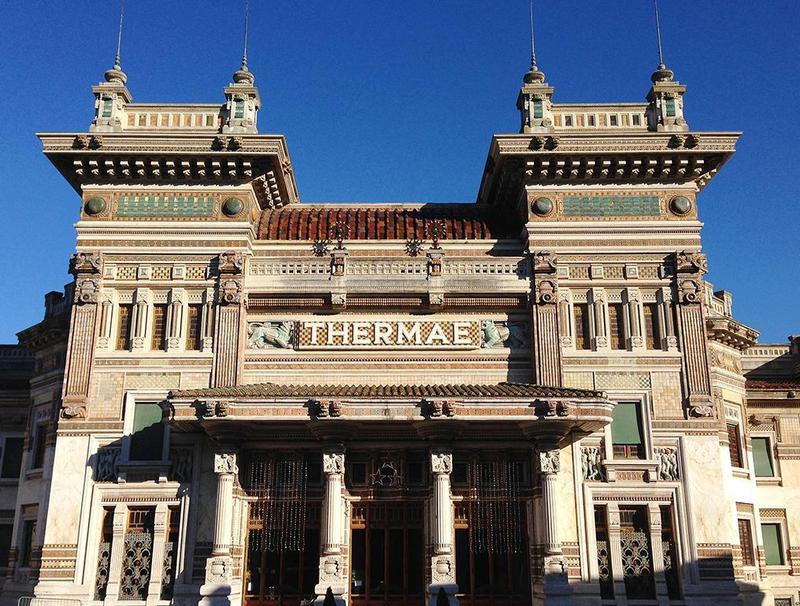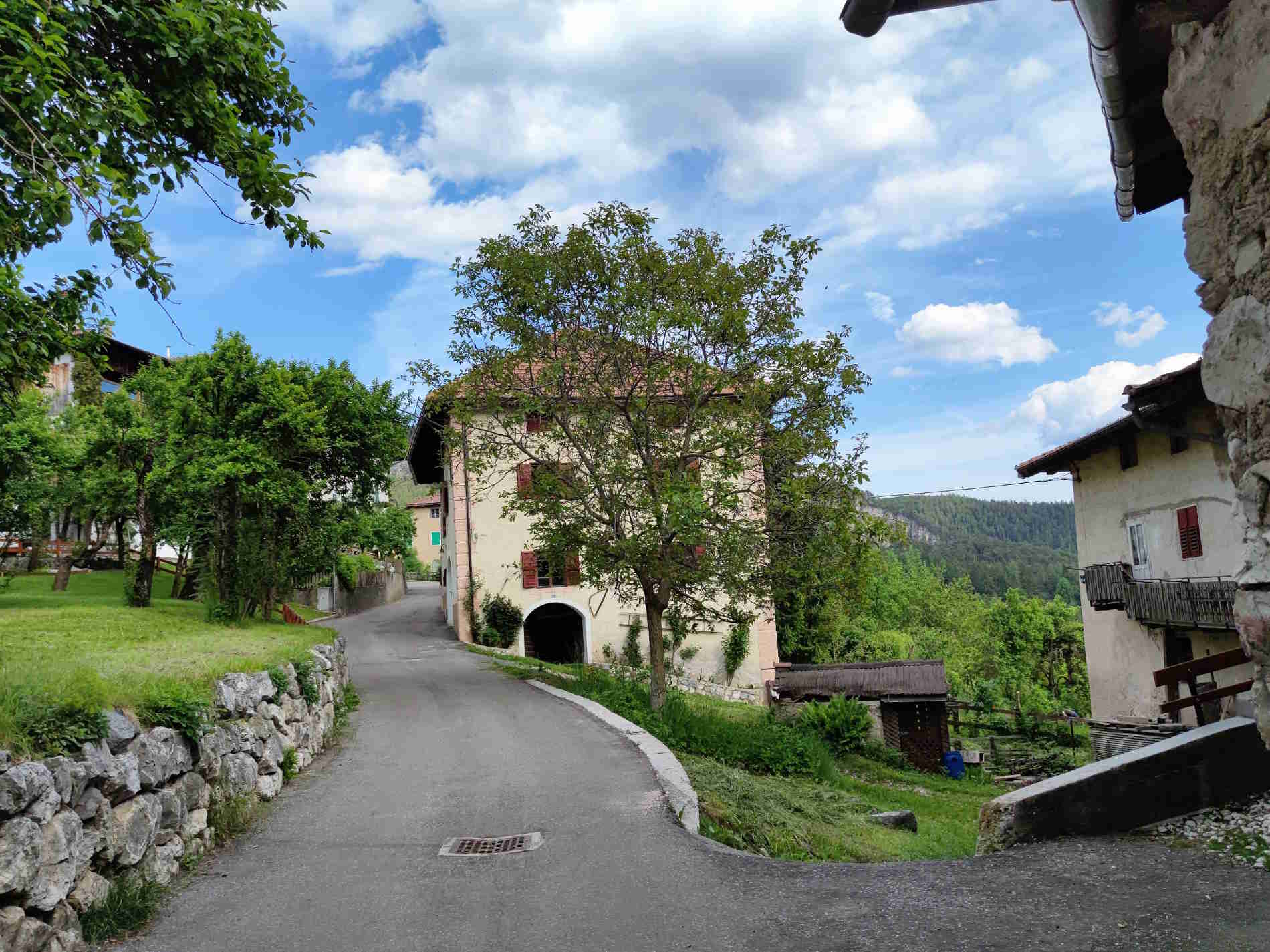
An articulated hospitality complex in Castelnuovo Berardenga — comprising a hotel, restaurant, apartments, swimming pool, outdoor areas and land — is returning to the market. Following the previous unsuccessful sale attempt, the asking base price has been reduced to €1.529 million. For a professional investor, however, the key question is not what the asset costs today, but how much capital will be required to turn it into a competitive hospitality product and what return that capital can generate following repositioning.
In Italy’s distressed hospitality market, the most compelling opportunities are not necessarily those offering the lowest entry price.
They are those where there is a meaningful gap between current value, the capital required for transformation and the potential value of the asset once repositioned and stabilised.
La Loggia Villa Gloria, located in Maciallina in the municipality of Castelnuovo Berardenga, fits precisely into this category.
The Court of Siena has scheduled a new sale attempt for 10 November 2026 in relation to the hospitality real estate complex, as part of enforcement proceeding no. 145/2023.
The key financial parameters of the new sale are:
-
Base price: €1,529,000
-
Minimum bid: €1,147,000
-
Minimum bid increment: €5,000
-
Bid submission deadline: 9 November 2026
-
Sale date: 10 November 2026
The comparison with the previous attempt is particularly relevant.
At the sale held on 30 July 2026, the base price stood at €1.910 million, with a minimum bid of €1.4325 million.
The new base price therefore reflects a reduction of approximately 20%.
Yet a price reduction, in itself, does not determine whether the investment creates value.
The key point: this is not simply a hotel
La Loggia Villa Gloria has a diversified real estate and hospitality configuration.
The complex comprises several buildings and operating components, including:
-
hotel accommodation;
-
restaurant;
-
terraces and common areas;
-
apartments;
-
accommodation designated as holiday homes and apartments;
-
swimming pool;
-
park and outdoor areas;
-
annex buildings;
-
storage and ancillary premises;
-
agricultural land.
This materially changes the appropriate investment analysis.
Applying a simple price-per-room metric would be insufficient and, in some cases, misleading.
The investor is not merely assessing a hotel building.
The opportunity potentially represents a broader hospitality compound, combining rooms, apartments, food and beverage, leisure, events and destination-driven services.
That multidimensional character is both the asset’s principal source of potential value and one of its most significant areas of complexity.
Siena and Chianti: the destination is part of the investment case
The property is located in Castelnuovo Berardenga, within a market strongly influenced by its proximity to Siena and the wider Chianti tourism ecosystem.
In a transaction of this kind, location should not be assessed purely in geographical terms.
It should be evaluated in relation to:
-
international demand;
-
seasonality;
-
leisure demand;
-
wine and food tourism;
-
destination weddings;
-
events;
-
average length of stay;
-
accessibility;
-
availability of professional operators;
-
the destination’s ability to support an ADR consistent with the total capital invested.
The property’s online presence and existing booking channels are commercially relevant, but they do not in themselves establish continuity of operations, the availability of every part of the complex, or the transferability of the hospitality business.
This distinction is critical.
Acquiring a property previously used for hospitality purposes does not necessarily mean acquiring a fully operational hotel business capable of continuing without interruption.
The real question: what could the property become?
The investment case depends less on what the property has historically been and more on the product that could be created following acquisition.
For a professional investor, the key question should be:
Should La Loggia Villa Gloria continue operating broadly as it has in the past, or does a new ownership structure create an opportunity to redesign its positioning entirely?
Several strategic scenarios could potentially be considered.
Scenario 1 — Repositioning the existing product
The property could remain predominantly leisure-oriented while undergoing targeted improvements to:
-
guestrooms;
-
common areas;
-
food and beverage;
-
revenue management;
-
distribution;
-
branding;
-
guest experience.
This may represent the least disruptive strategy, although the ability of the current configuration to generate adequate margins would need to be tested carefully.
Scenario 2 — Upper-upscale country hotel
A move towards a higher market segment could potentially leverage:
-
the surrounding landscape;
-
proximity to Siena;
-
local identity;
-
the swimming pool;
-
apartments;
-
the food and beverage component;
-
stronger experiential integration.
The central question would be whether the repositioned asset could sustain a materially higher ADR following the required CAPEX programme.
Scenario 3 — Distributed resort concept
The presence of several buildings and accommodation units could, subject to technical, planning and regulatory feasibility, support a model closer to a small distributed resort.
Value creation would then depend on the ability to integrate:
-
guestrooms;
-
apartments;
-
shared services;
-
food and beverage;
-
leisure activities;
-
destination experiences.
Scenario 4 — Hospitality, events and destination experiences
A further strategy could position the property as a destination for:
-
weddings;
-
private events;
-
small corporate retreats;
-
food and wine experiences;
-
longer-stay leisure guests.
Any such strategy would, however, need to be validated against the technical characteristics of the property and the applicable planning and licensing framework.
Investment Case
From an investor perspective, the transaction should be assessed through four fundamental variables.
1. Entry Price
The minimum bid of €1.147 million represents only the first layer of required capital.
It does not represent the actual cost of the investment.
2. CAPEX
A detailed assessment should quantify:
-
deferred maintenance;
-
structural works;
-
MEP upgrades;
-
regulatory compliance expenditure;
-
guestroom refurbishment;
-
common-area refurbishment;
-
swimming pool works;
-
restaurant refurbishment;
-
landscaping and outdoor areas;
-
additional investment required by the chosen repositioning strategy.
3. Ramp-up
Any material repositioning inevitably creates a stabilisation period.
The business plan should therefore model:
-
potential closure periods;
-
pre-opening costs;
-
reopening;
-
initial occupancy levels;
-
ADR growth;
-
commercial and marketing expenditure;
-
working capital;
-
operating break-even.
4. Exit Value
Ultimately, value creation depends on the valuation the property can achieve once stabilised.
In simplified terms:
Entry Price + CAPEX + Transaction Costs + Working Capital + Ramp-up = Total Investment Cost
followed by:
Stabilised EBITDA / Exit Yield = Potential Enterprise Value
Investment returns must therefore be assessed against Total Investment Cost, rather than the acquisition price alone.
The risk of confusing a discount with value
One of the most common mistakes in distressed hospitality investing is to assume that an asset is attractive simply because its asking price has been reduced.
The new base price is approximately 20% below the previous sale attempt.
That is relevant.
But it does not automatically mean that the economic value of the property exceeds the price being requested.
Value depends on the relationship between three different metrics.
Real Estate Value
What are the buildings, land, ancillary areas and associated rights worth on a standalone basis?
Operating Value
What level of EBITDA or GOP can the hospitality operation realistically generate once stabilised?
Transformation Value
What could the complex be worth following CAPEX, repositioning and operational stabilisation?
The interaction between these three dimensions ultimately determines the investor’s margin of safety.
Key due diligence areas before submitting a bid
A professional due diligence process should focus on at least the following areas.
Real estate perimeter
The investor should verify precisely:
-
buildings included in the sale;
-
surface areas;
-
appurtenances;
-
land;
-
annex buildings;
-
swimming pool;
-
access arrangements;
-
common areas;
-
any easements or third-party rights.
Planning and compliance
The analysis should establish:
-
authorised uses;
-
building permits and planning history;
-
any discrepancies or non-compliance;
-
potential for changes of use;
-
applicable restrictions;
-
authorisations relating to the different operating components.
Business versus real estate
A clear distinction must be drawn between:
-
real estate ownership;
-
hotel operations;
-
licences and permits;
-
operating authorisations;
-
contracts;
-
employees;
-
suppliers;
-
brand;
-
booking systems;
-
any lease or management agreements.
Real CAPEX
CAPEX should not be based on theoretical market averages.
It should derive from:
-
a technical site inspection;
-
the current maintenance condition;
-
MEP assessment;
-
the future concept;
-
intended positioning;
-
required operating standards.
Business plan
At a minimum, the underwriting should model:
-
available rooms;
-
ADR;
-
occupancy;
-
RevPAR;
-
food and beverage;
-
ancillary revenues;
-
payroll;
-
energy costs;
-
distribution costs;
-
maintenance;
-
GOP;
-
EBITDA;
-
working capital;
-
debt service;
-
equity returns.
Investment Committee View
Potential strengths
-
lower entry price;
-
diversified asset configuration;
-
multiple hospitality components;
-
location within the Siena-Chianti market;
-
repositioning potential;
-
potential integration of lodging, F&B, leisure and events.
Principal risks
-
real estate complexity;
-
potential planning or compliance issues;
-
separation between property ownership and the operating business;
-
CAPEX not yet fully quantified;
-
risk of overestimating future ADR;
-
seasonality;
-
stabilisation period;
-
need to verify the property’s actual operating status.
Catalyst
The primary near-term catalyst is the new sale scheduled for 10 November 2026.
A further factor to monitor will be whether professional hospitality operators, institutional investors or investors pursuing a repositioning strategy participate in the process.
An asset to underwrite before it is acquired
La Loggia Villa Gloria illustrates particularly well what a genuine hospitality special situation looks like.
The value is not simply in acquiring an asset at a lower price than in the previous sale attempt.
The value lies in understanding:
how much capital will ultimately be required, what hospitality product can be created, what operating profitability it can achieve and what the asset may be worth once transformed and stabilised.
Only at that point do the €1.529 million base price and the €1.147 million minimum bid become genuinely meaningful investment metrics.
Because in distressed hospitality transactions, the price may attract the investor.
But it is the post-acquisition business plan that determines whether the transaction creates or destroys value.
Further insights into hotel transactions, asset repositioning and hospitality special situations are developed across the ecosystem:
RobertoNecci.it — strategic analysis, tourism economics and hospitality.
InvestimentiAlberghieri.it — transactions, hotel assets, investments and hospitality market intelligence.
Investhotel.it — advisory, financing, turnaround and capital structure.
HotelManagementGroup.it — hotel management and advisory.
For feasibility studies, valuations, business plans and hotel investment analysis:
info@investimentialberghieri.it
Methodological Note and Disclaimer
Information concerning the procedure, pricing and composition of the property is based on publicly available documentation relating to enforcement proceeding no. 145/2023 before the Court of Siena.
Any references to potential value-creation strategies, operating scenarios, repositioning, CAPEX, returns or future uses are provided solely for analytical purposes and do not constitute a property valuation, investment recommendation or indication as to the potential outcome of the sale process.
Any investment decision should be preceded by independent legal, technical, planning, tax, operational and financial due diligence.