Over the 2026–2029 period, Valle d’Itria and inland Puglia may open a selective window for distressed hospitality transactions, special situations and ownership restructuring. This is not a story of widespread crisis. It is a market where value already exists, but still needs to be translated into transactions that capital can understand, assess and execute.
By Dr. Roberto Necci and Avv. Antonio Salerno
• • •
Puglia has now firmly entered the international imagination of leisure tourism. Its positioning has strengthened. Foreign demand has become more solid. The regional brand has gained clear international recognition. Several high-end transactions have already shown that the market is willing to recognise significant value when product, management and identity are aligned.
And yet, behind this positive trajectory, there is another hospitality market in Puglia that remains only partially visible to institutional capital.
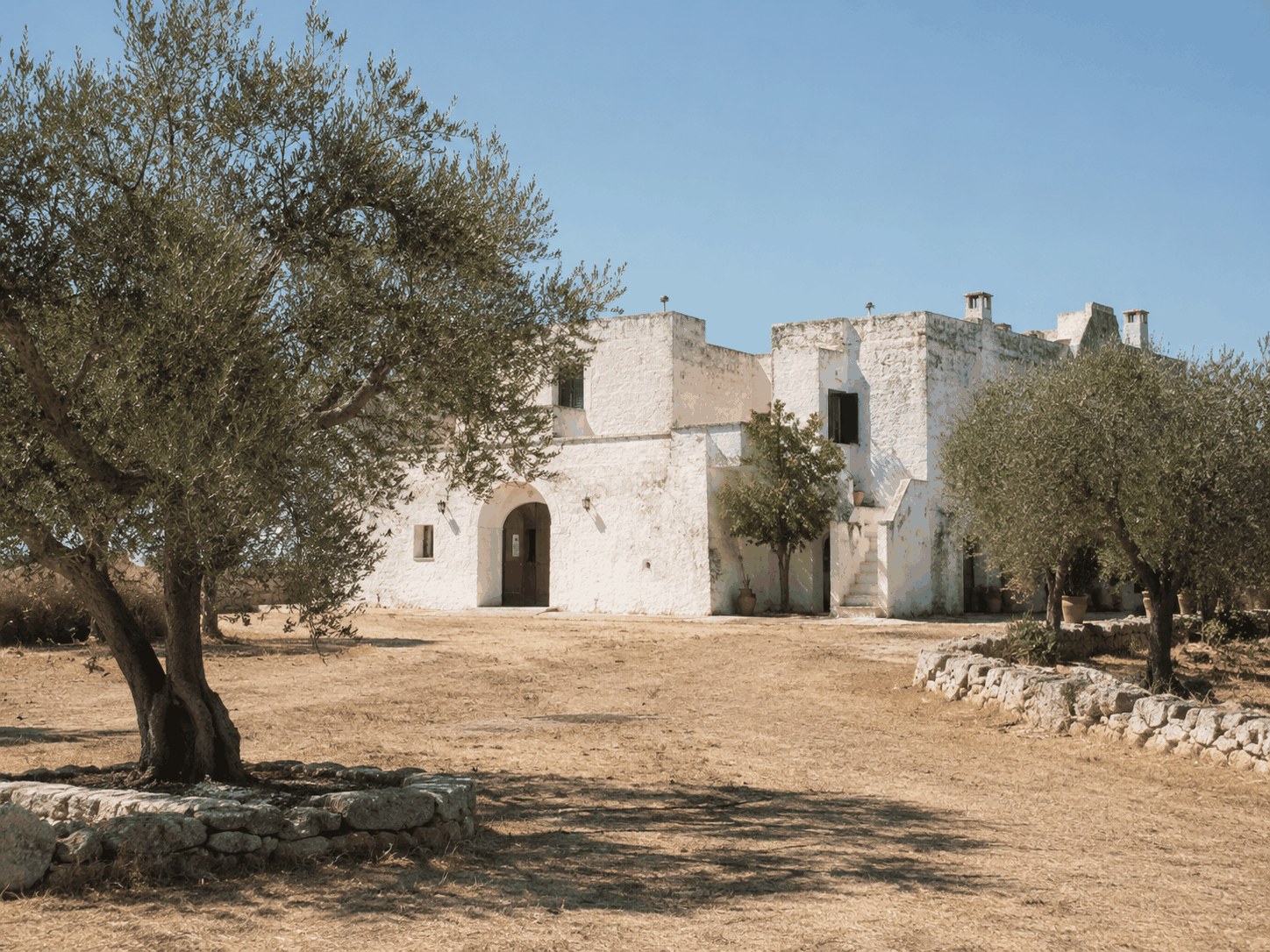
It is inland Puglia. It is Valle d’Itria. It is the territory of masserie, family-owned assets, undercapitalised hotels, unfinished projects, stalled conversions, closely held hospitality companies and transactions that do not yet appear on investors’ radar — not because they lack value, but because they have not yet been presented in a language the M&A market can read.
The central point is this: inland Puglia is not a market short of value. It is a market still short of financial translation.
This article is built on the convergence of two distinct areas of expertise: on one side, hospitality investment, M&A and hotel valuation; on the other, a local technical-legal framework, with particular reference to the tools provided by the Italian Business Crisis and Insolvency Code as applied to hospitality assets and distressed situations in the territory.
International capital does not avoid these areas because it sees no opportunity. It approaches them cautiously because it often does not find an orderly pipeline, preliminary due diligence, a clear assessment of local risks, transaction governance or a coordination process capable of turning complex individual assets into investable opportunities.
This is not a broad market forecast. It is a selective investment thesis. Certain specific situations, already visible in the market today, may open windows over the coming years for ownership restructuring, recapitalisation, acquisition, debt restructuring or operational repositioning.
This gap between underlying value and financial legibility is where one of the most compelling opportunities in Italian hospitality may emerge.
The 2026–2029 window: why the issue is becoming urgent
Over the 2026–2029 period, Valle d’Itria and inland Puglia may enter a phase of silent restructuring. Not a crisis of the territory. Not a decline in the destination. Not a loss of tourism appeal. Rather, a selective phase in which certain hospitality businesses and hotel-oriented real estate assets may find themselves at a crossroads: recapitalisation, sale, entry of an industrial partner, debt restructuring, corporate reorganisation or a change in management model.
Three phenomena appear likely to converge.
Undercapitalised hospitality assets
The first concerns masserie, boutique hotels and four-star properties that made significant investments during the 2018–2022 cycle. Tourism demand exists. The product has potential. The territory is attractive. But the financial structure is not always consistent with investment payback periods, seasonality, rising operating costs and the need for professional hotel management.
Corporate and family conflicts
The second phenomenon concerns corporate and family conflicts. A significant portion of Italy’s hospitality stock, especially in territories with a strong owner-operated tradition, is held by closely owned or family-controlled companies. When asset value, leverage, operational complexity and the need for new capital all increase, divergences often emerge between shareholders, heirs, operators and lenders.
Technical box — the CCII framework in hospitality
In these cases, the framework of the Italian Business Crisis and Insolvency Code may play a decisive role. Instruments such as negotiated crisis settlement under Article 12 CCII and simplified composition with creditors under Article 25-sexies CCII may, if properly used, become platforms for reorganising value — not merely tools for managing distress.
Negotiated crisis settlement provides a confidential, negotiation-based framework for addressing situations of economic and financial imbalance, facilitating dialogue between the company, creditors, banks and potential parties interested in continuity or restructuring. Simplified composition with creditors may become relevant where, following the negotiated settlement process, ordinary negotiated solutions are no longer viable, but it remains possible to structure a liquidation or asset-transfer solution capable of preserving value.
In hospitality, these tools must be read through an industrial lens, not merely a procedural one.
Conversion assets and stalled projects
The third phenomenon concerns conversion assets and stalled construction projects. There are buildings, rural complexes, hybrid structures and incomplete developments that could have valuable hotel or para-hotel uses, yet remain blocked by landscape constraints, urban planning issues, permitting processes, PPTR provisions, heritage authority requirements or uncertainty around the economic sustainability of the intervention.
Viewed separately, these elements appear to be weaknesses. Viewed together, they form a potential pipeline of distressed and special situation transactions. This is where capital may find value.
The real discount is not real estate. It is information.
When a hotel asset is sold at a discount, the assumption is often that the problem lies in the property itself: weak location, obsolete structure, inefficient management or insufficient market demand. In many cases, however, the discount has a different origin: information asymmetry.
A qualified investor does not simply buy rooms, walls, hectares of land, licences or permits. An investor buys an investment thesis. They want to understand what revenue can be stabilised, what EBITDA can be generated under efficient management, what capex is required, what urban planning, permitting, landscape and corporate risks exist, which operator can manage the asset, which brand can enhance it, what exit is plausible and which legal structure makes the transaction executable.
If this information is not collected, normalised and presented with method, the investor does not enter. Or enters only by applying a very high discount. This is why the real discount in inland Puglia is not always a real estate discount. Very often, it is an information discount. The value exists, but it has not yet been transformed into an investment-grade dossier. The opportunity exists, but it has not yet been made capital-ready.
This is the distance between a difficult property and a special situation.
Inland Puglia does not only need investors. It needs strategic coordination.
The issue, therefore, is not simply finding capital. Capital arrives when a transaction is readable. The real challenge is to build, in advance, the conditions that make the transaction readable, verifiable, governable and executable.
Inland Puglia needs technical and strategic coordination capable of bringing together four dimensions: knowledge of the territory, legal and urban planning analysis, hotel valuation and management assessment, and the ability to communicate with investors, funds, operators and advisors. Without this coordination, many opportunities remain invisible. With it, a complex situation can become a structured transaction.
This is the difference between a difficult property and a special situation. Between a business crisis and a relaunch platform. Between a shareholder conflict and an ownership restructuring. Between a stalled project and a discounted acquisition. In the hotel market, value does not depend only on the asset. It depends on the ability to make that asset executable.
Masserie and four-star properties: the critical post-investment phase
One of the most sensitive areas concerns masserie and four-star properties that have invested in recent years in renovation, expansion, repositioning or transformation. The initial thesis was correct: Puglia would continue to grow as an international leisure destination. But a correct view on demand is not enough to make a hotel investment sustainable.
Hospitality is a management-intensive sector. It requires capital, commercial expertise, revenue management, cost control, maintenance, international distribution, staff organisation, reputation management and the ability to work across multiple markets. When these elements are missing, even a quality asset can perform below its potential.
The greatest risk lies in the middle segment: properties that are too complex to be managed through traditional family-run logic, but not yet sufficiently structured to attract institutional capital. It is within this grey area that some of the most interesting opportunities emerge.
Not necessarily through aggressive acquisitions. In many cases, the solutions may be more sophisticated: business lease, lease structure, management contract, joint venture, entry of an industrial partner, recapitalisation, debt restructuring or separation between real estate ownership and hotel operations. Value does not arise only from the purchase price. It arises from the structure of the transaction.
Family governance and the Business Crisis Code: value must be reorganised
In the Italian hospitality sector, there is often a gap between the value of the asset and the quality of the governance structure around it. Many hotels are worth more than the corporate vehicle that contains them. When a hotel has to compete in international markets, sustain significant investments, manage rising costs and engage with banks or investors, governance becomes an industrial factor.
Shareholder disputes, generational transitions, disagreements over a sale, difficulty in injecting new capital and debt management are no longer merely private matters. They directly affect the value of the hotel business. In this context, crisis regulation tools should not be seen only as defensive instruments. They can become instruments of industrial reorganisation.
The right question is not simply: how can the debt be reduced? The right question is: what ownership, financial and management structure will allow this property to express value over the next ten years?
This is the question that truly matters to capital. Because an investor does not finance a crisis. An investor finances a credible reorganisation perspective.
Constraints, PPTR and heritage authorities: not only risk, but barriers to entry
One of the most common mistakes in assessing hotel assets in inland Puglia is to view constraints only as limitations. PPTR, heritage authorities, permits, urban planning designations, landscape protection and procedural complexity are often perceived as obstacles that reduce value. This is partly true. But for a sophisticated investor, constraints may also become barriers to entry.
They reduce competition. They select operators. They protect the identity of the territory. They prevent indiscriminate development. They make the value of genuinely authorisable and correctly designed assets more defensible.
Of course, this only applies if the risk is rigorously mapped. A constrained asset cannot be presented through a generic dossier. It must be supported by technical, urban planning, legal, landscape and hospitality due diligence capable of distinguishing what is impossible from what is complex but achievable.
Capital does not fear complexity. It fears unmanaged complexity.
Why international capital does not yet see the full opportunity
International capital is used to thinking in categories: trophy assets, resorts, branded hotels, platforms, portfolios, distressed assets, special situations, conversions and value-add opportunities. Many assets in inland Puglia do not easily fit into these categories because they have not yet been organised according to institutional logic.
What is often missing is a selected pipeline, normalised financial data, an independent hotel valuation, a capex analysis, a clear reading of constraints, verification of operational continuity, a transparent contractual structure, an investment thesis and coordination between owners, local professionals, banks, advisors and potential investors.
The result is that capital sees the destination, but not the transaction. It sees Puglia, but not yet the deal flow. The destination is already in the market. The transaction, in many cases, is not.
From territory to capital: the role of the coordinator
In a phase like this, the local partner cannot be a simple real estate intermediary. What is needed is a party capable of coordinating different areas of expertise: hotel valuation, financial analysis, management assessment, urban planning verification, dialogue with local professionals, dossier preparation, investor selection and definition of the operating structure.
From this perspective, Investimenti Alberghieri coordinates the M&A phase, the hospitality investment analysis, the preparation of the dossier and the dialogue with investors and hotel operators, in connection with a local technical-territorial presence for preliminary legal analysis, distressed mapping and asset qualification.
For Valle d’Itria, this local technical-territorial presence is provided by the law firm of Avv. Antonio Salerno, with specific reference to the interpretation of the CCII framework as applied to hospitality, the assessment of local distressed situations and the initial technical-legal qualification of assets.
The coordinator does not replace local professionals. It organises them. It does not promise generic capital. It builds the conditions for capital to evaluate. It does not simply sell a property. It makes a transaction readable.
From crisis to investment platform
The word “distressed” should not be read only in negative terms. In hospitality, many distressed situations are not terminal crises, but structural crises. An indebted hotel may be a weak debtor, but a strong asset. An undercapitalised masseria may be fragile under current management, but attractive to a stronger operator. A family conflict may destroy value, but it may also open the way to a necessary restructuring.
The real expertise lies in distinguishing between irreversible crisis and transformable crisis. The first should be avoided. The second should be structured. Here too, the CCII framework can play an important role, especially when crisis is not treated as mere debt management, but as an orderly reallocation of value.
In hospitality, an effective procedure or negotiation should always address three levels: continuity or discontinuity of management, sustainability of the financial structure, and the best industrial use of the asset. Only by bringing these three levels together is it possible to move from crisis to investment platform.
The final thesis: southern Italy is not peripheral. It is a frontier not yet fully structured.
Valle d’Itria and inland Puglia should not be read as peripheral markets. They should be read as markets that are not yet fully structured. The difference is substantial. A peripheral market remains marginal. An unstructured market can become highly attractive when someone builds method, access, selection and coordination.
International leisure demand for Puglia continues to grow. The value of the territory is recognised. The real estate and hospitality stock exists. Financial and corporate tensions may open entry windows. Constraints, if properly understood, may become barriers to entry. Undercapitalised assets may be transformed into relaunch platforms.
But none of this happens by itself. Strategic coordination is required. The ability is needed to speak simultaneously with owners, banks, advisors, local professionals, investors and hotel operators. A party is needed that can transform territorial complexity into a financially legible opportunity.
Inland Puglia does not only need capital. It needs coordination.
And whoever is able to build that coordination before others may capture one of the most interesting windows in Italian hospitality over the 2026–2029 period.
• • •
Investimenti Alberghieri can support owners, investors, advisors, banks and professionals in the initial assessment of hospitality transactions in Valle d’Itria, inland Puglia and other complex hotel markets.
Through a network of local partners and specialist expertise, it acts as transaction coordinator, helping to organise the dialogue between territory, capital, professionals and hotel operators.
The objective is not to generate generic leads, but to assess situations with genuine industrial and financial potential: existing hospitality assets, masserie, boutique hotels, resorts, four-star properties, real estate with a clear hospitality vocation, corporate or family restructuring transactions, distressed or special situation opportunities and dossiers that may be of interest to professional investors.
M&A — Investimenti Alberghieri
Transaction coordination, dossier preparation, dialogue with investors and hotel operators.
info@investimentialberghieri.it
Legal technical advisory — Studio Avv. Antonio Salerno
Local technical-legal qualification, CCII framework applied to hospitality, distressed analysis of the territory.
• • •
Dr. Roberto Necci
www.robertonecci.it
Avv. Antonio Salerno
Law firm — Veneto / Valle d’Itria
Business crisis, restructuring, distressed hospitality
CCII framework applied to the hotel sector
avv.salerno@libero.it