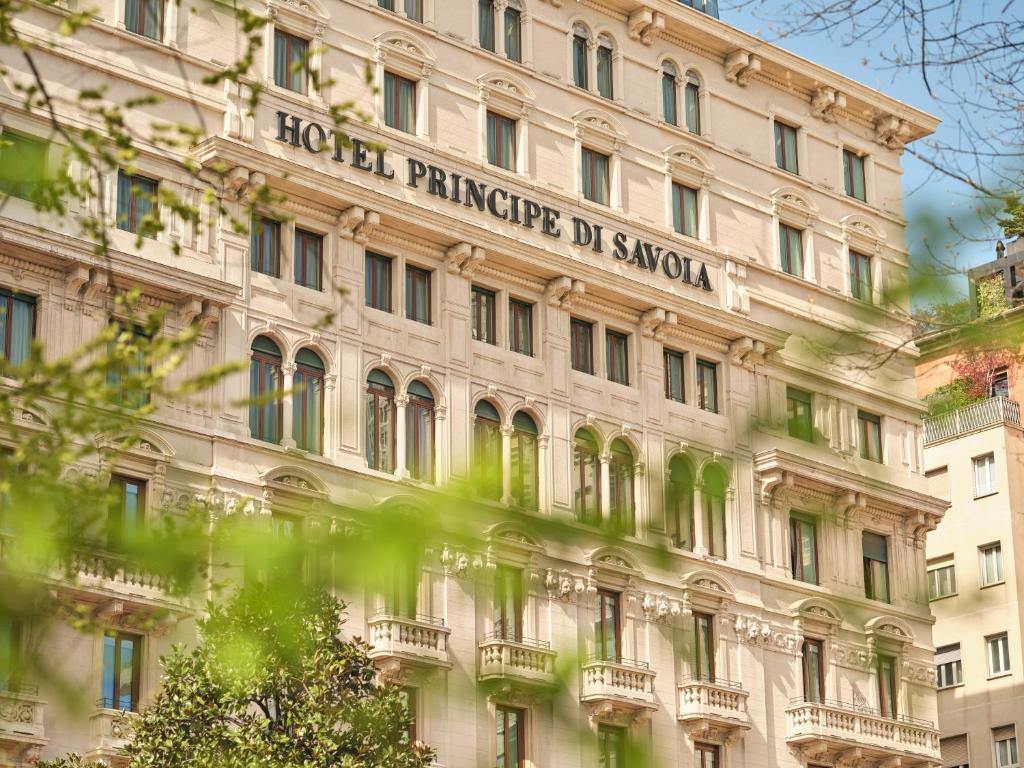
Construction is progressing towards an expected spring 2028 opening. Behind the project are 753 Hospitality, capital backed by Alchemy, financing from Banco BPM and an affiliation with Marriott International’s Tribute Portfolio. Yet for an investor, the key question is not how prestigious the hotel will be. It is how much value can be created by transforming a former bank building that had remained unused for years into an institutional-grade hospitality asset.
The redevelopment of the former Deutsche Bank headquarters in Piazza Garibaldi, Lecco, has now entered its operational phase.
Internal demolition and clearance works have been completed, while structural reinforcement of selected floor slabs and the subdivision of the areas allocated to guestrooms are under way. The mock-up room designed by Goddard Littlefair is expected to be completed by the end of November, while the stated target remains an opening in spring 2028.
At first glance, the story could simply be read as the arrival of a new internationally branded hotel in central Lecco.
That, however, would be an overly simplistic interpretation.
From a hotel investment perspective, the transaction is particularly interesting because it brings together almost all of the elements currently driving value creation in hospitality:
adaptive reuse, institutional capital, bank financing, international branding, urban regeneration, destination repositioning and execution risk.
The Lecco project is therefore, above all, a case of capital transformation: converting a non-performing or non-income-producing property into an operating hotel capable of generating cash flow and, if the strategy succeeds, a substantially different real estate value from that of the original asset.
The Transaction at a Glance
According to 753 Hospitality’s official portfolio, the project currently envisages:
-
opening in 2028;
-
144 guestrooms;
-
affiliation with Tribute Portfolio by Marriott International.
The most recent construction update, published on 3 September, refers instead to 145 guestrooms and a four-star positioning. This is likely to reflect a refinement of the original layout. In the absence of a formal update to the operator’s portfolio, we therefore use 144 keys as the official figure, while acknowledging 145 rooms as the latest project-level indication.
The scheme also includes a significant lifestyle component, with a panoramic swimming pool and facilities intended to position the property well beyond a purely accommodation-led proposition. Communications surrounding the acquisition referred to a 144-key hotel with a lake-view pool and an initial staffing requirement of at least 42 employees.
Yet the number of rooms is not the most interesting element.
The real issue is the economic structure of the transaction.
From Real Estate Asset to Hospitality Platform
In March 2026, 753 Hospitality, supported by funds managed by Alchemy Special Opportunities, reached an agreement to acquire Lariana Iniziative Immobiliari, the company owning the former Banca Popolare di Lecco building, which subsequently became Deutsche Bank’s local headquarters.
This is a crucial point.
The transaction should not be viewed merely as the acquisition of a building.
By acquiring the corporate vehicle, the investor gained control of the entity owning the underlying property and is now funding its conversion into a hotel.
Shortly after the corporate transaction, a Banco BPM financing facility granted to Lariana Iniziative Immobiliari was also announced, specifically aimed at supporting the conversion of the Piazza Garibaldi property into a hotel. The size of the financing has not been publicly disclosed.
This is significant because it makes the Lecco case an almost textbook example of how a modern hospitality investment may be structured:
equity + acquisition vehicle + debt + development + branding + hotel operations.
This is precisely the sequence through which a hospitality investment should be analysed.
The question is not simply what the property is worth today.
The relevant questions are:
How much capital will be required before opening? What performance can the stabilised hotel generate? And what value can the completed asset achieve once it is fully operational?
The Real Question: What Will the Property Be Worth After Conversion?
A bank building and an internationally branded hotel are two fundamentally different financial assets.
Before conversion, the property’s value depends primarily on:
planning status, location, floor area, physical condition, redevelopment potential and the local real estate market.
Once converted into a hotel, however, its value will depend predominantly on its ability to generate income.
The valuation framework therefore changes and begins to incorporate:
ADR, occupancy, RevPAR, total revenues, GOP, EBITDA, management structure, capitalisation rates and the asset’s ability to attract institutional capital.
The true economic objective is therefore not simply to develop 144 guestrooms.
It is to create an asset whose stabilised value exceeds the total amount of capital required to acquire and transform it.
That is the ultimate measure of success.
Lecco: A Destination in Transition
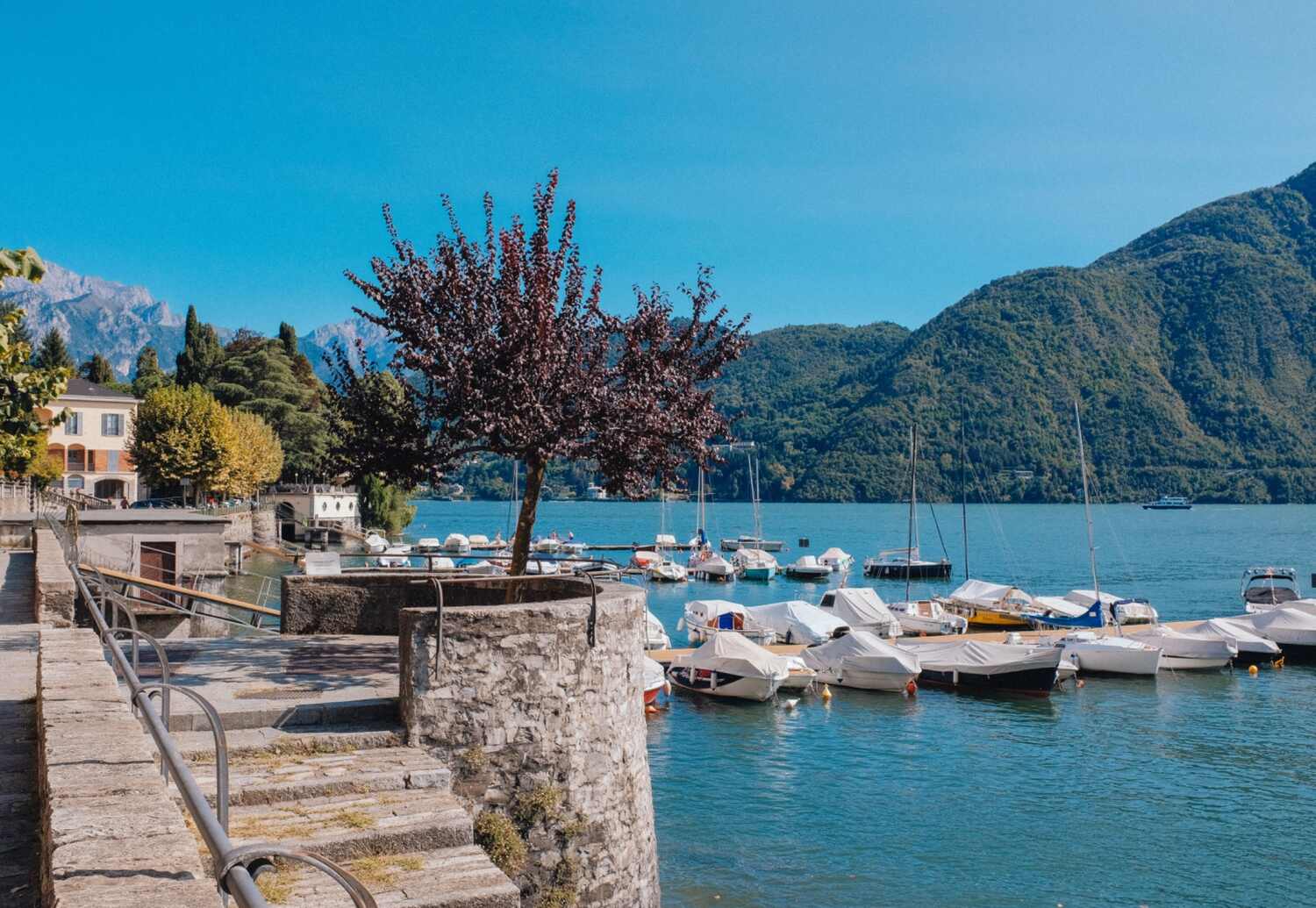
The underlying market also presents a number of compelling characteristics.
In 2025, the Province of Lecco recorded 558,637 arrivals and 1,544,487 overnight stays, representing increases of 18.9% and 19.9% respectively compared with 2024.
International demand accounted for approximately 73% of arrivals and 76% of overnight stays.
The city of Lecco alone recorded 107,256 arrivals and 267,089 overnight stays.
These figures matter for one particular reason.
The destination is not dependent solely on domestic demand.
It already has substantial international exposure, which is especially attractive for a hotel connected to a global distribution platform.
Lecco may also benefit from several demand drivers simultaneously:
Lake Como, international leisure demand, outdoor tourism, proximity to Milan, corporate demand and potential meetings and events business.
There is, however, another factor investors should monitor carefully.
Much of the recent growth in local accommodation supply has been driven by the non-hotel sector. The Province reports 625 accommodation businesses within the city of Lecco alone, including 388 holiday homes, serviced apartments and short-term rental properties.
The introduction of more than 140 branded hotel rooms therefore adds not merely additional capacity, but a fundamentally different type of hospitality product:
a professionally operated, internationally distributed hotel with considerably greater commercial reach than much of the fragmented local accommodation supply.
Marriott Is an Accelerator, Not an Investment Guarantee
The affiliation with Tribute Portfolio by Marriott International is one of the strongest industrial components of the project.
Tribute Portfolio generally allows hotels to retain a strong individual identity while benefiting from Marriott’s distribution infrastructure and commercial ecosystem.
For an asset such as this one in Lecco, the positioning appears particularly appropriate.
The building has a recognisable architectural identity, and the project aims to leverage its local character rather than erase it through excessive standardisation.
753 Hospitality also explicitly describes its strategy as focused on the conversion of existing buildings and the development of collection hotels, including in non-primary Italian destinations.
From a financial perspective, however, the role of the brand must be interpreted correctly.
Marriott can enhance the commercial capabilities of an asset. It cannot correct an investment acquired or developed at the wrong cost basis.
Distribution, loyalty, international recognition and access to overseas demand may support ADR and occupancy.
Ultimately, however, investment returns still depend on the relationship between:
total investment cost and cash flow generation.
The Key Missing Metric: Total Development Cost
The most important figure required to assess the transaction financially is not publicly available.
We do not currently know:
-
the effective acquisition price;
-
the size of the Banco BPM financing;
-
the total equity invested;
-
conversion CAPEX;
-
FF&E;
-
interest during construction;
-
professional and advisory fees;
-
pre-opening expenditure;
-
initial working capital;
-
contingency allowances;
-
total development cost.
The consideration paid for the underlying property has not been publicly disclosed. The value of the bank financing has likewise not been announced.
Without these figures, any attempt to calculate investment returns would be speculative.
The central metric should therefore be:
Total Development Cost per Key
TDC per key = total investment / number of guestrooms
Only by comparing this figure with the stabilised value per key can an investor establish whether genuine value creation is taking place.
Consider a purely methodological example.
If the completed hotel has a total development cost of €300,000 per key but, once stabilised, the market attributes a value of €400,000 per key, the investment may have created substantial value.
If, by contrast, development cost and stabilised value are broadly aligned, the investor’s margin is significantly compressed.
These figures are not estimates for the Lecco project.
They simply illustrate the appropriate framework through which the transaction should ultimately be assessed.
Investment Thesis: Why the Project Could Work
From an investor’s perspective, the positive investment thesis rests on five key pillars.
Location — Central Lecco, providing exposure to an internationally recognised destination connected to Lake Como.
Adaptive reuse — Conversion of a previously unused property into an income-producing hospitality asset.
Brand — Affiliation with Tribute Portfolio by Marriott International.
Capital structure — Involvement of professional capital alongside bank financing.
Demand growth — Strong growth in tourism flows across the province during 2025.
Taken together, these factors are compelling.
None of them, however, guarantees returns in isolation.
The Real Risk Is Not Simply Building the Hotel
Construction is progressing.
Yet some of the most material risks sit outside the building itself.
This is perhaps the most important lesson from the entire transaction.
Parking
The property currently has approximately 20 internal parking spaces.
According to local reporting, this is insufficient relative to the standards required for the hotel, meaning agreements with existing public or private car parks elsewhere in the city will also be necessary.
A valet parking service is expected to operate during periods of peak demand.
For an upscale hotel, this is not a minor issue.
Parking, accessibility and arrival logistics directly affect the guest experience.
Piazza Garibaldi: The Real Execution Risk
The more significant variable concerns the redevelopment of Piazza Garibaldi and the surrounding arcades.
The relevant planning agreement requires the private operator to carry out the regeneration project, involving an investment reported to be approximately €600,000, entirely funded by the developer.
More importantly:
the agreement links the opening of the hotel to the completion of the redevelopment works to the square and surrounding arcades.
This fundamentally changes the risk assessment.
Hotel development risk is not the same as construction risk within the hotel itself.
A property can be physically complete and yet still be unable to generate cash flow.
Permits, external works, mobility, parking, planning obligations and agreements with public authorities can all become part of the project’s critical path.
For lenders and investors financing a hotel development, that distinction is essential.
Every Month of Delay Has a Cost
A hotel under development absorbs capital but generates no operating revenue.
As a result, every potential delay can lead to:
additional interest expense, a higher cost of capital, postponed revenues, an extended pre-opening period and a delayed potential exit.
This is why a professional hotel business plan should never rely on a single scenario.
A robust underwriting should include, at a minimum:
a base case, a downside case and a severe downside case.
For example:
Base Case
Spring 2028 opening and ramp-up in line with the original business plan.
Downside Case
Opening delayed by six to nine months, combined with weaker-than-expected initial revenues.
Severe Downside Case
Delayed opening, higher CAPEX and simultaneous pressure on ADR or occupancy.
The quality of an investment should also be assessed by its ability to withstand the third scenario.
The Eight Questions a Professional Investor Would Ask
Before reaching a definitive conclusion on the transaction, a professional investor would need answers to at least eight questions.
1. What was the true acquisition cost?
2. What will the total CAPEX requirement be?
3. What is the Total Development Cost per Key?
4. What stabilised ADR is assumed?
5. What occupancy level underpins the business plan?
6. What stabilised GOP is expected?
7. How much debt is being used, and at what cost?
8. What exit yield is assumed when determining terminal value?
These are the figures that ultimately determine the IRR.
Not the rendering.
The Real Transaction: From Stranded Asset to Institutional Hospitality Asset
This is where the Lecco case becomes particularly relevant for Investimenti Alberghieri.
The former Deutsche Bank building was a prominent, central and recognisable property.
But an unused building does not automatically create value for its owner.
This investment seeks to achieve a far more complex transformation:
unused property
→ corporate acquisition
→ institutional capital
→ bank financing
→ conversion
→ international brand
→ hotel operations
→ cash flow
→ stabilised asset.
This is the true value-creation chain.
And it explains why, in hotel investment analysis, the real estate and the operating business cannot be assessed in isolation.
The building creates the product.
The operating company generates the income.
The capital markets convert that income into value.
Our Assessment of the Transaction
Based solely on publicly available information, the project presents an industrially compelling investment thesis.
The positive factors are clear:
central location, destination growth, strong international demand, global branding, professional capital, bank financing and the opportunity to transform a non-income-producing building into an institutional hospitality asset.
The risks are equally clear:
unknown CAPEX, undisclosed total investment cost, development risk, parking constraints, external urban regeneration works, commercial ramp-up and the future performance of the destination.
It is therefore not possible today to conclude whether the transaction will prove financially exceptional.
What can be said, however, is something more meaningful:
It contains several of the ingredients required to create substantial value.
The final outcome will depend on the ability to convert those ingredients into investment returns.
Conclusion: The Value Is Neither in the Building Nor in the Brand
The redevelopment of the former Deutsche Bank property in Lecco provides a clear example of how the Italian hotel investment market is evolving.
Some of the most interesting hospitality opportunities do not necessarily involve existing hotels.
Increasingly, value is being pursued through the conversion of:
offices, banks, historic properties, corporate buildings, obsolete structures and underutilised assets into new hospitality products.
But the physical conversion is only the first stage.
True value is created when real estate, capital, operations, distribution and demand are integrated within an economically sustainable model.
For this reason, the ultimate question should not be:
“What is the former Deutsche Bank building worth today?”
The more relevant question is:
“What could a stabilised 144-key Marriott-affiliated hotel in central Lecco be worth in 2030 — and how much capital will have been required to get there?”
The difference between those two figures will ultimately represent the value created by the transaction.
Confidential Analysis for Investors, Banks, Funds and Hotel Owners
Investimenti Alberghieri provides independent analysis of hotels, conversion opportunities, hospitality businesses and special situations.
Our work may include:
asset valuation, business planning, financial sustainability analysis, debt assessment, repositioning scenarios, turnaround strategies, conversions, disposals, leasing structures and extraordinary transactions.
For investment opportunities and confidential analysis:
info@investimentialberghieri.it
InvestimentiAlberghieri.it
Investhotel Capital Partners
Hotel Management Group
RobertoNecci.it