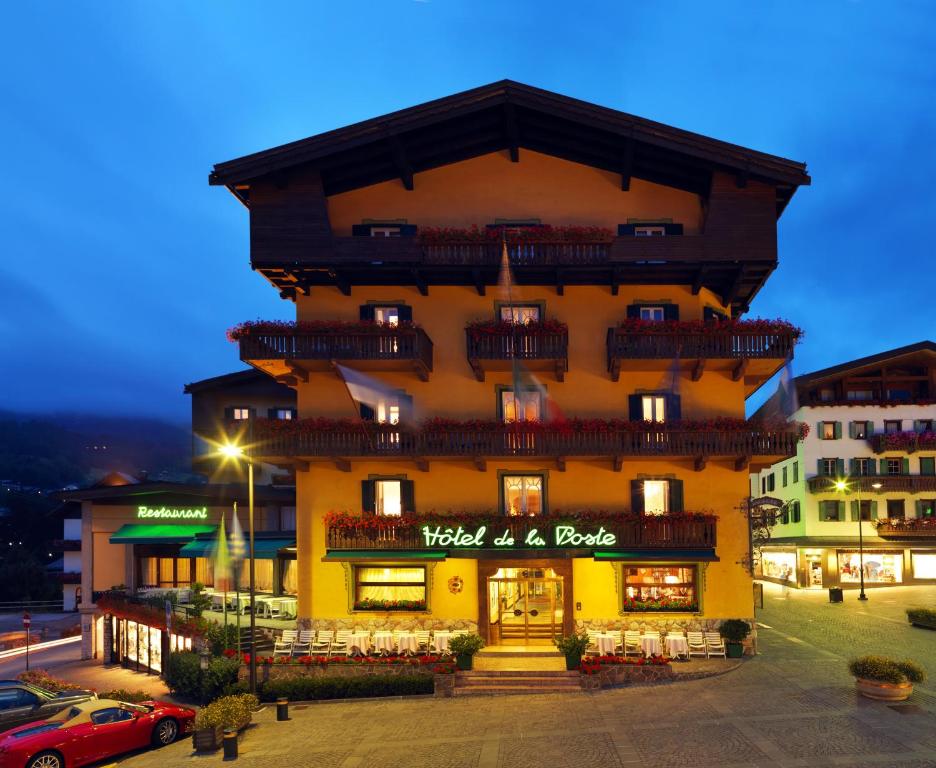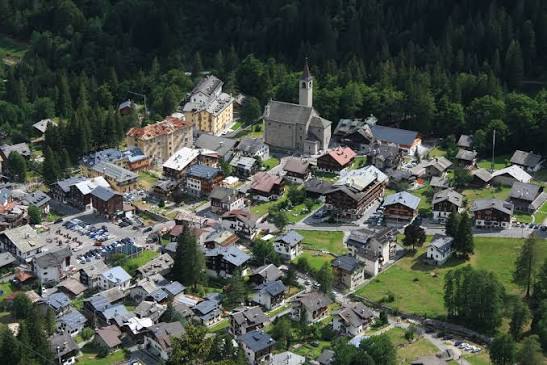
The sale of a hotel does not necessarily amount to the sale of a hotel investment opportunity.
The case of Casa Alpina De Filippi in Macugnaga, a hospitality property owned by the Archdiocese of Milan, illustrates this distinction particularly well.
On 17 September 2026, La Stampa reported that the Archdiocese had decided to bring to market what the newspaper describes as the largest accommodation facility in Macugnaga, with approximately 100 beds.
The property's official website provides an even more detailed picture: 110 beds across 40 en-suite rooms, together with a 120-seat restaurant, bar, communal areas, chapel, ski storage facilities and parking. The property is also located approximately 100 metres from the Belvedere chairlift and around 400 metres from the Monte Moro cable car.
These numbers — combined with the location — are certainly enough to attract investor attention.
They are not, however, enough to determine whether this represents an attractive investment.
The real investment case starts here.
An Asset That Must Be Assessed Beyond the Asking Price
Whenever a hotel comes to market, the first question is usually:
How much does it cost?
For a professional investor, the more relevant question should be:
How much total capital will be required to turn the property into the hospitality asset I intend to operate, and what return can that capital realistically generate?
That distinction is fundamental.
The acquisition price is only the first component of the transaction.
The proper investment equation is:
Acquisition Price + CAPEX + Transaction Costs + Pre-Opening Costs + Working Capital = Total Investment Cost
Returns should therefore be assessed against the Total Investment Cost, not simply against the purchase price of the real estate.
An apparently inexpensive property can become a poor investment if the required capital expenditure is excessive.
Conversely, a higher entry price may still prove economically sustainable if the location, physical characteristics and proposed business model can generate EBITDA commensurate with the capital invested.
This is one of the central principles behind the analysis published by InvestimentiAlberghieri.it: real estate value and hotel business value must be considered together, but they are not the same thing.
Casa De Filippi: A Location That Is Difficult to Replicate
The property is located in the Pecetto area of Macugnaga, at the foot of Monte Rosa.
Its proximity to the ski lifts is arguably one of the most compelling real estate features of the opportunity.
According to the property's official website, Casa De Filippi is approximately 100 metres from the chairlift providing access to Belvedere and around 400 metres from the Monte Moro cable car.
In mountain hospitality investments, proximity to the ski infrastructure can directly influence a property's commercial potential.
But even a strong location still has to be converted into operating performance.
The relevant question for an investor is not simply whether Casa De Filippi occupies a good position.
It is:
to what extent can that location be converted into ADR, occupancy, average length of stay and operating profitability?
110 Beds Do Not Automatically Mean 110 Profitable Beds
The property reports 110 beds across 40 rooms, with accommodation configurations designed for two, three and four guests.
This translates into an average theoretical capacity of approximately 2.75 beds per room.
That figure is significant because it immediately reveals something about the property's existing operating model.
Casa De Filippi has historically served families, schools, parish groups and organised groups, among the customer segments the property itself identifies as part of its summer and winter business.
Any incoming owner would therefore need to determine whether to:
maintain and develop the existing model;
introduce a stronger individual leisure component;
undertake a full repositioning;
or develop a hybrid concept.
Each strategy would produce materially different financial outcomes.
And this is precisely the point at which gross floor area and bed count cease to be the primary drivers of valuation.
The First Real Due Diligence Exercise Concerns the Future Product
One aspect deserves particular attention.
The Municipality of Macugnaga lists Casa Alpina De Filippi within the category covering holiday homes, holiday villages and vacation accommodation, rather than simply as a conventional hotel.
Before undertaking any financial valuation, it would therefore be essential to establish the property's precise planning, administrative and operating status.
A prospective investor should examine, at a minimum:
-
planning designation and building permits;
-
authorised hospitality classification;
-
cadastral configuration;
-
officially authorised number of rooms and beds;
-
building and plant compliance;
-
fire-safety compliance;
-
accessibility;
-
any applicable restrictions or covenants;
-
the feasibility of changing or adapting the current use;
-
investment requirements associated with a new commercial positioning.
In a hotel acquisition, the theoretical ability to conceive a hospitality concept does not necessarily mean that the concept can actually be delivered from a planning or regulatory perspective.
The purpose of due diligence is precisely to turn an investment hypothesis into a verifiable business proposition.
CAPEX Is Likely to Be One of the Decisive Variables
The ownership describes the property as having undergone renovation and upgrading works over time, including compliance with safety regulations.
That does not, however, mean that the asset is automatically suitable for every potential future positioning.
Maintenance, regulatory compliance and repositioning CAPEX are three different concepts.
If an investor were to reposition Casa De Filippi towards a more individually driven leisure hotel model, it would be necessary to assess the competitiveness of:
guestrooms and bathrooms;
public areas;
food and beverage facilities;
building systems;
energy efficiency;
technology;
acoustic performance;
accessibility;
wellness facilities;
ski storage and related guest services;
outdoor spaces;
architectural identity;
digital infrastructure and distribution standards.
The relevant question should therefore not simply be:
“How much will the refurbishment cost?”
It should be:
“Which CAPEX investments will genuinely drive higher ADR, occupancy, GOP and asset value?”
That is the difference between property maintenance and hotel value creation.
This relationship between capital expenditure, restructuring and asset repositioning also sits at the heart of the work carried out by Investhotel.it.
Determine Sustainable EBITDA First — Then Establish the Maximum Acquisition Price
Where no public asking price is available for immediate benchmarking, one of the most useful approaches is to work backwards.
Instead of beginning with the seller's price and trying to determine whether the economics can justify it, the investor should start with the level of operating performance that can realistically be achieved and determine how much the asset can therefore support as an acquisition price.
The sequence should be:
market demand → positioning → revenues → GOP → normalised EBITDA → CAPEX → required return → maximum sustainable asset value.
This approach helps prevent one of the most common mistakes in hotel acquisitions: buying the property first and subsequently building a business plan designed to justify the acquisition price.
The process should work in the opposite direction.
The business plan should validate the acquisition — not retrospectively justify it.
Seasonality Is the Mountain Hotel’s Main Risk. Managing It Is the Opportunity
Macugnaga has a clearly defined tourism identity.
Skiing, mountain activities, hiking, nature and outdoor experiences are natural components of the destination's demand profile.
Casa De Filippi itself describes a traditional operating model focused particularly on the winter and summer seasons.
That raises one of the most important questions in the entire investment case:
how many economically productive trading days can the property realistically generate each year?
Because the value of a mountain hotel does not depend solely on the number of rooms.
It depends on the number of days during which those rooms can be sold at a rate and occupancy level sufficient to support the property's fixed and variable cost base.
Demand should therefore be assessed separately across:
Winter season
Ski demand, ski weeks, holidays, weekends and organised groups.
Summer season
Hiking, outdoor activities, families, sports and nature-based tourism.
Shoulder seasons
Events, groups, corporate retreats, schools, associations and special-interest stays.
The ability to extend the economically viable operating season may ultimately have as much influence on investment value as the initial acquisition price.
Distribution Could Become a Major Value-Creation Lever
Any repositioning strategy would also require a fundamental reassessment of distribution.
A property primarily focused on organised groups operates under a very different commercial model from a leisure hotel distributed through:
-
direct booking channels;
-
OTAs;
-
metasearch;
-
tour operators;
-
DMCs;
-
commercial networks;
-
international source markets;
-
dynamic revenue management.
Changing the distribution model can simultaneously affect ADR, customer acquisition costs, occupancy and demand mix.
For this reason, the property's value cannot be created through real estate alone.
A hotel is also worth what its management team is capable of building around it in terms of demand.
The Real Question Is Not Whether to Buy Casa De Filippi. It Is What Casa De Filippi Should Become
This is arguably the most important question behind the entire transaction.
Casa De Filippi benefits from several features that would be difficult to replicate:
a long-established hospitality history;
more than 100 beds;
40 reported guestrooms;
a restaurant seating 120 guests;
proximity to the ski lifts;
a location at the foot of Monte Rosa;
and spaces that have been used for hospitality purposes for decades.
Yet none of these characteristics, taken in isolation, determines the value of the investment.
Value will emerge from the interaction between:
acquisition price + CAPEX + product + market + management + distribution + cost of capital.
This is the framework that should underpin any professional hotel acquisition.
Further analysis on the relationship between real estate value, operating performance and hotel governance is available on Robertonecci.it and through the advisory activities of HotelManagementGroup.it.
The Real Investment Begins After Completion
The sale of Casa De Filippi is undoubtedly a real estate transaction.
For those who analyse the hotel market professionally, however, it is above all a capital allocation decision.
An investor must determine how much capital should be allocated to the acquisition, how much to repositioning and what return should be required from the overall investment.
That changes the perspective entirely.
The property's sale price reflects its position today.
Its investment value will depend on the future that can be built around it.
For Casa De Filippi, therefore, the decisive question is not simply:
How much is it worth today?
It is:
What EBITDA can it generate tomorrow, after how much CAPEX and at what level of risk?
Only after answering those three questions can an investor establish the maximum economically sustainable acquisition price.
Because in professional hospitality investing, one rule remains fundamental:
First comes the business plan.
Then comes the value.
Only then comes the price.
HOTEL INVESTMENT ANALYSIS
InvestimentiAlberghieri.it analyses hotel acquisitions, asset repositionings, conversions, turnarounds and investment opportunities across the hospitality sector through an integrated real estate, financial and operational perspective.
For hotel asset analysis, valuations, development scenarios, business plans and investment dossiers:
info@investimentialberghieri.it