In hospitality real estate, there is a fundamental difference between buying a hotel and creating value.
Buying a hotel means acquiring an income stream the market already understands. Creating value is more demanding. It means identifying an asset whose next use is more valuable than its current one, moving before that potential is fully priced, and executing the transition with enough precision to convert vision into market reality.
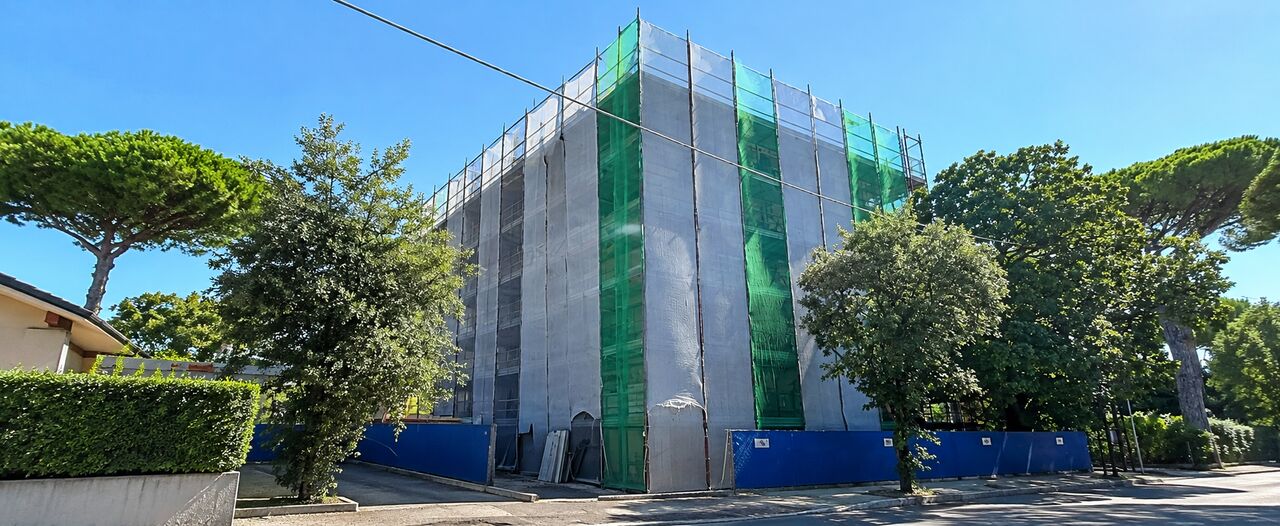
That is why Mama Shelter Rome, on Via Luigi Rizzo 20/22, matters. Not because a lifestyle hotel opened in Rome. Not because an international brand arrived in Prati. But because this was, at its core, the transformation of a former corporate building of roughly 15,000 square metres into a hospitality asset with a completely different commercial future.
That is where the real story sits. And that is where the value was created.
The opportunity existed before the hotel did
The market still tends to read hospitality transactions from the bottom up: rooms, rate, occupancy, margins. Useful metrics, of course, but rarely where the most interesting value creation begins.
The best deals start further upstream. They start with the asset.
In this case, the project is rooted in the conversion of an existing office complex into a lifestyle hotel. That distinction is crucial. This was not a conventional repositioning of an underperforming hotel. It was a change of use, a change of market, and, ultimately, a change of economic identity.
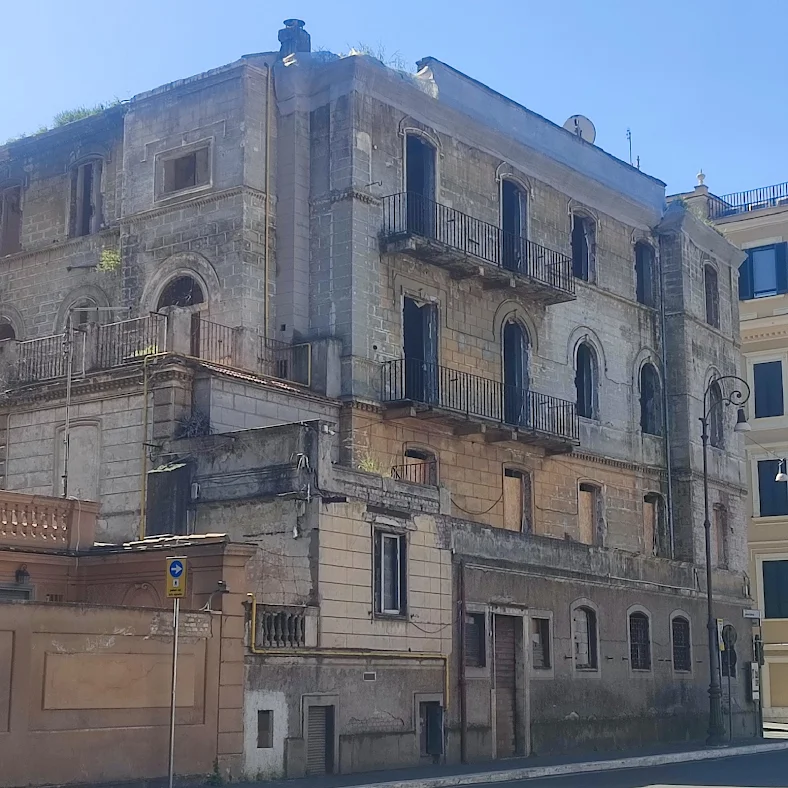
There is also a long-standing market association linking Via Luigi Rizzo 22 to the former presence of Telecom Italia Mobile / Telecom Italia. Whether one is looking at the property through the lens of urban memory, corporate history or title analysis, the broader investment point is unchanged: this was an asset from a previous cycle, tied to a legacy use, in a location strong enough to support a more valuable future.
And that, more often than not, is where the most attractive hospitality upside is found.
The real upside is created before performance is visible
An office building attracts one kind of capital, one kind of tenant demand and one kind of pricing logic. A well-positioned lifestyle hotel attracts another. The demand base changes. The revenue mix changes. The investor universe changes. The exit story changes.
Most importantly, the market starts valuing the asset on entirely different terms.
That is the part many observers still miss. They assume value is created through trading performance alone. But by the time performance is visible, much of the strategic work has already been done. The strongest returns are often generated earlier, when a property is still being valued through the lens of its past, while the investor is underwriting its future.
That is what makes Via Luigi Rizzo instructive. The opportunity was not simply to open a hotel in a good Roman district. It was to recognise that a former corporate property, in a strong urban micro-location, could be repositioned into an asset capable of generating far more than room revenue alone.
Grape Hospitality: the importance of controlling the asset, not just the operation
The first key player in the story is Grape Hospitality, and specifically Grape Hospitality Rome Vatican S.r.l., the vehicle associated with the project.
That matters because it places the centre of gravity at asset level. In transactions like this, control over the real estate strategy matters every bit as much as control over operations.
Grape Hospitality positions itself not as a narrow operator, but as a platform able to own, operate and manage hotels and restaurants across Europe. That alignment is significant. It reduces the disconnect that so often weakens hospitality deals: one party owns the asset, another develops it, another brands it, another runs it, and no one fully owns the value-creation logic from beginning to end.
When those layers are better aligned, the outcome is usually stronger. The asset is not simply opened; it is built around a coherent commercial thesis.
Sophisticated capital arrives before the market has proof
The second decisive element is the capital structure.
The transaction has been associated with a forward-funding model, which says a great deal about how the opportunity was understood. Ordinary capital waits for certainty. Sophisticated capital moves earlier, when the thesis is still ahead of the numbers.
That is not just a question of risk appetite. It is a question of where value actually sits. If an investor enters only once the product is complete, stabilised and fully benchmarkable, the market has already done much of the repricing. The sharper entry point is earlier, while the value is still embedded in design, entitlement, construction, positioning and execution.
That is when the spread is widest: between what the asset is worth in its inherited state and what it can become once the repositioning is complete.
In the case of Mama Shelter Rome, that timing is central. Capital did not back an operating hotel. It backed a transition.
And in hospitality real estate, transitions are often where the real returns are made.
Mama Shelter, Ennismore and Accor: brand as a valuation lever
The third layer is the brand, though “brand” is too small a word if it is understood merely as marketing.
Mama Shelter, founded in Paris by Serge Trigano together with his sons Jérémie and Benjamin Trigano, and now part of Ennismore within the broader Accor universe, functions here as something much more powerful: a valuation lever.
A credible lifestyle brand does not simply fill rooms. It changes how the asset is perceived. It broadens the demand profile. It supports pricing power. It strengthens food and beverage. It brings local relevance, not just transient demand. And above all, it makes the property less substitutable.
That last point matters enormously.
In crowded urban markets, value accrues disproportionately to assets that are difficult to replicate and easy to recognise. A strong lifestyle concept does not just improve trading. It changes the asset’s position in the market and, by extension, the way the market prices it.
That is not branding as decoration. It is branding as asset strategy.
Execution is where the investment case is either protected or lost
Every conversion eventually reaches the point where the story must survive reality.
Planning, permitting, building systems, circulation, public space, technical compatibility, timing, delivery discipline: this is where many otherwise attractive projects lose clarity and compromise the original thesis.
That is why the role of Artelia matters. In a transaction of this nature, technical execution is not a secondary function. It is one of the core drivers of outcome quality. The challenge is not simply to convert a building. It is to convert it into the right product without eroding the value proposition in the process.
Hospitality conversions are unforgiving of imprecision. A former office building can be turned into a hotel. That does not mean it will become a compelling hotel, still less one with enduring market relevance.
The best execution teams do more than deliver works. They protect the investment thesis from dilution.
Debt does more than leverage returns. It finances the transformation itself.
The financing framework deserves the same level of attention as the real estate and operational components.
In complex hospitality deals, debt is not merely a return-enhancement tool. It is what finances the period between conviction and proof. Acquisition, repositioning, build-out, opening and stabilisation all sit on different timelines. If the capital stack is not structured around that reality, even a strong idea can become pressured at precisely the wrong moment.
The involvement of institutional lenders such as Natixis and CACIB, through acquisition and long-term facilities linked to the project vehicle, points to a structure designed to support the asset through that transition.
And that is exactly what good debt should do in hospitality real estate: not rush the asset into maturity, but give it the runway required to become what the investment thesis says it can become.
The final product is not just a hotel. It is a monetisable urban ecosystem.
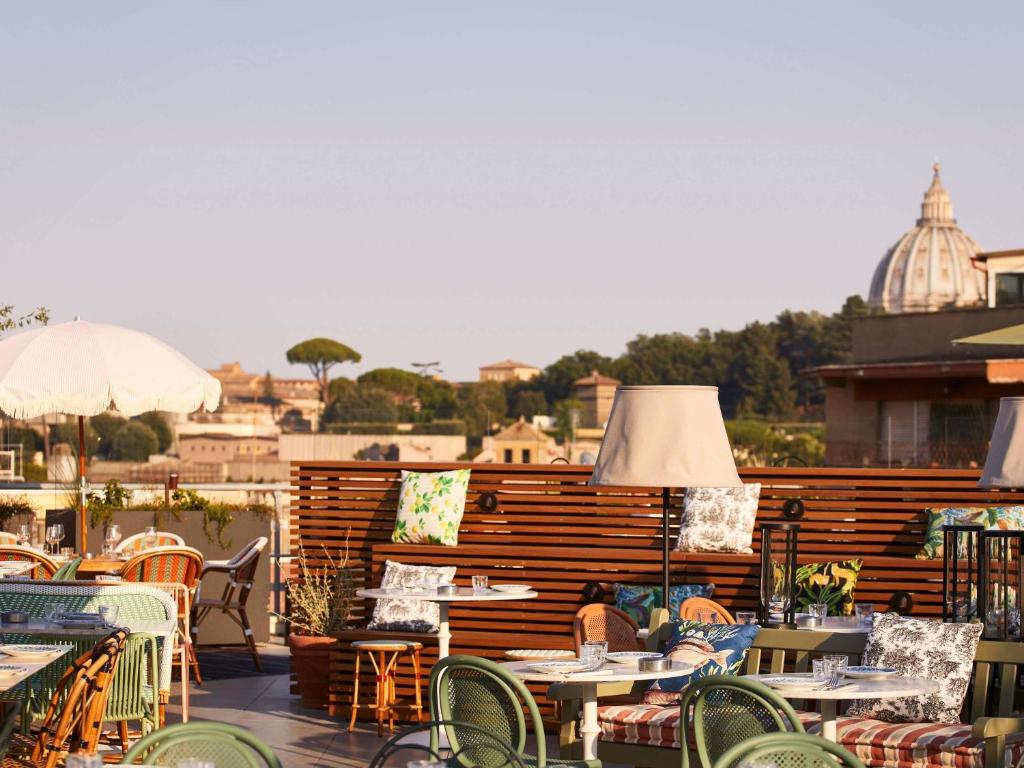
Today, Mama Shelter Rome presents itself as a hotel in Prati, close to the Vatican, with 217 rooms, a rooftop overlooking St Peter’s, a pool, spa, garden, bar and restaurants.
But the room count is not the point.
The point is that the asset has been repositioned into an urban ecosystem of revenue. Rooms matter, but so do food and beverage, local footfall, rooftop activation, lifestyle relevance, business demand and neighbourhood appeal. The property no longer functions as a single-purpose building. It operates as a multi-layered commercial platform.
That shift is critical. Once an asset can monetise multiple forms of demand across different dayparts, customer segments and use cases, its earnings profile becomes more resilient and its strategic value becomes more obvious.
That is when a building stops being merely improved and starts becoming genuinely more valuable.
The wider lesson for hospitality investors
The real lesson of Via Luigi Rizzo is not simply that Rome can support a lifestyle brand. That is true, but it is far too shallow a conclusion.
The deeper lesson is that the strongest hospitality transactions are rarely built on the obvious. They are built on a sharper reading of the asset itself.
A property with a long prior life. A legacy use that had run its course. A vehicle designed around the opportunity. Capital willing to move before value was fully visible. A brand able to reposition the asset, not merely market it. Technical execution strong enough to preserve the thesis. Financing structured to support the transition. And, ultimately, a finished product that creates a new form of economic relevance within the city.
That is not refurbishment.
That is value creation.
And the principle behind it is straightforward: the most attractive margin in hospitality real estate is not always found where there is already a hotel. More often, it is found where there is still an asset the market has not yet learned to value properly.
If you require assistance with transactions of this kind, visit www.hotelmanagementgroup.it.