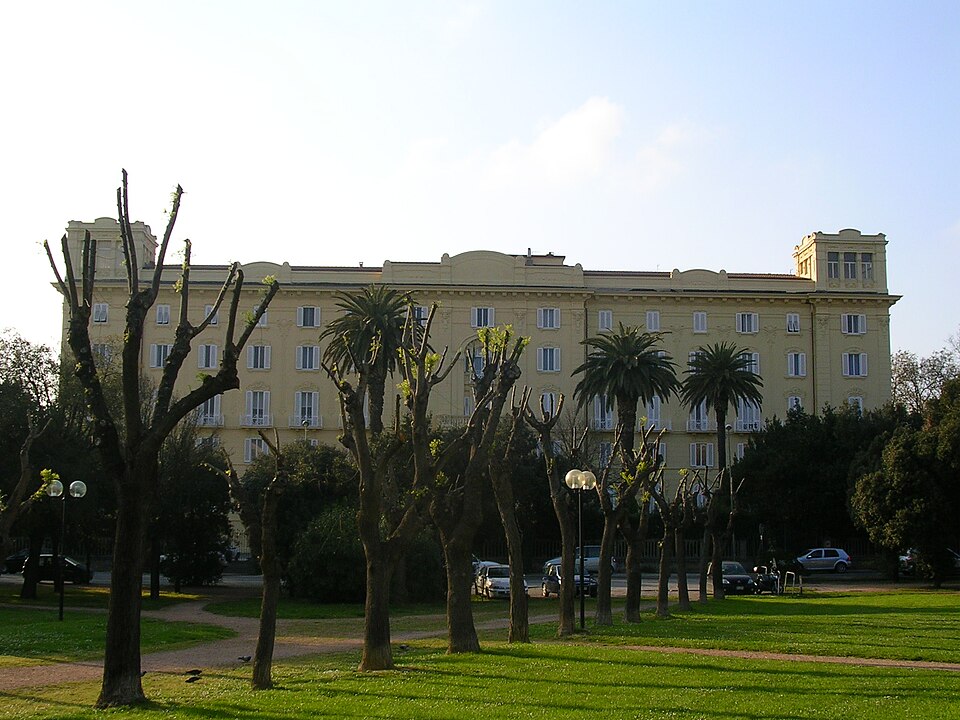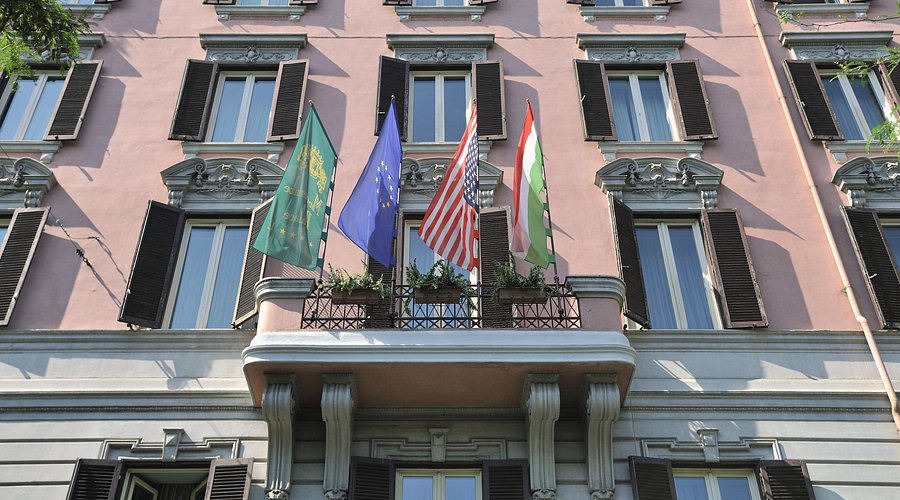
Room00 Next Gen Hospitality’s acquisition of the Mecenate Palace Hotel matters less for the headline number than for what the transaction actually signals. In Rome, hotel value creation is no longer driven simply by owning the underlying real estate. It is increasingly driven by the ability to combine acquisition, capex, repositioning and operational infrastructure within a single investment thesis. Room00 has acquired 100% of the company managing the hotel through a transaction with an overall value of approximately €12 million, inclusive of the post-acquisition repositioning programme. The asset is a 62-key four-star hotel overlooking the Basilica of Santa Maria Maggiore and spread across two 19th-century buildings.
That distinction is critical, because it marks the dividing line between a news-driven reading of the deal and an advisory one. The €12 million figure should not be read as a pure acquisition price. It also includes the cost of transforming the asset. Any simplistic cost-per-key analysis is therefore weak at best. Public sources do not provide a precise breakdown between entry price and capex, nor do they fully clarify how value is split between the real estate, the operating platform and any hybrid control structure that may sit between the two. Yet this is precisely where the transaction should be judged. It is not enough to know how much capital has been deployed. What matters is understanding how much of the future return is expected to come from real estate basis and how much from operational execution.
The business rationale, by contrast, is clear. Once repositioned, the Mecenate will operate under the Select Natural Hotels brand. The refurbishment is scheduled between November 2026 and March 2027 and is designed not only to upgrade the product, but to reshape the revenue model. The rooftop and restaurant will be opened to external customers, alongside the introduction of coworking, specialty coffee and a meditation room. That is the most interesting aspect of the deal. The objective is not simply to make the hotel more attractive; it is to make it more productive on a per-square-metre basis. In a 62-key urban hotel, the gap between a good investment and an excellent one is not occupancy alone. It lies in the ability to monetise non-room areas with discipline and consistency.
The strategic context also matters. In May 2025, King Street Capital Management announced a strategic investment of up to €400 million in Room00, making clear that the platform would continue to grow through leases and management agreements while also expanding its ability to acquire assets directly in prime micro-locations. In Italy, Room00 identified Kryalos SGR as its partner for the creation of a local real estate vehicle. In the broader transaction, Room00 was advised by GRC IM and CBRE Investment Banking. This is why Mecenate Palace should not be read as a one-off opportunistic acquisition. It is a logical move within a platform that is building an integrated model across capital, real estate and operations.
The timing is equally consistent with wider market dynamics. CBRE ranked Rome as the third most attractive European city for hotel investment in 2025. JLL reported that hospitality accounted for 14% of total Italian real estate investment in 2025, with €1.8 billion in volume, while roughly 90% of transactions by number were below €50 million. Colliers also noted that value-add strategies accounted for 70% of hotel deals in Italy during the first half of 2025. In that context, Mecenate Palace is not an outlier. It is exactly the type of asset investors are targeting: a still-accessible ticket size, manageable execution complexity and meaningful upside through repositioning.
Still, the investment case is not supported by capital alone. It rests just as heavily on demand. Istat confirmed that Rome was Italy’s leading tourism destination in 2024, with more than 42.7 million overnight stays. Data released by Turismo Roma for 2025 points to a new record, with 52.92 million overnight stays and 22.9 million arrivals. But this is only one side of the equation. The statistical yearbook of Rome Capitale also shows that in 2024 the number of hotels fell to 994, while complementary accommodation rose to 32,430, driven by rapid growth in short-term rentals and other tourist-use formats. In investment terms, that means demand is exceptionally strong, but competitive pressure is now far broader and more aggressive than a traditional hotel-only lens would suggest. In today’s Rome, a central location is no longer enough. Assets must be genuinely distinctive, well positioned across channels and capable of defending both rate and margin within an accommodation market far more fragmented than it was even five years ago.
Room00’s operating targets need to be assessed in exactly that context. The group is targeting ADR above €200 and occupancy of 90% within roughly 18 months of stabilisation. On a simple run-rate basis, that points to more than €4 million in annual room revenue before taking into account rooftop income, food and beverage and ancillary revenue streams. It is an attractive set of assumptions, but it should not be romanticised. This is an execution-heavy business plan. The direct view over Santa Maria Maggiore and the strength of the micro-location are real advantages, but they do not guarantee performance. Delivering those numbers will require disciplined channel mix, mature revenue management, strong digital reputation, a genuinely differentiated product and, above all, an ability to convert shared spaces into recurring external demand rather than occasional footfall. If coworking, specialty coffee and the rooftop remain brand concepts, the deal risks becoming an expensive refurbishment. If they become repeatable revenue generators, Mecenate could emerge as a genuine repositioning success and a meaningful asset re-rating story.
The conclusion is straightforward. This is an intelligent transaction, but not because “Rome is hot” or because the hotel enjoys an iconic view. It is intelligent because it targets what is arguably the most compelling segment of the Roman hotel market today: mid-sized urban assets in irreplaceable locations, with absorbable capex and substantial embedded upside through repositioning and operating improvement. Mecenate Palace is less a passive real estate acquisition than a strategic test case. If it works, it will confirm that in today’s Rome value is created not by buying hotels, but by buying assets with embedded repositioning potential. If it does not, it will prove the opposite: that the market may believe in the value-add narrative, but that without execution, even an exceptional location is not enough to produce an exceptional investment outcome.
Roberto Necci
Would you like to explore the topic further?
https://www.hotelmanagementgroup.it
For a confidential discussion:
r.necci@robertonecci.it