Meliá Hotels International’s acquisition of the Meliá Genova property is not one of the largest hotel transactions in Europe by scale. Its significance lies elsewhere.
This is a strategic deal in which an international hotel operator, already managing the property, has chosen to acquire direct ownership of the underlying real estate. In doing so, Meliá moves from operating the hotel to controlling the full hotel platform: brand, operations, asset, investment decisions and long-term positioning.
The transaction highlights a broader shift in hospitality investment. The asset-light model remains the dominant growth strategy for global hotel groups. Yet for selected luxury assets — centrally located, operationally familiar, architecturally distinctive and difficult to replicate — direct ownership is becoming strategically relevant again.
In the case of Meliá Genova, the acquisition points to three important market signals:
-
international operators remain interested in Italian hospitality assets;
-
urban luxury hotels in secondary but resilient destinations are gaining strategic relevance;
-
direct ownership can still create value when the asset is rare, brand-relevant and operationally understood.
For further analysis of hotel transactions, investment strategies and hospitality real estate in Italy, visit the Investimenti Alberghieri blog.
The transaction: from hotel operator to property owner
According to Legalcommunity, ADVANT Nctm advised the Genoa-based holding company Assobello on the sale of the Meliá Genova property to Meliá Hotels International, the Spanish hotel group active globally in the luxury and upper-upscale segments.
The legal team was led by partner Bruno Fondacaro, together with associate Ana-Maria Tamba.
The defining feature of the transaction is that Meliá was already operating the hotel. The acquisition therefore does not represent a conventional property purchase by an external investor. Nor is it simply a change in real estate ownership.
It is an industrial move.
The operator that already knew the hotel, managed its market positioning and controlled its brand environment has now decided to acquire the real estate as well.
From a technical perspective, the transaction narrows the gap between property ownership and hotel operations. It aligns the interests of the owner, operator and brand within a single strategic framework.
This matters because, in hospitality, value is rarely created by the building alone. It is created by the interaction between the asset, the brand, the management model, the guest mix, the destination, the capital expenditure strategy and the long-term commercial vision.
The investment thesis
The core investment thesis is straightforward:
For centrally located urban luxury hotels with architectural identity and strategic brand relevance, direct ownership can once again become a competitive advantage, even for hotel groups that remain broadly asset-light.
Over the past two decades, major hotel companies have progressively reduced their real estate exposure. Management agreements, franchise models, leases and other asset-light structures have allowed global brands to expand quickly while limiting capital intensity.
That logic remains valid.
Asset-light growth enables scale, geographic expansion, stronger returns on invested capital and lower balance-sheet exposure. But the model is not universally superior. Its efficiency depends on the type of asset, the destination, the brand strategy and the control required to protect long-term value.
A more selective approach is now emerging:
-
asset-light remains efficient for network expansion;
-
ownership becomes rational when the asset is rare and strategically important;
-
direct control can protect brand value in luxury hospitality;
-
ownership may unlock better capex decisions and stronger alignment between real estate and operations;
-
operators with direct knowledge of the property can underwrite risk more accurately than external investors.
Meliá Genova fits this logic. It is not merely a managed hotel. It is a high-end urban property in a historic building, located in a city with a complex but diversified demand base.
The asset: a luxury urban hotel in a historic building
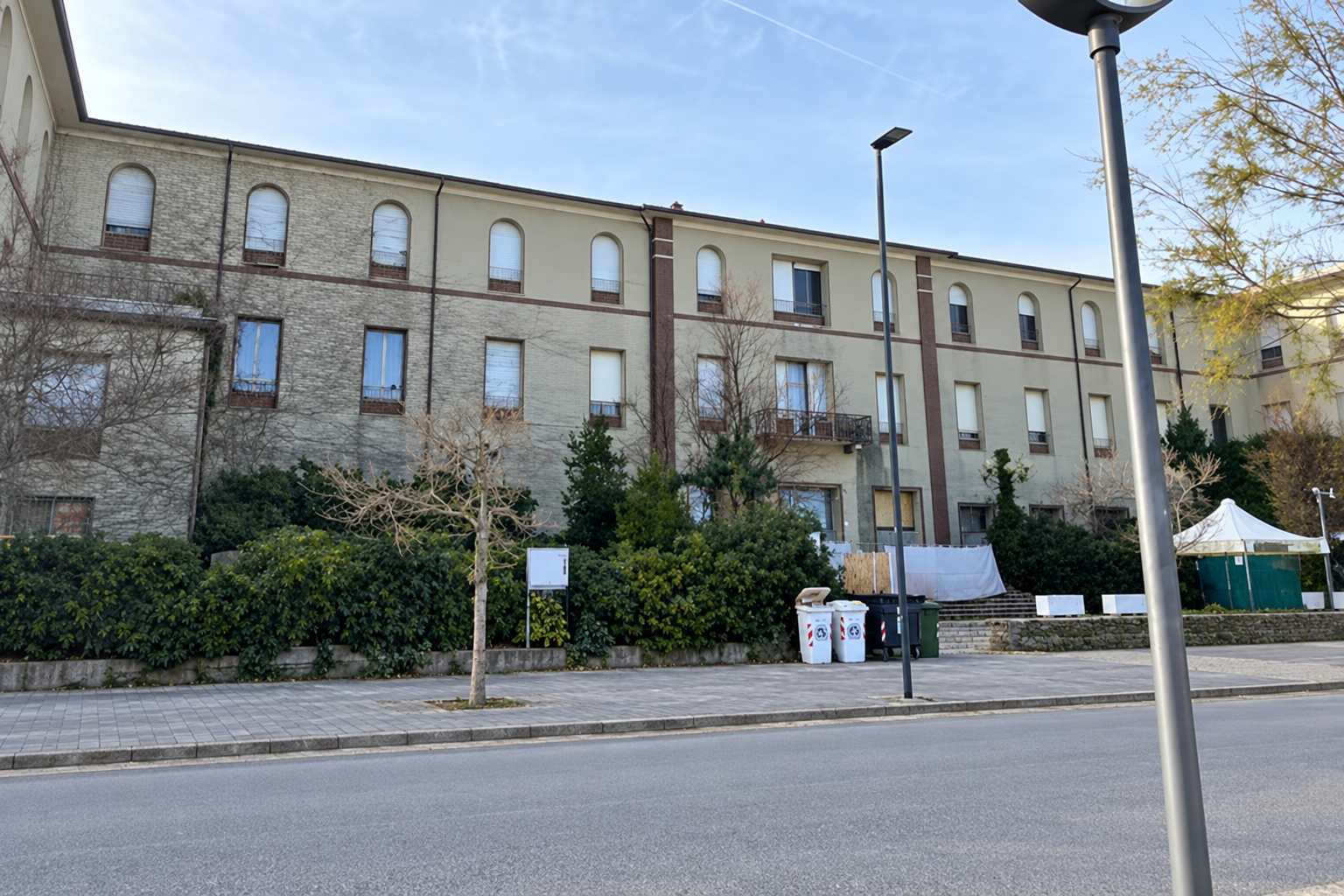
Meliá Genova is located in central Genoa, within a historic Art Deco building. The hotel has approximately 99 roomsand offers facilities aligned with an upper-upscale/luxury positioning, including wellness, fitness, restaurant and hospitality spaces designed for leisure, corporate and international demand.
From a real estate perspective, the property has several features that are particularly relevant in hotel investment:
-
central urban location;
-
limited but qualified scale;
-
historic architectural identity;
-
existing international brand affiliation;
-
upper-upscale/luxury positioning;
-
diversified potential demand;
-
limited replicability in the same urban context.
The hotel’s size is important. With around 99 rooms, it is not a large-scale conference property and does not benefit from the same operating leverage as a much larger hotel. However, in urban luxury hospitality, scale is only one part of the equation.
What matters is the combination of location, brand, product quality, pricing power, operating discipline and scarcity.
A hotel of this type should be viewed less as a volume-driven accommodation asset and more as a strategic urban foothold: a property that strengthens brand presence, protects market positioning and offers long-term value through control of a distinctive asset.
Why Genoa matters
Genoa is not an obvious hotel market in the way Rome, Florence, Venice or Milan are. It does not have the same international leisure intensity as Italy’s leading art cities, nor the same corporate depth as Milan.
But this does not make it uninteresting. It makes it more selective.
Genoa has a layered demand profile, supported by:
-
port and maritime activity;
-
cruise-related traffic;
-
cultural tourism;
-
domestic and international leisure demand;
-
corporate travel;
-
selective meetings and events;
-
links with the wider Ligurian region;
-
ongoing urban regeneration;
-
a limited supply of truly central luxury hotel product.
For hotel investors, Genoa is a market where asset quality and operational expertise can matter more than passive exposure to demand.
In highly liquid gateway cities, market momentum often supports asset performance. In more nuanced secondary destinations, value creation depends more heavily on product quality, commercial execution, pricing strategy and the ability to capture higher-value demand segments.
That is why Meliá Genova is strategically interesting. The hotel is not simply exposed to Genoa as a destination; it can help shape the upper end of the city’s hospitality offer.
Why the acquisition makes industrial sense
The transaction can be read through five main investment drivers.
1. Strategic control
For a hotel group, direct ownership removes dependence on a third-party landlord.
If a property is important to the brand’s presence in a destination, acquiring the asset protects that position over the long term. It also reduces the risk of future misalignment around capex, contract renewals, repositioning, use of the property or operating standards.
In luxury hospitality, control matters. Brand reputation is built through consistency, and consistency is difficult to preserve when ownership and operations are not fully aligned.
2. Brand-property alignment
In the luxury segment, the physical asset is part of the brand promise.
The façade, rooms, bathrooms, lobby, restaurant, wellness spaces, materials, circulation flows and service environment all influence the guest’s perception of value.
When the operator owns the property, investment decisions can be made with greater strategic coherence. Capex is no longer merely a landlord obligation or a negotiated item. It becomes part of the brand and asset management strategy.
3. Lower information asymmetry
Meliá was already operating the hotel. That gives the group a major underwriting advantage.
An external buyer would need to assess the property through due diligence, financial data, market analysis and management assumptions. Meliá already had direct operating knowledge of the asset.
This reduces uncertainty around:
-
historical performance;
-
true seasonality;
-
demand segmentation;
-
rate potential;
-
cost structure;
-
staffing;
-
maintenance requirements;
-
guest perception;
-
operating limitations;
-
commercial upside.
In hotel investment, information asymmetry is one of the most important sources of risk. Here, that risk is materially reduced.
4. Targeted capex potential
Direct ownership allows the operator to plan investment more efficiently.
The value creation path does not necessarily require a radical transformation of the hotel. In a high-end urban property, targeted capex can be sufficient to improve guest perception, support ADR growth, strengthen reputation and protect the asset’s competitive position.
Potential areas include rooms, bathrooms, wellness, F&B, technology, energy efficiency, common spaces and service infrastructure.
In luxury hotels, capex should not be assessed only by square metres or additional keys. It should be assessed by its impact on pricing power, guest satisfaction, brand consistency and long-term asset value.
5. Long-term capital preservation
A centrally located historic hotel in an Italian city with barriers to entry can also function as a long-term store of value.
For an industrial hotel group, the return is not limited to operating EBITDA. It also includes strategic control, capital appreciation, brand protection, flexibility and future optionality.
This combination of operating and real estate value explains why direct ownership may be rational even for a group that continues to rely primarily on asset-light growth elsewhere.
Asset-light is not dead. It is becoming more selective.
The acquisition should not be interpreted as a rejection of the asset-light model. That would be too simplistic.
Asset-light remains the dominant structure for global hotel growth. It allows brands to scale quickly, enter new markets, reduce capital requirements and improve returns on capital.
But the real debate is not asset-light versus asset-heavy.
The real debate is where ownership creates strategic value.
For standardised expansion, management and franchise models remain highly efficient. For rare, central, luxury or brand-critical assets, direct ownership may offer advantages that contractual control alone cannot fully provide.
A sophisticated hotel group can therefore pursue both strategies at the same time:
-
asset-light growth for scale;
-
selective ownership for strategic assets;
-
leases or hybrid structures where operational control is needed;
-
partnerships with institutional investors where capital efficiency remains the priority.
The Meliá Genova transaction belongs to this more selective category. It suggests discipline rather than a structural reversal.
Key metrics in a transaction of this nature
A hotel acquisition of this kind cannot be assessed using a single metric. Price per room, while useful, is insufficient.
The analysis should include a broader set of indicators.
Price per key
Price per key is helpful for benchmarking, but only when adjusted for location, condition, brand, capex, profitability and market positioning.
In historic luxury hotels, two assets with the same number of rooms can have very different values.
Normalised EBITDA
The property’s sustainable earning capacity is central.
Historical EBITDA must be adjusted for extraordinary items, non-recurring costs, post-pandemic distortions, temporary inefficiencies and any management anomalies.
ADR and RevPAR potential
The critical issue is not only current performance. It is whether the hotel can improve its rate positioning and revenue quality over time.
This requires a detailed analysis of the competitive set, demand segmentation, distribution mix and brand strength.
Capex requirements
In historic properties, capex risk can materially affect returns.
The main areas to assess include:
-
structural condition;
-
MEP systems;
-
rooms and bathrooms;
-
public areas;
-
fire safety;
-
accessibility;
-
energy efficiency;
-
technology;
-
brand standards;
-
deferred maintenance.
A poorly estimated capex plan can turn an attractive acquisition into a low-return investment.
Terminal value
Even when the buyer has a long-term industrial strategy, exit value remains relevant.
The future liquidity of the asset will depend on its profitability, condition, brand relevance, market appeal and attractiveness to institutional or strategic buyers.
Value creation levers
The Meliá Genova acquisition offers several potential value creation levers.
Stronger luxury positioning
International brand control can improve reputation, service standards, commercial reach and the hotel’s ability to attract higher-spending guests.
Better guest mix
Value can be created by improving the balance between corporate, leisure, international, cruise-related, event-driven and premium demand.
A stronger mix supports both ADR and profitability.
Distribution optimisation
Meliá’s ownership of the asset may allow for a more disciplined distribution strategy, with stronger direct channels, loyalty programme integration and reduced dependency on intermediaries.
Ancillary revenue growth
Wellness, food and beverage, meetings, premium experiences and personalised services can all contribute to margin expansion.
Selective investment
Targeted capex can improve perceived quality and support rate growth without requiring a full repositioning.
Asset protection
Direct ownership helps avoid the gradual deterioration that can occur when owner and operator incentives diverge.
Risk factors
The deal also requires a clear view of risk.
Destination risk
Genoa is promising, but it does not have the depth of demand of Italy’s main gateway cities. Performance depends on the ability to capture multiple demand segments and sustain pricing power.
Capex risk
Historic buildings can require substantial investment. Underestimating future capex is one of the most common risks in hotel acquisitions.
Scale risk
With approximately 99 rooms, the hotel has limited scale. This can work in a luxury context, but it requires disciplined cost control and careful revenue management.
Operating risk
Luxury service standards can be expensive to maintain. Profitability depends on the ability to preserve rate integrity while managing labour and operating costs.
Macroeconomic risk
Inflation, interest rates, international travel patterns, labour shortages and economic cycles can all influence performance.
Competitive risk
Italy’s luxury hospitality market is increasingly competitive. New openings, repositionings and brand entries can alter market dynamics.
Why the deal matters to hotel investors
The transaction is important because it shows how an industrial operator can value a hotel differently from a financial investor.
A real estate fund would typically focus on:
-
yield;
-
lease or operating risk;
-
contract duration;
-
tenant strength;
-
capex;
-
financing;
-
exit yield;
-
liquidity;
-
comparable transactions.
A hotel operator already managing the asset will also consider:
-
brand relevance;
-
operational familiarity;
-
guest data;
-
commercial upside;
-
distribution strength;
-
cost structure;
-
reputation;
-
strategic control;
-
long-term destination value.
This means that the operator may be the natural buyer for the asset. It can understand and monetise dimensions of value that a purely financial investor may either discount or fail to capture.
The hotel as a real estate-operating platform
The Meliá Genova case reinforces a fundamental principle: a hotel is not a passive real estate asset.
It is a real estate-operating platform where value depends on the integration of:
-
ownership;
-
operations;
-
brand;
-
contracts;
-
staff;
-
distribution;
-
reputation;
-
destination;
-
technology;
-
capex;
-
demand;
-
pricing power;
-
profitability;
-
repositioning potential.
This is why hotel valuation requires a different methodology from office, retail or residential real estate.
A hotel cannot be valued only by applying a yield to rent, estimating a price per square metre or reviewing historical revenues. It requires an integrated model combining real estate analysis, operational assessment, market intelligence and financial modelling.
For further insight, see the hotel guides by Roberto Necci, which focus on hospitality management, valuation and asset enhancement.
What an international-standard hotel due diligence should cover
A transaction of this type requires a due diligence process that goes well beyond legal and title verification.
An international-standard hotel due diligence should include at least ten areas.
1. Real estate due diligence
Title, ownership, cadastral consistency, encumbrances, permitted use, asset boundaries and property condition.
2. Planning and urban due diligence
Planning constraints, development potential, authorisations, permitted works, change-of-use issues and regulatory limitations.
3. Technical due diligence
Structure, MEP systems, fire safety, accessibility, energy efficiency, deferred maintenance and capex requirements.
4. Operational due diligence
Revenue, costs, staffing, margins, service standards, supplier contracts, operating procedures and management efficiency.
5. Market analysis
Destination performance, competitive set, demand drivers, tourism flows, events, pipeline and pricing dynamics.
6. Brand analysis
Fit between brand, property, guest profile, pricing strategy and destination.
7. Financial modelling
Business plan, cash flow projections, sensitivity analysis, capex plan, debt assumptions, return scenarios and downside cases.
8. Tax and corporate structuring
Acquisition structure, tax implications, financing structure and corporate considerations.
9. Contract review
Supplier agreements, employment matters, insurance, licences, operating contracts, commercial agreements and legacy obligations.
10. Exit analysis
Future liquidity, potential buyer universe, terminal value assumptions and exit risk.
This level of analysis explains why hospitality investment requires specialist expertise. Generic real estate underwriting is not enough.
International reading of the transaction
From an international perspective, the deal fits a broader investment pattern.
Italy remains one of Europe’s most attractive hospitality markets, particularly for luxury and upper-upscale assets. International investors and operators continue to seek properties with:
-
historic character;
-
central locations;
-
recognised destinations;
-
repositioning potential;
-
international brand compatibility;
-
scarcity value;
-
rate growth potential;
-
long-term capital protection.
Italy offers many of these attributes. It also presents meaningful complexity: planning constraints, historic buildings, fragmented ownership, bureaucracy, labour issues, tax structuring and long authorisation timelines.
This complexity creates barriers to entry, but also opportunities for operators with local knowledge, technical expertise and a long-term view.
Meliá Genova fits this logic. It is not only an income-producing hotel. It is a strategic hospitality asset in an Italian urban market where scarcity, brand control and operational knowledge can generate value over time.
Implications for the Italian hotel market
The transaction carries several implications for the Italian market.
First, luxury hotel investment is no longer limited to the most obvious gateway destinations.
Second, international operators may acquire direct ownership when the asset is strategic enough.
Third, the separation between real estate investor and hotel operator is not the only model available.
Fourth, historic urban hotels can attract industrial capital, not only financial capital.
Fifth, Italy remains attractive, but capital is becoming increasingly selective.
The key point is selectivity. Investors and operators are not looking for generic hotels. They are looking for assets with location, identity, operational upside, brand relevance and defensible long-term value.
What hotel owners and investors can learn from Meliá Genova
For hotel owners, the transaction shows that a well-positioned asset operated by an international brand can attract interest not only from investors, but also from the operator itself.
For investors, it confirms that hotel value is not simply a function of the property. It is a function of the property’s operating potential.
For operators, it shows that ownership can be rational when the asset is strategic, scarce and hard to replace.
For the Italian market, the message is clear: international capital is still active, but it is moving selectively towards assets with a clear investment logic.
Not just a property acquisition, but a market signal
Meliá Hotels International’s acquisition of Meliá Genova should not be read as a simple property transaction.
It is a signal of how the relationship between ownership, operations and value is evolving in hospitality.
The Spanish group is not merely acquiring a building. It is taking full control of a hotel platform already integrated into its brand and commercial ecosystem.
In a sector where asset-light strategies remain highly relevant, the transaction demonstrates that direct ownership still has a role when the asset is rare, central, brand-relevant and capable of generating long-term value.
The broader lesson is clear: a hotel is not an ordinary real estate asset. It is a complex economic platform where value is created through the interaction of real estate, brand, operations, demand, capex and strategy.
That is why every hotel acquisition requires method, technical expertise, financial discipline and deep market understanding.
Are you assessing the acquisition, sale, repositioning or strategic enhancement of a hotel?
Hotel Management Group supports investors, owners, operators and hotel groups with advisory, due diligence, business planning, valuation, development and asset management services in the hospitality sector.
Explore the services offered by Hotel Management Group, read the Investimenti Alberghieri blog and consult the hotel guides by Roberto Necci to analyse the Italian hotel market with greater strategic clarity.