Morgans Group acquires The Harper: what the deal teaches hotel investors
Morgans Group’s acquisition of The Harper is not simply the sale of a small boutique hotel in Norfolk. It is a useful example of how an independent hotel can become investable when it combines identity, product quality, reputation, destination appeal and operational control.
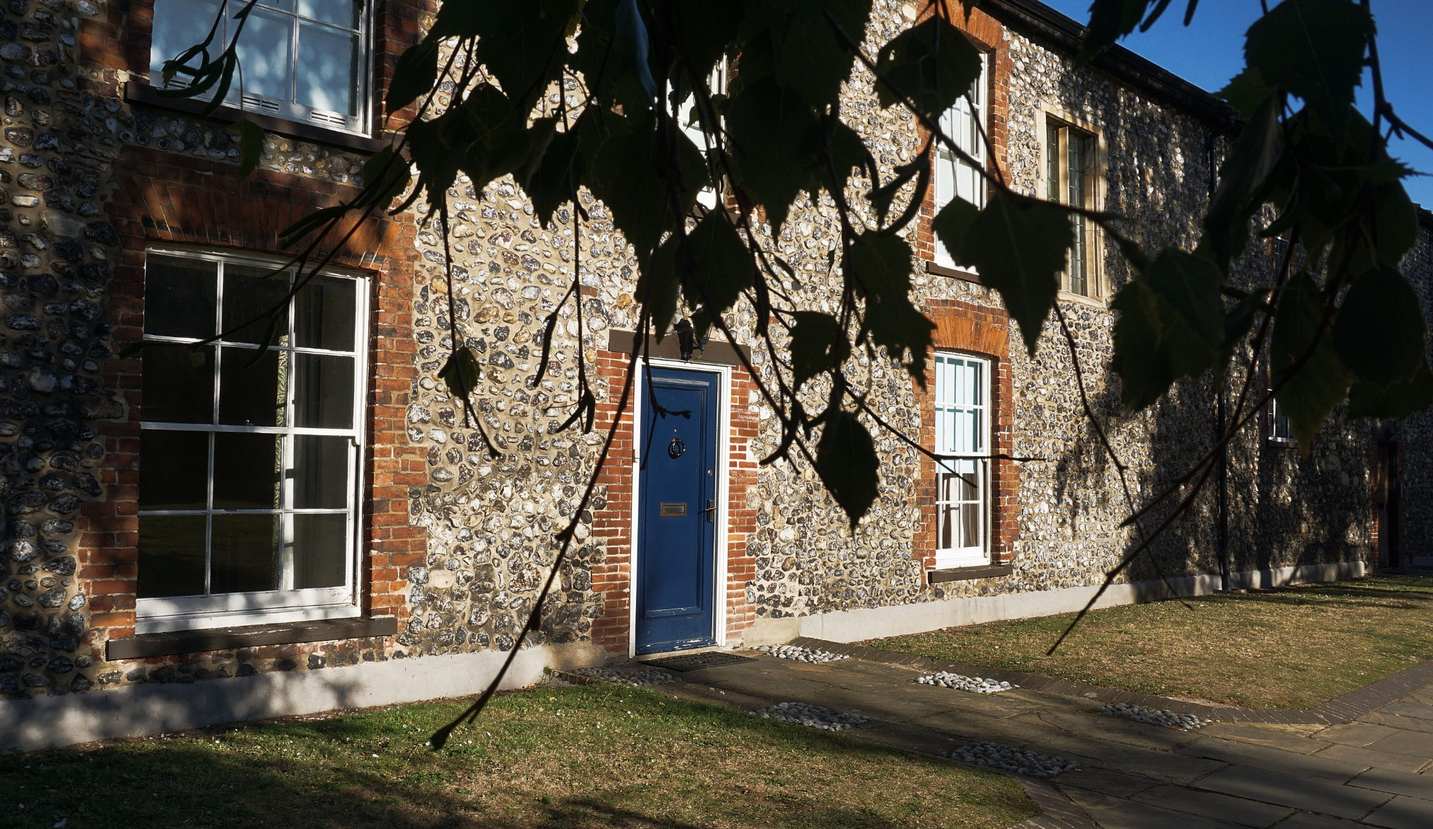
The Harper is a 32-room boutique hotel located in Langham, North Norfolk, close to the coast and within reach of the Norfolk Coast National Landscape. The property sits around three hours by car from London and includes a restaurant, bar, spa and events room.
The hotel was opened in 2021 by Sam Cutmore-Scott, following an investment of approximately £6 million, equal to around £187,500 per room, to transform a former glassblowing factory into a contemporary hotel. In 2024, The Harper was awarded a Michelin Key, further strengthening its reputation in the boutique and lifestyle segment.
The most interesting point is not only Morgans Group’s acquisition. It is the journey that made the hotel desirable.
Here, value does not come from scale, an international brand or a major metropolitan location. It comes from a different combination: adaptive reuse, local identity, guest experience, reputation and operational coherence.
For further analysis of hotel funds, transactions, value creation and hospitality investment strategies, visit the Investimenti Alberghieri blog.
Founder-created value: from factory to boutique hotel
The Harper is an interesting case because it began as a transformation project.
A former glassblowing factory is not, by nature, a hotel. To become one, it has to be completely reimagined: spatial layout, bedrooms, building systems, common areas, food and beverage, wellness, identity, service, atmosphere and positioning.
This type of project is often described as adaptive reuse: the conversion of an existing building into a new use. In hospitality, adaptive reuse can be a powerful value lever, but also a complex one.
It is powerful because it can create a product that cannot easily be replicated. A hotel created from a factory, convent, villa, farmhouse, historic building or industrial asset can have a stronger identity than a standardised property.
It is complex because it requires capital, vision, technical expertise and the ability to turn a non-hotel building into an efficient hospitality product.
In the case of The Harper, the initial investment of around £6 million across 32 rooms points to a significant level of commitment: approximately £187,500 per room. That figure should not be read only as construction or refurbishment cost. It should be read as capital deployed to create a new, distinctive and positioned hotel product.
The central point is this: Sam Cutmore-Scott did not simply open a hotel. He turned a building into a hospitality story.
When small scale becomes an advantage
In hotel investment, size is often seen as a strength. More rooms can mean more potential revenue, greater operational efficiency, better absorption of fixed costs and stronger appeal for certain institutional investors.
But boutique hospitality follows a different logic.
A 32-room hotel can be highly attractive if it has strong identity, high perceived quality, a solid average rate, strong reputation and disciplined cost control. Small scale can become an advantage when it enables personalisation, attention to detail, atmosphere and a direct relationship with the guest.
The Harper belongs to this category. It does not compete on mass. It competes on specificity.
A well-designed boutique hotel does not need to speak to everyone. It needs to speak to the right guest.
In Norfolk, potential demand is linked to leisure stays, weekends, food-led travel, wellness, short breaks, London-based guests and travellers looking for high-quality rural and coastal destinations.
The question is not:
how many rooms does the hotel have?
The right question is:
how much value can each room generate through product, experience, reputation and destination?
That distinction is essential for hotel investors.
Norfolk: leisure destination, landscape and the demand for urban escape
The Harper is located in a very different context from major urban hotel markets. Langham is not London, Manchester or Edinburgh. It is a destination rooted in its landscape.
And that is exactly the point.
In recent years, many investors and operators have paid closer attention to regional leisure destinations, especially when they combine landscape, authenticity, food and beverage, wellness and access to large demand catchments.
The Norfolk Coast National Landscape provides a coherent setting for a boutique hotel: nature, coastline, villages, quietness, outdoor experiences and experiential travel.
For a hotel such as The Harper, distance from London is not necessarily a weakness. It can be part of the positioning: far enough to offer escape, accessible enough to capture weekends and short breaks from a high-spending customer base.
In the upper leisure segment, a destination does not only need to be convenient. It needs to be desirable.
A hotel in this type of setting creates value when it turns landscape into experience, distance into exclusivity and the stay into something memorable.
The Michelin Key as product validation
The Michelin Key awarded in 2024 is an important element of the transaction.
In hospitality, external recognition is not just a reputational prize. It can become a market signal.
A Michelin Key indicates that the hotel has been recognised for the quality of the experience it offers. For an independent boutique hotel, this can have several effects:
-
it strengthens credibility with guests;
-
it increases international visibility;
-
it improves product perception;
-
it differentiates the hotel from its competitive set;
-
it supports pricing power;
-
it makes the asset more readable for potential buyers.
The key point, however, is that a Michelin Key does not create value out of nothing. It validates value that must already exist in the product.
Recognition of this kind works when the hotel has identity, coherence, service, design, atmosphere and operational quality. If those elements are missing, the award cannot replace them.
In the case of The Harper, the Michelin Key likely strengthened the perception of the asset at a point when the hotel had already been created, opened and positioned. That makes it more interesting for an operator such as Morgans Group, which can step into a property already recognised by the market and work on consolidating its value.
Morgans Group: from regional owner-operator to broader platform
The buyer, Morgans Group, is a British owner-operator with experience in independent hospitality and character-led properties. The acquisition of The Harper is strategic because it allows the group to enter a new geography and add an already positioned boutique hotel to its portfolio.
This matters.
Morgans Group is not only buying bricks and mortar. It is buying a product, a reputation, a team, a customer base, a destination and an existing revenue platform.
For an owner-operator, an asset such as The Harper can follow a different logic from that of a financial fund. The objective is not necessarily to buy, refurbish and sell quickly. It may be to integrate the hotel into a long-term operating vision, gradually improving performance, experience and profitability.
In this kind of transaction, continuity is often more important than disruption.
Value is not always created by changing everything. Sometimes it is created by preserving what works and improving what can grow.
For The Harper, the risk for any new owner would be to dilute the hotel’s identity. The real challenge will be to enhance it without making it feel artificial.
Acquiring an independent hotel means acquiring a reputation
When a boutique hotel is acquired, the object of the transaction is not only the real estate.
The buyer also acquires less visible but highly important assets:
-
online reputation;
-
commercial positioning;
-
customer database;
-
operating team;
-
product identity;
-
local relationships;
-
external recognition;
-
food and beverage;
-
perceived quality;
-
entrepreneurial story.
These elements are difficult to value using traditional real estate metrics alone. Yet they can have a significant impact on value.
An independent hotel with a strong reputation can have greater potential than a standardised property because it does not compete only on price and location. It competes on desirability, recognition and emotional connection with the guest.
The Harper shows that in boutique hospitality, value is not found only in square metres or room count. It is found in the hotel’s ability to be remembered.
A memorable asset is more defensible than a generic one.
The transition from founder to structured operator
The acquisition by Morgans Group also highlights a delicate moment in the life of a boutique hotel: the transition from founder-led creation to structured ownership and operation.
Sam Cutmore-Scott created the product, took the initial risk, invested the capital, transformed the building and brought the hotel to a recognised level of quality.
Morgans Group enters at a different stage: consolidation, continuity, potential operational growth and integration into a wider hospitality platform.
This transition can be a major source of value, but it also carries risk.
In boutique hotels, founder-created value is not made only of walls, rooms and revenue. It is also made of tone, atmosphere, local relationships, attention to detail and perceived authenticity.
The new owner must avoid two opposite mistakes: over-standardising the hotel and erasing its soul, or failing to intervene enough and leaving growth potential unrealised.
The real value is protected when the original identity is made stronger, not more generic.
For boutique hotels, this balance is essential. Identity cannot be industrialised too rigidly. It has to be protected, made more efficient and translated into sustainable profitability.
Food, spa and events: value beyond the rooms
The Harper is not only a 32-room hotel. It also includes a restaurant, bar, spa and events space.
This is important because in boutique hotels, profitability does not depend only on rooms.
Ancillary functions can play a significant role:
-
food and beverage reinforces identity and local appeal;
-
the bar enhances experience and dwell time;
-
the spa supports average rate and travel motivation;
-
events generate additional revenue and visibility;
-
common areas build atmosphere and reputation.
In a small hotel, these components must be managed carefully. They can increase value, but also complexity, labour costs and operational risk.
The question is not whether to add services. The question is whether those services genuinely improve margin, reputation and rate potential.
In the case of The Harper, food, spa and events help turn the property from a place to stay into a reason to travel.
That distinction is fundamental for many small Italian hotels as well.
A character hotel should not sell only rooms. It should sell a reason to stay.
Capex, reputation and management: the formula for an investable boutique hotel
A boutique hotel becomes attractive to capital when four elements work together:
entry price, capex, reputation and management.
The entry price must be consistent with the potential. Capex must build product, not just aesthetics. Reputation must prove that the market recognises the value. Management must turn quality and demand into margin.
In the case of The Harper, the sequence is clear:
-
non-hotel building;
-
significant initial investment;
-
conversion into a boutique hotel;
-
opening in 2021;
-
reputation building;
-
Michelin Key in 2024;
-
acquisition by an owner-operator.
This sequence is useful because it shows that value is not created in a single moment. It is built in stages.
A serious investor should always ask:
-
what is the value of the building today?
-
what capex is required?
-
what concept can work?
-
what demand can be captured?
-
what reputation can be built?
-
which operator can manage the asset?
-
what exit strategy is credible?
Without an integrated answer to these questions, the investment remains real estate. With a credible answer, it becomes hospitality.
For further insight into the perspective of investors, funds and specialist operators, the InvestHotel blog covers hotel investments, funds, distressed credit, acquisitions, disposals, due diligence and value-enhancement transactions.
Why this transaction also matters for the Italian market
The Harper case is highly relevant to Italy.
Italy is full of properties that could become boutique hotels, country houses, relais, historic residences, rural resorts, masserie, villas, convents, former production buildings or small character hotels.
But having an interesting building is not enough.
Value is created when the building becomes a credible, sustainable and recognisable hotel project.
Many Italian assets have potential, but are not yet investable because they lack essential elements:
-
clear concept;
-
realistic capex plan;
-
demand analysis;
-
management model;
-
rate positioning;
-
cost control;
-
commercial strategy;
-
digital reputation;
-
business plan;
-
professional investor documentation.
The Harper shows that even a small-scale hotel can become attractive when it builds strong identity and visible performance.
For the Italian market, the lesson is important: not every hotel needs to become large. Some need to become unique.
The hotel guides published on RobertoNecci.it explore these themes in depth: hotel valuations, investments, management agreements, business leases, franchising, governance, management control, asset management and value creation strategies.
Boutique hotels and secondary destinations: the value of authenticity
One of the most important lessons of this transaction is that hotel value does not belong only to capital cities, art cities or globally iconic destinations.
There is a strong market for boutique hotels in secondary destinations, provided they have a clear identity and a compelling reason to travel.
Langham, in Norfolk, is not a global destination. But The Harper has managed to build a recognisable proposition within that setting.
This principle matters greatly for Italy.
Villages, secondary coastlines, rural areas, wine regions, thermal destinations, hills, smaller lakes and inland territories can become attractive markets if the hotel product is designed properly.
The problem is not being outside a major city. The problem is lacking a clear proposition.
A boutique hotel in a secondary destination must answer precise questions:
-
why should a guest come here?
-
what experience will they find?
-
what demand can be captured?
-
what rate can be sustained?
-
what identity makes the hotel different?
-
what management can guarantee consistent quality?
-
what reputation can be built over time?
Without these answers, location becomes a limitation. With these answers, it becomes a source of differentiation.
Price, capex, reputation and exit: the investment logic
A boutique hotel investment should always be read through the relationship between price, capex, reputation and exit.
A property may look attractive because the entry price is manageable, but require excessive capital to become competitive. Another may appear expensive, but already have product quality, reputation and pricing power.
The real question is not only:
how much does the hotel cost?
The better question is:
how much capital, management and time are needed to make the hotel perform at the level required by the investment case?
That total effort includes acquisition price, conversion or refurbishment, systems, staffing, marketing, concept development, reputation building, stabilisation and future exit potential.
For a small boutique hotel, this is even more important. There is less room for error. A weak concept, poor service, uncontrolled costs or inconsistent positioning can quickly erode value.
The Harper suggests a different trajectory: clear concept, meaningful investment, visible reputation and acquisition by an operator capable of taking the asset into its next phase.
That is the logic of boutique hotel value creation.
Five lessons from the acquisition of The Harper
The Morgans Group-The Harper transaction offers five useful lessons for hotel owners, investors and operators.
First: a small hotel can be a highly attractive asset when it has identity, reputation and operational quality.
Second: adaptive reuse creates value when it turns a building into a non-replicable hotel product.
Third: external recognition, such as a Michelin Key, can strengthen the readability of the asset, but only when it validates real value.
Fourth: in regional leisure destinations, value is created by turning the territory into an experience.
Fifth: the transition from founder to owner-operator can consolidate value, provided the original identity of the hotel is preserved.
These lessons fully apply to the Italian market as well.
Many Italian properties and small hotels do not simply need to be sold. They need to be transformed into readable hotel projects. They need a concept, a capex plan, management, commercial strategy and a narrative consistent with demand.
An asset without identity is valued as property. An asset with identity, performance and reputation can be valued as a hotel.
Conclusion: a boutique hotel is valuable when it becomes memorable
Morgans Group’s acquisition of The Harper shows that hotel value is not created only by scale or by location in a major market. It can also be created by a small property when that property becomes memorable.
A boutique hotel creates value when building, story, design, management, food and beverage, wellness, territory and reputation all work in the same direction.
The real leap does not occur when a building is converted into a hotel. It occurs when that hotel becomes a reason to travel.
For this reason, anyone who owns a building, small hotel, historic residence, rural property or tourism asset to be enhanced should ask one decisive question:
is my asset simply a building to be converted, or can it become a recognisable, profitable and investable hotel experience?
The difference between these two answers can affect value, sale timing, operator interest and the quality of investors involved.
Hotel Management Group supports owners, investors, funds, family offices and operators in the analysis, due diligence, value creation, development and structuring of hotel investment transactions.
If you are considering the conversion of a property into a hotel, the sale of a boutique hotel, the repositioning of an existing asset or the development of a character-led hospitality project, you can explore the group’s advisory, governance and development activities at HotelManagementGroup.it.
A hotel creates value when it stops being merely a place to sleep and becomes an experience the market recognises, remembers and rewards.
Roberto Necci - r.necci@robertonecci.it