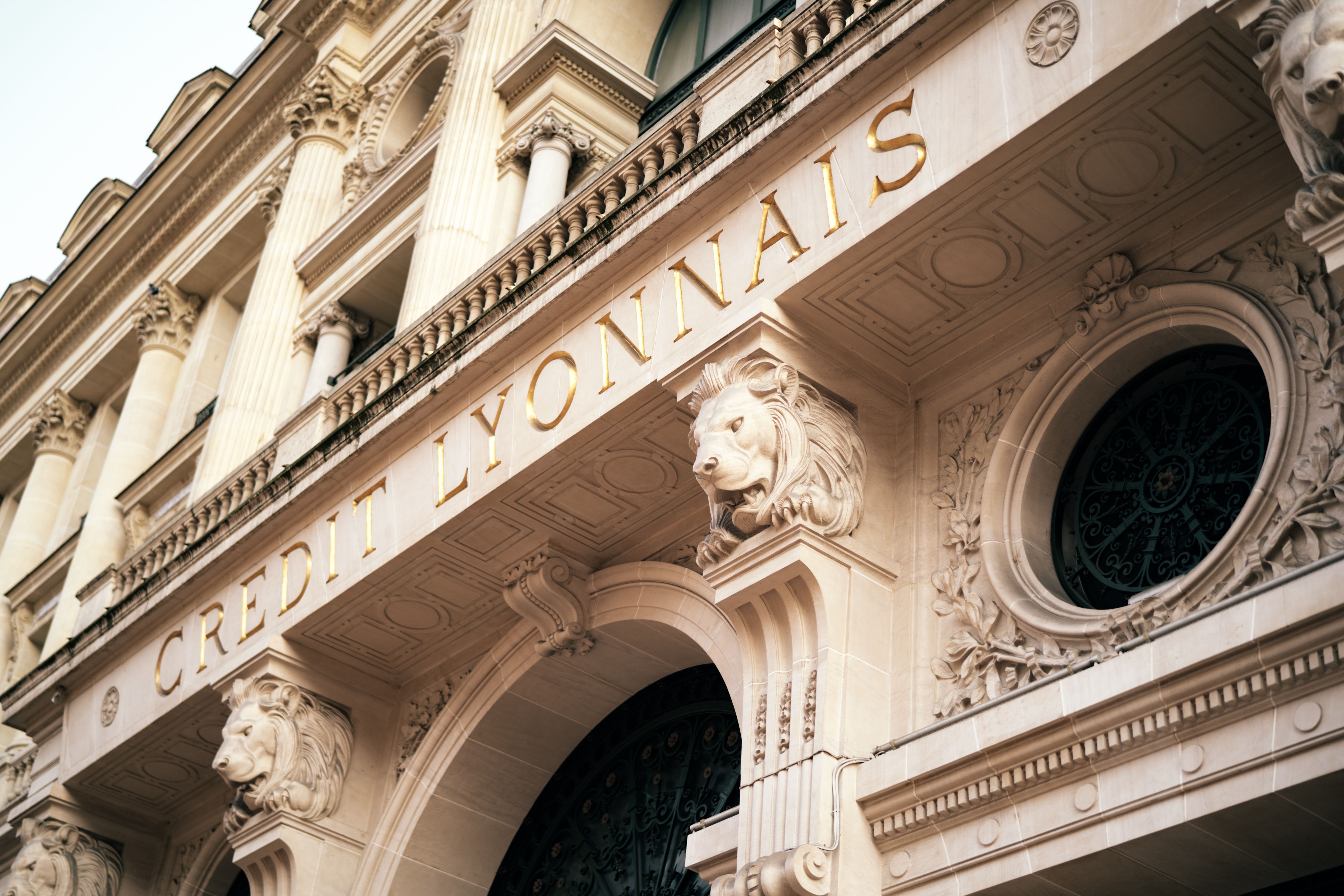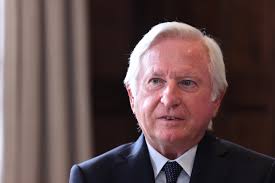
In hotel investment, some players buy rooms. Others buy real estate. A much smaller group buys potential.
Paddy McKillen belongs to that third category.
Born in Belfast in 1955, McKillen is one of Ireland’s most prominent property investors, with a career that has moved across commercial real estate, retail assets, landmark London hotels, contemporary art, architecture, wine estates, experiential travel and high-stakes corporate disputes.
Yet reducing McKillen to wealth, property deals or litigation would miss the more important point.
For hotel investors, he is a case study in value creation.
His career shows how a hotel can be transformed from a real estate asset with operating income into something far more powerful: a brand, a destination, a pricing platform and a vehicle for long-term capital appreciation.
His name is closely associated with three very different hospitality worlds: Maybourne in London, Château La Coste in Provence and The Shinmonzen in Kyoto.
Each project tells a different story. Together, they reveal a single investment philosophy: true luxury is not simply acquired. It is built through capital, vision, time, cultural intelligence and obsessive control of the product.
Why Paddy McKillen matters to hotel investors
McKillen matters to hotel investors because his career sits at the intersection of real estate, hospitality, brand building and capital strategy.
First, he has been involved with some of Europe’s most iconic hotel assets.
Claridge’s, The Connaught and The Berkeley are not ordinary five-star hotels. They are trophy assets: rare, irreplaceable properties in prime London locations, with global reputations built over generations. They are operating businesses, but they are also patrimonial assets, cultural institutions and long-term stores of value.
Second, McKillen understood that the value of a luxury hotel cannot be measured only by current EBITDA.
In the luxury segment, value is shaped by location, scarcity, heritage, reputation, architectural quality, food and beverage, service culture, international demand, brand equity and the ability to command premium rates over time.
Third, he treated capital expenditure not as a maintenance obligation, but as a strategic tool.
Fourth, his career shows how critical governance becomes when large-scale hotel assets involve entrepreneurs, sovereign capital, family offices, lenders, advisors and operating teams.
Fifth, he anticipated one of the defining themes of modern luxury hospitality: the hotel not merely as accommodation, but as a destination in itself.
From Irish real estate to global luxury hospitality
McKillen’s career began in real estate. His early business activity developed between Ireland and the United Kingdom, with investments in commercial property, retail assets and shopping centres.
That background shaped his approach.
Investors who come to hospitality from real estate often see the hotel primarily as a building. Operators who come from hospitality tend to see it primarily as a business. McKillen’s strength was his ability to connect both perspectives.
A hotel is not just a building with rooms.
But it is not just a profit and loss account either.
It is a hybrid asset: real estate, operating business, service platform, brand vehicle, reputational engine and financial instrument.
Once that complexity is understood, hotel investment becomes a different discipline.
The question is no longer simply whether an asset is worth buying. The question becomes what that asset could become if repositioned with the right capital, the right product strategy and the right governance.
Maybourne: the battle for London’s landmark hotels
Paddy McKillen’s name is most closely linked to the Maybourne story, the group behind three of London’s most celebrated hotels: Claridge’s, The Connaught and The Berkeley.
Today, the Maybourne portfolio also includes The Emory in London, The Maybourne Beverly Hills in Los Angeles and The Maybourne Riviera on the French Riviera. But the heart of the story remains in London.
Claridge’s is one of the great symbols of Mayfair hospitality.
The Connaught represents a more discreet, intimate and deeply refined form of luxury.
The Berkeley, in Knightsbridge, carries a more contemporary, lifestyle-oriented and international positioning.
Together, these hotels represent an extraordinary concentration of value: prime locations, global recognition, ultra-high-net-worth clientele, architectural heritage and exceptional rate potential.
For hotel investors, Maybourne is a perfect laboratory.
It shows the difference between owning luxury hotels and transforming them.
The objective was not ownership. It was value creation.
At the centre of the McKillen-Maybourne case is not only a shareholder dispute. It is a fundamental economic question:
How much value can an entrepreneur create by repositioning iconic hotels?
According to press reports, McKillen claimed compensation linked to the increase in value of the Maybourne assets after years of work on refurbishment, development, management and value enhancement. The dispute with the Qatari owners led to a major arbitration, with the award reportedly exceeding £700 million.
The number is striking. But the strategic lesson is even more important.
In luxury hospitality, value creation does not always appear immediately in a single year’s income statement. It may emerge through a higher portfolio valuation, increased real estate value, stronger average daily rates, deeper international demand, brand expansion and the creation of new properties under the same platform.
A luxury hotel, in other words, can become more than an operating asset.
It can become a value platform.
Defensive capex vs transformational capex
One of the most important lessons from the McKillen dossier concerns capital expenditure.
In much of the hotel market, capex is treated as a defensive cost. Rooms are refurbished. Bathrooms are updated. Systems are replaced. Public areas are refreshed. The objective is to prevent product obsolescence.
That is defensive capex.
It protects value.
McKillen’s approach points to a different use of capital: transformational capex.
Transformational capex is not designed merely to preserve the asset. It is designed to change the investment thesis.
It moves the hotel into a higher competitive set. It redefines the guest experience. It strengthens brand perception. It increases potential ADR. It supports higher RevPAR. It lifts the capital value of the underlying real estate.
The distinction is critical.
Defensive investment keeps the asset alive.
Transformational investment changes what the asset is worth.
But in luxury hospitality, spending heavily is not enough. Capital must be deployed with precision.
Capex must be aligned with the building’s history, the target guest, the desired positioning, the service model, the distribution strategy and the future economics of the asset.
Luxury does not reward generic spending.
It rewards coherent investment.
Claridge’s: the value of history
Claridge’s illustrates both the opportunity and the risk embedded in iconic hotels.
A historic hotel carries enormous intangible value. It has memory, mythology, loyal guests, cultural visibility and institutional status. But that same heritage makes the asset fragile.
Every intervention must modernise the product without damaging its identity.
The risk is twofold.
Leave the hotel trapped in the past, and it gradually loses competitiveness.
Modernise it in the wrong way, and it loses the very thing that made it valuable.
Value creation in trophy hotels comes from managing that tension: preserving memory while increasing contemporary relevance.
Anyone investing in historic hotels must understand that the real product is not only the room.
It is the continuity between past and present.
Claridge’s is not valuable simply because it is in Mayfair.
It is valuable because it is Claridge’s.
That is the kind of value a purely financial investor may underestimate.
The Connaught and The Berkeley: different identities, same discipline
The Connaught and The Berkeley reveal another important principle: within a luxury hotel group, each property must have its own identity.
Luxury does not work through excessive standardisation.
In mid-market hospitality, replicability is often an advantage. In luxury, differentiation is part of the value proposition.
A portfolio such as Maybourne is not just a collection of prestigious buildings. It is a system of complementary identities.
Each hotel must be distinct. Each must be credible. Each must deliver at the highest level. But none should feel interchangeable.
For investors, this is a powerful lesson.
A luxury hotel group should not become a portfolio of attractive assets with the same language repeated in different locations.
It should become an ecosystem of distinctive properties, each with its own emotional and commercial logic.
The Emory: privacy, suites and the new codes of luxury
The opening of The Emory added another layer to the Maybourne story.
Developed as an all-suite hotel in Belgravia, The Emory reflects a clear direction in contemporary luxury hospitality: more privacy, more personalisation, stronger wellness, larger spaces, discreet service and a more controlled relationship with ultra-premium guests.
For investors, this matters.
Luxury hospitality is not static. It evolves with the expectations of high-net-worth and ultra-high-net-worth travellers.
Today’s luxury guest often wants less formality and more control. Less display and more privacy. Less standard service and more personal recognition. More wellness, security, space, flexibility, design and access.
That shift has investment consequences.
It changes room count. It changes square metres per key. It changes capex. It changes staffing. It changes ancillary revenue. It changes the way value is created.
The Emory signals that the future of luxury hotels will not be defined only by historic grandeur.
It will also be defined by the ability to capture new forms of exclusivity.
The Qatari dispute: governance as a core investment variable
The dispute between McKillen and the Qatari investors is one of the most instructive elements of the dossier.
International press reports reconstructed a conflict over McKillen’s role in enhancing the value of the Maybourne hotels and the compensation allegedly due to him under agreements between the parties.
For hotel investors, the lesson is not the legal drama itself.
The lesson is governance.
In complex hotel transactions, especially those involving large-scale capital, family offices, sovereign wealth, banks, advisors and entrepreneurial operators, agreements must be precise from the beginning.
They must define who controls the asset.
Who approves capex.
Who signs off the business plan.
Who has operating responsibility.
How value creation is measured.
How entrepreneurial contribution is remunerated.
How exits are handled.
What happens in the event of a change of control.
And what rights survive if the relationship breaks down.
The Maybourne case shows that, in luxury hotels, governance is not a technical appendix.
It is part of the investment thesis.
Poorly defined governance can destroy value, delay exits and turn a successful asset story into a prolonged corporate battle.
Château La Coste: when the hotel becomes the destination
If Maybourne represents the urban, financial and corporate side of McKillen’s career, Château La Coste represents the more visionary side.
In Provence, McKillen developed a project that brings together vineyards, contemporary art, architecture, gastronomy, landscape and luxury hospitality.
Villa La Coste is not simply a hotel located on a wine estate.
It is a cultural destination.
That distinction matters.
A traditional hotel captures existing demand.
A destination hotel creates demand.
Guests do not choose Villa La Coste merely because they need somewhere to sleep near Aix-en-Provence. They choose it because they want to enter a specific world: art, architecture, wine, cuisine, silence, landscape, privacy and a recognisable aesthetic universe.
For hotel investors, this model is powerful.
When a hotel becomes the reason for travel, it reduces its dependence on the surrounding destination and increases its own pricing power.
In valuation terms, the asset moves from hospitality property to destination brand.
Art, architecture and wine as economic infrastructure
At Château La Coste, art and architecture are not decoration.
They are economic infrastructure.
The presence of major artists, architects, installations and pavilions creates an ecosystem of meaning. It increases visibility. It extends dwell time. It attracts a global audience. It supports food and beverage. It strengthens positioning. It gives the hotel a category of its own.
This is often underestimated by investors.
In luxury hospitality, what appears intangible can produce highly tangible economic effects: higher rates, stronger occupancy, direct demand, international media attention, partnerships, events, loyalty and brand premium.
Art can become marketing.
Architecture can become distribution.
Landscape can become pricing power.
Wine can increase length of stay.
Gastronomy can become a reason to travel.
This is the strategic leap Château La Coste makes visible.
The Shinmonzen: the luxury of rarity
In Kyoto, with The Shinmonzen, McKillen’s approach becomes even more selective.
Designed by Tadao Ando and inspired by the Japanese ryokan tradition, The Shinmonzen represents a quiet, cultured and deeply contextual form of luxury.
Here, value does not come from scale.
It comes from rarity.
A limited number of suites. High design intensity. A deep connection to place. A precise cultural identity. A guest profile able to recognise and pay for a non-standardised experience.
For hotel investors, The Shinmonzen is important because it shows that, in luxury hospitality, bigger does not always mean more valuable.
Sometimes maximum value comes from limitation.
Few keys.
Strong identity.
Exceptional perceived quality.
Non-replicability.
This is the opposite of the industrial logic of traditional hospitality.
It does not scale through room count.
It scales through reputation, price and desirability.
The McKillen formula
The McKillen formula can be summarised simply:
Acquire or develop rare assets. Invest deeply and selectively. Build identity. Use architecture, culture and experience as value multipliers. Protect positioning. Give the market time to recognise the transformation.
It is not a model for everyone.
It requires patient capital, access to world-class talent, tolerance for major capex, deep understanding of luxury, product control and long investment horizons.
But it is a model worth studying.
Many of its principles can be applied to smaller hotel investments.
An independent hotel in a city of art.
A historic palazzo.
A masseria.
A relais.
A resort.
A former convent.
A wine estate.
A property in need of repositioning.
The lesson is not to imitate Claridge’s or Villa La Coste.
The lesson is to stop treating hotel assets as generic.
Value begins when the asset becomes specific.
What an investor would look at in a McKillen-style deal
A hotel investor analysing a McKillen-style asset should focus on several variables.
The first is location scarcity.
A luxury hotel in an irreplaceable location has natural protection against competition. Real estate scarcity remains one of the strongest drivers of long-term value.
The second is rate potential.
It is not enough to know what the hotel generates today. The investor must understand what ADR the hotel could sustain after a credible repositioning.
The third is capex per key.
In luxury hotels, capex can be extremely high. But it should be assessed against expected growth in rate, reputation and capital value, not merely against the initial cost.
The fourth is brand equity.
A hotel with heritage, recognition or a powerful identity can command a premium over an anonymous asset.
The fifth is international demand.
A luxury hotel cannot rely only on local demand. It must be able to attract global, high-spending guests.
The sixth is management quality.
A great building managed poorly remains a missed opportunity. A great building managed well can become a value platform.
The seventh is governance.
If the project involves several shareholders or capital partners, value must be protected through clear agreements, robust decision-making mechanisms and shared valuation criteria.
Essential timeline
1955
Paddy McKillen is born in Belfast.
1980s and 1990s
He builds his business in commercial real estate, with property investments in Ireland and the United Kingdom.
2000s
His profile increasingly shifts towards higher-profile international assets and the luxury hospitality sector.
The Maybourne phase
McKillen becomes a central figure in the story of Claridge’s, The Connaught and The Berkeley, three of Europe’s most important trophy hotel assets.
2015
Qatari investors take control of the Maybourne group. McKillen remains involved in the enhancement of the assets through consultancy and development agreements.
2022
The relationship between the parties breaks down, leading to legal and arbitration proceedings.
2025
According to press reports, McKillen receives a major arbitration award, reportedly exceeding £700 million, in the dispute with the Qatari owners of the Maybourne group.
In parallel
McKillen strengthens his international hospitality profile through projects such as Château La Coste in Provence and The Shinmonzen in Kyoto.
Five lessons for hotel investors
The first lesson is that hotel value is not only operational.
EBITDA, margins and RevPAR matter. But in trophy assets, so do scarcity, history, reputation and capital appreciation potential.
The second lesson is that capex must have a thesis.
Spending heavily does not automatically create value. Capex creates value only when it supports a clear, credible and monetisable repositioning.
The third lesson is that luxury requires identity.
A high-end hotel cannot be generic. It needs a story, a language, a clientele and a distinctive promise.
The fourth lesson is that governance protects value.
In complex hotel deals, agreements between shareholders, operators and advisors must be designed before problems arise.
The fifth lesson is that a hotel can become the reason for travel.
When a hotel becomes a destination in its own right, its value changes radically.
Can the McKillen model be replicated in Italy?
The question is unavoidable: can the McKillen model be replicated in Italy?
The answer is yes, but not mechanically.
Italy has an extraordinary stock of historic buildings, cities of art, coastal destinations, villages, villas, palazzi, former convents, wine estates, resorts and underdeveloped hotel assets.
Many of these properties have potential.
What they often lack is a strong hospitality thesis.
Italy does not suffer from a shortage of assets. It often suffers from a shortage of integrated vision.
The market needs investors who can read real estate, operations, brand, destination, capex, design, distribution and international demand as one connected system.
That is why the McKillen dossier is relevant to Italy.
It does not suggest that every hotel should become Claridge’s or Villa La Coste.
It suggests that every asset must find its own economic identity.
A historic hotel in Rome, Florence, Venice, Naples or Milan can create value if repositioned coherently.
A resort in Puglia, Tuscany, Sicily or the Amalfi Coast can become a destination hotel if the product is strong enough to motivate the journey.
An independent hotel can escape price competition if it builds a credible narrative and a distinctive experience.
But all of this requires hotel investment capability.
Not merely real estate ownership.
The risk: confusing luxury with cost
The McKillen dossier also teaches what not to do.
Luxury is not simply spending more.
Luxury is not just marble, design, art or celebrity chefs.
Luxury is consistency between promise, product, service, price and market.
Many investors confuse the cost of an intervention with the value it creates. But an expensive hotel can still be a weak hotel if it lacks clear demand, professional management, commercial strategy, positioning and economic control.
Aesthetic sophistication does not replace a business plan.
Design does not replace revenue management.
Brand does not replace operations.
Capex does not replace governance.
The strength of the McKillen approach is that it connects all these elements.
Why this dossier matters now
The international hotel market is entering a phase in which the best assets will continue to attract capital, while average and poorly differentiated assets will face growing pressure.
The cost of capital, scarcity of prime locations, growth in luxury demand, competition between global brands and the rising interest of family offices and sovereign investors all make one distinction increasingly important:
Some hotels are merely expensive.
Others are genuinely capable of creating value.
Paddy McKillen is an emblematic figure in this shift.
He is not just a property investor.
He is a builder of hotel value through identity, capital, architecture, culture and long-term vision.
His career shows that a hotel, when interpreted correctly, can become far more than an operating asset.
It can become a scarce asset, a brand, a destination, a development platform and, in the best cases, a machine for capital appreciation.
Conclusion: the hotel investor as author of value
The Paddy McKillen case shows that true hotel investment does not end with the acquisition of the property.
It begins after the acquisition.
It begins when the investor decides what the hotel should become.
A sophisticated hotel investor does not look only at the entry price. He looks at potential value, scarcity, narrative, future clientele, required capex, governance and exit strategy.
McKillen built his reputation on precisely this ability: seeing in hotels not only what they are, but what they can become.
For the hotel investment market, that is the central lesson.
Average assets are bought.
Extraordinary assets are built.
Investor profile
Name: Paddy McKillen
Nationality: Irish
Origin: Belfast
Main sectors: real estate, luxury hospitality, property development
Associated assets and projects: Maybourne, Claridge’s, The Connaught, The Berkeley, Château La Coste, Villa La Coste, The Shinmonzen
Strategic profile: investor and developer focused on rare assets, luxury, architecture, art and long-term value creation
Key theme for hotel investors: transforming capex and hotel identity into capital appreciation
What the McKillen case teaches
The value of a luxury hotel comes from the integration of real estate, operations, brand, experience and scarcity.
Capex must be connected to a clear repositioning strategy.
Governance between shareholders, investors and operators must be precisely defined.
Iconic hotels require patient capital.
The intangible component of the product can generate real economic value.
A hotel can become the reason for travel, not merely a response to existing demand.
For further insights into hotel management, development and value creation, read Roberto Necci’s hotel guides: https://www.robertonecci.it
For more dossiers and market analysis on hotel investments, visit the Investimenti Alberghieri blog: https://investimentialberghieri.it/blog
For hotel market news and updates, visit InvestHotel: https://www.investhotel.it/it/news.html
For hotel acquisitions, value enhancement, development and repositioning projects, visit Hotel Management Group: https://www.hotelmanagementgroup.it
Hotel Management Group supports investors, owners and operators in the evaluation, acquisition, value enhancement and strategic management of hotel assets.
From real estate analysis to due diligence, from repositioning to business planning, the objective is to transform the hotel from a simple hospitality property into a platform for value creation.
Learn more at https://www.hotelmanagementgroup.it
Roberto Necci - r.necci@robertonecci.it