Deal analysis / Rome / capital markets / Investimenti Alberghieri
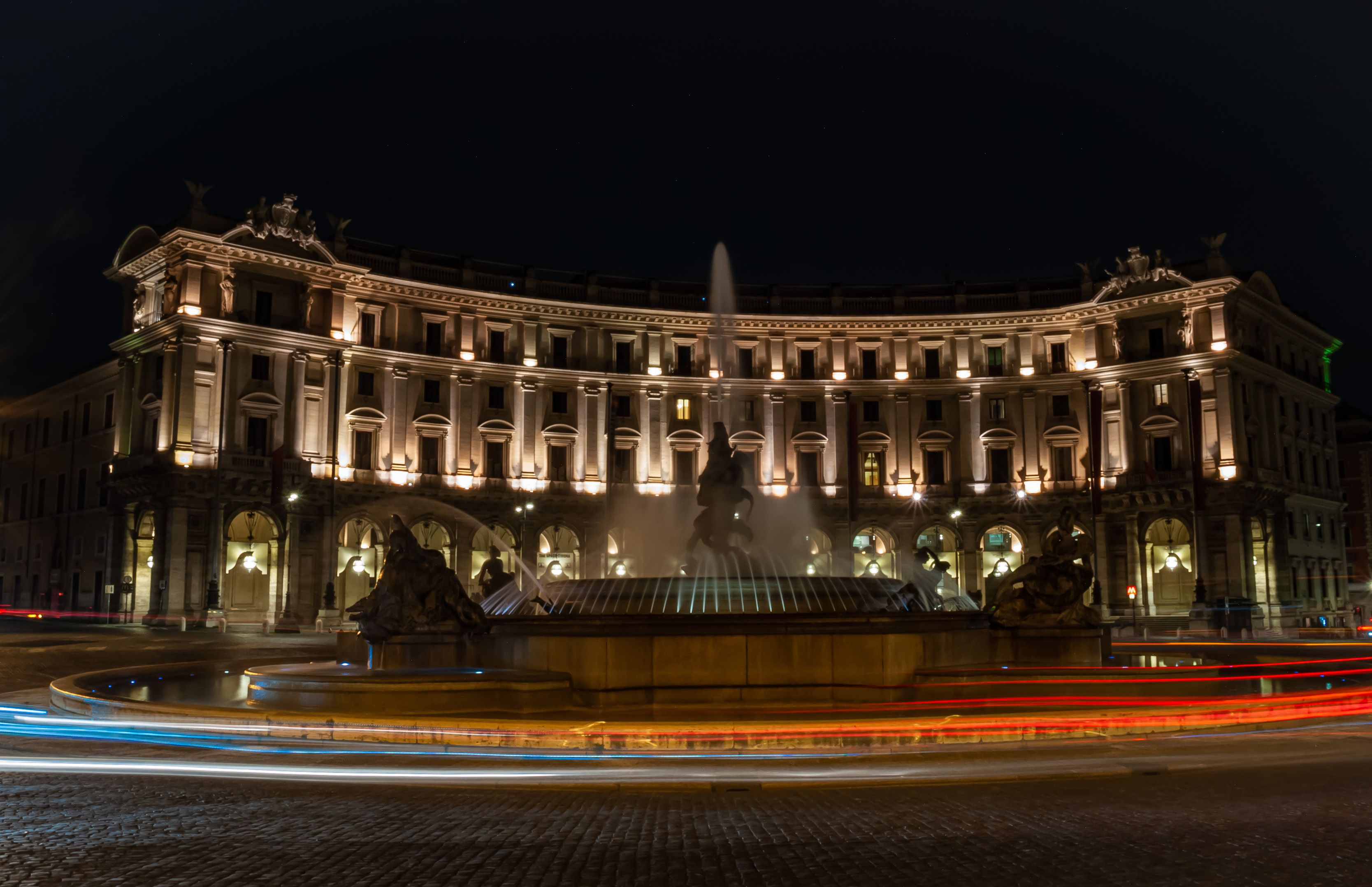
Palazzo Esedra is not simply one of the most significant real estate transactions in Rome this year.
It is a case study.
Not because it is a hotel acquisition. In fact, the opposite is true.
Until only a few months ago, the building also included a hospitality component. Today, the new business plan is primarily focused on office and retail. Between those two facts lies the real story: a sophisticated capital structure involving more than 100 UniCredit wealth clients, Allianz, Finaval, PIMCO Prime Real Estate, a securitisation special purpose vehicle, and a bank combining advisory, equity placement and acquisition financing.
For owners of prime hotel assets, the real news is not that a landmark building in Rome has changed hands.
The real news is this:
when an asset is structured to be investable, capital shows up.
That changes the question.
The question is no longer simply:
how much is my hotel worth?
The real question is:
how much would my hotel be worth if it were prepared, documented and presented to the market as an institutional-grade investment opportunity?
The key facts of the transaction
-
Asset: Palazzo Esedra, Piazza della Repubblica, Rome
-
Size: approximately 30,000 sqm
-
Reported value: over €200 million, according to financial press estimates
-
Investors: more than 100 UniCredit wealth clients
-
Partners: Allianz, Finaval, PIMCO Prime Real Estate
-
Structure: securitisation special purpose vehicle
-
Arranger and financing bank: UniCredit
-
Declared repositioning strategy: primarily office and retail
-
Relevance for hospitality investors: permitted use, latent value, financial structuring and access to capital
The transaction: Palazzo Esedra enters an institutional capital structure
Let us start with the facts.
More than 100 high-net-worth families among UniCredit’s wealth clients have co-invested, together with Allianz Group and Finaval — the real estate holding associated with the Feltrinelli family — in a transaction involving Palazzo Esedra, one of Rome’s most recognisable buildings, overlooking Piazza della Repubblica.
Strategic support is being provided by PIMCO Prime Real Estate.
UniCredit’s role goes well beyond introducing private capital. The bank structured the transaction, aggregated its wealth client base and financed part of the acquisition price. This marks UniCredit’s first real estate co-investment transaction offered to wealth clients, following several club deals in private equity.
The acquisition price has not been officially disclosed. Financial press estimates have placed the value of the transaction above €200 million.
So far, this is the real estate story.
But for readers of Investimenti Alberghieri, the most relevant point is not the prestige of the address.
It is what the transaction reveals about the relationship between real estate, permitted use, private capital and financial structuring.
The detail hotel owners should not ignore: until December, there was also a hotel
Until December 2025, Palazzo Esedra housed offices, retail units, a multiplex cinema, the historic Dagnino pastry shop and also a hospitality component.
The lease agreements then expired.
The new positioning declared by the buyers is primarily focused on office and retail, with the objective of repositioning the building as a prime asset in Rome’s office market.
Many readers will treat this as a detail.
For us, it is the core of the story.
Not because one should conclude that office use is always more valuable than hotel use.
That would be a superficial reading.
The correct conclusion is more precise, and far more useful:
in that specific micro-market, for that specific building, under that specific capital structure, the investors’ business plan favoured a predominantly office and retail strategy over hospitality continuity.
That is the real lesson.
A hotel is not worth only the number of its rooms.
It is not worth only its RevPAR.
It is not worth only its rent.
It is not worth only its EBITDA.
A hotel is also worth what it can become.
It is worth its planning status.
It is worth any planning restriction on hotel use.
It is worth the possibility of being converted, separated, contributed into a vehicle, financed, securitised or placed into a PropCo/OpCo structure.
It is worth the quality of the documentation with which it is brought to market.
It is worth the advisor’s ability to make the market read it not as a simple property, but as an investment transaction.
Prime hotel owners should look at Palazzo Esedra from this perspective.
Not as a Roman real estate sale.
But as a benchmark.
On the Investimenti Alberghieri blog, we analyse precisely these issues: hotel transactions, investors, capital markets and cases in which financial structuring can materially change the market’s perception of value.
Before finance comes the planning question
When a property that once included a hospitality use is being repositioned, the first question is not financial.
It is a planning question.
The right question is not immediately:
how much does it generate?
The right question is:
what can legally be done with it?
And, even before that:
is there a planning restriction on hotel use?
In Rome, as in many other Italian cities, hotel-use restrictions, change-of-use procedures, building permits, authorisations and planning compatibility can have a decisive impact on the value of a transaction.
We are not making any statement about the specific status of Palazzo Esedra’s former hospitality component.
The point is methodological.
An asset that ceases to operate as a hotel is not automatically free to assume any other use.
Likewise, a hotel that appears locked into its hospitality function may conceal latent value that the owner has never properly measured.
This is where many owners make the wrong move.
They start from the price they would like to achieve.
They start from the buyer who has approached them.
They start from the historical rent.
They start from the emotional value of the property.
They start from “someone told me it is worth this much”.
But a serious transaction does not start there.
It starts with integrated due diligence:
-
planning;
-
building compliance;
-
hospitality;
-
real estate;
-
tax;
-
financial;
-
operational;
-
contractual;
-
licensing and authorisation.
Only then does valuation come into play.
Only then does the business plan become meaningful.
Only then can an owner decide whether to sell, lease, convert, reposition, contribute into a vehicle or securitise.
For deeper analysis on planning restrictions on hotel use, change of use, hotel leases, hotel valuation and the strategic management of hospitality real estate, see the hotel guides published on www.robertonecci.it.
The real news is the structure: SPV, wealth capital, bank and asset manager
Palazzo Esedra is interesting not only because of what it is.
It is interesting because of how it was acquired.
The transaction was structured through a securitisation special purpose vehicle.
The vehicle issued notes.
Those notes were subscribed by qualified investors: Finaval, Allianz and more than 100 UniCredit wealth clients.
PIMCO Prime Real Estate provides strategic support as asset manager.
UniCredit aggregates the investors and finances part of the acquisition.
In simplified terms, the structure is this:
-
prime real estate asset;
-
dedicated vehicle;
-
wealth investors;
-
institutional partners;
-
bank financing;
-
specialised asset manager;
-
repositioning business plan;
-
potential exit strategy.
This is the point.
It is not a simple acquisition.
It is an asset packaged for capital.
And when the opportunity is legible, capital comes in.
Why this model can also apply to hotels
Many Italian hotel owners still think in a linear way:
I own a hotel, therefore I look for a buyer.
Sophisticated capital does not think like that.
Sophisticated capital thinks in terms of:
-
asset;
-
risk;
-
management;
-
permitted use;
-
operator;
-
corporate structure;
-
leverage;
-
capex;
-
exit;
-
governance;
-
expected return.
A prime hotel can be much more than a hotel.
It can become:
-
a PropCo separated from the OpCo;
-
an investment vehicle;
-
a club deal;
-
a real estate securitisation;
-
a sale-and-leaseback transaction;
-
a consolidation platform;
-
an asset contributed into a joint venture;
-
part of an aggregatable portfolio;
-
a family office investment opportunity;
-
a product for qualified investors.
But this only happens if the asset is prepared.
A poorly marketed hotel remains a property with rooms.
A well-structured hotel becomes a transaction.
The difference in value can be substantial.
Because buyers do not pay only for bricks and mortar.
They pay for clarity.
They pay for bankability.
They pay for documentation.
They pay for reduced risk.
They pay for the quality of the business plan.
They pay for the ability to enter an already organised opportunity.
They pay because someone else has already answered the difficult questions.
This is where specialised advisory becomes decisive.
Not simply to “produce a valuation”.
That is the easy part.
The real work is to transform a complex hospitality asset into a transaction that capital can understand.
On the Investhotel blog, we explore these issues in depth: hotel advisory, investment structures, due diligence, value creation, extraordinary transactions and capital-access strategies for hospitality assets.
The lesson for prime hotel owners
Palazzo Esedra offers at least four operational lessons.
Capital exists, but it only buys what it understands
It is not true that the market is frozen.
Capital is available.
It is in banks.
It is in family offices.
It is in entrepreneurial families.
It is in funds.
It is in institutional investors.
It is in private wealth.
But capital does not buy confusion.
It buys legible transactions.
It buys clear documentation.
It buys measurable risks.
It buys verifiable scenarios.
It buys governable structures.
Many hotels are not undervalued because they are unattractive.
They are undervalued because they reach the market in a disorderly way.
Hospitality use is a lever, not a dogma
In some cases, hotel use is the highest and best use.
In others, it is not.
In some properties, maximum value comes from continued hospitality use.
In others, it comes from a change of use.
In others still, it comes from a combination of hotel, retail, serviced apartments, residential, office, ancillary spaces, food and beverage or branded residences.
The problem is not choosing in advance.
The problem is measuring.
The owner of a hotel asset must understand whether the highest value lies in the operation, the real estate, the conversion potential, the lease, the location, the brand, the development upside or the financial structure.
Without this analysis, the owner is selling blind.
Structure can be worth as much as the asset
Two identical properties can be perceived by the market in very different ways.
One reaches the market with incomplete data, unclear contracts, authorisations still to be verified, unquantified capex and no strategy.
The other reaches the market with due diligence, a business plan, a planning assessment, a financing hypothesis, a corporate structure, a teaser, a data room, potential operators and an exit strategy.
The first is treated as a problem.
The second is treated as an opportunity.
Capital pays for that difference.
The owner must move before the buyer does
Waiting for a buyer to appear is often the most expensive mistake.
When the buyer arrives before the advisor, the buyer sets the perimeter.
The buyer sets the price.
The buyer sets the narrative.
The buyer highlights the weaknesses.
The buyer prices every uncertainty.
The owner must be prepared first.
The owner must know what they own.
They must know what alternatives are available.
They must know which use creates the highest value.
They must know which structure can attract capital.
They must know whether they are selling a hotel, a property or a transaction.
The question every owner should ask today
The Palazzo Esedra club deal matters not because hotel owners should be interested in buying Palazzo Esedra.
It matters because it shows how capital behaves when an asset is properly structured.
The question, therefore, is not:
how much is my hotel worth today?
That is only the first question.
The real question is:
how much would my hotel be worth if it were transformed into an investable transaction?
How much would it be worth if ownership and operation were separated?
How much would it be worth if it were presented to a family office?
How much would it be worth if it entered a PropCo/OpCo structure?
How much would it be worth in a sale-and-leaseback transaction?
How much would it be worth if it were securitised?
How much would it be worth if it were contributed into a dedicated vehicle?
How much would it be worth as part of a portfolio?
How much would it be worth if alternative permitted uses were actually verified?
How much would it be worth if the market received not a property, but a strategy?
That is the difference between undergoing a negotiation and controlling a transaction.
Who this article is really for
This article is not for everyone.
It is not for those looking for a free valuation to compare with three others.
It is not for those who want to know “more or less” what something is worth.
It is not for those who have already decided the price and are merely looking for confirmation.
It is not for those who see advisory as a cost rather than a value lever.
This article is for owners, families, real estate companies and hotel entrepreneurs who hold complex assets and want to understand whether there is a smarter path to value creation.
Prime hotels.
Hospitality properties in strategic locations.
Hotels requiring repositioning.
Assets whose permitted use needs to be verified.
Properties to be sold.
Contracts to be renegotiated.
Transactions to be presented to investors.
Family-owned real estate portfolios to be reorganised.
Properties that look like hotels today but could become investment transactions tomorrow.
CTA — before the market prices your hotel, decide the strategy
If you own a hotel, a hospitality property, a prime asset or a hotel-related real estate opportunity that may be worth more than it currently appears on paper, do not wait for a buyer to tell you what it is worth.
The buyer will act in their own interest.
They will price uncertainty.
They will seek a discount.
They will use weaknesses against you.
They will convert every unresolved issue into a reduction in value.
They will weigh planning restrictions, capex, contracts, authorisations, staffing, operations, market conditions, interest rates and timing.
That is normal.
Your job is to move first.
Move with a strategy.
Move with an independent valuation.
Move with a planning assessment.
Move with a financial structure.
Move with a data room.
Move with a value narrative.
Move knowing whether you are selling a hotel, a property or a transaction.
Write now to r.necci@robertonecci.it.
Suggested subject line:
Confidential hotel asset review
In your message, include:
-
location of the asset;
-
number of rooms or total surface area;
-
whether you own the real estate, the operation, or both;
-
any existing lease or management agreement;
-
current condition of the property;
-
objective: sale, lease, repositioning, investor search, securitisation, change of use or asset value creation.
The initial review is designed to understand whether there is real potential.
Not to produce a decorative report.
Not to confirm expectations.
Not to waste time.
It is designed to answer one precise question:
is your asset only a hotel, or can it become a transaction?
If the asset has potential, the discussion will be confidential.
If it does not, it is better to know immediately.
Write to r.necci@robertonecci.it.
Before the market decides for you.
Further reading
To continue exploring the themes discussed in this article:
-
Investimenti Alberghieri blog — hotel transactions, investors, capital markets, real estate deals and market case studies.
-
Investhotel blog — advisory, investment structures, due diligence, corporate vehicles and value creation for hotel assets.
-
Roberto Necci hotel guides — planning restrictions on hotel use, change of use, hotel leases, key money, hotel valuation and practical tools for owners and operators.
Sources and methodological note
This article is based on public sources regarding the Palazzo Esedra transaction, information reported by the financial press and an independent Investimenti Alberghieri analysis of the relationship between permitted use, institutional capital and value creation in hotel assets.
The reported value estimates have not been officially disclosed by the parties and should be treated as press indications.
This article is for information and market analysis purposes only. It does not constitute investment solicitation, financial advice or legal advice.