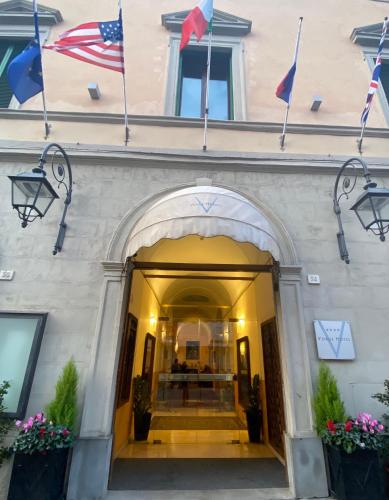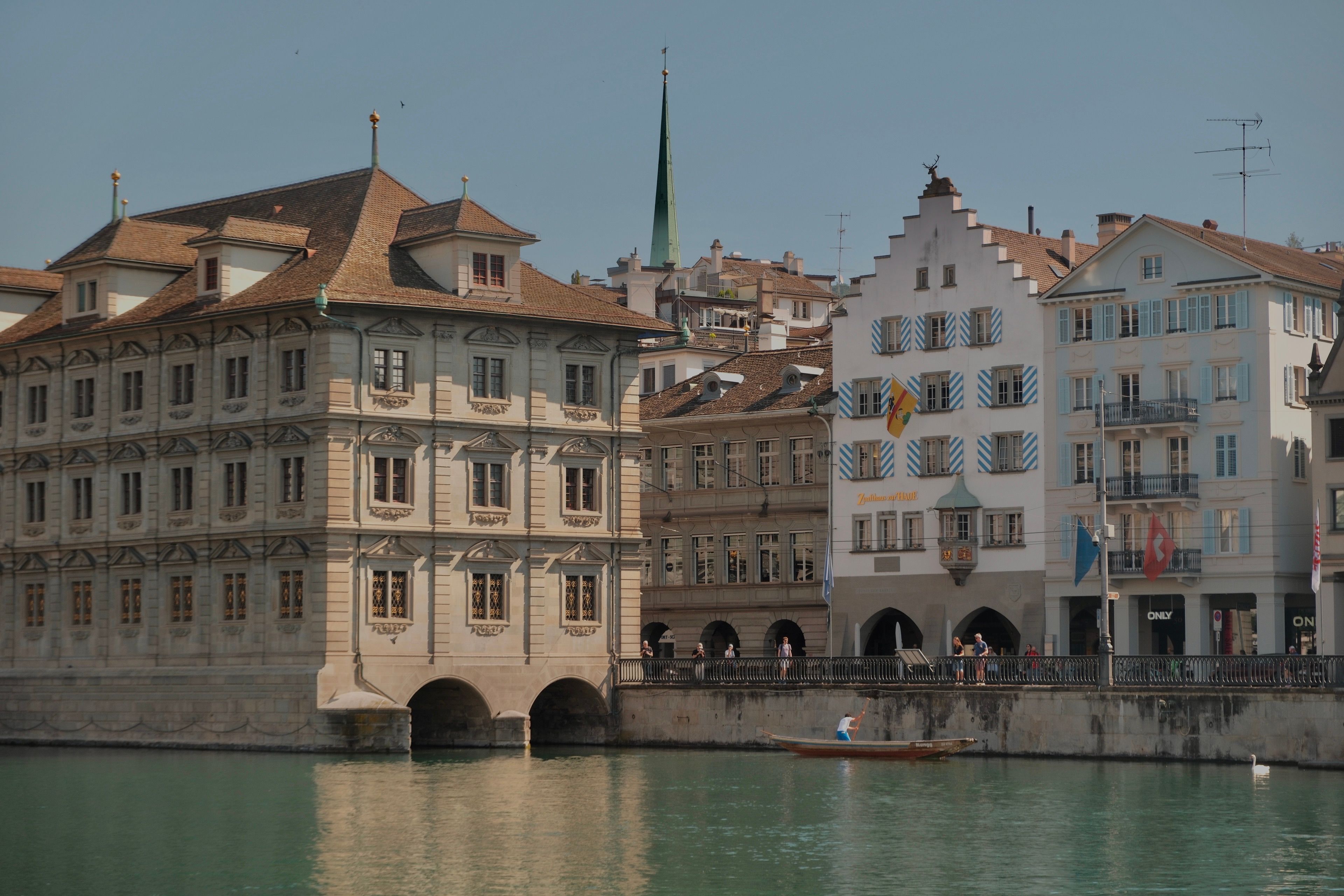
When an institutional investor such as Pictet Alternative Advisors acquires a branded hotel in the center of Zurich, the message to the market is clear: prime hotels, when properly located and professionally managed, remain one of the most compelling asset classes in European real estate.
The sale of the Zurich Marriott Hotel, a 266-room property in central Zurich, is not just another market transaction. It is a case study in how hotel investment in Europe is evolving.
The deal, completed by HVS Hodges Ward Elliott as exclusive advisor to the seller, saw the hotel acquired by Pictet Alternative Advisors on behalf of its direct real estate fund Elevation II. Pictet partnered with Vertell Asset Management as operating partner for the acquisition.
But the real point is not only who bought the asset.
The real point is what was acquired: an upper-upscale branded hotel in a central location, with significant scale, a long-term Marriott management agreement, an ongoing renovation program, and value creation potential linked not only to the real estate, but to the operating platform behind the asset.
That is why this transaction is also highly relevant for the Italian hotel market.
The Zurich Marriott shows one essential thing: today, the value of a hotel is no longer driven only by the building. It is created through the combination of location, brand, contract, capex, governance, and operating capability.
What happened: the sale of the Zurich Marriott to Pictet
HVS Hodges Ward Elliott announced the successful sale of the Zurich Marriott Hotel, a landmark hospitality asset located in a central position in Zurich.
The hotel includes:
-
266 rooms;
-
two restaurants;
-
a bar;
-
a cigar lounge;
-
an executive lounge;
-
15 meeting rooms;
-
separate staff accommodation with 105 rooms;
-
Marriott management under a long-term hotel management agreement.
The property is also recognizable for its tower design and represents one of the few upper-upscale branded hotels of this scale in central Zurich.
Another important element is the renovation program. A four-year phased refurbishment of the guestrooms is currently underway, with the remaining 63 rooms expected to be renovated in the first quarter of 2027.
These details matter because they allow the deal to be read not only as a real estate sale, but as a complex hospitality investment.
A hotel of this nature is not simply an income-producing building. It is an operating platform.
It generates revenue every day. Its performance depends on brand reputation, management quality, corporate and leisure demand, distribution, cost control, meeting and event capacity, and the consistency of the investment strategy.
This is the main difference between a traditional real estate investment and a hotel investment.
For more case studies, transactions, and market insights in the hospitality sector, readers can visit the Investimenti Alberghieri blog, which focuses on hotel transactions, hospitality assets, and value creation models in hotel real estate.
Why this deal matters for hotel investors
The sale of the Zurich Marriott is important because it brings together many of the features that currently attract institutional capital to the hotel sector.
Investors are not simply looking for attractive or well-located hotels. They are looking for assets that can generate value in a predictable, transparent, and governable way.
In the case of the Zurich Marriott, five key factors stand out.
1. A prime location in a high-barrier-to-entry city
Zurich is one of the strongest markets in Europe.
It is a city with international demand, a strong business component, a global financial reputation, the ability to attract high-end corporate and leisure guests, and limited availability of prime hotel product in the city center.
In a market like this, location becomes a competitive barrier.
A central, branded hotel of meaningful scale is difficult to replicate. This reduces competitive risk and increases interest from institutional investors.
In hotel real estate, location remains essential. But it is no longer enough on its own.
A strong location creates the potential. Management converts that potential into value.
2. Scale and asset visibility
With 266 rooms, the Zurich Marriott has meaningful scale.
Scale matters in hotel investment because it affects several key areas:
-
the ability to absorb fixed costs;
-
operating efficiency;
-
attractiveness to international brands;
-
relevance to corporate demand;
-
the ability to generate meetings and events revenue;
-
interest from funds and institutional investors.
A smaller hotel may be attractive to private operators or family offices, but it often has less appeal for institutional investors, unless it is an exceptional luxury asset or located in a truly irreplaceable destination.
The Zurich Marriott combines scale, brand, and location. That combination is what makes it an institutional-grade hotel asset.
3. International brand and global distribution
The presence of Marriott is a central element of the transaction.
In a competitive market such as Zurich, an international brand can have a major impact on hotel performance. This is not only because of brand awareness, but also because of reservation systems, loyalty programs, corporate channels, operating standards, and global commercial reach.
The brand reduces part of the commercial uncertainty, especially for financial investors that do not intend to operate the hotel directly.
However, a brand is never automatically valuable. It must be assessed within the contract.
This is where one of the most important issues comes into play: the hotel management agreement.
4. The management agreement as part of the value
The Zurich Marriott is managed by Marriott under a long-term management agreement.
This is a decisive point.
In hotel investment, the contract between owner and operator can directly affect the value of the asset. It is not a secondary document. It is an economic, financial, and strategic component of the investment.
A strong hotel management agreement can provide:
-
management continuity;
-
access to an international brand;
-
greater bankability;
-
operating standards;
-
distribution strength;
-
quality control;
-
stronger exit appeal.
But it can also introduce important constraints:
-
long contractual duration;
-
management fees;
-
investment obligations;
-
sale restrictions;
-
positioning constraints;
-
performance clauses;
-
complex relationships between owner and operator.
For this reason, in a hotel transaction, the contract should not be reviewed after the valuation. It should be reviewed before it.
A hotel with a weak contract may be worth less than it appears. A hotel with a solid, sustainable agreement aligned with the investor’s strategy may be worth more.
On these topics, the Roberto Necci hotel guides on hotel management and franchise agreements offer useful insight into why contractual governance, critical clauses, and operating models directly affect risk, profitability, and hotel value.
5. Capex and renovation as value creation levers
Another key element of the deal is the four-year phased renovation program across the guestrooms.
In the hotel sector, capex is not just a technical line item. It is an industrial lever.
Product renovation can affect:
-
ADR;
-
RevPAR;
-
online reputation;
-
market competitiveness;
-
perceived quality;
-
corporate demand;
-
premium leisure demand;
-
operating efficiency;
-
the ability to maintain brand positioning.
A hotel may occupy an excellent location, but it can lose value if the product is not updated. In the same way, a well-planned capex program can turn a mature asset into a more competitive platform.
In the case of the Zurich Marriott, the room renovation should not be seen as simple maintenance. It should be read as part of the value creation strategy.
The investor is not only buying the hotel as it is today. The investor is also buying what the hotel can become tomorrow.
The role of the operating partner: why capital alone is not enough
The presence of Vertell Asset Management as operating partner is another important signal.
In the hotel sector, financial capital alone is not enough.
A fund can acquire the real estate, but it must then govern a complex operating business. It must monitor performance, engage with the operator, oversee capex, verify brand standards, read the data, anticipate risks, and protect value over time.
This is where hotel asset management becomes critical.
A specialized operating partner can help:
-
monitor hotel performance;
-
supervise the operator;
-
review budgets and forecasts;
-
assess investment plans;
-
oversee the management agreement;
-
support the commercial strategy;
-
prepare the asset for a future exit;
-
improve communication between owner, operator, and investor.
This is a highly relevant lesson for the Italian market as well.
Many hotel owners believe value sits mainly in the building. In reality, value is created by the way the real estate, the operating business, and the strategy are brought together.
What the Zurich Marriott teaches the Italian market
The Italian market is full of hotels with strong potential.
There are properties in prime locations, internationally recognized destinations, art cities, leisure markets, family-owned assets, independent hotels, repositioning opportunities, and situations linked to generational transitions, operational distress, or divestment needs.
But not all these hotels are immediately investable.
The difference between a hotel that is simply “for sale” and a hotel that is genuinely attractive to an investor lies in the quality of the information, governance, and strategy behind it.
A sophisticated investor wants to understand:
-
how much revenue the hotel generates;
-
what the real margins are;
-
which costs are normalized;
-
how much capex is required;
-
which contract governs the operation;
-
which brand may be suitable;
-
which demand drivers support the market;
-
which operating risks exist;
-
what value can be created;
-
which exit scenario is realistic.
Too often, in Italy, the sale process of a hotel starts with an asking price rather than an asset analysis.
That is a mistake.
In the hotel sector, understanding value comes before setting price.
And value is not only real estate value. It is operating, contractual, financial, and strategic value.
For those looking to analyze opportunities, extraordinary transactions, assets to be repositioned, hotel NPLs, hotels for sale, or investment processes in the hospitality sector, Investhotel is a specialized platform focused on the analysis, valuation, and structuring of hotel transactions.
Hotels as an asset class: why investor interest remains strong
In recent years, hospitality has become an increasingly important component of real estate investment strategies.
The reason is simple: when properly managed, hotels can offer an attractive combination of real estate value, operating income, and growth potential.
Compared with other real estate segments, hotels involve greater operating complexity. But that same complexity can generate value for investors with the right expertise.
An office building or retail property depends largely on its lease. A hotel depends on daily performance.
This increases risk, but it also creates more room for active value creation.
An investor can create value through:
-
product repositioning;
-
brand change;
-
new management agreement;
-
franchising;
-
renovation;
-
revenue optimization;
-
cost control;
-
distribution improvement;
-
revised commercial strategy;
-
better use of meeting, food and beverage, and ancillary spaces.
The Zurich Marriott shows exactly this: a hotel is not a static asset. It is a dynamic asset.
And a dynamic asset requires dynamic expertise.
The biggest risk: valuing a hotel as if it were only real estate
The main mistake in hotel investment is treating a hotel like a standard real estate asset.
That approach can lead to serious errors.
A hotel is not valued only on square footage, location, or building value. It must also be evaluated through:
-
profit and loss;
-
normalized EBITDA;
-
RevPAR;
-
ADR;
-
occupancy;
-
labor costs;
-
distribution channels;
-
reputation;
-
contracts;
-
future capex;
-
brand;
-
management;
-
market demand;
-
operating risks.
The sale of the Zurich Marriott is interesting because it shows a different model: institutional capital, a prime asset, a global brand, an operating partner, and an investment plan.
It is a combination that reduces improvisation and increases the ability to manage risk.
In Italy, this mindset is still not widespread enough, especially among independent and family-owned hotel assets.
But it will become increasingly decisive.
The 7 operating lessons from the Zurich Marriott deal
The sale of the Zurich Marriott to Pictet offers at least seven useful lessons for anyone investing in, selling, or repositioning hotels.
1. Location is essential, but it is not enough
A prime location creates demand and protects value, but it must be supported by management, brand, and strategy.
2. Brand can increase asset bankability
An international brand can make a hotel more understandable to banks, funds, and investors, but it must be assessed within the contract.
3. The management agreement is part of due diligence
Duration, fees, performance tests, termination rights, capex obligations, and operating control directly affect value.
4. Capex must be assessed before acquisition
A hotel without an investment plan risks losing competitiveness. Capex is not an accessory cost, but a strategic lever.
5. Hotel asset management protects value
After acquisition, continuous governance is required. Value is not created only at closing, but throughout the life of the investment.
6. Scale matters
Institutional investors tend to favor assets that can generate volume, efficiency, and market relevance.
7. Exit value is built from day one
Every decision on brand, contract, capex, and management affects the future liquidity and resale value of the hotel.
Why this transaction also matters to Italian hotel owners
The sale of the Zurich Marriott does not only concern funds, institutional investors, or major international advisors.
It also matters to Italian hotel owners.
Many Italian hotels could become more attractive to the market if they were better prepared.
Preparing a hotel for sale or for the entry of an investor means:
-
organizing financial data;
-
separating personal costs from business costs;
-
building a credible business plan;
-
estimating capex correctly;
-
analyzing the competitive market;
-
evaluating brand or franchise scenarios;
-
clarifying contracts and permits;
-
identifying the right buyer profile;
-
building a solid financial narrative.
An investor does not buy only the hotel’s past. An investor buys its future.
And that future must be explained with numbers, strategy, and method.
Conclusion: the future of hotel investment will be increasingly selective
The sale of the Zurich Marriott to Pictet Alternative Advisors confirms that interest in high-quality hotels remains strong. But it also confirms that the market is becoming more selective.
Owning a hotel in a good location is no longer enough.
The asset must be understandable, governable, and capable of being repositioned or enhanced.
Investors are looking for hotels that combine:
-
location;
-
brand;
-
scale;
-
management;
-
contract;
-
capex;
-
asset management;
-
exit strategy.
The Zurich Marriott is a strong case because it brings many of these elements together.
It is a prime hotel, in a solid city, with a global brand, a structured management agreement, a renovation plan, and a specialized operating partner.
The message for the Italian market is clear: hotels with potential must be transformed into understandable investment products.
The question is no longer only:
how much is this hotel worth?
The right question is:
what value can this hotel generate if it is properly managed, renovated, contracted, and governed?
That is where the quality of a hotel investment is truly measured.
Are you evaluating a hotel investment, sale, or repositioning project?
If you are an owner, investor, fund, bank, or operator interested in analyzing a hotel asset, structuring a transaction, or evaluating an acquisition, divestment, or repositioning process, you can explore the working model of Hotel Management Group.
Hotel Management Group supports complex decisions in the hotel sector by integrating financial analysis, governance, asset management, contracts, hotel operations, and strategic value creation.
Contact Hotel Management Group to analyze your hotel project and turn a hotel into a value creation platform.
FAQ on hotel investment and the Zurich Marriott deal
Who acquired the Zurich Marriott?
The Zurich Marriott Hotel was acquired by Pictet Alternative Advisors on behalf of its direct real estate fund Elevation II, with Vertell Asset Management acting as operating partner.
Why is the sale of the Zurich Marriott important?
It is important because it shows institutional investor interest in prime, branded, well-located hotels with value creation potential through management, capex, and asset management.
What role does Marriott play in the transaction?
Marriott manages the property under a long-term management agreement. This makes the hotel management agreement a central component of the investment.
Why is capex critical in hotel investment?
Because hotel value also depends on product quality. Renovations, room upgrades, brand standard compliance, and guest experience improvements affect revenue, competitiveness, and future value.
What can the Italian market learn from this transaction?
The Italian market can learn that a hotel must be prepared as an investment product: organized data, clear contracts, capex planning, governance, commercial strategy, and professional asset management.
Roberto Necci - r.necci@robertonecci.it