Two new hotels and 41 additional rooms in the Prosecco Hills represent far more than a simple increase in accommodation supply. They point to a broader shift: an internationally recognised destination is beginning to convert brand awareness, visitor growth and territorial appeal into a more structured hospitality product. The next step will not simply be adding more rooms, but developing hotels capable of sustaining ADR, length of stay, ancillary revenues and long-term real estate value.
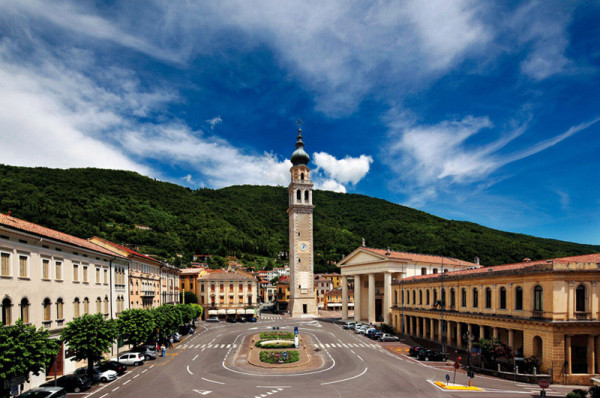
The Prosecco Hills of Conegliano and Valdobbiadene are entering a new stage in their tourism development.
News that two new hotels are set to add a total of 41 rooms to the local market may, at first glance, appear to be little more than a local hospitality story.
From a hotel investment perspective, however, it deserves much closer attention.
When a destination grows, the real turning point does not come simply when visitor numbers increase.
It comes when growing demand begins to generate investment, asset redevelopment and new hospitality concepts.
And that is precisely what now appears to be happening in the Prosecco Hills.
From International Recognition to a Stronger Hotel Product
UNESCO World Heritage status and the global strength of the Prosecco brand have progressively transformed the Conegliano and Valdobbiadene area into a destination recognised well beyond Italy.
Between 2019 and 2025, arrivals across the UNESCO area increased from approximately 186,000 to more than 252,000, while overnight stays rose from around 445,000 to over 573,000.
Even more significant is the growth of international demand, with foreign arrivals increasing by approximately 48% compared with 2019.
These figures have an inevitable consequence.
As international demand increases, so does the need for accommodation products capable of serving guests with different spending profiles, service expectations and travel motivations.
The market therefore gradually moves beyond the simple availability of beds towards demand for clearly positioned and recognisable hotel products.
This distinction lies at the heart of many of the investment opportunities analysed by InvestimentiAlberghieri.it.
The Former Alla Torre: Value Lies in the Product, Not Simply in the Room
One of the projects involves the redevelopment of the former Alla Torre Hotel and Restaurant in Valdobbiadene.
The property is expected to return to hospitality use through a concept combining guest rooms, food and beverage facilities and a spa.
This is precisely what makes the project particularly interesting.
Today’s hotel market can no longer be assessed purely on room count.
A room is simply accommodation capacity.
A hotel that successfully integrates:
-
accommodation;
-
food and beverage;
-
wellness;
-
destination experiences;
-
wine and gastronomy;
-
guest services;
becomes a far more sophisticated revenue-generating hospitality product.
That difference directly affects the property’s ability to generate:
higher ADR, ancillary revenues, longer stays and greater total spend per guest.
In other words, value does not necessarily come from the number of rooms.
It comes from the amount of revenue each guest can generate throughout the stay.
The 41 New Rooms Matter More Than the Number Suggests
In purely numerical terms, 41 additional rooms may appear relatively modest.
But in hotel investment, absolute numbers tell only part of the story.
The more interesting point is this:
private capital continues to be committed to developing or repositioning hotel products in a destination that has experienced significant growth in international demand.
For investors, that is an important signal.
It suggests that the market is increasingly being perceived not simply as somewhere tourists visit, but as a destination where it may make sense to deploy capital into hospitality assets.
The distinction is fundamental.
A tourism destination can attract large numbers of visitors without necessarily developing into a mature hotel investment market.
Maturity begins when demand, product and investment start to converge.
The Historical Constraint: Strong Alternative Accommodation, Less Structured Hotel Supply
Much of the tourism growth experienced by Italy’s wine destinations has been supported by a substantial expansion in alternative accommodation.
Agriturismi, B&Bs, apartments, guesthouses and small independent properties have played a crucial role.
They have often provided the first layer of accommodation capacity required to absorb rising visitor demand.
But there is a second stage of development.
As a destination becomes increasingly international, it begins to attract market segments requiring more sophisticated services:
-
premium leisure travellers;
-
small international groups;
-
destination weddings;
-
incentive travel;
-
corporate retreats;
-
business events;
-
tour operators;
-
wellness travellers;
-
high-end food and wine tourism.
These guests are not simply looking for a bed.
They are looking for an integrated service platform.
And this is where more structured hotel products can find room to grow.
The Real KPI Is Not Arrivals: It Is Room Nights and Economic Value
There is a common mistake in destination analysis.
Success is often measured almost exclusively through visitor arrivals.
For hotel investors, however, the most relevant indicators are different:
average length of stay, occupancy, ADR, RevPAR, seasonality and total revenue per guest.
A destination may attract very large numbers of visitors while still generating relatively modest hotel profitability.
This is particularly true where day-trip tourism dominates.
A visitor arrives, tours a winery, has lunch, buys local products and leaves.
From a tourism statistics perspective, that person is a visitor.
From a hotel perspective, that visitor does not exist.
The real challenge for the Prosecco Hills will therefore be to convert an increasing share of visitors into overnight guests.
The next challenge will be to turn those overnight stays into complete experiences.
Hotels Can Become Economic Multipliers for the Destination
In a destination such as the Prosecco Hills, the role of a hotel can extend far beyond accommodation.
Hotels can become platforms capable of bringing together:
wine + gastronomy + landscape + wellness + culture + mobility + experiences.
A one-night stay can become two nights.
A winery visit can become part of an experiential package.
A leisure guest may use the spa and restaurant.
A corporate event can generate overnight stays.
This is how tourism demand begins to generate greater economic value across the destination.
As frequently explored on RobertoNecci.it, meaningful tourism growth is not simply about increasing visitor numbers. It is about building higher-quality demand and increasing the economic value generated by each visitor and by the destination as a whole.
What Type of Hotels Could Work in the Prosecco Hills?
This is arguably the most relevant question for investors.
The answer does not necessarily lie in large hotels.
The physical characteristics of the area and the positioning of the destination appear particularly suited to hospitality concepts with a strong identity and relatively limited room counts.
Potentially attractive models may include:
-
boutique hotels;
-
wine resorts;
-
country hotels;
-
historic residences;
-
wellness retreats;
-
small luxury hotels;
-
gastronomy-led resorts;
-
lifestyle properties deeply connected with the local destination.
In these formats, profitability does not necessarily depend on the economies of scale associated with large urban hotels.
What matters far more is the ability to sustain an appropriate average room rate, supported by food and beverage, wellness and experiential revenues.
A Competitive Advantage That Is Difficult to Replicate
The territory also benefits from an exceptionally valuable asset:
the Prosecco name.
It is already a globally recognised consumer brand.
From a tourism perspective, this means the destination can benefit from a level of international awareness that many other locations must spend years — and considerable resources — trying to build.
But a powerful destination brand does not automatically make a hotel investment profitable.
It merely creates favourable market conditions.
The hospitality product still needs to be designed correctly.
The Risk: Confusing Destination Awareness with Profitability
This is probably the main risk at this stage of the market.
The assumption that a property located in a renowned tourism destination will automatically generate a viable hotel business is fundamentally flawed.
Before committing capital, investors should test at least:
-
existing demand;
-
potential demand;
-
source markets;
-
seasonality;
-
competitive benchmarks;
-
positioning;
-
sustainable ADR;
-
expected occupancy;
-
optimal property size;
-
CAPEX;
-
labour costs;
-
F&B revenues;
-
wellness revenues;
-
operating model;
-
potential EBITDA;
-
post-repositioning real estate value.
One of the most expensive mistakes in hospitality investment is to acquire or refurbish first and analyse the market afterwards.
The correct sequence is the opposite:
build the economic model first, then determine what level of investment that model can support.
This is the same principle underpinning the asset analysis and value-creation work explored on Investhotel.it.
Redeveloping Existing Properties Could Become a Major Opportunity
The former Alla Torre project also highlights a second important issue:
the repositioning of existing real estate.
A significant share of future hotel investment opportunities in Italy may not come from constructing new buildings.
Instead, value may be created through the transformation of:
-
former hotels;
-
underutilised properties;
-
obsolete accommodation facilities;
-
historic buildings;
-
properties with previous hotel use;
-
assets no longer aligned with contemporary demand.
The value-creation formula can be summarised as:
existing asset + CAPEX + repositioning + new management + improved distribution = value creation.
But for the equation to work, the value created must exceed the capital required to deliver the transformation.
That is where pre-investment analysis becomes critical.
Tourism Growth Is Now Beginning to Translate into Investment
The two new hotels and 41 additional rooms will not, by themselves, transform the hotel market of the Prosecco Hills.
But they can be interpreted as an important market signal.
The destination appears to be progressing through three distinct stages:
first, international recognition.
Then, visitor growth.
Now, the upgrading and professionalisation of hotel supply.
If this trajectory continues, the next stage could be even more significant:
the entry of investors and operators seeking opportunities to reposition existing hospitality assets.
This is likely to be where an important part of the area’s future hospitality and real estate development takes place.
The Question Is Not How Many Hotels the Destination Needs
Asking how many additional hotels could be developed in the Prosecco Hills is probably the wrong starting point.
The more relevant question is:
What type of hotel product can this destination sustainably support, at what ADR, at what occupancy level and with what return on invested capital?
Everything follows from that answer.
The acquisition price.
The sustainable CAPEX.
The room count.
The category.
The services.
The operating model.
And ultimately, the value of the asset.
Because in hotel investment, real estate value does not come from the beauty of the location alone.
It comes from the property’s ability to generate sustainable income.
The 41 new rooms in the Prosecco Hills therefore matter not simply because of what they represent today.
They matter because of what they may anticipate tomorrow:
the transition from a successful tourism destination to a genuine hotel investment market.
Hotel Investment and Development Analysis
For hotel asset analysis, development projects, economic and operational feasibility studies, repositioning and real estate value-creation strategies:
info@investimentialberghieri.it
Further insights:
InvestimentiAlberghieri.it
Investhotel.it
RobertoNecci.it