The Autonomous Province of Bolzano has decided to demolish and rebuild the historic Rifugio Firenze in Val Gardena. The implied investment exceeds €132,000 per bed—an unusually high figure that cannot be assessed using conventional hotel benchmarks alone. Its true value must be measured against the project’s economic, environmental, social and territorial returns.
Ten million, four hundred and fifty thousand euros to build a mountain refuge offering 79 beds.
Taken in isolation, the figure may appear disproportionate. It translates into an indicative investment of approximately €132,000 per bed, even before any potential cost overruns, final construction timelines or future operating terms are known.
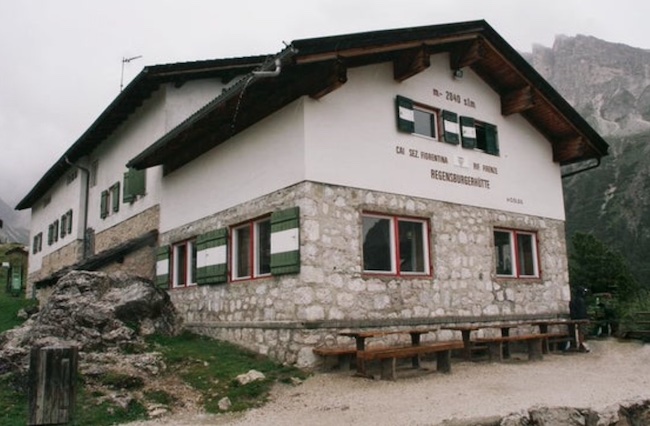
Yet Rifugio Firenze, also known as Regensburgerhütte, is not a conventional hotel. Built in 1888, it is a historic Dolomites mountain refuge in Val Gardena and has been owned by the Autonomous Province of Bolzano since 2010.
The decision to demolish and completely rebuild it therefore provides a particularly relevant case study. It demonstrates how a hospitality investment should be assessed when financial returns must be considered alongside safety, environmental protection, public service obligations and the continued provision of accommodation at altitude.
Why Rifugio Firenze will be demolished
The Provincial Government has approved the project’s spatial and volumetric programme, together with the allocation of the funding required for demolition and reconstruction.
According to the Autonomous Province of Bolzano, technical inspections and the commissioned feasibility study identified:
-
structural deficiencies;
-
shortcomings in fire safety;
-
non-compliance with current regulations;
-
significant constraints affecting the upgrading of the existing buildings;
-
the technical and financial unsustainability of a comprehensive refurbishment.
The conclusion is significant: retaining and refurbishing the original structure would have been less viable than replacing it.
The decision does not, therefore, appear to have been driven simply by a desire to increase capacity or transform the refuge into a luxury hospitality property. It reflects the inability of a refurbishment project to deliver a fully safe, efficient and sustainable building on acceptable terms.
The news, also reported by Montagna.TV, raises an unavoidable question: how should the viability of a €10 million-plus public investment in a 79-bed mountain refuge be measured?
What the new Rifugio Firenze will look like
The new building will have a more compact footprint and will be constructed predominantly from timber, offering a contemporary interpretation of traditional Alpine refuge architecture.
The project will include:
-
79 beds;
-
approximately 308 square metres of ancillary space;
-
a photovoltaic system;
-
a pellet-fired heating system;
-
compliance with current structural and fire-safety standards;
-
improved energy efficiency;
-
a more functional internal layout;
-
enhanced guest comfort and service quality.
The Province has confirmed that the entire investment will be funded through resources already available within its budget.
Approval of the spatial and volumetric programme allows the project to advance to its next design and construction stages. The €10.45 million figure should therefore be regarded as the financial framework currently announced, subject to further validation as the design develops, contracts are awarded and construction progresses.
The cost per bed is high—but comparing it with a hotel would be misleading
Dividing the total investment by the proposed capacity results in an indicative cost of approximately €132,300 per bed.
This is a useful metric, but not a conclusive one.
For an urban hotel, the development cost per room or per bed can be compared with projected revenue, average daily rate, occupancy, EBITDA and the completed property’s market value. A high-altitude refuge involves a very different cost structure, including:
-
restricted site access;
-
complex transportation of materials, equipment and workers;
-
limited seasonal construction windows;
-
challenging weather conditions;
-
environmental and landscape constraints;
-
demolition and disposal costs;
-
the need for autonomous energy systems;
-
greater engineering complexity;
-
higher safety requirements;
-
maintenance under severe climatic conditions.
A substantial proportion of the €10.45 million may therefore have little direct connection with accommodation capacity. The capital expenditure will also fund construction logistics, safety, energy independence and the ability to maintain a vital service at altitude.
The cost-per-bed figure should not be disregarded. It must, however, be interpreted within the correct operational and territorial context.
Demolition can be more economical than refurbishment
The Rifugio Firenze project challenges a widely held assumption: refurbishment is not necessarily the most economical option.
When a property simultaneously suffers from structural issues, outdated building services, inadequate fire protection, poor energy performance and inefficient internal layouts, refurbishment can create three major risks.
The first is cost-overrun risk. Work on existing buildings frequently reveals defects and complications that cannot be fully quantified before construction begins.
The second is functional risk. A substantial amount of capital may be invested in a renovated property that remains constrained by its original configuration.
The third is long-term economic risk. A lower initial construction cost may subsequently result in higher energy consumption, maintenance requirements and operating inefficiencies for decades.
The decision between refurbishment and reconstruction should therefore be based on the property’s total life-cycle cost, not merely the initial construction budget.
This is also a core principle of hotel due diligence and value-enhancement analysis: the key question is not simply whether a building can be refurbished. Investors must determine what hospitality product can ultimately be delivered, how much it will cost to operate and how long it will remain competitive.
A mountain refuge is more than an accommodation business
Rifugio Firenze will provide overnight accommodation and food and beverage services, but it cannot be assessed as a conventional hotel business.
A high-altitude refuge operates under inherent constraints:
-
a limited operating season;
-
demand heavily influenced by weather conditions;
-
complex supply arrangements;
-
high logistics costs;
-
difficulties in recruiting and retaining staff;
-
reliance on autonomous utility systems;
-
above-average maintenance requirements;
-
revenue dependent on trail accessibility;
-
increasing exposure to the effects of climate change.
An analysis based solely on the revenue generated by its 79 beds might therefore indicate a financial return that is insufficient relative to the capital invested.
The refuge, however, also creates indirect benefits. It supports hiking and mountaineering, strengthens Val Gardena’s appeal, provides a permanent presence in the mountains, improves visitor safety and generates business for local suppliers, guides, transport providers and tourism operators.
Its performance should therefore be assessed through a broader concept: the extended territorial return.
Measuring the extended territorial return
For public tourism infrastructure, return on investment does not necessarily correspond to the profit generated by the individual property.
In the case of Rifugio Firenze, the overall return should be assessed across at least five dimensions:
-
Direct financial return
Revenue from accommodation, food and beverage, and ancillary services, net of operating costs. -
Tourism return
The property’s ability to increase the destination’s appeal, service quality and visitor length of stay. -
Territorial return
The value generated for guides, suppliers, transport providers, tourism operators and other local businesses. -
Social return
Greater safety, accessibility, mountain stewardship and public enjoyment of the natural environment. -
Environmental return
Lower consumption, improved resource management and reduced environmental impact compared with the existing property.
Only by considering these dimensions together is it possible to assess whether €10.45 million represents excessive expenditure or a strategic long-term investment.
However, “extended return” must not become a generic formula used to justify any level of public spending. It should be translated into specific objectives, measurable indicators and independently verifiable outcomes.
The questions the project must still answer
The information released to date describes the construction project, but it does not yet allow for a complete assessment of the property’s future financial and operational sustainability.
Several material questions remain unanswered:
-
What is the detailed breakdown of construction costs?
-
What is the project timetable?
-
How long will the refuge remain closed?
-
Which procurement and contract structure will be used?
-
What will the final cost be after tendering?
-
How exposed is the project to construction-cost inflation?
-
What operating model will be adopted?
-
How long will any future concession last?
-
What rent or concession fee will be payable by the operator?
-
How many days per year will the refuge operate?
-
What occupancy level is expected?
-
What average bed rate has been assumed?
-
How much revenue will food and beverage generate?
-
What will the annual supply-chain and logistics costs be?
-
How many employees will be required?
-
What level of maintenance expenditure has been forecast?
-
Will the operation require ongoing public subsidies?
Without this information, it is possible to assess the technical rationale for reconstruction, but not the full financial and operational sustainability of the project.
A well-designed building does not automatically create a successful business. A publicly funded asset must demonstrate over time not only that it functions effectively, but also that the benefits it produces are proportionate to the resources invested.
Photovoltaics and pellet heating do not, by themselves, make a project sustainable
The project includes a photovoltaic system and pellet-fired heating. These solutions are consistent with the objective of reducing energy consumption and environmental impact, but sustainability cannot be established merely by listing the technologies to be installed.
For a high-altitude refuge, the entire operating cycle must be considered:
-
building-envelope performance;
-
overall energy demand;
-
on-site generation and storage;
-
water management;
-
wastewater treatment;
-
waste management;
-
pellet transportation;
-
system maintenance;
-
emergency back-up systems;
-
material durability.
The real test will come from operational data: actual consumption, energy costs, avoided emissions, maintenance requirements and system reliability.
Designed sustainability must ultimately become measured sustainability.
The risk of confusing value creation with higher visitor volumes
A new, safer and more efficient refuge can improve the visitor experience and strengthen Val Gardena’s international positioning. Any new infrastructure within an environmentally sensitive setting, however, may also increase pressure on the surrounding area.
The project’s success should not therefore be measured solely by the number of overnight stays or visitors.
Performance indicators should also include:
-
quality of the visitor experience;
-
average length of stay;
-
visitor spending;
-
distribution of tourist flows;
-
water and energy consumption;
-
waste generation;
-
pressure on trails and natural habitats;
-
benefits for local businesses;
-
the balance between accessibility and conservation.
In mountain tourism, higher volumes do not necessarily create greater value. A property can deliver better results by accommodating demand more safely, efficiently and sustainably—without turning the mountain into an overcrowded destination.
The broader lesson for hotel investment
The Rifugio Firenze case offers a lesson that applies to a substantial proportion of Italy’s hospitality real estate.
Many properties are considered attractive because of their history, architecture, views or prestigious location. These characteristics may support demand, but they do not guarantee investment viability.
Before acquiring or redeveloping a hospitality property, investors must distinguish between:
-
historical value;
-
architectural value;
-
real estate value;
-
hospitality value;
-
symbolic value;
-
operational sustainability;
-
financial sustainability;
-
regulatory upgrade costs;
-
income-generating capacity.
The analysis developed by Investimenti Alberghieri, together with the operational expertise of Hotel Management Groupand the sector experience of Roberto Necci, begins with the integration of four elements: property, market, operations and capital.
The question is not simply:
How much will refurbishment or reconstruction cost?
The correct question is:
What asset will be delivered, how much will it cost to operate, what income can it generate and what economic and territorial value will it create over time?
Conclusions
The €10.45 million investment in Rifugio Firenze is substantial, and an indicative cost exceeding €132,000 per bed requires transparency, disciplined project management and rigorous cost control.
The figure cannot be judged solely through the benchmarks used for a conventional hotel. The investment will also fund safety, energy independence, environmental protection, territorial stewardship and the continued operation of a historic piece of tourism infrastructure in the Dolomites.
Yet the public nature of the investment makes the measurement of its results even more important.
The project’s success will not depend only on the architectural quality of the new building. It will depend on its ability to remain within budget and timetable, support a viable operating model and demonstrate that the value created for Val Gardena is proportionate to the resources committed.
Because €10.45 million could represent either an above-market cost or a strategic investment.
The difference will not be determined by the announced budget, but by the economic, environmental and territorial returns that the new Rifugio Firenze is able to generate over the coming decades.
Hotel Investment and Asset Evaluation
Investimenti Alberghieri provides independent analysis of hospitality properties, conversion opportunities, redevelopment projects, acquisitions and value-enhancement strategies.
To request a preliminary assessment or discuss a hospitality project:
info@investimentialberghieri.it